The Vampire Lestat’s New York EP Proves Lestat’s Best Songs Are His Most Personal
After last week’s The Devil’s Road EP gave us complete versions of songs we had only heard in passing throughout the episode, the New York EP doubles down on that idea, expanding brief musical moments into four fully realized songs: Big Bad Wolf, When I Call Out Your Name, Cabbage, and, of course, the emotionally devastating centerpiece of Episode 5, New York, Stained Glass Eyes.
We’d be lying if we said we didn’t understand the frustration of hearing these tracks in full and immediately wishing they’d had more room to breathe on screen. There are revelations tucked into nearly every verse, callbacks that deepen the relationships we’ve been following all season, and enough character work to make anyone wonder what another five minutes of music could have looked like.
At the same time, it’s worth remembering that, just like Interview with the Vampire before it, this adaptation was always envisioned as a story told across multiple seasons. That also means The Vampire Lestat has to balance two different jobs: telling its story while convincing us that Lestat (Sam Reid) is a genuine rockstar with an actual discography. If every song had been performed in full all season, we’d probably be having the opposite conversation about the show turning into a musical. Somewhere between those two extremes sits the version of the series we’ve been watching, one where the songs enhance the narrative without swallowing it whole.
Besides, it’s hard to imagine Daniel Hart and the entire creative team pouring this much love into an original soundtrack only to leave these songs behind after one episode. Lestat has been teasing one final performance since Detroit. We still have two episodes left this season, and if the universe is feeling particularly generous, a Season 4 somewhere down the line. We haven’t seen the finale yet, so we’re certainly not claiming to know what’s coming, but we’d much rather remain optimistic than assume these songs have already sung their last note.
Anygays… enough discourse.

We’ve accepted that these weekly EPs have become our excuse to fangirl over Daniel Hart’s music genius and Sam Reid’s vocals, and this might be their most powerful release yet. Unlike the unhinged rock anthems that opened the tour, every song on New York is written to someone. Louis (Jacob Anderson) gets one. Gabriella (Jennifer Ehle) gets one. The Beautiful Unwell get one. Claudia (Delainey Hayles) gets one. Lestat really pulled an Oprah this week: you get a song, you get a song, you get a song, everybody gets a song.
The result is an EP that trades spectacle for intimacy without sacrificing the theatrical flair that’s made this soundtrack so addictive. It’s also a fascinating snapshot of Lestat’s growth as a songwriter. The first EPs revolved around his own mythology and larger-than-life persona. Here, every song is written for someone else. The rockstar who wanted the spotlight is now using it to process the people who’ve defined his immortal life.
Big Bad Wolf is the closest thing here to the cocky, untouchable Lestat who kicked off the tour, but underneath all that swagger sits a man who’s clearly still nursing old wounds. If Big Boss was a diss track built to humiliate Armand (Assad Zaman), this one is aimed at Louis. Not out of spite, but out of frustration. Lestat isn’t trying to destroy his ex. He’s trying to reclaim a story that no longer belongs to him.
Right from the opening verse, he admits exactly who he is. He’s messy and volatile. He has a vicious temper. There are parts of himself he recognizes all too well. The issue isn’t that Louis called him flawed—it’s that Interview with the Vampire reduced him to little more than the villain in someone else’s fairy tale.

The chorus couldn’t make that clearer. “Now I’m the big bad wolf in your fairytale” reframes Louis’ memoir as exactly that: one person’s version of events. The sharpest lyric arrives a little later with “half the truth is worse than no truth at all.” Lestat never argues that Louis fabricated everything. He’s arguing that selective memory can become just as misleading.
Then comes the spoken-word breakdown, which drives that point home while also becoming one of the funniest moments on the soundtrack. Only Lestat could interrupt a rock anthem to complain about the color of a skirt, insist Louis forgot to mention his scars, correct his commedia dell’arte character, refuse to admit he’s a romantic sap, and passionately deny one specific story about Claudia (fair). None of those details change the story completely, yet they matter immensely to him because they’re proof someone else has been telling his life for him.
There’s even a wonderfully petty callback hidden in the chorus. Lestat repeatedly sings that “the night’s for sale,” echoing Louis’ famous declaration that he “owns the night.” It’s a clever inversion, especially now that Daniel (Eric Bogosian) has turned their relationship into an international bestseller. If Louis once claimed to own the night, Lestat’s retort is deliberately double-edged. It’s either a taunt that Louis, for all his wealth, failed to buy what he claimed was already his—or, more cuttingly, that he’s since commodified their story, putting even the night up for sale.
For all its bravado, though, Big Bad Wolf never feels triumphant. It feels wounded. Beneath every sarcastic jab is someone grappling with what it means to become the monster in the story told by the person he loved most. That’s what elevates it beyond a simple diss track. It’s heartbreak with distortion pedals.

If Big Bad Wolf is Lestat answering Louis, When I Call Out Your Name is him trying to make sense of someone he’ll probably never fully know: Gabriella.
Knowing everything the series has revealed about their relationship makes this one of the most unsettling listens on the EP. What initially sounds like a love song slowly reveals itself to be something much sadder: a son trying to make sense of a lifetime of neglect, manipulation, and abuse. The chorus never offers answers, only questions: “What are we doing? Why are we here? Is it obsession? A deep lovers spell?” Lestat keeps asking because there may not be an answer. Rather than romanticizing what they became, the song captures the confusion abuse often leaves behind.
The verses reinforce that feeling by moving between memories of his human life and the eternity they’ve now spent together. Images of blue eyes, the mountains of Auvergne, his mother’s mortal sickness, blood, and the “gift” of vampirism blur into one another until it’s impossible to separate mother from fledgling. Immortality didn’t fix their relationship; it simply preserved it.
Perhaps the most heartbreaking detail is the repeated “Ga-ga-ga” refrain woven through the chorus. It works as a playful abbreviation for Gabriella’s name, but it also recalls the stutter Lestat struggled with for twenty years. For a few moments, the rockstar disappears completely. All that’s left is a frightened little boy still calling out for a mother who never truly gave him what he needed.
By the time the outro arrives with Lestat repeating “Gabriella” again and again, it almost sounds like a prayer destined to go unanswered. It’s uncomfortable, tragic, and beautifully written precisely because it refuses to simplify such a deeply complicated form of abuse into something easy to understand.

That’s why Cabbage couldn’t arrive at a better time. After two emotionally exhausting songs, Lestat suddenly delivers the weirdest track on the EP, and somehow it becomes one of its funniest. It’s chaotic, self-deprecating, and surprisingly uplifting, transforming every insult that’s ever been thrown at him into something worth celebrating.
“Be broken. Be unlovable. Be cabbage.” Only Lestat could make that work. Instead of treating those labels as something shameful, he embraces them, declaring that this isn’t “a cry for help” but “a song for all the beautiful unwell.” On its surface, it feels like an anthem for every vampire who’s ever been told they’re too damaged to deserve love. It’s an invitation to stop apologizing for existing and start embracing the parts of yourself the rest of the world labels monstrous.
Maybe that’s why we couldn’t help hearing something larger in it too. The Vampire Lestat/Interview With The Vampire has always spoken to queer audiences in ways that go beyond its vampires, and it’s difficult not to hear echoes of that experience here. Queer people are so often told they’re too much, too complicated, or somehow need to become more acceptable before they deserve happiness. Whether that was the intention or not, Cabbage ends up resonating in much the same way. Lestat isn’t asking anyone to become easier to love. He’s opening the doors and saying, “Come exactly as you are.”
The repeated chants of “Make more” obviously work within the show’s mythology as a call to create more vampires and expand the ranks of the Beautiful Unwell, but they also reinforce that sense of belonging. Find your people. Build your community. Stop apologizing for taking up space. If the world insists on calling you a monster, you might as well surround yourself with monsters who understand you.
Musically, Cabbage is one of the New York EP’s most infectious tracks, embracing the controlled chaos that has become a hallmark of this soundtrack. It’s playful without sacrificing emotional depth, ridiculous without becoming a joke, and catchy enough that we’ve already accepted it’ll be living rent-free in our heads for the foreseeable future. Somehow, Daniel Hart has managed to write a song that encourages us to proudly declare ourselves damaged and cabbage in the same breath, and honestly? We wouldn’t have it any other way.

By this point, we’d already gone from heartbreak to trauma processing to an unexpectedly empowering vampire anthem. Then the New York EP decides to end with Stained Glass Eyes and casually delivers one of the most emotionally devastating songs The Vampire Lestat has released to date.
If the stripped-back performance in Episode 5 left us staring blankly at the screen with tears running down our faces, the studio version somehow finds a way to hurt even more. We honestly didn’t think Daniel Hart and Sam Reid could improve on what we’d already heard. We should’ve known better.
Stained Glass Eyes is written for Claudia, but it isn’t simply a song about missing her. It’s a conversation with her memory. Every verse is shaped by grief, regret, and the impossible task of reconciling the joy of raising Claudia with the role Lestat played in losing her.
“The day you were born, I was shakin’ like a leaf on an old oak tree. Then you stayed like a thorn, red roses rainin’ down ’til they flooded me.” It’s a beautiful way of describing their relationship from the very beginning. Claudia changed Lestat forever. She entered his life as something unexpected and became inseparable from it, bringing immense love alongside unimaginable pain.
The image of a thorn isn’t meant to diminish that love; if anything, it acknowledges that the people we love most are often the ones capable of hurting us the deepest. Claudia became both daughter and adversary, someone who filled Lestat’s immortal life with purpose while also forcing him to confront parts of himself he’d spent centuries avoiding.
That complicated love runs through every verse. One of the most striking lines comes when Lestat sings, “No one ever gets to keep my smile, but you can peel it off me like one of your souvenirs.” It’s such a distinctly Claudia image. Throughout the series, she’s collected keepsakes from the people whose lives crossed hers. Here, Lestat imagines giving her something infinitely more personal: his smile. It’s a small detail that says everything about how much of himself he willingly gave to the daughter he loved, even if neither of them always knew how to show it.

The New York EP studio version introduces another devastating addition through TC’s (Sarah Swire) vocals. During the episode, the song already felt like Lestat singing directly to Claudia as her muse lingered beside him in the recording studio. Here, Claudia sings too. It’s a stunning creative decision.
Rather than functioning as a traditional duet, TC’s vocals slip into the song like a memory Lestat can’t silence. Every harmony feels like Claudia answering him from inside his own guilt, reminding him that some ghosts never leave us.
The chorus may be the strongest piece of songwriting on the entire EP. “Don’t break that stare, I’m burnin’ in your mirror tonight. No, don’t you dare call it yearnin’, it’s the fear that I’m right.” Those lyrics immediately bring us back to Claudia’s final moments in Paris, where she looked directly at Lestat as she burned. It’s the image that has haunted him ever since. This isn’t Claudia asking him to miss her. She’s forcing him to relive the moment he couldn’t save her, refusing to let him look away from the guilt he’s carried ever since.
The bridge drives that idea home with one simple command: “Don’t look away.” Repeated over and over again, it stops sounding like a lyric and starts feeling like Claudia refusing to let Lestat escape what happened in Paris. No sold-out venue, screaming crowd, or rockstar persona can drown out her voice because grief doesn’t disappear just because life moves forward. If anything, immortality gives it even more time to settle in.
It’s a stunning song, made even stronger by the decision to let Claudia sing alongside Lestat. We adored the version featured in the episode, but hearing TC woven into the studio recording elevates it into something even more haunting. Now all we’re asking for is an official release of the unplugged performance too.

We’re also going to need someone to explain how Daniel Hart and Sam Reid keep doing this. Every single week, we’ve convinced ourselves the soundtrack has reached its peak. Every single week, another EP arrives and immediately proves us wrong. At this point, we’re one email away from forwarding both Hart and Reid our therapy bills because there has to be some reimbursement program for this level of emotional devastation.
One of our favorite things about the New York EP is how intentionally personal it feels. Every song is addressed to someone who shaped Lestat’s life: Louis gets a furious response to the story that turned him into the villain, Gabrielle receives two centuries’ worth of unanswered questions, the Beautiful Unwell are handed an anthem, and Claudia gets a love letter wrapped inside an apology that arrived far too late. That’s what makes these weekly EPs feel so rewarding. They aren’t simply companion releases; they’re another layer of storytelling, expanding the characters without asking the series to stop for a full concert every episode.
So yes, please continue supporting this immortal queer mess by streaming his music and watching his little television show. Lestat may insist he doesn’t care about numbers on streaming platforms, but we certainly do—and so do the people deciding whether this vampire gets to keep making music for years to come.
Now, if you’ll excuse us, we’ll be adding this entire EP to our playlists, pretending we won’t immediately replay Stained Glass Eyes for the fifth time today, and waiting to see what Lestat has planned for these final two episodes. If this soundtrack has taught us anything, it’s that Daniel Hart and Sam Reid always have one more song ready to wreck us when we least expect it.
The Vampire Lestat’s New York EP is available to stream on all major music platforms. The Vampire Lestat Episode 5, New York, is available to stream on AMC+ now. Episode 6, Montreal, will premiere on AMC on Sunday, July 12, at 9 pm ET/PT. Seasons 1 and 2 of Interview With the Vampire are available to stream on AMC+, Netflix, and Prime Video (depending on the region). Follow us on X and Instagram for all queer stuff!
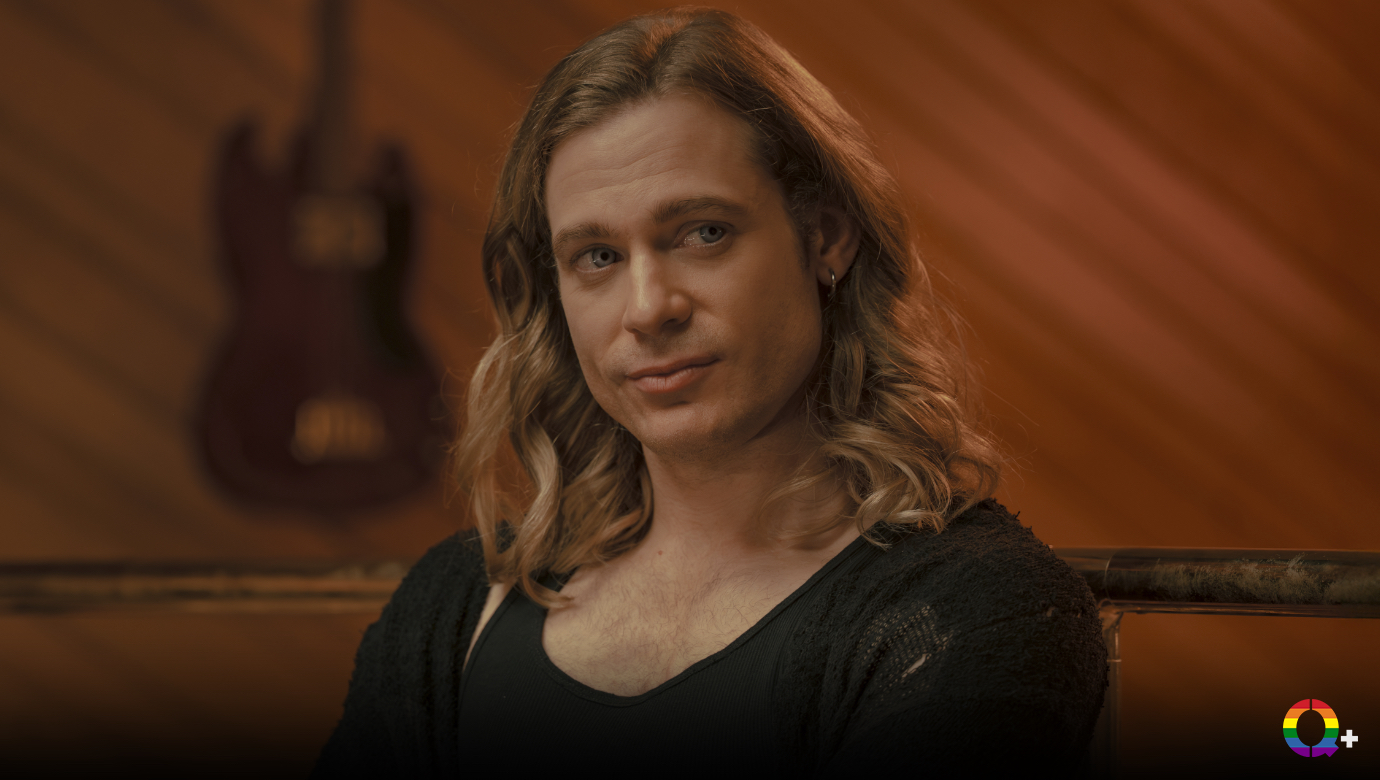
Featured Image: Image Courtesy of AMC. Photo by Sophie Giraud.
Discover more from Q+ Magazine
Subscribe to get the latest posts sent to your email.


Pingback: The Vampire Lestat Episode 6 'Montreal' Recap: Brutal Love – Q+ Magazine
Pingback: The Vampire Lestat's Montreal EP Gives Us the Most Romantic Song of the Season – Q+ Magazine