
The Vampire Lestat Review: Loneliness in a Room Full of Voices
There’s something almost hypnotic about the way The Vampire Lestat pulls us back into AMC’s Immortal Universe. Even before the season fully reveals its hand, it becomes clear that this is not simply a continuation of Interview with the Vampire, but a complete transformation of it. The bones of the story remain the same, the emotional DNA is still unmistakably there, yet the perspective shift changes everything. If Interview with the Vampire felt like grief wrapped in gothic romance, The Vampire Lestat feels like memory set on fire. It is louder, messier, funnier, more theatrical, more emotional, and somehow even more intimate.
The season opens with an auction following a global catastrophe and the presumed death of Lestat de Lioncourt (Sam Reid), the infamous vampire rockstar whose posthumous vinyl recordings titled The Failures guide us through the story. Through these recordings, Lestat narrates his life in fragments, jumping between centuries, relationships, traumas, triumphs, and disasters with the same chaotic energy that defines him as an individual. We may not always know what is literally happening, but we always understand what it means to Lestat. And that distinction is crucial. This is not a show about objective truth. It is a show about emotional truth under distortion, which is why sometimes the truth only appears when the narrative fractures, when the “muses” interrupt his control and the past reveals itself in sharper, more violent detail.
This approach creates a story that starts in the middle, loops backward, jumps forward, and occasionally teases outcomes that feel inevitable but never fixed. The effect is disorienting, but intentionally so, constantly shifting timelines and blurring truth, performance, and memory together. Yet despite how ambitious and sprawling the structure is, the season never loses emotional clarity. Every detour, every flashback, every seemingly disconnected moment ultimately circles back to one central truth: Lestat desperately wants to be loved, seen, and understood without being reduced. Trauma repeats. Betrayal repeats. And Lestat keeps singing through all of it.
And that is what makes this season so compelling.

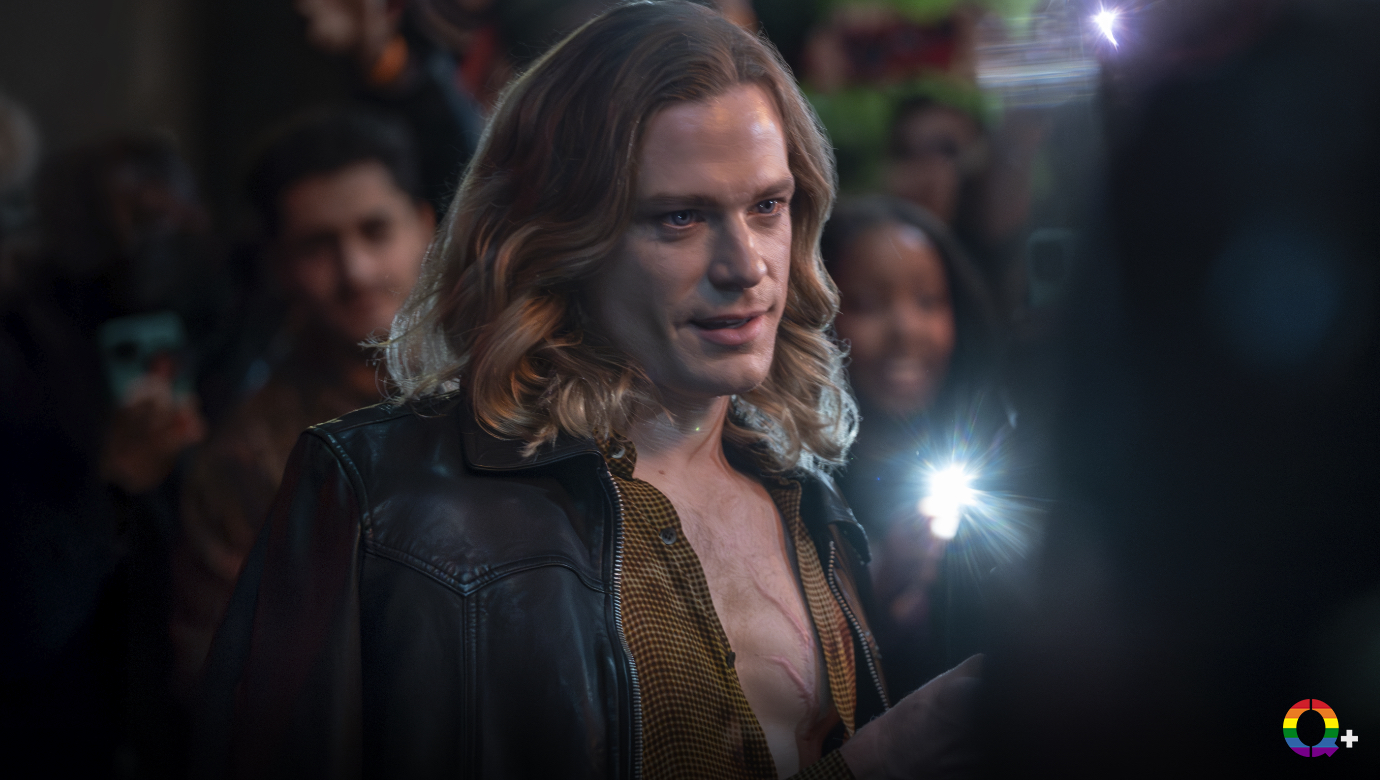
For all his arrogance, theatricality, and endless need for attention, The Vampire Lestat presents Lestat as a profoundly lonely individual. The tragedy of the character is not that he is alone—because he rarely is—but that despite all the company, all the noise, all the chaos, none of it ever resolves into connection. It’s crowded intimacy, not companionship. Presence is not the same as connection, and being surrounded is not the same as being held. Even his fame, which spreads like a global contagion across mortals and vampires alike throughout the episodes, only amplifies the emptiness underneath.
People orbit around him constantly: lovers, companions, fledglings, fans, enemies, ghosts of his past. He fills rooms effortlessly. He dominates every conversation, every moment. Still beneath all the beauty, ego, and spectacle, there is a deeply wounded creature terrified of abandonment. In fact, we could argue that one of the season’s most gripping undercurrents is how clearly it frames abandonment as the defining force of Lestat’s existence.
His mortal life is marked by neglect, emotional violence, and forms of abuse that continue to echo long after his transformation. That early lack of stable love doesn’t just haunt him but structures him. It explains the intensity of his attachment, the volatility of his rage, and the way he oscillates between craving intimacy and destroying it the moment it feels too close. The show returns to this repeatedly, not as exposition, but as emotional logic. Lestat doesn’t just hurt people but reenacts patterns of being hurt, even when he believes he is in control of them.
That’s why there’s a quiet question that forms as we get to know him more and more: Is there someone who truly loves Lestat as Lestat? Many characters claim they do. Some probably even believe they do. But the show slowly strips those declarations down until only one relationship feels consistently grounded in something real, even if that “real” is messy, painful, and often destructive: Louis (Jacob Anderson).

Louis is not positioned as Lestat’s salvation, but he is positioned as the closest thing Lestat has ever had to emotional truth. Their bond is not clean or romantic in any traditional sense. It is volatile, co-dependent, deeply wounded, and still somehow sincere. Even when they are apart, they orbit each other. Even when they try to erase one another, they remain structurally essential to each other’s narrative existence. Lestat’s entire “rockstar era” collapses without Louis as both wound and witness.
Even when Louis is absent from parts of Lestat’s narrative, his presence shapes nearly every choice Lestat makes. Louis helped define who Lestat became in the public mythos. The tour exists because of him. The album exists because of him. The anger, heartbreak, desperation, and vulnerability threaded through most of the songs trace back to Louis and the wounds left behind by the publication of the in-universe book Interview with the Vampire. This season understands something crucial about their relationship: toxic as it may be, these two vampires are fundamentally tied to each other in ways neither immortality nor distance can sever.
Jacob Anderson once again proves why Louis is the emotional anchor of this universe. The last two seasons belonged largely to him, and his work there was beyond extraordinary. Here, even while the spotlight shifts toward Lestat, Anderson somehow manages to deepen Louis further and show us a side of him we had only seen glimpses of. His performance carries an exhaustion that feels centuries old, a violence that is chilling to the bone, but also a tenderness that sneaks up on you when you least expect it. Some of the season’s most emotionally brutal scenes rely entirely on Anderson’s ability to communicate emotional conflict with such finesse. Louis spends much of the season wrestling with guilt, grief, resentment, and love simultaneously, and Anderson never loses control of any of it.
Still, this is undeniably Sam Reid’s season.

What Reid accomplishes here is staggering. We have said for years that his portrayal of Lestat was something special, but The Vampire Lestat confirms it beyond any doubt. Reid does not simply play Lestat… he is Lestat. And we’re not exaggerating with that statement; he understands him on an almost frightening level. Every contradiction inside the character exists simultaneously in his performance. He is magnetic and pathetic, cruel and deeply vulnerable, hilarious and heartbreaking, often within the same scene. Reid understands that Lestat’s charisma is inseparable from his desperation and that the theatricality is often just armor protecting an incredibly fragile emotional core.
What makes the performance so extraordinary is its precision. Reid is meticulous in the way he modulates Lestat depending on who he is with. Around his band, there is dominance. Around Louis, there is softness and love buried beneath hurt and provocation. Around Gabriella (Jennifer Ehle), there is a child’s hunger, endlessly reshaping itself into whatever might earn him her closeness. Around Daniel (Eric Bogosian), there is antagonism and resentment. Around Armand (Assad Zaman), there is exasperation and defiance. Around his fans, there is performance. Around himself, eventually, there is just exhaustion. It is an unbelievably layered performance that somehow never feels technical. Reid makes every version of Lestat feel real.
And the season wisely allows him to be all of those versions as freely as he wants.

The Vampire Lestat does not sanitize its protagonist, nor does it attempt to excuse him. Instead, it contextualizes him. One of the show’s greatest strengths is how directly it engages with the abuse that shaped Lestat long before we met him. The series does not shy away from showing that he is a victim of both his mortal family and immortal maker, the vampire Magnus (Damien Atkins), in profoundly different ways, and it understands how those violations permanently distorted his understanding of love, intimacy, and control.
The relationship between Lestat and his biological mother Gabriella is deeply uncomfortable, disturbing, and absolutely essential to the story. Rather than softening the incestuous nature of their dynamic, the adaptation amplifies elements that Anne Rice often left implied or buried between the lines. Gabriella is not built as a nurturing mother in any way; in fact, she actively rejects motherhood altogether. She is distant, self-interested, and at times emotionally unavailable in ways that cut deeply into Lestat’s already fragile sense of belonging.
And Lestat is not a son who has ever received stable affection. What remains between them is recognition. They understand each other too well, and that understanding becomes its own kind of trap, making the relationship more tragic and psychologically complicated. Lestat clings to Gabriella because she was one of the only sources of affection in his mortal life, while Gabriella seems to view Lestat simultaneously as son, companion, projection, and extension of herself. There is even a layer of gender envy woven into their relationship, as Gabriella longs for the freedoms masculinity afforded Lestat in ways she herself never experienced as a woman.
The Vampire Lestat understands how horrifying this dynamic is while also recognizing how emotionally formative it remains for Lestat. Watching it unfold is, by design, a hard pill to swallow, but the writers never exploit it for shock value alone. Instead, they use it to deepen our understanding of a character whose entire existence has been shaped by deeply distorted versions of love.

That same emotional damage can also be felt in the way the season approaches Lestat’s relationship with Magnus. Some of the most devastating, crude, and cruel moments of the season arrive through the way the show gradually dismantles the mythology surrounding him. At some point, the song Your Biggest Fan presents a version of Magnus and Lestat’s dynamic filtered through performance, ego, and memory, carrying the kind of seductive glamour Lestat himself often uses to survive his past. There is allure to it, charisma, even the illusion of affection. But The Vampire Lestat constantly reminds us that memory inside this universe is slippery, curated, and deeply self-protective. The series understands that Lestat is a narrator forever trying to turn pain into spectacle, trauma into theater.
Without giving away too much of how this is handled, there comes a moment where that carefully constructed image begins to fracture in a way that is deliberately mirrored across that specific episode’s emotional structure—the show asks us to watch different layers of harm collapse at the same time, and it’s, for lack of a better word, simply brilliant. What starts as something almost fictionalized is suddenly interrupted by something far more grounded and brutal, and the contrast between those threads creates one of the most unsettling emotional parallels of the season. In doing so, the series forces us to reevaluate not one, but multiple characters—the ways abuse, abandonment, and violence can shape a person. It is a haunting exploration of how trauma echoes across immortality, and another example of how masterfully this series uses perspective and visual storytelling to reveal the emotional truths its characters can barely admit to themselves.
And that emotional complexity extends across the entire season.
One of the most impressive achievements of The Vampire Lestat is how alive it feels. Contrasting with the mournful atmosphere of Interview with the Vampire seasons one and two, this season pulses with movement, music, ego, humor, chaos, and theatricality because Lestat himself is telling the story. Even at its loudest, however, the season never loses sight of the loneliness underneath the spectacle. His narration becomes omnipresent, almost ghostlike, guiding viewers through memories and regrets as though we are sitting beside him at 3 a.m. while he insists on telling everything that ever happened to him in the exact order that memory and emotion demand.
There is also something worth noting about tone. The season constantly shifts registers: gothic horror, tragic romance, dark comedy, surreal meta-commentary, and raw emotional confession. It is frequently funny in ways that feel intentional rather than accidental, largely because Lestat himself is incapable of being emotionally restrained. Even at his lowest points, he is theatrical. Even at his most violent, he is expressive. That constant tonal instability becomes part of the viewing experience, allowing the season to move fluidly without ever collapsing under its own ambition.

The writing team deserves enormous praise for pulling this balancing act off so successfully. Rolin Jones, Hannah Moscovitch, Jonathan Ceniceroz, Kevin Hanna, Anusree Roy, and Ryan Kattner craft a season that feels both sprawling and deeply personal at the same time. Adapting The Vampire Lestat was never going to be easy. The source material is dense, strange, philosophical, violent, deeply emotional, and often wildly internal. Yet the writers manage to preserve the essence of Anne Rice’s work while reshaping it into something that feels uniquely suited for television. The result is a season that still feels unmistakably connected to Interview with the Vampire while simultaneously evolving beyond it. Watching both adaptations side by side feels like looking at two paintings from the same artist created during entirely different artistic periods.
And then there is the music.
Daniel Hart’s work on this season cannot be praised enough because the songs are not just supplemental material; they are storytelling devices as important as the dialogue itself. If viewers have followed the album rollout alongside the show, they already know how committed the production was to the meta experience surrounding Lestat’s music career. But within the season itself, the songs become emotional extensions of the character. They carry heartbreak, ego, rage, longing, and loneliness in ways dialogue alone sometimes cannot. Hart manages to create music that genuinely feels like it could only come from Lestat de Lioncourt specifically, which is an incredible accomplishment considering how iconic and larger-than-life the character already is.
The supporting cast remains phenomenal across the board. Delainey Hayles continues to leave an enormous impact as Claudia, whose presence haunts nearly every corner of the season, even when she is physically absent in the first few episodes. Joseph Potter is absolutely devastating as Nicolas de Lenfent, capturing the tragedy of the character with heartbreaking precision. Potter plays Nicolas’ unraveling with such painful honesty that watching the character succumb to the darkness of the gift becomes genuinely difficult to witness. There is a fragility to his performance that makes Nicki’s fate linger long after his scenes end, and the chemistry he shares with Reid adds enormous emotional weight to understanding Lestat’s first love and one of his earliest catastrophic losses.

Assad Zaman’s Armand becomes increasingly fascinating the deeper the story goes, and without spoiling any specifics, let’s just say viewers should absolutely not underestimate how much damage Armand is capable of causing. The season understands exactly how terrifying he can be beneath all the restraint and elegance, and it weaponizes that beautifully. Eric Bogosian’s Daniel Molloy also receives far more material than viewers may expect, and every scene he’s given crackles with tension, humor, or danger. The season also finds room to make Lestat’s band feel like fully realized personalities rather than background decoration, and Noah Reid, Ryan Kattner, Seamus Patterson, and Sarah Swire all bring an infectious chemistry and energy to Larry, Salamander, Alex, and TC, respectively, that makes the dynamic of the group feel lived-in from the very beginning.
It’s truly an impressive ensemble, the kind that makes one wonder how so many talented performers ended up in the same show. Their collective chemistry is every bit as compelling as their individual performances. If there’s one thing more impressive than the cast itself, it’s the season’s uncanny ability to keep surprising you.
Even when you think you understand where the narrative is heading, The Vampire Lestat constantly finds new ways to complicate itself emotionally and structurally. There are reveals, tonal pivots, character turns, and narrative risks throughout the season that make it impossible to watch passively. The show trusts its audience completely, rewarding viewers who pay close attention while still delivering deeply emotional character work at every turn.
The Vampire Lestat succeeds because it understands Lestat himself. The series does not reduce him to a monster or myth, nor does it attempt to redeem him into a hero. Instead, it presents him as something far more interesting: a deeply damaged, deeply emotional individual constantly searching for meaning, connection, freedom, understanding, and love in an existence that often strips all five away. He is both deeply self-aware and persistently self-destructive, selfish and compassionate, cruel and romantic, impulsive and thoughtful, ridiculous and profoundly hurt. He’s a creature who understands love intellectually but experiences it as chaos. A man who performs himself so completely that even his honesty feels staged.

So by the time viewers reach the season’s climax, whether they love Lestat, hate him, fear him, pity him, or all four simultaneously, one thing is certain: they will understand him in ways they never did before. Because Lestat is not simply arrogant or performative, he is emotionally overexposed, and this season allows us to see every fractured part of him laid bare: the rockstar, the actor, the wolfkiller, the abused boy, the vampire, the abandoned son, the lover, the murderer, the joke, the tragedy. That is what makes The Vampire Lestat such a remarkable achievement.
It is not simply the story of a vampire. It is a sprawling confession about loneliness, immortality, identity, trauma, art, love, ego, and survival disguised as a gothic rock opera. It is messy, ambitious, emotionally overwhelming television that refuses to play safely. It trusts its own emotional chaos, allowing contradictions to exist without ever sanding them down into something easier to digest. It’s unruly and fully committed to the idea that storytelling itself can be as unstable and seductive as memory.
It’s television at its best, at its most alive. Easily one of the year’s strongest series and an early contender for our best television of 2026.
And with only six episodes seen for the purposes of this review, we’re left with one certainty: The Vampire Lestat has not played its final note yet. And something tells us the encore might just kill us all.
The Vampire Lestat will premiere on AMC and AMC+ on Sunday, June 7 at 9 pm ET/PT. Seasons 1 and 2 of Interview With the Vampire are available to stream on AMC+ (US only), Netflix, and Prime Video (depending on the region). Follow us on X and Instagram for all queer stuff!
Featured Image: Image Courtesy of AMC. Photo by Sophie Giraud.
Discover more from Q+ Magazine
Subscribe to get the latest posts sent to your email.


Pingback: Lestat Rocked Manhattan Ahead of 'The Vampire Lestat’ Premiere – Q+ Magazine
Pingback: Pride 2026: A Q+ Celebration – Q+ Magazine
Pingback: The Vampire Lestat Episode 1 'Detroit' Recap: The Failures Begin – Q+ Magazine
Pingback: Lestat Drops ‘Detroit’ EP and Finally Unleashes ‘Black Licorice’ – Q+ Magazine
Pingback: The Vampire Lestat Episode 2 'Toledo' Recap: Peeling Back the Layers of Lestat de Lioncourt – Q+ Magazine
Pingback: The Vampire Lestat Episode 5 'New York' Recap: Nothing Stays Buried – Q+ Magazine
Pingback: The Vampire Lestat's Montreal EP Gives Us the Most Romantic Song of the Season – Q+ Magazine
Pingback: The Vampire Lestat Episode 7 'The Failures' Recap: The Soul at the Long Table – Q+ Magazine
Pingback: The Vampire Lestat's New York EP Proves Lestat's Best Songs Are His Most Personal – Q+ Magazine
Pingback: The Vampire Lestat Renewed for Season 4 as Anne Rice's Queen of the Damned – Q+ Magazine