
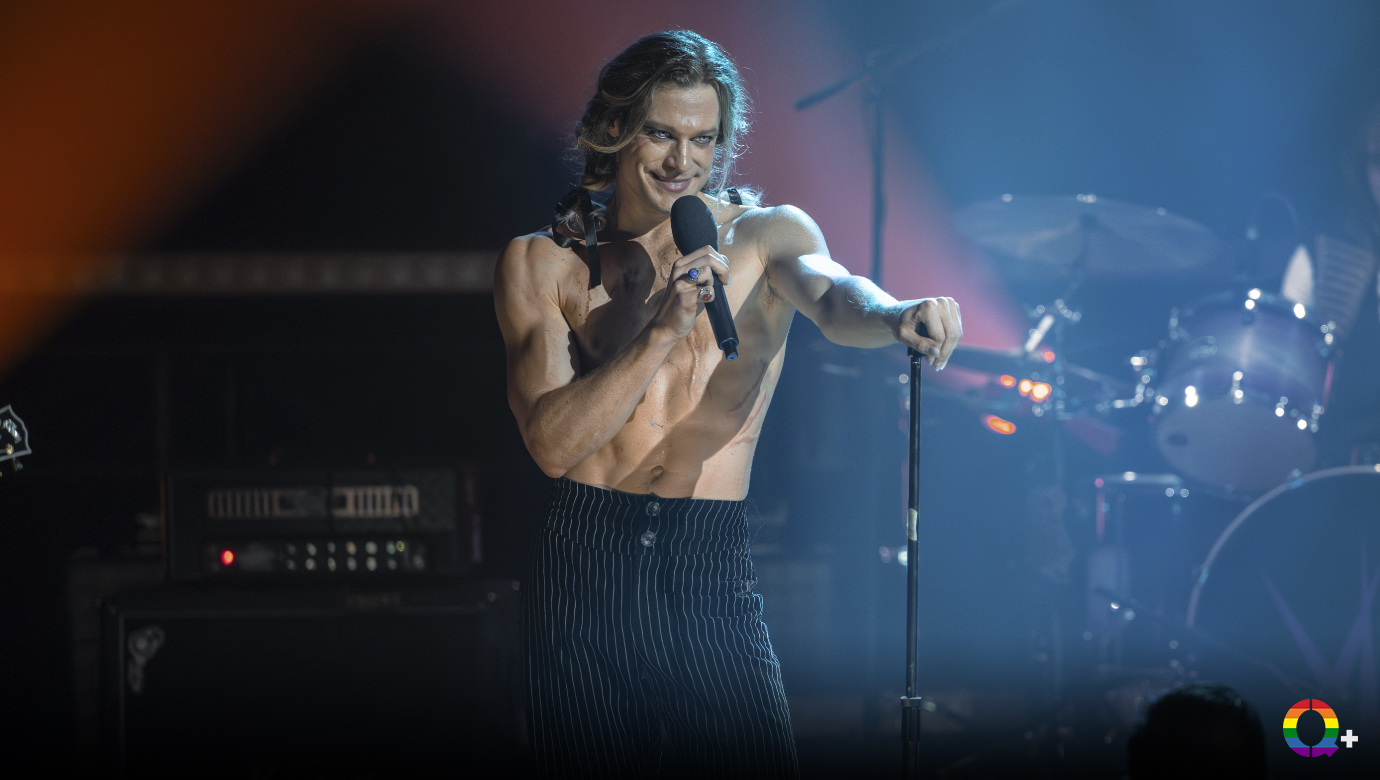
The Devil’s Road EP Proves There Are No Throwaway Songs in The Vampire Lestat
Welcome to The Devil’s Road. Mind the potholes, the emotional damage, and the inevitable soundtrack release that comes out when an immortal vampire mistakes unresolved trauma for artistic inspiration. This week’s release is the biggest EP The Vampire Lestat has delivered so far. Despite Episode 4, The Devil’s Road, only showcasing one song almost in full, the accompanying EP release expands into five tracks: Plastic Fiends, Big Boss, Nothin’ To Lose, Hit The Lights (Bare Bones), and Le Petit Coup — Demo.
More importantly, it confirms something we’ve slowly started to suspect throughout the season: there are no throwaway songs in Lestat’s catalog. We already knew Sam Reid recorded more than 20 songs for the series, but The Devil’s Road EP demonstrates just how intentional that process really was. Melodies that seemed like background noise, songs we assumed only existed to fill out a concert setlist, even a tune Lestat absentmindedly strummed while sitting alone on a bus—none of them were accidents. Every release continues expanding the emotional map of where this version of Lestat has been and where he’s going.

Take Plastic Fiends. The song has technically been with us since Episode 1, when Lestat complained that the harmonies weren’t quite right during his concert in Detroit. Episode 4 quietly brings it back as the opening track soundtracking Lestat’s introduction to the Devil’s Road, but hearing the complete version reveals one of the nastiest social commentaries in his catalog.
On first listen, it’s another infectious glam-rock anthem that fits comfortably alongside Long Face and Black Licorice. The hooks are enormous, the attitude is unmistakably Lestat, and the chorus is practically begging to be screamed in an arena. Then the lyrics start landing. Rather than targeting one person or one political idea, Plastic Fiends lashes out at an entire culture built on greed, vanity, performative outrage, consumerism and disposable living.
Billionaires, colonialism, environmental collapse, and empty rebellion all get swept into Lestat’s crosshairs. It’s messy, chaotic, and intentionally overwhelming because that’s exactly how he sees the world. The title doesn’t simply describe a villain; it describes a society that’s become increasingly artificial, one plastic smile at a time.
If Plastic Fiends is Lestat looking outward, Hit The Lights (Bare Bones) is him turning that gaze back on himself. When the song first appeared in Episode 4, The Devil’s Road, we assumed it might never receive a full release. It almost felt too intimate, with Lestat quietly playing guitar after the mass shooting, abandoned by his band and his mother (again), heading back to Montreal with little left besides his own thoughts. We’re so glad we were wrong.

The completed version turns one of the episode’s quietest moments into one of the soundtrack’s most devastating songs. What makes Hit The Lights (Bare Bones) so effective is that it refuses to belong to one relationship. It can be read as a song for Nicki (Joseph Potter), for Gabriella (Jennifer Ehle), for Louis (Jacob Anderson), or for every person Lestat has desperately tried—and failed—to hold onto throughout his impossibly long life.
By the time he’s quietly singing these words on that bus, he’s not simply mourning the collapse of his music career. He’s mourning every version of love that has slipped through his fingers. Every goodbye reopens the previous wound because that’s how abandonment works. You don’t grieve in neat little boxes; you carry every loss with you until eventually they all begin sounding like the same song.
For someone whose greatest fear has always been being left behind, Hit The Lights (Bare Bones) almost feels like Lestat accidentally writing his own therapy session. It captures the emotional state we find him in after The Devil’s Road better than almost anything else in the soundtrack, exposing a vulnerability that all the leather pants, venue lights and rockstar bravado could never hide.
That emotional honesty makes the transition into Nothin’ To Lose especially satisfying. We only hear the song briefly as Lestat reunites with his band to begin recording again, but even those few moments are enough to show another evolution in his sound. Daniel Hart has previously mentioned drawing inspiration from Led Zeppelin for this particular song, and that DNA is certainly there. But reducing it to that comparison almost feels unfair.
What Hart has accomplished across this entire soundtrack is creating a musical identity that can nod to classic rock while still sounding unmistakably like The Vampire Lestat. Nothin’ To Lose has the swagger, grit, and larger-than-life attitude of its influences, yet it still belongs entirely to Lestat. The lyrics continue blending violence, desire, blood, music, and reinvention into one messy emotional cocktail, almost suggesting that music itself has become another form of immortality for him. Earlier releases often chased spectacle; this one feels like the work of an artist who’s becoming increasingly comfortable in his own skin. Even when its runtime within the episode is brief, the song leaves the impression that Lestat’s next musical era is already taking shape.

That leaves us with Le Petit Coup — Demo, which feels less like a proper Vampire Lestat release and more like discovering an old demo tucked away in the deluxe edition of an album years later. Credited to Fates Entourage—a project we suspect, but can’t confirm, may be connected to Daniel Hart—it only briefly surfaces in Episode 4, The Devil’s Road, as background music. Rather than feeling unfinished, the track comes across as another peek behind the curtain, reminding us that the creative team built a much bigger musical world than what ultimately made it into the series. Not every song was destined for Lestat’s setlist, but we’re certainly not complaining about getting to hear one more piece of the puzzle.
And finally, let’s talk about Big Boss.
If we had to pick a favorite song from The Devil’s Road EP, this would probably be it. Don’t get us wrong: every track on the EP sounds fantastic to our very human ears, but there is simply something exquisite about watching an immortal vampire dedicate four minutes of his life to publicly roast his ex situationship who, among many other things, killed his daughter, kidnapped his first love, later helped destroy him, and somehow still thinks he’s the victim in all of this. Diss tracks, man, they’re delicious!

As we mentioned in our recap of The Vampire Lestat Episode 4, The Devil’s Road, Big Boss is aimed at Armand (Assad Zaman) and Armand alone, dismantling everything from his obsession with the Great Laws to his oversized ego, his controlling nature, his relationship with history, and yes, even his appearance. It’s gloriously excessive, but it’s also remarkably clever. Our favorite detail has to be the repeated countdown woven into the song, a wonderfully petty nod to the Five Great Laws that Armand treats with near-religious devotion.
Turning those laws into the setup for a joke is exactly the kind of theatrical shade we’d expect from Lestat, and Sam Reid delivers every insult with the perfect amount of smug satisfaction. As we said in our recap, it’s a gloriously petty diss track, and we’ve been laughing about it ever since we first heard it. Forgive us, Armand, but this is just too good. Too good.
“He asked me, ‘Was it good?’ I said, ‘comme ci, comme ça.’” Come on! If that’s not one of the funniest lyrics Lestat has ever written, we don’t know what is. We know we’re supposed to be objective here, but we’re only human. Unlike somebody.

At this point, we’re risking sounding like a broken record, but we genuinely can’t help ourselves. Daniel Hart, Sam Reid, and everyone involved in crafting The Vampire Lestat’s music deserve every flower we can possibly throw at them. Week after week, they continue proving this isn’t simply television music. Every song deepens a character. Every lyric pushes the story forward. Every performance reveals another emotional layer beneath Lestat’s impossibly dramatic exterior.
Watching this fictional discography evolve alongside the series has become one of our favorite parts of the season because the songs aren’t simply accompanying the story anymore; they’re telling it. If it were up to us, we’d happily hand this team every award imaginable for songwriting, composition, performance, production—you name it.
But anygays, you know the routine by now, Beautiful Unwell. Finish Pride Month by supporting our favorite immortal bicon. He may be “a toxic bitch, anxiously attached, show pony with a personality disorder” vampire, but he’s also a 275-year-old queer immortal making some of the best music we’ve heard all year, and we’re very, very, very fond of his little music career.
So hit play on The Devil’s Road EP. We promise it’s a much safer road than the one he actually drove down this week. And that’s saying something.
The Devil’s Road EP is available to stream on all major music platforms. The Vampire Lestat Episode 4, The Devil’s Road, is available to stream on AMC+. Episode 5, New York, will premiere on AMC on Sunday, July 05, at 9 pm ET/PT. Seasons 1 and 2 of Interview With the Vampire are available to stream on AMC+, Netflix, and Prime Video (depending on the region). Follow us on X and Instagram for all queer stuff!
Featured Image: Image Courtesy of AMC. Photo by Sophie Giraud.
Discover more from Q+ Magazine
Subscribe to get the latest posts sent to your email.


Pingback: The Vampire Lestat's New York EP Proves Lestat's Best Songs Are His Most Personal – Q+ Magazine