
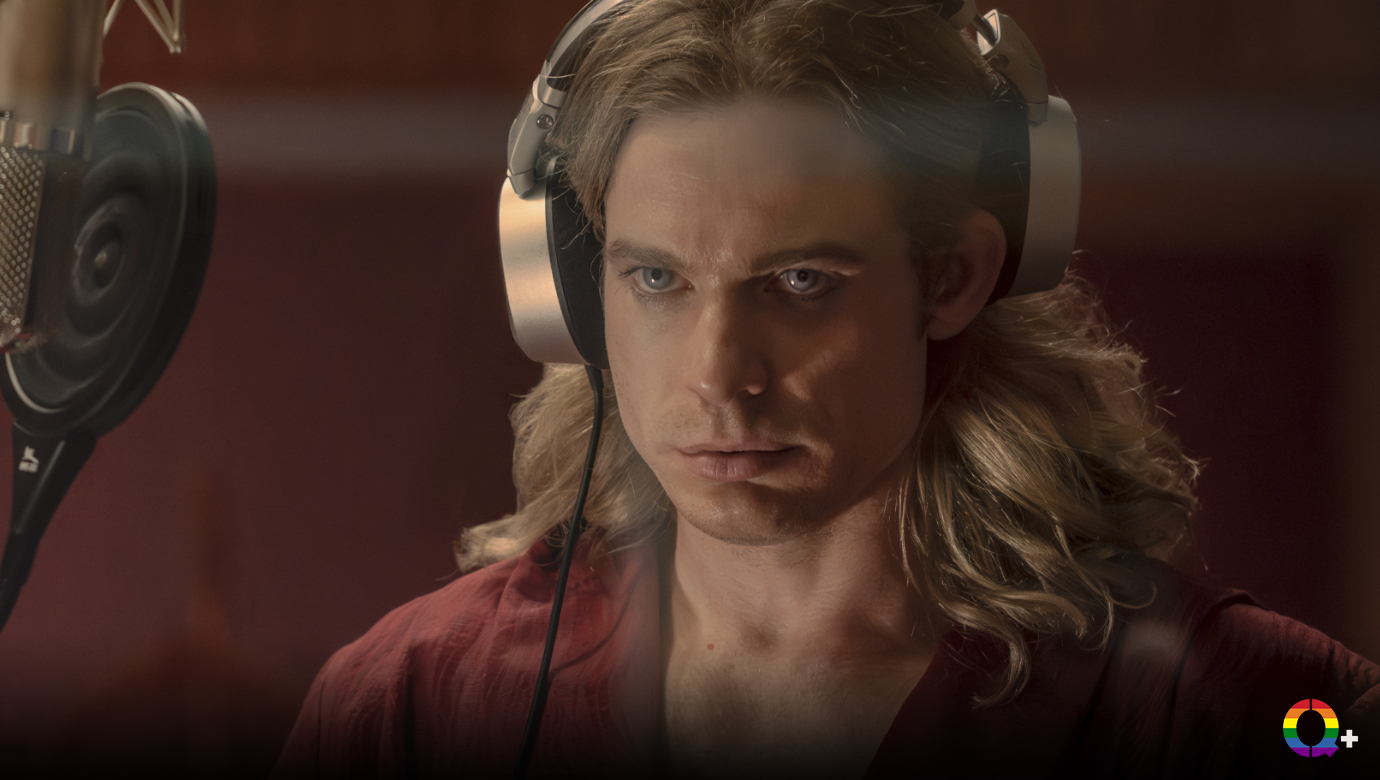
The Vampire Lestat Episode 5 ‘New York’ Recap: Nothing Stays Buried
Happy Sunday, and happy new episode of The Vampire Lestat to those who celebrate. If the first four episodes were about Lestat (Sam Reid) unknowingly setting the stage for disaster, The Vampire Lestat Episode 5, New York, is where the past begins collecting its debts. Long-buried grief resurfaces, old relationships refuse to stay in the past, ancient secrets finally come to light, and nearly every major character discovers that some wounds never truly heal—they simply wait for the right moment to reopen.
At the end of our The Vampire Lestat Episode 4, The Devil’s Road, recap, we mentioned that nearly every major character felt like they were walking toward a cliff without realizing it. This week, some of them finally reach the edge. Some stumble. Some are pulled back at the last possible moment. Others aren’t nearly as lucky. The result is one of the season’s most emotionally devastating hours so far—not because it revels in horror the way Toronto did or forces Lestat to relive some of the most painful chapters of his immortal life like The Devil’s Road, but because it quietly reopens the wound at the heart of Louis and Lestat’s story, while finally revealing the burden Lestat has carried alone for centuries.
Confined largely between a New York recording studio that Lestat jokingly describes as his coffin for the fall of 2025 and memories from one of the most defining chapters of his immortal life, The Vampire Lestat Episode 5, New York, finally introduces us to Marius de Romanus (Christopher Heyerdahl), the legendary keeper of Those Who Must Be Kept, and to Akasha (Sheila Atim) herself, the Queen of the Damned. Along the way, we get another welcome dose of Devil’s Minion, spend more time worrying about Louis (Jacob Anderson) than we ever thought possible, receive yet another reminder that trusting Armand (Assad Zaman) is almost always a mistake, and witness one of the season’s most heartbreaking musical moments.

Before we venture into spoiler territory, though, we want to repeat something we’ve been saying since we began this journey together back in Detroit, but especially emphasized in our The Devil’s Road recap: pay close attention to Lestat’s narration from The Failures. Earlier in the season, those passages mostly served to reshape memories or soften uncomfortable truths. Now they’ve become something else entirely. Lestat is no longer simply recounting the past. More often than not, he’s warning us about the future. The clues are there. We still don’t know exactly where they’re leading, but with each passing episode, it becomes increasingly clear they’re all pieces of the same puzzle.
As always, we’re only discussing the events of The Vampire Lestat Episode 5, New York. Future episodes, book material, and speculation about what’s still to come won’t be part of our analysis, so you can read freely without worrying about spoilers beyond Episode 5.
So grab your tissues, drink some water, and let’s dive into all things The Vampire Lestat Episode 5, New York.
PSA: From this point forward, there will be major spoilers for The Vampire Lestat Episode 5, New York. If you haven’t watched the episode yet, we recommend coming back once you have. You’ve been warned, so tread carefully.
TW: This recap includes mentions of suicide.

A New Era, an Old Burden
Episode 5, New York, wastes no time letting us know we’re entering an entirely new phase of The Vampire Lestat. The tour is over. Lestat is officially dead—at least as far as the world is concerned—and the reckless public spectacle that fueled the season’s first four episodes has been replaced by something much quieter, and arguably much more dangerous: four months locked inside a recording studio, trying to create the album that will define his immortal life.
The opening narration quickly fills in the blanks after the events of The Devil’s Road. Between the shooting that supposedly killed Lestat and another mass shooting elsewhere that same night, his disappearance becomes surprisingly easy to sell. An amnesia fund keeps everyone involved quiet—from coroners and obituary writers to Jarda (Sam Reid), Fareed (Gopal Divan), Daniel (Eric Bogosian), Dee (Amaka Umeh), Christine (Jeanine Serralles), and the rest of his entourage—and by the time the dust settles, spring has given way to the fall of 2025. Four months later, Lestat has successfully vanished from public life.
Only, of course, he hasn’t found much peace there. Instead, he’s become a perfectionist’s nightmare.
If the opening minutes prove anything, it’s that recording an album with Lestat de Lioncourt is an endurance test. Take after take piles up with seemingly no end in sight. Larry (Noah Reid) eventually asks what exactly they’re trying to achieve. Lestat’s answer is wonderfully infuriating in its simplicity: “Again.” By the time Sam Barclay (Christopher Geary) casually announces they’re already on take sixty-one, it’s obvious that nobody is capable of satisfying Lestat’s standards. And in fairness to them… we’re not entirely convinced anyone could.
What makes these studio scenes so fascinating, however, isn’t simply watching Lestat obsess over every note. It’s the reason behind that obsession. According to him, this isn’t just another album. It’s his obituary. His confession. The story of everything he’s lived through translated into music before one final live performance. The band isn’t there to make catchy rock songs. They’re there, in Lestat’s own words, to “pull the plug.”

That mission completely reframes the dynamic inside the studio. When TC (Sarah Swire) insists that drums are drums, Lestat immediately rejects the idea. Drums shouldn’t sound like drums. They should sound like death approaching… and then life emerging. He isn’t asking her to keep time. He’s asking her to perform emotion. Gabriella (Jennifer Ehle) immediately recognizes why TC can’t quite grasp what he’s asking. Her deepest wound, she points out, is a man walking away during a wedding ceremony—not centuries of abandonment, violence, guilt, longing, and survival.
For Lestat, every instrument has to become part of him. His band is, as he calls them, the guests gathered around his deathbed. TC’s drums are his heart. Alex’s (Seamus Patterson) guitar is his hunger. Salamander’s (Ryan Kattner) bass embodies the nightmares that never stop following him. Larry’s guitar represents his frailty. Together, they’re supposed to tell the story of what Lestat jokingly describes as “a three-century train wreck.”
That’s an enormous understatement, of course, but it perfectly captures who Lestat is. Nothing in his life—or his art—is ever allowed to exist without meaning.
The episode also reinforces something we’ve been pointing out since the end of Toronto and throughout The Devil’s Road: Lestat is no longer fully controlling the memories that surface from The Failures. As he directs the band, fragmented flashes interrupt the recording sessions. Someone digs a body out of the earth. Dirt is shaken from lifeless limbs. Blood is forced between cracked lips. The images arrive without explanation, almost like intrusive memories forcing themselves into the narrative before Lestat is ready to tell us the full story.
The walls separating his past from his present continue to crumble.
The Failures also keep quietly warning us about what’s still to come. Lestat casually tells us he leaves the studio only once during those four months—a detail the episode deliberately refuses to explain until much later—and reveals that all this work is leading toward “that now infamous concert.” Once again, he’s not simply recounting history. He’s leaving breadcrumbs for the catastrophe waiting further down the road.

Present-day events do the same. Gabriella has fully taken control of Lestat’s operation, replacing Christine as the person managing every aspect of his fake death and the band’s future. She reduces his inner circle to what she considers the essentials: herself and Sam. Her reasoning is equal parts practical and deliciously ruthless. Sam has successfully faked his own death before, understands the recording process, and—perhaps most importantly—his role in Paris ensures Lestat will never grow too comfortable around him. It’s another reminder that Gabriella’s return has never really been about comforting her son. She’s working toward an objective of her own.
But moving on. Eventually, those fractured memories stop interrupting the story altogether and just become it. The scattered images finally fall into place as Lestat awakens beneath layers of earth—weak, starving, and thoroughly confused. Following a mysterious voice, he discovers the impossible standing before him: Marius de Romanus, the very vampire Armand had long insisted was dead.
The surprise isn’t simply that Marius is alive. It’s discovering who he really is. Introducing himself simply as “the Keeper,” Marius explains that he has spent centuries watching over two ancient figures known only as Those Who Must Be Kept. He offers almost no explanation beyond that. Instead, he calmly informs Lestat that “She” summoned him there… and that his own role has already come to an end. Marius was the Keeper. Now Lestat is.
Before either Lestat or we have time to process what that responsibility truly means, Episode 5, New York, unveils the figure whose presence has silently shaped vampire history from the very beginning: Akasha, the Mother of All Vampires. When Lestat reaches out to touch what appears to be nothing more than a stone statue, he immediately realizes the impossible. She isn’t stone… she’s alive.
It’s a phenomenal ending to the episode’s opening act because, even after three seasons, Interview With the Vampire and The Vampire Lestat continue expanding their mythology one revelation at a time. Just when we think we’ve begun to understand how this immortal world works, the series introduces its oldest—and perhaps most dangerous—player, reminding us that we’ve barely scratched the surface.

Louis, Regina, and the Line That Finally Breaks
If The Devil’s Road ended by suggesting Louis had found someone capable of carrying part of the weight of his grief, New York wastes no time showing us what that arrangement has become. It isn’t helping him heal. It’s feeding a wound that never truly closed.
The first glimpse of just how far things have progressed comes during one of Lestat’s Failures recordings. Louis is sitting at a restaurant, enthusiastically talking about expanding his growing business empire while Regina (Delainey Hayles), playing Claudia (Delainey Hayles), politely listens. At first glance, it almost resembles an ordinary dinner between friends.
Then the camera widens, and we find out that Regina isn’t alone. Sitting beside her is another young woman—an off-Broadway actress hired to play the role of Madeline.
Suddenly, what once looked like an uncomfortable coping mechanism has now evolved into something far more elaborate. Regina greets Louis as “brother” in Claudia’s unmistakable accent while Madeline’s stand-in completes the illusion. Together, they perform the life Claudia and Madeline never had the chance to live, reminiscing about imaginary adventures and kissing across the table while Louis quietly watches the future his daughter was denied unfold before him.
It’s almost unbearable to watch. Not because Regina or Madeline’s stand-in are mocking Claudia’s memory—they’re clearly giving Louis exactly what he keeps asking for—but because the fantasy has stretched far beyond the point where anyone involved can still pretend it’s healthy. Regina knows she’s performing. Louis increasingly looks like someone trying to convince himself that maybe… just maybe… she isn’t.
The next encounter makes it painfully clear that the arrangement is only becoming more dangerous.

Later, Louis and Regina drift across a quiet park lake in a rowboat, a visual that quietly echoes another boat ride Louis once shared with Claudia back in New Orleans. It’s a subtle callback, but hardly a coincidence. Regina then asks about Lemuel (Moses Sumney), giving us our clearest glimpse yet into Louis’ current situationship. He explains that they take things slowly. Lemuel doesn’t measure their relationship by how much time they spend together. Sometimes they don’t know where the other is, and that works for them.
It’s an arrangement that makes perfect sense for Louis. When we first met Lemuel, Louis described him as emotionally unavailable. This episode reveals that’s exactly what Louis needs because it’s exactly what he has become. He has almost nothing left to give another person. Part of him will always belong to Lestat. Another part never truly left Claudia behind. If Louis thinks Lemuel is emotionally unavailable, then Louis is something even worse. He’s emotionally stranded, unable to move forward because so much of him is still living somewhere in the past.
Even during this peaceful conversation, though, the past refuses to loosen its grip. Regina continues speaking in Claudia’s accent until Louis gently asks her to stop and use her own. It’s a tiny moment, but an important one. For perhaps the first time since this arrangement began, Louis acknowledges that constantly hearing the fake-Claudia’s accent isn’t bringing him comfort anymore.
Then Regina pulls out a notebook and starts writing. Under any other circumstances, it would be an ordinary gesture. Here, it immediately evokes Claudia’s journals, and Louis’ expression tells us everything the episode doesn’t have to say out loud.
The illusion finally begins to collapse when a park ranger catches them on the boat. Louis instinctively freezes the man with the Mind Gift before Regina, fascinated, asks him to do the same to her. He refuses at first but eventually gives in.
Watching Regina suddenly become perfectly still affects Louis in a way neither of them anticipates. He reaches out, takes her hand, and for one suspended moment looks at her as though Claudia herself were sitting before him.
It’s the closest Louis has come to believing the fantasy, and it terrifies him.
He immediately releases Regina, abandons the moment, and urges them both to leave before the ranger recovers. By the time the scene ends, it’s clear Louis no longer trusts himself to know where the performance ends and reality begins. It’s also why he’ll soon do something he probably never imagined he would: ask for help from the only other person left in the world who might understand what he’s going through.

Devil’s Minion
While Lestat buries himself inside the recording studio and Louis continues unraveling, New York finally gives Daniel and Armand the uninterrupted conversation their relationship has been building toward ever since Dubai. And as one would expect from Devil’s Minion, the scene is equal parts romantic confession, psychological chess match, and emotional ambush.
It begins with Daniel filming reactions from Beautiful Unwell fans for his documentary following Lestat’s supposed death. The responses vary wildly. Some insist the whole thing was staged. Others claim Lestat never existed at all and that Jarda was the real artist. Some simply mourn the loss of someone whose music unexpectedly changed their lives. Then Daniel interviews an anonymous vampire who openly criticizes Lestat for abandoning the movement he inspired, arguing that revolutions don’t need soundtracks—they need numbers. When Daniel asks whether he’s making fledglings himself, the vampire admits he nearly completed one turning before being interrupted.
Then something unsettling happens. The stranger’s words slowly stop sounding like his own until it’s unmistakably Armand speaking through him. The body never changes, but every sentence is now being fed by someone else entirely. It’s a wonderfully eerie demonstration of vampire telepathy and another reminder that Armand rarely enters a room in the conventional sense.
Following the psychic trail eventually leads Daniel to a park bench where Armand is quietly waiting. There, he finally lays bare what he claims has been fifty-two years of love—not through sweeping declarations, but through memories Daniel himself barely remembers. He recalls sitting beside Daniel’s bed after drug binges, making sure strangers he had sex with left safely, and quietly protecting him from consequences he never knew existed.
The memory that lands hardest, however, takes place in 2002. After secretly attending his daughter’s graduation despite not being invited, Daniel accepted her rejection and drove away. Armand reveals he guided him to the Rothko Chapel, where Daniel finally allowed himself to grieve the relationship he’d lost. When a security guard interrupted, Armand simply gave the man a conveniently timed coughing fit, buying Daniel another half hour alone with his sorrow.

It’s an incredibly tender confession. Not because it excuses anything Armand has done throughout Interview with the Vampire and The Vampire Lestat, but because it’s the first time we’ve watched him explain what loving someone has looked like from his perspective. He’s not asking Daniel to forget Paris or pretend Dubai never happened. He even admits he refuses to use the word “love” until he’s made profound amends for the harm he caused.
Whether Daniel believes him is another matter entirely. And honestly, whether we believe him is complicated, too. Because here’s the fascinating thing about Armand: sincerity and manipulation have never been opposites. They’ve almost always arrived together.
The conversation also reframes Louis’ place in Daniel’s story. Armand reveals that every time he returned from checking on Daniel, Louis was waiting at home to hear every detail. Daniel’s book painted Armand as the calculating architect behind so much of the suffering in Paris and Dubai, but Armand argues Daniel overlooked someone just as capable of cruelty. Louis, he says, is methodical. Calculating. Cruel in ways Daniel still refuses to fully acknowledge.
It’s hardly the first time the series has challenged Daniel—and us—to reconsider Louis. Back in Season 2 of Interview with the Vampire, Raglan James (Justin Kirk) warned him, saying, “You fear Armand. You should fear the other one.” It’s an easy warning to dismiss because Jacob Anderson gives Louis such aching humanity that we often remember him primarily as a victim. But Louis has always been capable of extraordinary cruelty. Like Claudia, he’s Lestat’s fledgling. He carries the same capacity for tenderness and brutality, and that’s precisely what makes him such a fascinating protagonist.
But we’re digressing. Armand didn’t arrange this meeting with Daniel simply to confess his love of five decades. He came to make his fledgling an offer. He wants to become Daniel’s maker in every possible sense of the word. He wants to restore the years age has stolen from him, give him half a lifetime back, and teach him abilities only the oldest vampires possess—including the ability to walk in the sun.
For longtime fans, that final promise immediately stands out. Walking in daylight is one of Armand’s rarest gifts, meaning Daniel could eventually inherit it as well. Daniel certainly notices. In fact, after everything else Armand reveals throughout the conversation—including that Sofia is actually Gabriella, Lestat’s biological mother, and that their relationship is anything but maternal—the revelation that excites Daniel most isn’t the incest bombshell threatening to upend his documentary. It’s the possibility of seeing daylight again.
By the time the scene ends, Devil’s Minion occupies exactly the complicated emotional space it should. We believe Armand when he says he loves Daniel. We also believe he’s trying to influence him. Those truths have never been mutually exclusive. If Interview with the Vampire and The Vampire Lestat have taught us anything, it’s that Armand doesn’t know how to love someone without also trying to shape them, protect them, possess them… or save them.

The Queen Who Changed Everything
If the opening of The Vampire Lestat Episode 5, New York, establishes that Lestat has turned a recording studio into his latest coffin, the rest of the episode reveals why he can’t seem to finish this album without excavating one of the defining chapters of his immortal life. Every failed take, every intrusive memory, and every frustration eventually circle back to the same place: Akasha. The Queen. And the moment everything in Lestat’s existence changed.
Inside the recording booth, Larry continues struggling through take after take, asking for more vocals in his monitor, only for Lestat to explode, promising to give him vocals “down the throat, past the colon” before demanding that he stop thinking about Alex eating burgers again and start playing “from the groin.” It’s an absurdly funny exchange, but it also illustrates just how impossible Lestat’s expectations have become.
Sam certainly understands where all this is heading. When he quietly asks whether Lestat intends to rerecord Larry’s guitar parts himself, Lestat doesn’t hesitate. He tells Sam to bury Larry beneath the rest of the mix, joking that he should pretend Lestat is Armand—or the Talamasca—and become the spineless mole digging Larry’s grave.
The problem, of course, is that the band thinks they’re making an album. Lestat is trying to translate three centuries of grief, guilt, and survival into music. The episode immediately contrasts those impossible recording sessions with the moment another impossible responsibility was handed to him centuries earlier.

Back in the crypt, Marius finally explains what being Keeper actually means. Rather than offering Lestat sympathy after nearly eighty years buried beneath the earth, he offers him purpose. His instructions are remarkably simple: venture into the modern world, collect objects that represent the present, play music for Akasha, feed her the ashes of mortals—but never their blood—and return every night.
When Lestat admits he doesn’t want a purpose and only wants to die, Marius gently reframes everything he has endured. Lestat already learned the depths of despair while buried beneath the earth. Now he must learn something far more difficult: how to continue living.
It’s striking how perfectly that advice mirrors the man we meet in the present. Centuries later, Lestat is still trying to survive. The only difference is that he’s now trying to process his existence through music instead of duty.
Marius also expands the mythology of this world in ways that completely reshape everything we thought we knew about vampires. Akasha, he explains, is the source of every vampire alive. If she burns, they all burn. That’s why the role of Keeper exists in the first place.
The warning isn’t theoretical, either. Marius admits he nearly doomed vampirekind himself. In 1802, after celebrating a successful relocation a little too enthusiastically, he fell asleep before finishing the job. He awoke beside Akasha with his own body burning, only to realize Enkil, her husband, had been left exposed to the rising sun. The accident left him horribly damaged and, according to Marius, set vampires back generations. One mistake almost cost their entire species everything. Now that responsibility belongs to Lestat.
Before leaving, Marius tells him to be patient. Akasha exists outside ordinary time. When he first became Keeper, it took twenty-two years before she spoke a single word to him. Yet the moment Marius disappears, Akasha quietly whispers, “Twenty-three.” Lestat receives within minutes what Marius waited decades to hear. The Queen really chose him.
The present and the past continue bleeding together as Gabriella and Lestat finally address the question lingering between them since The Devil’s Road. Why did she leave him? Gabriella asks which time he means. New Orleans? Spain? Or perhaps the very first time, when he was only three years old, collecting sticks by the river? Lestat tells her she was a terrible mother, something she accepts without the slightest attempt to defend herself. But she knows that isn’t really what he’s asking.
When she finally addresses Spain, her answer is harsh. She left because she no longer needed him. “You don’t need around you what doesn’t need you anymore. It breaks the circle.” She says. For someone who has spent his entire existence begging the people he loves to stay, it’s one of the cruelest things anyone could possibly say.
Hurt, Lestat kisses her because that’s how he understands control before quietly asking whether she needs him now. She says she does. On the surface, it’s everything Lestat has always wanted to hear. Yet Gabriella’s expression after he stands up suggests something very different. Whatever brought her back into his life, she’s gonna do whatever it takes to accomplish it.

As Keeper, Lestat throws himself into the role with genuine enthusiasm. He eagerly returns from the city carrying little treasures for Akasha, proudly presenting something as ordinary as an ice cream scoop simply because it’s a new invention and he loves the way the word sounds. He plays her new music, tells her about the modern world, and marvels at how quickly civilization is changing around him. More importantly, he talks to her. He asks who created her. Why vampires exist. Why Gabriella abandoned him. Whether he’s evil. Where God is.
They’re the questions of a really young vampire with a curious mind, but they’re also the questions of the frightened little boy from Auvergne who never stopped searching for someone to tell him he wasn’t fundamentally broken. Akasha never answers directly. Instead, she simply pushes the ice cream scoop from its pedestal. It’s the smallest movement imaginable, but to Lestat, it means everything.
Meanwhile, the recording sessions continue collapsing under the weight of Lestat’s perfectionism. Unsatisfied with the emotion in his own vocals, he repeatedly walks into direct sunlight, allowing himself to burn while singing until he captures exactly the performance he’s been hearing inside his head. It’s simultaneously ridiculous, horrifying, and completely Lestat.
Years of isolation inside the crypt eventually begin taking their toll as well. Lestat starts holding conversations with objects representing everyone he has ever loved or lost—Nicki, Gabriella, Magnus (Damien Atkins), Armand, his family, even Marie Antoinette gets a seat at the table. His loneliness has become so overwhelming that he fills the silence himself. The only voice slowly beginning to answer belongs to Akasha, who starts tapping her fingers in time with the music he plays.
Mistaking those tiny responses for permission, Lestat commits the one mistake Marius explicitly warned him never to make. Wanting to reward Akasha after another evening together, he cuts his own hand and lets a few drops of blood touch her lips, offering what he calls “a splash of red for the night.”
As the calendar turns to 1900 and fireworks welcome a new century outside the crypt, Akasha finally rises. At first, she simply stretches out a hand and softly calls Lestat toward her. He approaches without hesitation, unable to hide the wonder on his face after years of waiting for this moment. Then, without warning, she attacks. The Queen sinks her fangs into him and drinks.
The episode deliberately withholds what happens next, but it hardly needs to tell us that this is one of the defining moments of Lestat’s immortal life. He ignored the only rule Marius ever gave him, and the consequences of that single choice are still rippling through the present more than a century later.

Back in the studio, while recording more vocals, Lestat suddenly sees the muse of his nine-year-old self struggling to read a passage from Thomas Aquinas. Adult Lestat gently finishes the quotation for him: “How is it that they live in such harmony, the billions of stars, when most men can barely go a minute without declaring war in their own minds?” The moment is interrupted by another flash of the mysterious witch-burning memory that has been haunting him all season, before his younger self points toward Lestat’s buzzing phone.
Louis is trying to reach him. The contact is saved as “Thomas Pitty He’s a Whore,” because of course it is.
Lestat initially tries to ignore him, but memories of Gabriella leaving him in Spain and of the last night he shared with Louis at Mardi Gras refuse to let him. Annoyed, he abruptly retunes the song the band is recording, orders everyone else to continue without him, and walks out of the studio.
Before we leave this recording session behind, though, The Vampire Lestat Episode 5, New York, quietly plants one final piece of the episode’s ending. Trying to lift Larry’s spirits after yet another disastrous session, Alex reminds his brother that he may have been a terrible goalie growing up, but he was always “a total shredder with an axe.” He encourages him to do one more take and then get some rest.
For now, it feels like nothing more than one brother comforting another. By the end of the hour, those exact words—and especially that final instruction to “rest”—will become something far more sinister.

The Daughter They Both Lost
If The Vampire Lestat Episode 5, New York, has one emotional centerpiece, it’s this reunion between Louis and Lestat. Not because they resolve the resentment that’s been simmering between them since the publication of Interview with the Vampire. They don’t. But because the episode reminds us that beneath every betrayal, every fight, and every wound they’ve inflicted on one another, they’re still Claudia’s parents. No one else understands what losing her meant the way they do, and for one devastating stretch of the episode, everything else simply falls away.
Louis finally admits just how far things have spiraled with Regina. What began as roleplaying has become something far more dangerous. Sometimes she’s Regina pretending to be Claudia. Sometimes she’s Claudia pretending to be Regina. Increasingly, Louis can’t tell where one ends and the other begins. He knows how impossible that sounds. He knows it isn’t rational. Yet through tears, he confesses the part that truly breaks our hearts: some nights he doesn’t want to know the difference. He wants to believe, if only for a moment, that somehow their daughter has found her way back to him.
That’s why he called Lestat. Because if there’s one person who loved Claudia enough to recognize her if the impossible had happened, it’s the other parent who lost her.
As Louis breaks down, Lestat immediately points out that somebody shot him in the middle of the street and Louis never once called afterward. Louis doesn’t even try to defend himself. He freely admits he’s a selfish bastard, adding that anyone who has spent five minutes with him could have predicted exactly how he’d behave. It’s a wonderfully familiar exchange, but it also confirms something we’ve suspected since Toledo: despite everything that happened at that fateful meeting and the following concert, these two stayed in touch. How much? We don’t know, but they never disappeared from each other’s lives.

Despite complaining that he’s in the middle of recording the most important album of his career, Lestat still pulls up his hood, slips on his sunglasses, and walks into the diner without another word. Because Louis asked him to. Inside, Regina immediately recognizes him once he lowers his disguise. She points out that the internet says he’s dead. Lestat, with perfect Lestat logic, simply replies, “Then I must be.” For a fleeting moment, it almost feels as though the encounter might stay surprisingly lighthearted, but it doesn’t.
Regina quickly drops the performance and begins speaking honestly, explaining that Louis sought her out—not the other way around. The arrangement has been beneficial for both of them. The money helps her pay off old debts, and whenever things become too strange between them, she picks up extra shifts at the diner just to reconnect with something real.
Then she asks the question hanging over the entire scene. Does she really look like Claudia?
Lestat doesn’t answer immediately. The resemblance clearly hits him just as hard as it hit Louis. The episode floods him with memories of Claudia throughout her life, from their earliest years together to her execution in Paris. For a few agonizing seconds, it feels as though he might lose himself to those memories too. But he doesn’t.
Instead, Lestat does something Louis no longer can: he remembers Claudia. Not the fantasy. Not the grief. Claudia herself.
Yes, Regina resembles her. But Claudia never walked like that. She carried herself differently. She had a heart murmur that Regina doesn’t. The resemblance may be extraordinary, but it isn’t enough to erase the countless tiny details that made Claudia who she was. Lestat refuses to let grief overwrite the daughter he remembers, and in doing so, offers Louis the kindness he’s been unable to offer himself.
When Lestat returns to the car, he tells Louis exactly what he needs to hear instead of what he desperately wants to believe: it isn’t her. She isn’t anything like their Claudia. The eyes are not the same. Louis agrees that Regina’s eyes lack Claudia’s spark, and Lestat urges him not to see her again before adding, with that familiar mix of sarcasm and genuine hurt, that the next time someone tries to murder him, perhaps Louis could pick up the phone.
What makes the sequence so affecting is that neither man judges the other. Lestat never mocks Louis for believing the impossible because, inside that diner, he came dangerously close to believing it himself. He understands exactly why Louis wants Regina to be Claudia. Because he wants Claudia back, too.
That’s why the episode’s final song lands with such force.

Back at the studio, Lestat doesn’t throw himself into another impossible recording session or obsess over another take. Instead, he sits alone at the piano as Claudia quietly takes her place beside him once more, becoming the latest of the muses that have followed him throughout the creation of this album. Without saying a word, he begins writing Stained Glass Eyes.
Sam, the only person nearby, instinctively starts recording, recognizing that whatever is happening in front of him shouldn’t be interrupted but preserved. What follows is one of the most emotionally devastating moments The Vampire Lestat has given us.
Rather than trying to explain his grief, Lestat simply pours it into the music. Every lyric carries another piece of Claudia: the day she entered his life, the years they shared, the guilt he still carries over losing her, and the impossible task of learning to love someone after they’re gone. When he sings, “No one ever gets to keep my smile, but you can peel it off me like one of your souvenirs,” the line becomes almost unbearable. It’s a quiet callback to the Claudia we knew—the girl who collected souvenirs throughout her immortal life—and one of countless reminders that she’s still present in every note he writes. It’s heartbreaking not simply because the song is beautiful—although it absolutely is—but because it feels as though Lestat is finally saying everything he never found the words to tell her while she was alive.
We fully admit it: this scene completely broke us. We were openly sobbing by the time Stained Glass Eyes came to an end, and it suddenly became impossible to question why Lestat has spent four relentless months obsessing over every note of this album. This is what he’s been chasing all along. Every impossible request, every endless take, every argument with the band has been in service of moments like this, where music finally becomes memory. Suddenly, all those impossible demands don’t sound excessive anymore, but necessary.
After everything Louis and Lestat have done to each other, it’s remarkable that Claudia remains the one person capable of making all their anger disappear. For one unforgettable stretch of The Vampire Lestat Episode 5, New York, they stop being ex-lovers, reluctant allies, or two vampires still carrying decades of unresolved resentment.
They’re simply two grieving fathers trying to protect the memory of the daughter they both lost.

The Blood of Akasha
By the time The Vampire Lestat Episode 5, New York, reaches its final act, it becomes clear that this episode has been building toward a revelation much larger than Lestat’s latest recording session. Every flashback, every interruption from The Failures, every glimpse of Akasha has been pointing toward the same truth: the blood flowing through Lestat’s veins has, for centuries, not been entirely his own.
After hearing Stained Glass Eyes, everyone recognizes that something has changed. This doesn’t sound like the album they thought they were making anymore. Even Alex realizes that if this is the emotional direction Lestat is chasing, then everything they’ve recorded before no longer belongs.
Lestat agrees without hesitation. The entire album will be recorded again because, as he now sees it, instruments are no longer supposed to play melodies. They have to play metaphors. Every note has to carry memory. Every performance has to carry emotion.
Larry knows he can’t keep up with any of that. Exhausted after months of impossible recording sessions, he thanks the band for what he calls the best two years of his life before walking away. His departure forces everyone else to confront the obvious conclusion. If they’re ever going to make the album Lestat hears inside his head, they’ll have to become vampires.
TC, Alex, and Salamander don’t hesitate. One after another, they step forward, ready to receive the Dark Gift. But Lestat refuses. Not because he doubts them, but because he genuinely cares about them. Somewhere over these past two years, they stopped being hired musicians and became people he doesn’t want to condemn to the same fate he believes has haunted every vampire born from his blood.
So, for the first time, Lestat tells them why.

Tracing the story back to Spain, Lestat reveals that after his great love [Gabriella] left him, he buried himself beneath the earth until Akasha herself called him into her service. Then he finally confirms what he’s been insisting all season: yes, he has the blood of Akasha in him. She didn’t simply drink from him; he drank from her too.
The flashback resumes moments after the scene we witnessed earlier. Lestat spends three days suspended in the air while the newly awakened Akasha floods the crypt with an endless torrent of questions about humanity, history, language, suffering, God, and existence itself.
When Marius returns, he immediately understands what has happened. Furious, he forces Akasha back into her resting place, declares Lestat unworthy of the role of Keeper, and sends him away. Meanwhile, Akasha herself has become something entirely different. No longer silent, she proclaims herself the girl, the god, the voice, the soul, the night, the Queen—the answer.
It’s an astonishing performance from Sheila Atim, who somehow manages to make Akasha feel both impossibly ancient and terrifyingly alive.

Looking back from the present, though, it’s impossible not to see this as the moment that reshaped the rest of Lestat’s immortal life. The blood inside him is no longer simply Magnus’ legacy. It now carries Akasha herself—and, with her, Amel.
Lestat calls it “the metal sun.” It cannot be restrained in the moment or mastered over time. It drags those closest to him toward depravity before rewarding them with regret. As he speaks, the series flashes back to perhaps the clearest example we’ve ever witnessed of this: the night he dropped Louis from the sky.
It’s a devastating recontextualization of one of Interview with the Vampire‘s darkest moments. Not because it excuses what Lestat did—it doesn’t—but because it reveals how he understands it himself. The monster he fears isn’t one he believes he has become. It’s one he believes he carries.
And perhaps even more tragically, it’s one he believes he passed on. Every vampire Lestat has made since has inherited the same blood. Louis carries it. Claudia carried it. In Lestat’s mind, the curse never ended with him. It spread through everyone he loved.
Even after hearing all of that, the band refuses to back away. Alex cuts his hand first. Salamander immediately follows. TC simply steps in front of Lestat, taps her throat, and silently asks him to make more vampires. Gabriella watches the exchange with unmistakable satisfaction, her fangs peeking through as she smiles. Whatever agenda she’s been pursuing since returning to Lestat’s life, this moment suggests events are unfolding exactly as she intended.

And because this is The Vampire Lestat we’re talking about, the episode saves one final tragedy for its closing minutes.
After leaving the studio, Larry finds himself waiting on a subway platform when a fan recognizes him. Their conversation is unexpectedly sweet. She tells him how much the band’s music has meant to her and how excited she is for the album everyone online believes they’re secretly recording. Larry, emotionally drained after walking away from the project, simply admits that he’s tired.
Then Armand appears.
He doesn’t threaten Larry or even touch him. Instead, he does what he always does best: he weaponizes vulnerability. Repeating the same reassuring words Alex offered Larry earlier that day, he gently suggests that perhaps it’s finally time to get some rest. Larry seems to recognize him, but it doesn’t matter. Armand has already taken control, and the word rest has already become a death sentence.
Seconds later, Larry walks into the path of an oncoming train as Armand watches without the slightest trace of emotion.
And that’s what makes Armand so frightening. He rarely kills with rage. He kills with patience, with understanding, with terrifying calm. He learns exactly where your defenses are weakest… and then speaks so softly you don’t realize he’s already decided your fate.
Some monsters don’t need ancient blood at all. Sometimes they only need a single word.

The Vampire Lestat Episode 5, New York: Final Thoughts
By the time The Vampire Lestat Episode 5, New York, comes to an end, it becomes clear that this isn’t an episode about shocking twists (though Larry’s suicide made us gasp) or explosive set pieces. It’s about inheritance. Every major storyline asks the same question differently: what do we pass on to the people we love? Sometimes it’s grief. Sometimes it’s guilt. Sometimes it’s power. Sometimes it’s music. And sometimes it’s blood.
But perhaps the episode’s greatest achievement is the way it reframes Lestat without ever asking us to absolve him. Learning the truth about Akasha’s blood doesn’t erase the pain he’s caused or excuse the choices he’s made, nor should it. What it does is make his self-loathing infinitely more tragic. It reveals the tragedy behind the man we’ve been watching all season. For centuries, Lestat has genuinely believed that everyone he loves is doomed the moment he brings them into his life. Whether that fear is true or not remains to be seen, but it casts an entirely new light on the impossible burden he’s been carrying ever since leaving Akasha’s crypt.
Emotionally, though, this episode belongs to Claudia. Louis and Lestat’s reunion isn’t memorable because it rekindles their romance or resolves years of resentment. It’s memorable because, for one heartbreaking night, they stop being ex-lovers and become what they’ve always been: two parents grieving the same daughter. And by the time Stained Glass Eyes begins, that grief becomes almost impossible to put into words. We certainly can’t pretend it left us untouched. As we shared, we were openly sobbing, and we suspect we weren’t the only ones.

Meanwhile, the episode reminds us why Armand remains one of the most fascinating—and frightening—characters in this universe. Whether he’s confessing decades of love to Daniel or gently convincing Larry to walk toward his own death, he approaches both with the same unnerving calm. It’s a chilling reminder that Armand rarely relies on force. He understands people first. Then he decides what to do with that understanding.
Needless to say, we finished The Vampire Lestat Episode 5, New York, emotionally wrecked—in the best possible way.
With the album becoming something far more personal than anyone expected, Akasha’s influence finally coming into focus, and every major relationship pushed to its emotional breaking point, it feels like the season is steadily marching toward the catastrophe Lestat has been warning us about since the premiere.
But before we start preparing ourselves for whatever Episode 6, Montreal, has in store, we want to hear from you. Did Louis and Lestat’s reunion break your heart as much as it broke ours? Where does Stained Glass Eyes rank among the show’s original songs in y’all’s playlists? Has learning the truth about Akasha’s blood changed the way you see Lestat? And perhaps most importantly, what do you think Daniel is going to do with everything Armand just revealed? Come talk to us across all our socials, and we’ll see you next week for our recap of Episode 6.
The Vampire Lestat Episode 5, New York, is available to stream on AMC+ now. Episode 6, Montreal, will premiere on AMC on Sunday, July 12, at 9 pm ET/PT. Seasons 1 and 2 of Interview With the Vampire are available to stream on AMC+, Netflix, and Prime Video (depending on the region). Follow us on X and Instagram for all queer stuff!
Featured Image: Image Courtesy of AMC. Photo by Sophie Giraud.
Discover more from Q+ Magazine
Subscribe to get the latest posts sent to your email.


Pingback: The Vampire Lestat Episode 6 'Montreal' Recap: Brutal Love – Q+ Magazine
Pingback: The Vampire Lestat's New York EP Proves Lestat's Best Songs Are His Most Personal – Q+ Magazine