
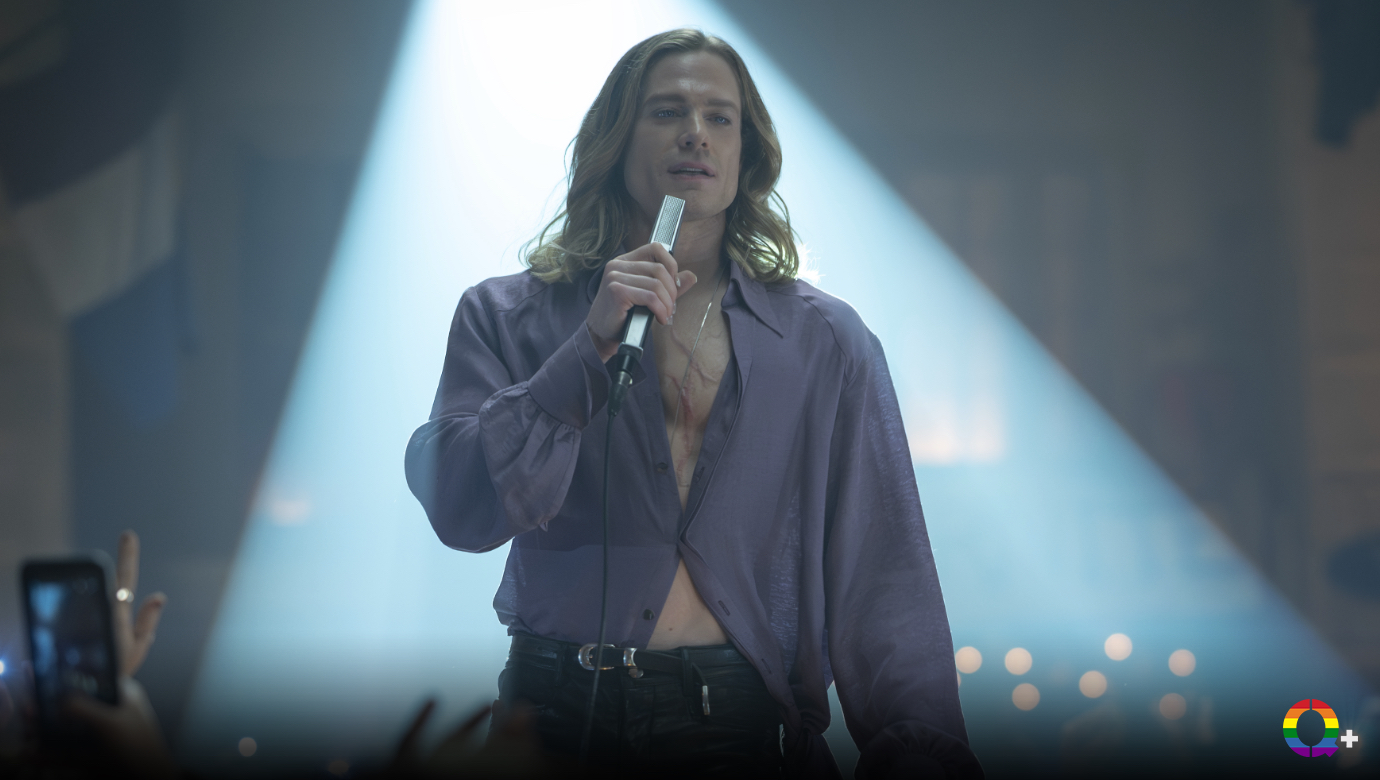
The Vampire Lestat Episode 7 ‘The Failures’ Recap: The Soul at the Long Table
Well… here we are. Seven episodes later, we’ve finally reached the end of the road for this first chapter of The Vampire Lestat. Somehow, over the last seven weeks, we’ve collectively survived vampire rock concerts, emotional warfare disguised as songs on the radio, approximately forty-seven existential crises, several murder attempts, and whatever on earth Lestat (Sam Reid) had going on at any given moment. Looking back, it’s been one of the wildest rides we’ve ever had the pleasure of covering. Then again, considering what nearly every major character endured this season, we suppose we got off pretty easy.
Before we dive into everything The Vampire Lestat Episode 7 ,The Failures, has to offer, we’d like to take a moment to thank everyone who joined us along the way. Whether you’ve been reading these recaps since Detroit or found them somewhere between Toledo and Montreal, thank you for spending this season with us, for indulging our many attempts to untangle Lestat’s wonderfully complicated mind, and for sharing your own theories, heartbreak, excitement, and occasional emotional breakdowns every single week. Reading your thoughts after each episode became one of our favorite parts of this experience, and we sincerely hope this won’t be the last time we get to obsess over this world together. (Manifesting that Season 4 renewal announcement literally any day now.)

Coming out of Montreal, we genuinely had no idea what shape this finale would take.
Last week, we argued that the real mystery was never whether Louis (Jacob Anderson) and Lestat would survive. The season had already removed that question from the board long before Episode 6 reached its final scene. Between Lestat narrating The Failures from some point further along the timeline, Louis appearing alive at the 2026 auction (incomplete, perhaps, but alive—we’re still keeping an eye on that mysteriously missing foot), and Dr. Fareed’s (Gopal Divan) explanation in Toronto that destroying a powerful vampire isn’t nearly as simple as removing their head, survival itself never felt like the puzzle.
The real question was always why.
Why would Armand (Assad Zaman) and Daniel (Eric Bogosian) choose this exact moment to behead both Louis and Lestat? We’d love to claim they were simply sabotaging our Loustat agenda, but we were genuinely trying to understand what either of them hoped to accomplish. Were they trying to stop the Great Conversion? Prevent the concert? Save Louis and Lestat from something even worse? Or were they pursuing a completely different goal that just happened to intersect with everything else? Because, honestly, what kind of season finale opens by decapitating both its protagonists?
Without wandering into spoiler territory just yet, all we’ll say is this: whatever expectations we had for The Vampire Lestat Episode 7, The Failures, the episode gleefully ignored every single one of them. For us, that’s part of what made it work.
Not because every viewer is obligated to love the direction it takes—television is wonderfully subjective, and everyone’s experience with this finale is going to be different—but because we’ve always appreciated stories willing to surprise us. We love it when we think a show is about to zig and it confidently zags instead. Looking back across the season, all the clues pointing toward this conclusion were there. We just didn’t realize where they were leading until the final pieces clicked into place.
So rather than delivering a straightforward rescue mission, racing toward the concert we’d been anticipating all season, or giving us Akasha (Sheila Atim) dramatically opening her eyes à la Bella Swan at the end of Breaking Dawn – Part I, The Vampire Lestat Episode 7, The Failures turns inward.
Throughout the season, we’ve watched Lestat slowly peel away the carefully constructed persona he built around himself, exposing the frightened, wounded man underneath. The finale pushes that idea even further, expanding it beyond Lestat alone. Louis, Armand, Daniel, Gabriella (Jennifer Ehle), and even people long gone from the present timeline all become part of a larger conversation about abuse, the scars it leaves behind, accountability, self-deception, forgiveness, understanding, and the complicated, deeply human process of moving forward without pretending the past never happened.
At the same time, the episode never loses sight of the much larger narrative it’s building.
From the very beginning, The Vampire Lestat has been presented as the first half of a much bigger story, and Episode 7 fully embraces that identity. Rather than forcing every mystery into a tidy conclusion, it brings the emotional journey this season set out to tell to a satisfying close while laying a remarkably solid foundation for everything still waiting beyond it. By the time the credits roll, there’s a concert we haven’t witnessed, more failures we haven’t experienced, relationships that have only begun revealing their full complexity, and an entire global catastrophe looming just over the horizon.
So if you walked away with more questions than answers, that’s perfectly normal. This isn’t the final note of the composition. It’s only the first movement.

One last thing before we begin. If you’ve read these recaps from the start, you’ve probably grown tired of hearing us repeat the same piece of advice every single week. Unfortunately for you, we’re going to say it one final time: pay attention to Lestat’s narration.
Since Detroit, we’ve argued that The Failures wasn’t simply a memoir. It was a confession. Week after week, Lestat’s voice slowly transformed from performance into vulnerability, revealing more about himself than he ever intended. Episode 7 doesn’t abandon that idea—it literally proves it.
But anygays, we’ve rambled long enough. Let’s get into everything The Vampire Lestat Episode 7, The Failures.
PSA: From this point forward, there will be major spoilers for The Vampire Lestat Episode 7, The Failures. If you haven’t watched the episode yet, we recommend coming back once you have. You’ve been warned, so tread carefully.
TW: This recap discusses events depicted in the episode involving graphic violence, torture, decapitation, psychological abuse, child abuse, incestuous abuse, trauma, emotional manipulation, and discussions of abusive relationships.

A Banquet of The Soul
After the shocking finale of Montreal, The Vampire Lestat Episode 7, The Failures, wastes absolutely no time taking us to the aftermath. Through The Failures, Album 57, Side A, Lestat calmly narrates the last few seconds he remembers before everything went black. Louis had just suggested that perhaps a quiet life together “could be nice.” Lestat had answered, “Could be.” Their hands had touched. He noticed Alex (Seamus Patterson) standing nearby in his cheap plastic Dracula mask and briefly wondered why he was there.
Then, as Lestat so simply puts it, the world pivoted.
What’s remarkable about the opening sequence is that we experience those final moments exactly as he does. Rather than watching the attack unfold from a safe distance (and thank god for that—we’re still recovering from last week’s finale), the camera becomes Lestat’s point of view. We glimpse upside-down boots, the night sky, a half-painted moon, his own blood pooling beneath him, fragmented flashes of the world through the eyes of a severed head. It’s disorienting, violent, and deeply surreal, placing us inside Lestat’s fractured consciousness before we even understand where it’s taking us.
Lestat initially describes what comes next as a dream. Only… it isn’t.
If anything, The Vampire Lestat Episode 7, The Failures, presents something much closer to a personal limbo, a place suspended somewhere between life and death where memory, guilt, trauma, regret, and love coexist. Lestat isn’t dead. As we’ll soon learn, he’s occupying that terrifying threshold where the body is still fighting to survive while the soul begins asking whether it even should.
Soon, he finds himself wandering through a forest, listening to birdsong and carefully transcribing the melodies onto sheet music. The setting immediately feels familiar because we’ve already heard about it. Back in Montreal, Lestat confessed to both Louis and Daniel that he’d been dreaming about a forest and spending years recording birds instead of performing for audiences. It’s also why Louis later asked whether there were birds in the desert while imagining the future they might build together.
Only now, something feels fundamentally wrong. It’s broad daylight. Lestat knows he’s still a vampire because of his distinctive glass fingernails, yet the sun doesn’t burn him. Hunger steadily hollows him out until even the birds fall silent, their songs giving way to an unsettling emptiness.
Then the waiters arrive.

A procession carrying silver-domed serving trays slowly overtakes the forest path, led by former entourage member Dee (Amaka Umeh). Lestat follows them while another familiar sound drifts through the trees, reminding him of home: the gentle melody played at Montreal’s pedestrian crossings. The city slowly seeps back into his memory until he finds himself standing before the dining table that defined his childhood.
Waiting there are his younger selves.
Nine-year-old Lestat (Shepherd Munroe) is struggling through a lesson with the abbot (Zachary Amzallag) of Haute-Loire, fighting to suppress his stutter before earning another strike across the hand. When the abbot asks about the purpose of a monk’s hood, adult Lestat instinctively answers for his younger self. It narrows one’s vision. It blocks out the world so the eyes remain fixed on God.
It’s the correct answer. But the abbot immediately offers another. The robes also trip them. They drag across the ground, tangle beneath their feet, and constantly stand in the way.
Whether intentional or not, it becomes a remarkably elegant metaphor for everything this finale is about. The very structures we’re taught are meant to guide us through life—our upbringing, our faith, our families, even our love—can just as easily become the things preventing us from moving forward.
When Lestat finally accepts his place at the table, despite immediately noticing there are seven waiters and only four guests, the world shifts once again. The forest disappears, replaced by Magnus’ (Damien Atkins) tower. His younger selves and the abbot vanish, giving way to the people most responsible for shaping his immortal existence: Magnus, Gabriella, Nicki (Joseph Potter), Louis, Antoinette (Maura Grace Athari), and even TC (Sarah Swire).
Then one of the waiters announces the next course.
Course 187: The Soul.
Our minds immediately went back to Toronto. Following Lestat’s disastrous sit-down interview with Daniel, Magnus appeared as one of his muses and described a never-ending banquet where everyone important in Lestat’s life sat together at a long table, consuming pieces of his soul. Sixty-eight courses had already been served, he joked, yet the bill never came because the plates simply kept arriving.
At the time, it felt like surreal imagery illustrating Lestat’s emotional exhaustion. Now we realize it wasn’t merely a metaphor. Somewhere inside himself, Lestat already knew this place existed.
As the guests begin eating with surprising enthusiasm, TC sets a timer on a phone and slides it across the table toward Lestat. He stares at the countdown in confusion, but before he can ask what it means, the episode tears us away.

When we return, the banquet has transformed into something else entirely. Magnus now presides over the long table like the chairman of an impossibly bureaucratic tribunal while Antoinette dutifully records every word on a typewriter. One by one, each vampire formally states their name for the record. Lestat quickly notices someone is missing: Claudia (Delainey Hayles).
Magnus explains she already said everything she needed to say. Antoinette, never one to resist embellishing the minutes, happily provides Claudia’s actual message, making it clear the séance from Montreal wasn’t symbolic closure. Lestat knows Claudia meant every word she said. There won’t be a second conversation.
Unable to make sense of what’s happening, Lestat arrives at the only conclusion his mind can provide. He’s dead. This grotesque dinner party at his father’s long table inside Magnus’ tower must be whatever version of hell awaits vampires like him. But Gabriella corrects him. He’s not dead yet; he’s dying—there’s a difference.
Magnus describes what’s happening as “the reminiscence, the deliberation, and mastication” of Lestat’s failures. Naturally, Lestat wants to know how he died. Gabriella once again reminds him that he hasn’t. Instead, Magnus argues that Lestat squandered both his mortal and immortal lives. Before he can continue, though, Louis interrupts with three simple words: “Could be nice.”
Instantly, everything comes flooding back. Louis’ offer. His own answer. Their hands touching. Across the table, Louis silently mimes the motion of a blade passing across a neck, reminding Lestat of the decapitation that followed moments later. Antoinette can’t resist adding that perhaps the second attempt will prove more successful than the first.
When Lestat wonders whether everyone gathered there intends to judge him, Magnus replies that they aren’t judges; they’re merely the failure finders. Judgment belongs to someone else. And just then, another course arrives.
Course 205: The Soul.
Lestat laughs. Surely this has to be a dream. Gabriella insists it isn’t. Nicki matter-of-factly informs him that his severed head is currently traveling west inside a bowling bag, while Magnus casually notes that his body lies across a butcher’s counter elsewhere in Montreal. We immediately cut to both images, revealing that Lestat’s subconscious has remained strangely tethered to the physical world all along.
It’s one of our favorite storytelling choices in the entire finale. Rather than treating death as a clean transition, The Failures fractures Lestat’s consciousness alongside his body. His mind exists simultaneously within this impossible banquet while remaining dimly aware of what’s happening to him elsewhere in the city, creating the unsettling sense that his soul hasn’t left his body so much as stretched itself between two realities.

From there, the trial gradually takes shape. Magnus questions Lestat’s destruction of the Children of Darkness and the Paris coven. Rather than defend himself outright, Lestat points out that he only followed Magnus’ example. Throw money at the problem and walk away. If abandoning responsibilities makes him a failure, then perhaps he simply inherited that particular lesson from his maker.
Another waiter announces the next course.
Course 214: The Soul.
By now, the repetition has become the point. Every accusation, every memory, every grievance eventually circles back to the same destination. Two hundred and fourteen courses later, they’re still dissecting Lestat’s soul.
Eventually, another question that’s been bothering Lestat since this bizarre banquet began finally comes to the surface: why is Magnus sitting at the head of the table? Magnus answers that he’s Lestat’s maker, but Lestat immediately rejects the premise. Magnus knew him for barely a week. He doesn’t know him well enough to preside over… whatever this is. Besides, Lestat argues, he has two makers.
Magnus immediately understands what he’s asking. Lestat wants Gabriella in the chair.
Standing, Magnus remarks that failure apparently continues even in the astral plane, noting Lestat’s enduring dependence on his mother. Antoinette dutifully records the official change of chairmanship as Gabriella takes Magnus’ place.
The moment she does, everything changes once again. Magnus’ tower disappears, replaced by an eighteenth-century French salon. Gabriella returns to the clothing and hairstyle Lestat remembers from that period of his life, settles comfortably into her new position, and, without missing a beat, instructs Antoinette to move on to the next item on the agenda.
If Magnus spent the first 214 courses examining Lestat’s failures as a vampire, Gabriella’s arrival signals that the banquet is about to descend much deeper, toward wounds that predate immortality itself. This is no longer a reckoning with the monster Lestat became. Lestat’s own subconscious is steering him back toward the child he once was, forcing him to revisit memories he spent centuries reframing, rationalizing, or refusing to confront altogether.
And as we’ll soon discover, those may be the failures that matter most.

Making “Armends”
While Lestat spends his first moments after decapitation wandering through a strange limbo somewhere between life and death, Louis experiences something arguably even worse. He’s fully conscious. The first thing he sees isn’t some metaphysical banquet or comforting vision of the afterlife. It’s the fluorescent lighting of a Montreal butcher shop, his severed head resting on a steel worktable while his body sits several feet away, strapped to a chair.
Before Louis can even process how impossible his situation is, Armand appears and calmly informs him that they’ve come here because he’d like to make amends. Or, as he insists on calling them, his “armends.” It would almost be funny if it weren’t so horrifying on virtually every conceivable level.
Back in The Devil’s Road, we watched Armand attempt to make peace with Daniel and Lestat by reading deeply personal letters he claimed came from the very depths of his soul. Somewhere in the back of our minds, we assumed Louis would eventually receive one too. What we never imagined was that Armand’s version of reconciliation would involve separating Louis’ head from his body, transporting both across Montreal, and turning a slaughterhouse into the setting for what he sincerely considers an honest conversation.
And that’s the important distinction. From Armand’s perspective, none of this is contradictory. As part of the journey he’s been taking since Dubai, he genuinely wants to confess the things he’s done wrong.
His first apology concerns the betrayal Louis has known about for decades. Armand admits he chose the Paris coven over Louis, deliberately leading him into a production where Louis’ execution would become the evening’s grand finale. The coven may have pressured him, he explains, but he also acknowledges something far uglier: he took genuine aesthetic pleasure in making Louis’ death beautiful.
His second confession is the lie that ultimately destroyed their relationship. For decades, Armand knowingly accepted credit for saving Louis after the trial when, in reality, it was Lestat who ensured Louis survived the Théâtre des Vampires. That deception became the foundation of everything that followed. Their decades together, their penthouse in Dubai, the quiet life they built—it all rested on a lie Armand convinced himself no longer mattered simply because enough time had passed.
It hadn’t. The lie remained exactly where he’d left it, silently rotting beneath every happy memory they created afterward.

The unsettling part of this sequence is that Assad Zaman never plays Armand as someone faking remorse. He believes every apology he’s offering. He believes this conversation is necessary. He believes this is what accountability looks like. The horror doesn’t come from a lack of empathy. It comes from realizing that centuries of abuse have so thoroughly distorted Armand’s understanding of love and responsibility that he can no longer recognize cruelty even while actively committing it. In his mind, Louis isn’t being tortured for an apology. He’s being invited into an important emotional breakthrough.
That warped perspective becomes even clearer as Armand continues talking. He admits he never truly minded Louis sleeping with other men throughout their relationship. If anything, Louis’ guilt afterward only tightened the emotional bond between them while conveniently leaving Armand free to spend time with Daniel. Then, perhaps for the first time in decades, he asks himself the question he’s spent seventy-seven years avoiding: did he actually love Louis, or was Louis simply the latest person he convinced himself he needed to survive?
The answer he arrives at is fascinating. Looking back across centuries of cult leadership, ritual executions, manipulation, carefully constructed lies, and violence, Armand doesn’t describe himself as evil. He describes himself as empty. “A room without walls, floors, ceiling… an infinite nothing.”
Ironically, we don’t think his conclusion is entirely correct. We do believe Armand loved Louis. Not with the all-consuming obsession he once directed toward Lestat, nor with the complicated fascination he would later develop toward Daniel, but genuinely nonetheless. Otherwise, so much of the hurt he carries throughout this episode simply wouldn’t exist. People don’t spend nearly eighty years nursing resentment over someone who never mattered.
The tragedy is that Armand’s love has always been inseparable from control. Even while loving Louis, he planted the Fred Stein photographs throughout Louis’ collection to destabilize him. He built an entire relationship atop a foundational lie. He repeatedly rewrote Louis’ memories whenever reality threatened the life he wanted to preserve. Somewhere along the way, love and manipulation stopped existing as separate concepts inside Armand’s mind, and that’s precisely what makes him such a fascinating character. His capacity to love has never erased the damage he’s capable of inflicting on the people he loves.
Having delivered what he considers two deeply heartfelt apologies, Armand naturally concludes it’s Louis’ turn. He places a pen into the hand of Louis’ detached body, slides a sheet of paper beneath it, and patiently waits for Louis to begin writing his own apology.
The framing here is extraordinary because it reveals just how fundamentally Armand misunderstands accountability. He’s spent the past several years learning how to apologize, only to conclude that healing is transactional. He has admitted his wrongdoings. Now Louis should acknowledge his. It’s equal parts therapy session, hostage negotiation, and emotional extortion.

Louis’s first written response consists of two wonderfully succinct words: “Fuck you.”
Armand exhales with something resembling disappointment. He genuinely expected time and perspective to make Louis more reflective. Instead, he calmly explains Louis’ current condition. His head and body have remained separated for over two hours, yet they’re still communicating thanks entirely to the strength of Lestat’s ancient bloodline. Had Louis descended from almost anyone else, he’d already be dead.
Which is precisely why everything happening inside the butcher shop is being livestreamed to Budapest, where Dr. Fareed oversees a room full of researchers documenting Louis’ condition. His suffering has become a scientific observation, and whether Louis survives long enough to produce meaningful data appears to matter almost as much as whether he survives at all.
Armand casually remarks that, assuming Louis lives through this, he probably won’t remember any of it anyway. Only then does he gesture toward another body lying nearby: Lestat’s. Still headless.
Louis’ attention immediately shifts. For the first time since waking up, panic truly takes over. Armand almost absentmindedly assures him Lestat is merely “resting” before the concert, joking in a way that’s disturbing precisely because it sounds so casual. He also admits to infiltrating Lestat’s band from the very beginning, handing Louis information the audience has been piecing together for weeks about Armand’s manipulation of Alex and his role in Larry’s (Noah Reid) death.
Louis isn’t in any state to process what Armand has just confessed. His attention is fixed on one thing and one thing only: where is Lestat’s head? Armand tells him it’s with his companion. The revelation has none of the effect Armand expects. Louis still refuses to make amends.
Concluding that stronger motivation is required, Armand wheels out one final surprise: Regina (Delainey Hayles).
Blindfolded, restrained, and visibly terrified, she has no idea where she is. Louis immediately begs Armand to leave her out of this, insisting she has nothing to do with any of it. Armand calmly removes the blindfold. The moment Regina sees Louis’ severed head staring back at her from across the table, she screams.
Whatever Armand believes he’s accomplishing, this stopped being about making amends long before Louis ever opened his eyes inside the butcher shop. It has become something else entirely: a desperate attempt to force forgiveness through suffering.
And forgiveness has never worked that way.

Putting The Soul on Trial
Back at Lestat’s final banquet at the long table, the meeting resumes exactly where it left off, only now it feels less like an afterlife waiting room and more like the world’s longest performance review. Every guest has arrived with notes. Every decision Lestat has ever made is up for discussion. Every regret has its own agenda item. The only difference is that Lestat can’t storm out before the meeting is over.
Nicki is the first to take the floor. His accusation isn’t really about immortality, but love. He argues that Lestat gave him the Dark Gift instead of giving him the one thing he actually wanted to hear: that he loved him. Louis immediately joins the conversation with one of the driest observations imaginable, remarking that if Nicki wanted those words to stick, he probably should’ve said them a mile up in the air.
It’s a wonderfully dark callback to Season 1, but it also reveals something important about the setting itself. These aren’t ghosts returning to settle unfinished business. They’re manifestations of Lestat’s own conscience, replaying every relationship through the lens of guilt rather than memory.
Gabriella pushes back, insisting Lestat told Nicki he loved him a thousand times. Lestat corrects her—not a thousand, ten thousand. Before the conversation can continue, another unexpected guest literally crashes the proceedings.
Daniel’s giant floating head bursts through the ceiling to continue roasting Lestat from inside his bowling bag. Once he’s gone, Gabriella reminds Lestat that while many voices are competing for his attention, he still controls the volume.
At first, it sounds like practical advice. By the end of the episode, it becomes the entire point. Lestat has spent centuries allowing other people’s voices to become his own inner monologue. Every criticism, disappointment, and impossible expectation no longer comes from Magnus, Gabriella, Louis, or Marius. It comes from him.
The meeting quickly shifts toward another perceived failure: music. TC reminds everyone that Lestat couldn’t even fill an arena in Rhode Island. Gabriella counters that Van Gogh only sold one painting during his lifetime. A waiter reads Billboard’s scathing review describing Lestat as “an intransigent crypt keeper in the hokiest light imaginable,” sending the entire table into laughter, while Nicki and Louis eagerly add their own critiques.
Throughout the season, we’ve watched almost everyone dismiss Lestat’s tour, question his artistic legitimacy, ridicule his performances, and compare him to everyone except himself. The banquet simply weaponizes all those insecurities at once, dragging every bad review back onto the table as though they were objective truths instead of opinions.
Naturally, Lestat refuses to concede. He reminds Louis and Nicki that they each saw him at different concerts and knows perfectly well he killed both performances. Unfortunately, the long table isn’t interested in celebrating his successes. It only wants to revisit the nights that still haunt him.

That exchange transforms the room once again. The elegant eighteenth-century salon dissolves into the New York recording studio where Marco Piemontessi (Kameron Lopreore)—the opera tenor Lestat murdered back in New Orleans for butchering Don Pasquale—appears to critique Lestat’s own recording of When I Call Out Your Name.
What follows is one of the funniest sequences in the finale. Marco meticulously dissects every rushed phrase, swallowed consonant, missed entrance, and flat note with exactly the same impossible standards Lestat once held him to. It’s poetic justice in its purest form. The perfectionist who spent centuries demanding excellence from everyone else suddenly finds himself on the receiving end of his own impossible expectations.
Then the comedy gives way to something much heavier.
As Marco continues critiquing the performance, Lestat can no longer avoid where the song is leading him: Gabriella. More specifically, the memories of her that he’s spent the entire season refusing to fully understand.
The flashbacks begin with the image that’s haunted these recaps since Toledo: Gabriella touching her wounded son after the wolf attack. From there, the episode finally allows us to witness another fragmented memory in full.
Young Lestat walks beside Gabriella toward the execution of several women accused of witchcraft. A priest preaches divine justice while four terrified girls—two of them no older than Lestat himself—wait to be burned alive. One of them is someone he knows. As the priest condemns them, Gabriella explains what really happened. These girls aren’t witches; they’re victims.
Back at the long table, Lestat finally asks his mother why she brought him there. Gabriella’s answer sounds almost compassionate. She wanted him to leave Auvergne. She wanted him to witness the world’s cruelty so he’d escape before it consumed him too. But he was too cabbage to run.
And it’s not a lie, which is precisely what makes this sequence so devastating. The episode refuses to flatten Gabriella into a one-dimensional monster. She loved her son in the only way she knew how. She truly wanted him to survive. But love and abuse had become so thoroughly intertwined in her worldview that she could no longer separate one from the other. Protecting him meant traumatizing him. Teaching him meant breaking him.
The memory continues as Gabriella physically forces young Lestat to keep watching while his childhood friend burns alive. Adult Lestat finally sees the moment clearly. Then Louis points out the painful symmetry: centuries later, Lestat would force Claudia to witness Charlie’s (Xavier Mills) death under the guise of teaching her a lesson. The cycle didn’t begin with him, but it continued through him.
Until now, the banquet has largely catalogued Lestat’s failures as a maker, lover, musician, and vampire. This moment shifts the conversation somewhere much deeper. The question is no longer simply what Lestat did wrong. It’s where he first learned to believe love looked like this.
Magnus wastes no time twisting the knife further, reminding everyone that Gabriella’s hands wandered after the wolf attack. Gabriella immediately pushes back, arguing Lestat certainly didn’t seem to object to those wandering hands over the next two centuries. It’s one of the most uncomfortable exchanges the series has ever staged because it reflects how survivors often internalize abuse long before they possess the language to describe it.
Magnus then delivers perhaps the cruelest observation of the entire episode: Lestat’s makers loved their Lestat. The sentence hangs in the air with all its weight. Lestat offers no rebuttal, no defense of Gabriella, and no defense of himself. Instead, he begins making the same agonized sound Nicki made while dying all those years ago.
It’s an extraordinary performance from Sam Reid because nothing needs to be verbalized anymore. Lestat has finally reached the realization that his subconscious has been circling all season. Gabriella didn’t simply manipulate him; she abused him. And somewhere beneath centuries of denial, longing, loyalty, and misplaced devotion, part of him has always known.
The banquet moves on, but that revelation never really does.

As they move into Lestat’s uses of the Blood, Magnus praises Lestat for transforming Gabriella before condemning him for giving the Dark Gift to Nicki too. Marius arrives at the table to question nearly every defining decision of Lestat’s immortal existence: Armand, Paris, Gabriella, Spain, Akasha. Every accusation becomes another serving of “The Soul.”
As the barrage continues, Lestat himself begins to deteriorate. His timer keeps counting down. Twenty minutes. Then two. Antoinette argues that Gabriella ultimately abandoned him because he remained emotionally juvenile. Marius condemns the opportunities he squandered after drinking from Akasha herself. Louis gleefully revisits Lestat’s disastrous years in New Orleans.
Through it all, one memory keeps interrupting the noise. “Could be nice. Could be. Hands Touch.” Every time the long table drags him toward shame, his mind returns to those final seconds with Louis.
But time is running out, and the voices grow louder. Magnus calls him an unworthy heir. Marius calls him Akasha’s greatest disappointment. Gabriella mocks him for sitting on a park bench “like a fucking idiot in a fog he mistakes for love.” One after another, every muse piles on: failure, coward, selfish, manipulative, careless, cabbage, brat, peacock.
Eventually, the insults stop sounding like individual criticisms and become something far more frightening: the soundtrack inside Lestat’s own mind. He’s simultaneously the defendant, the prosecution, and the jury, desperately trying to decide whether any part of his life deserves acquittal before death finally claims him.
Then the timer expires, the alarm rings, and Lestat laughs. Not nervously or desperately, but with complete, theatrical defiance. He slams the snooze button, buys himself another nine minutes, leaps onto the table, grabs a microphone with his foot, and transforms his own trial into a stage.
The banquet was only the opening act.
Now it’s time for the final show.

A Different Kind of Amend
When we return to the butcher shop, Regina is frozen in horror. Louis immediately begs Armand to let her go, but Armand barely acknowledges the request. Instead, he asks Dr. Fareed for an update on Louis’ condition as though discussing an ordinary patient. The prognosis isn’t encouraging. Louis’ body is beginning to fail, time is running out, and Armand decides this is the perfect moment to explain why Regina is there.
What follows completely reframes every interaction Louis has shared with her this season. According to Armand, Regina’s story began the moment Louis threw him across the walls of their Dubai penthouse. Rather than accepting that their relationship had reached its breaking point, Armand started constructing another one. Using an old photograph of Claudia and facial-recognition software, he spent months searching for women who resembled her before eventually finding Regina in London. He secured her visa, coached her, positioned her in New York, and meticulously orchestrated encounter after encounter until Louis finally noticed her.
Every coincidence Louis believed fate had placed in his path was manufactured. Every chance meeting had been designed. Every carefully timed appearance had been another invisible hand guiding him exactly where Armand wanted him to go.
Regina, visibly shaken, insists she never understood the full picture. Armand had told her Louis was a lonely man carrying unimaginable grief who simply needed someone willing to stay beside him. She believed she was helping. Armand, meanwhile, describes the entire operation with startling detachment. Once Regina had earned Louis’ trust, she no longer required constant direction because she had already become exactly what he’d intended her to become.
It’s another devastating reminder that Armand’s manipulation has never been limited to memories. Throughout their relationship, he repeatedly reshaped Louis’ emotional reality without Louis ever realizing it. Even after Dubai, after the interview, after everything that had already come to light, Armand still couldn’t resist exploiting Louis’ deepest wound to get what he wanted.
Perhaps the most unsettling part is that Armand doesn’t present any of this as cruelty. He wants Louis to appreciate the effort. Regina isn’t simply another means of manipulation in his mind; she’s proof of how much he was willing to do to orchestrate this reunion. Horrified, Louis simply asks Armand to kill him already.
Armand refuses. He still expects Louis to make amends.

That expectation remains one of the episode’s most fascinating contradictions. After spending years reflecting on his own betrayals, Armand has convinced himself that the damage between them exists on equal footing. He’s apologized. Now Louis should apologize too. Only then, in Armand’s mind, can either of them move forward.
The flaw in that logic is obvious. Accountability can’t be demanded, and forgiveness can’t be extracted. An apology stops being an apology the moment it’s coerced.
When Louis refuses again, Armand escalates. If Louis won’t apologize, he’ll decapitate Regina with the same blade used on Louis before attempting to attach Louis’ head to her body.
It’s a grotesque threat, and one longtime book readers will immediately recognize as echoing one of the most disturbing moments from The Vampire Armand. Here, though, the reference serves a different purpose. Rather than recreating that storyline, the series uses it to show just how completely Armand’s need for emotional closure has consumed him. Whether he would actually follow through almost becomes irrelevant. The threat itself tells us everything we need to know about where his mind has arrived.
Regina desperately tries to separate herself from Armand. She admits she made terrible decisions but insists she never understood what she’d been recruited into. Armand barely reacts. Instead, he continues discussing Louis’ deteriorating condition with Dr. Fareed while casually remarking that scientific progress has always relied on trial and error. The indifference is chilling.
As Regina pleads not to become part of whatever nightmare Armand has planned, Louis simply closes his eyes. Armand interprets the silence as Louis shutting both of them out, prompting him to reflect. Claudia, he admits, was always the doorway through which he could reach Louis because he understands that obsession with forgiveness better than anyone. Louis was his Claudia.
It’s an astonishing comparison because it explains almost everything about Armand’s emotional state at the moment. Just as Louis spent decades chasing Claudia’s forgiveness after Paris, Armand has spent nearly eighty years chasing Louis’. The symmetry is deeply twisted, but within Armand’s worldview, it makes perfect sense. He isn’t looking for revenge. He’s looking for release.
Louis remains firm, though. To prove he isn’t bluffing, Armand orders one of his followers, Nelson, to pick up the knife and “rest”. Without hesitation, Nelson presses the blade against his own throat and begins slicing into his skin. But since Louis still refuses to apologize, Armand gives Regina the same command. Fighting with every ounce of strength she has, she raises the blade toward her wrist while begging Louis not to give Armand what he wants.
But Armand has found the one pressure point Louis can’t ignore. He isn’t going to watch another young woman who reminds him of Claudia die in front of him.
So Louis asks for paper.
What follows isn’t the apology Armand expects. Louis writes three short points: “Sorry. 1) Magnus Tower: Kissing you in front of Lestat. 2) Couldn’t pin me on companionship. 3) Kissing you in front of Lestat. Not for you. Never. For him.”
Armand immediately dismisses the apology as a performance rather than sincerity. Louis doesn’t argue. Instead, he finally admits that he used Armand. He never forgave him for Paris and never will. Armand orders Regina to cut herself again. This time, she obeys.
As Louis continues to weaken, Dr. Fareed explains that blood deprivation is rapidly shutting his body down. Barely able to speak, Louis reminds Armand that if he listened to the séance, then he also heard what happened afterward on the bench. Louis. Lestat. Then. Now. Even while dying, Louis is thinking about him.
Armand refuses to believe it’s true. Convinced Louis is declining too quickly, he urges him to communicate telepathically instead.
What follows becomes perhaps the most surprising conversation of the entire finale. Rather than offering the apology Armand demanded, Louis begins listing the lies he’s spent his entire life telling—not just to other people, but to himself. He pretended to be a straight man. He pretended to be a respectable Black businessman. He even pretended to be an artist. Again and again, he built entire identities atop foundations that were never completely true.

Only then does Louis acknowledge Armand, or rather, Arun. For the first time, he allows himself to picture the twelve-year-old boy who was sold by the people meant to protect him, trafficked, abused, and forced to survive horrors no child should endure. Louis admits he spent decades refusing to see that child because doing so would’ve forced him to confront uncomfortable truths about himself.
The “apology” Louis ultimately offers has nothing to do with Paris, Dubai, or what transpired during their relationship. He apologizes because he never loved Arun. Not because Arun deserved forgiveness. Not because Armand deserves atonement. But because Louis now understands that beneath centuries of manipulation and cruelty existed a broken child who needed someone capable of holding him instead of simply surviving beside him. Louis was never that person.
It’s an extraordinary distinction, and Jacob Anderson and Assad Zaman play it with heartbreaking restraint. Louis refuses to absolve Armand of anything he’s done. He simply acknowledges the child whose suffering he spent decades refusing to look at. Those aren’t the same thing.
And somehow, that’s the apology Armand never realized he wanted. After everything—the manipulation, the lies, the torture, the emotional blackmail—the words that finally reach him aren’t the ones he demanded. They’re the ones he never thought to ask for.
Armand dismisses Dr. Fareed’s research team before freeing Regina, healing the wound on her wrist, and warning her that bad things happen to people who talk. She flees the butcher shop without looking back.
Before leaving himself, Armand carves a single letter into Louis’ chest: an “A.” The wound itself will eventually heal, making the gesture feel less like a physical mark than an emotional one. We can’t be sure if this is what he intended, but like so much of Armand’s love, it’s impossible to separate affection from possession. Even in letting Louis go, we think he can’t resist leaving behind one final reminder that he was there once.

A Bowling Bag, a Soul, and the End of the World
While Louis and Lestat fight for their lives in two very different ways, Daniel spends most of the finale carrying Lestat’s severed head around Montreal inside a bowling bag. Somehow, it’s exactly as ridiculous as it sounds.
The morning after the decapitation, Daniel arrives at a bowling alley and casually places the bag containing Lestat’s head on the shoe counter. When the employee jokes that he must have slipped out before “the wife” woke up, Daniel dryly replies that the wife told him to get his head as far away from her body as possible.
It’s one of several moments reminding us just how absurd Daniel’s life has become. Only a few days ago, he was a Pulitzer Prize-winning journalist interviewing a vampire rock star. Now he’s placing that same rock star’s severed head between rented bowling shoes because his ego got bruised by a telepathic prank.
Left alone with the bag, Daniel finally says everything he’s been wanting to say to Lestat since Toronto. He concedes that Lestat may be smarter than him. He even admits he’s better looking. But more talented? Absolutely not. Daniel insists Lestat could never accomplish what he did as a journalist, mocking the idea that fronting a rock band somehow compares to spending decades telling stories that mattered.
Beneath all the sarcasm, though, sits something much more personal. Daniel is still furious about the way Lestat dismissed him from the moment they met, treating him not as an equal but as another prop in his performance. Looking down at the vampire who spent the season acting like he was above everyone else, Daniel can’t resist pointing out the irony. For all that arrogance, Lestat’s final hours are currently being spent inside a bowling bag. It’s petty, it’s cruel, but it’s also the closure Daniel clearly wanted.

Daniel’s victory lap is interrupted first by Alex, who silently arrives at the bowling alley, repeatedly glancing toward the bag, and then by Raglan James (Justin Kirk), who shows up with considerably more purpose. Unlike everyone else in The Failures, Raglan isn’t interested in revenge, apologies, or emotional closure. He’s here because the Talamasca has a much larger problem.
When he first met Daniel in Dubai, Raglan explains, there were roughly sixteen hundred vampires in the world. Now there are nearly three hundred thousand, and they’re multiplying faster than humanity can sustain. A possible human extinction is no longer theoretical; it’s already underway.
As more Talamasca operatives quietly enter the bowling alley, Raglan reveals they need Lestat alive because the Montreal concert has to happen. Alex, speaking for the first time since Larry’s death, agrees. He wants to play the concert.
Suddenly, the season’s larger conspiracy comes into focus. According to Raglan, the Talamasca has been quietly nudging events from the shadows all along, steering Lestat’s tour toward this exact moment. Even the infamous “make more” lyric in Cabbage wasn’t entirely Lestat’s idea. The organization has been helping facilitate the Great Conversion rather than trying to prevent it.
Daniel quickly realizes what that means. The Talamasca isn’t attempting to stop the catastrophe. It’s trying to manage it. Humanity is running out of resources, governments are already discussing contingency plans, and the old balance between humans and vampires is collapsing. Whether vampires eventually rule the world almost becomes beside the point. The future has already begun, and everyone is scrambling to adapt.
Still, Daniel can’t understand why saving Lestat matters so much. Raglan’s answer takes the conversation in an entirely different direction. Lestat shouldn’t still be alive. His head is here. His body is somewhere else. By every biological measure, he should already be dead, yet consciousness continues to cling to him. To Raglan, that isn’t merely a medical anomaly. It’s proof—proof that the soul exists.
After centuries of studying vampires, the Talamasca has finally encountered evidence that something survives beyond biology. Whatever is keeping Lestat tethered to existence cannot be explained through blood alone. “Wonder,” Raglan tells Daniel, “has returned.”
It’s a fitting revelation for a series that has repeatedly asked whether vampires are merely monsters or something far more human. Throughout the season, Louis, Lestat, Armand, and Daniel have wrestled with love, guilt, trauma, regret, and accountability. Raglan’s observation suggests those struggles aren’t remnants of the people they once were, but evidence that something fundamentally human survived the transformation. The greatest revelation isn’t that vampires exist. Everyone already knows that in this universe. It’s that even after becoming the monsters humanity fears most, they still possess a soul.

The Soul Survives
By the time Lestat transforms the long table into a concert stage, it’s clear this was never a small trial examining a handful of regrets. It’s a full courtroom. Every vampire he made, every life he altered, every relationship he complicated now fills the audience while Lestat stands center stage, attempting to explain himself one final time before the silver thread keeping him alive finally snaps.
He welcomes the crowd, introducing the gathered souls as the people he murdered, made, or memorably traumatized before thanking them for their historical proximity to him. It’s classic Lestat: theatrical, self-aware, hilarious, and just defensive enough to disguise how frightened he actually is.
As he moves through the audience, he begins recognizing faces stretching back across two centuries of immortality. One man, Enzo (Cyrus Aazam), catches his attention. Lestat remembers killing him in Vienna decades earlier and immediately apologizes, admitting Enzo deserved better. The moment is brief, but the episode lingers on it just long enough to make it feel significant. Like so many names scattered throughout The Vampire Lestat Episode 7, The Failures, Enzo doesn’t feel like a random callback so much as another thread waiting to be explored.
Back on stage, Lestat finally addresses the verdict his muses have spent the entire episode delivering: failure. They’ve found fault with his music, his leadership, his relationships, his choices, his fledglings, and the life he built for himself. Lestat doesn’t entirely reject the accusation, though. Instead, he reframes it. If he failed, then at least it means he attempted something.
For a moment, he slips back into performance, insisting that alone makes him better than the people judging him. Then he catches himself. No. That’s another performance. If these truly are his final moments, he doesn’t want applause or the last word. He wants honesty.
Looking toward the people who shaped his existence and who have spent the episode dissecting every mistake he ever made, Lestat admits something much simpler. He loved them. However imperfectly, however disastrously, however much that love hurt them and him.
That confession quietly transforms everything that came before it. Throughout the banquet, every relationship has been reduced to a list of failures, betrayals, and wounds. Lestat doesn’t deny any of it. He simply refuses to let those failures become the only story his life tells. Love didn’t erase the harm he caused, but neither did the harm erase the love he felt. For perhaps the first time all season, he’s able to hold both truths at once.
As the timer races toward zero, the performance begins collapsing alongside him. His breathing grows ragged. His strength abandons him. Through it all, one memory refuses to disappear: “Could be. Hands touch.” It has echoed through the long table almost like a prayer because, after everything else has been stripped away, it’s the one thing Lestat knows was unquestionably real.
Lestat begins taking stock of the failures he truly believes belong to him. He didn’t honor the Blood. He spilled too much of it. He hurt too many people. His thoughts drift back to Enzo one final time as he asks someone—anyone—to tell him he’s sorry because the beautifully wrapped package Enzo was carrying deserved to reach its destination.
Then he finally collapses.
Before the light can claim him, someone quietly sits beside him. It’s Paul (Steven G. Norfleet).

Of all the people who could appear at the edge of Lestat’s death, the episode chooses Louis’ brother, and it’s one of the finale’s most beautiful decisions. Paul was the last person Louis ever told I love you without hesitation. Now he becomes the person entrusted with giving Lestat the reassurance he’s spent centuries searching for: Louis does love him. He simply struggles to say the words.
It doesn’t erase everything that came before. The banquet hasn’t absolved Lestat of his failures, nor does Paul pretend it has. Instead, he offers something far more valuable. Throughout the episode, Lestat has been forced to confront every voice that taught him he was selfish, broken, disappointing, unworthy, or impossible to love. Paul reminds him that those voices were never the whole story. For all the pain Lestat caused, and for all the pain he endured himself, he was loved. Sometimes, that’s enough to give someone the strength to keep living.
As the silver threads finally appear above him, Paul quietly switches off Lestat’s timer.
The next thing Lestat remembers is gasping awake inside his coffin aboard the tour bus, parked several hundred yards from the Montreal stage where forty-five thousand vampires and ten thousand Beautifully Unwell mortals impatiently wait for him to perform. The transition is wonderfully disorienting. One moment, he’s confronting his own soul. Next, he’s back in the physical world, surrounded by faces that seem almost unreal after everything he’s just experienced.
Through narration, Lestat explains that Raglan later filled in the practical details. The Talamasca tracked down both halves of him after Daniel and Armand carried out the beheading before reuniting his head with his body. Exactly how Alex factored into all of that remains deliberately vague. Throughout the season, he appears to have been served both Armand and, eventually, the Talamasca, making him one of the finale’s biggest remaining mysteries.

What isn’t a mystery, though, is who insisted Lestat be driven straight to the venue despite having literally just returned from the brink of death: Gabriella. But before Lestat can direct his anger toward her, one thought overwhelms everything else: Louis.
Rushing across the bus, Lestat finds him sitting there, alive, his head reattached, the fresh scar around his neck mirroring the one around Lestat’s own. Neither of them launches into some sweeping declaration of love. They don’t need to. Louis reaches out and gently traces the wound around Lestat’s neck. Lestat simply looks back at him. A quiet exchange about birds and evening primroses is all they say.
It’s one of the most intimate Loustat scenes the series has ever given us because it trusts everything that came before. After an entire season spent watching these two struggle to communicate honestly with one another, the silence says almost everything. The future they imagined is still there. Bruised, interrupted, and postponed, perhaps, but still alive. Even after everything that happened, they’re still imagining it.
But before either of them can say anything more, the moment ends. Lestat tells us he’d only learn everything Louis endured later, after the concert, after the mayhem, after the world changes forever. For now, another confrontation awaits him and is, in many ways, the emotional climax of the entire season.
Gabriella reminds him that forty-five thousand people are outside expecting a performance. Lestat refuses. She challenges him to walk outside and tell them there won’t be a concert. He stares at her in disbelief. He can’t believe she expects him to climb out of a coffin after brushing against death itself and immediately walk onto a stage. He tells her to perform instead. Let the crowd tear her apart. Then, for the first time in more than two centuries, he calls her exactly what she is: a monster.
That outburst carries the emotional weight of the entire season. For seven episodes, The Vampire Lestat has asked us to sit with the profoundly uncomfortable reality of Lestat’s relationship with Gabriella, watching him defend her, idealize her, excuse her, and repeatedly reinterpret memories that became harder and harder to justify. The series never rushed him toward recognition because that’s rarely how abuse works. Survivors don’t simply wake up one day and see everything clearly. Untangling love from harm can take years. Sometimes centuries.
What makes this moment so powerful isn’t that Lestat finally gets angry. It’s why he’s angry. He’s finally seeing her for who she is, and he allows himself to say it out loud. There’s something deeply compassionate about the way the series handles that realization. It never asks us to judge Lestat for how long it took him to get there. Instead, it invites us to understand how profoundly abuse reshapes the people who survive it.
Recognizing the truth doesn’t erase the damage, but it does break the illusion that kept him trapped inside it. After everything the banquet forced him to confront, standing up against Gabriella becomes an act of liberation every bit as important as waking up.

The episode’s final minutes then carry us beyond that moment. Back inside his Montreal apartment, sometime after the concert and the catastrophe that followed, Lestat is recording the reel of The Failures we’ve been listening to throughout the episode. He wonders whether whoever eventually bought these tapes hated him. Whether listening to them made them feel even a fraction of what he experienced in the spring, summer, and fall of 2025. Or whether this final confession has failed just like so many things before it.
Then another tape begins. Standing on his balcony overlooking Montreal, Lestat reflects on something he said back at the beginning of his recordings. He once believed he merely contributed to the catastrophe that nearly ended humanity. Now he wants to take that back. He didn’t contribute; it was his fault.
As the camera slowly pulls away to reveal a ruined Montreal stretching toward the horizon, the scale of that confession becomes devastatingly clear. Lestat may have survived his reckoning with the past, but the world outside has been transformed all the same. The season closes by reminding us that while one journey has reached its destination, another is only just beginning, and it suddenly feels far bigger than any of us could have imagined seven weeks ago.

The Vampire Lestat Episode 7, The Failures, Final Thoughts
If The Vampire Lestat Episode 7, The Failures, proves anything, it’s that finales don’t always need to answer every question to feel complete. On paper, this episode leaves an astonishing amount unresolved.
We still haven’t seen everything that happened during the Montreal concert. We don’t even know how Lestat ultimately agrees to go on stage after that final confrontation with Gabriella. And Akasha has barely entered the story. The devastated world, the mysterious auction from Detroit, and whatever transformed sixteen hundred vampires into hundreds of thousands all remain somewhere ahead of us.
Daniel’s future feels increasingly uncertain with all the foreshadowing sprinkled through the season. The Talamasca has revealed itself to be playing a far more dangerous game than we imagined. Even Armand leaves the season standing at what feels like the beginning of an entirely different journey.
And yet, none of that makes The Vampire Lestat Episode 7, The Failures, feel incomplete because this finale understands exactly which story it needed to finish: Lestat’s understanding of himself.
Everything this season has been building toward culminates in that one deeply personal realization. He confronts the abuse that shaped him, recognizes Gabriella for what she truly was, accepts responsibility for the people he’s hurt without allowing those failures to define his entire existence, and finally allows himself to believe something he’s struggled with for centuries to accept: he is loved.
Only after completing that emotional journey does the series turn its attention back toward everything still waiting beyond it. That’s what makes the finale feel so satisfying.
Rather than treating its emotional climax as something that must happen alongside the spectacle, The Vampire Lestat allows the emotional story to become the spectacle. The global catastrophe, the concert, Akasha, and everything still to come carry more weight because we now understand the person at the center of them.

The same is true for Louis and Lestat’s journey as a couple.
For all the chaos surrounding them, the finale gives them something they’ve been denied for decades: honesty. Not closure, not certainty, and certainly not a happily-ever-after, but honesty. Their reunion lasts only a few moments, but after an entire season built around memory, perspective, performance, and self-deception, it feels significant that they finally meet each other without any of those things standing between them. Whether they’ll be allowed to hold onto that once the world begins ending around them is another question entirely.
If The Vampire Lestat Episode 7, The Failures, leaves us with one overwhelming feeling, it’s anticipation. The emotional journey this season set out to tell reaches a satisfying conclusion, while the larger story teased since the opening minutes of Detroit finally feels ready to begin.
As for us, our time with The Vampire Lestat isn’t over either. Over the coming days, we’ll be sharing our full ranking of every song from the season, revisiting them now that we’ve experienced the complete story behind each one. We’ll also be looking back at this first chapter as a whole, reflecting on everything it accomplished and where we think it leaves the series moving forward.
So while this may be the end of our weekly recaps, it isn’t the end of our coverage. Keep an eye on Q+ and social media throughout the week. Because we’re not done talking about this show just yet.
The Vampire Lestat Episode 7, The Failures, is available to stream on AMC+ now. Seasons 1and 2 of Interview With the Vampire are available to stream on AMC+, Netflix, and Prime Video (depending on the region). Follow us on X and Instagram for all queer stuff!
Featured Image: Image Courtesy of AMC. Photo by Sophie Giraud.
Discover more from Q+ Magazine
Subscribe to get the latest posts sent to your email.


