
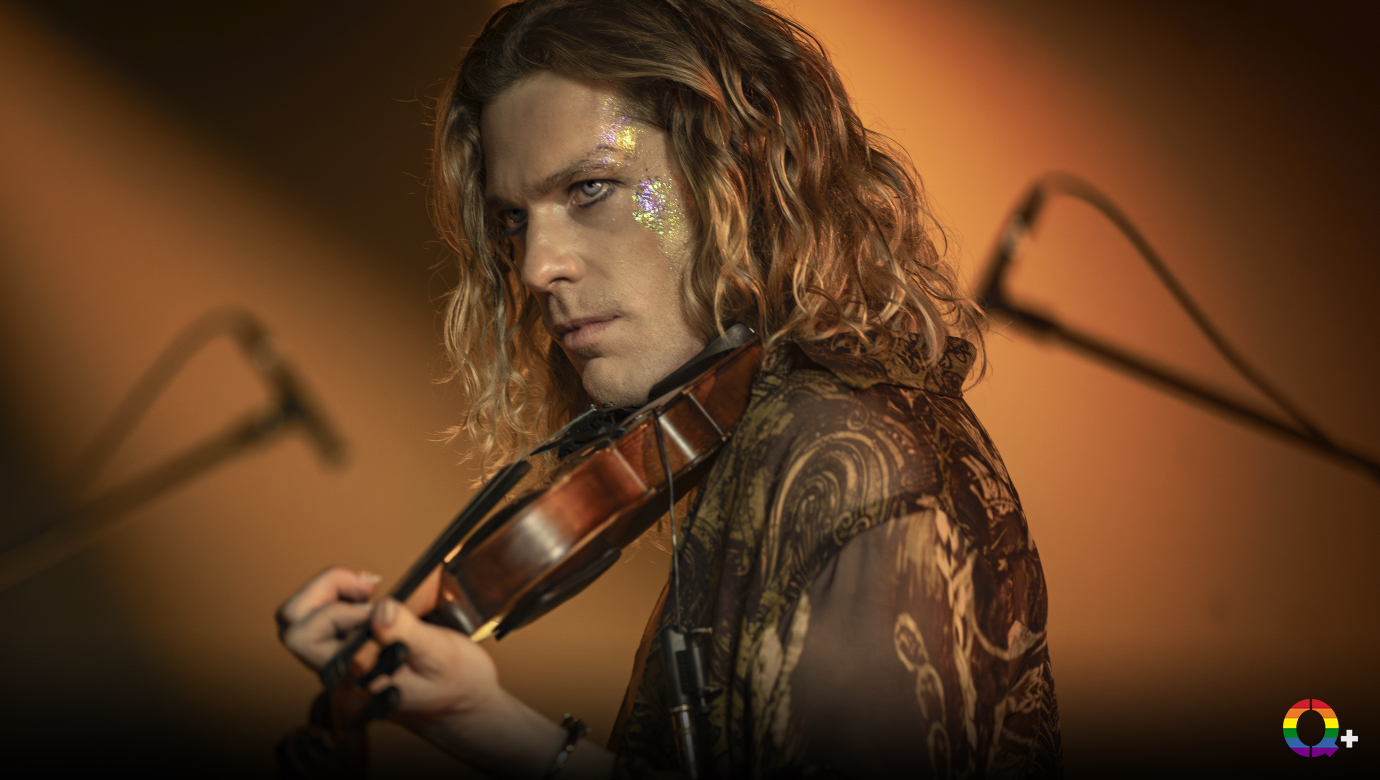
The Vampire Lestat Episode 1 ‘Detroit’ Recap: The Failures Begin
The day has finally arrived. After years of anticipation, The Vampire Lestat has officially taken over our screens with its first episode, Detroit.
The third season of AMC’s Interview With the Vampire, now titled The Vampire Lestat, has been a long time coming. Television audiences have waited years to return to this world, while readers of Anne Rice’s novels have spent decades wondering what a television adaptation of The Vampire Lestat might look like. Unsurprisingly, the excitement surrounding this season has been crackling with anticipation and speculation for months.
We would like to mention, though, that as with any adaptation, changes are inevitable. But as huge fans of the source material ourselves, we can reassure y’all that, as we mentioned in our review of The Vampire Lestat, we came away from what we’ve seen feeling that the creative team has pulled off a very successful balancing act. They are adapting one of Rice’s most ambitious and complicated novels while remaining faithful to the television universe they have carefully built through their interpretation of Interview With the Vampire.
It’s impressive television work, and we won’t ever get tired of praising it.

But anygays… one thing worth keeping in mind as we begin these weekly recaps is that The Vampire Lestat is telling a sprawling story. Some mysteries won’t be answered immediately. Some character arcs require context that arrives much later in the season. And because of that, we’ll be saving our complete spoiler-filled thoughts on the season for a larger retrospective piece after all seven episodes have aired. For now, we’re focusing solely on what unfolds each week and avoiding spoilers for future episodes. So feel free to engage with us, you won’t hear a word from our team about what happens later in the season.
But enough stalling. Let’s get into everything that happened in tonight’s premiere.
PSA: From this point forward, there will be major spoilers for The Vampire Lestat Episode 1, Detroit. If you haven’t watched the season premiere yet, we advise you to stop reading and come back once you’re done. You’ve been warned, so tread carefully.

The Future is Already a Disaster
The Vampire Lestat Episode 1, Detroit, opens with a sequence that immediately raises more questions than answers. In a secretive posthumous auction taking place at a hangar sometime in 2026, an auctioneer welcomes a room full of wealthy and influential attendees while promising complete anonymity for everyone involved. Among those gathered are several familiar faces, including Raglan James (Justin Kirk) of the Talamasca, and the vampires Armand (Assad Zaman) and Louis de Pointe du Lac (Jacob Anderson).
Neither Armand nor Louis appear to have emerged from the events of the season unscathed. Armand now wears an eyepatch, with a deep scar visible beneath it, while Louis arrives leaning on a cane. Unlike the fashionable accessory he carried during his New Orleans years, this one serves a much more practical purpose. One of his legs is gone, replaced by a prosthetic. The episode offers no explanation for how either vampire sustained these major injuries, but the implication is immediately clear: whatever happened between 2025 and this auction was catastrophic.
The first item offered for sale is the complete musical catalog of the vampire Lestat (Sam Reid), including master recordings, unreleased sessions, handwritten compositions, and private recordings made by Lestat himself. Before bidding can even begin, however, the auctioneer calmly sets the collection on fire. Many attendees immediately leave, unwilling to spend money on a pile of ashes, but Louis can’t help smiling. Even after everything, he instantly recognizes the gesture. It is exactly the kind of theatrical, self-destructive stunt Lestat would pull.

The second lot proves far more significant. Housed within an extravagant music cabinet is a complete vinyl pressing of Lestat’s music alongside 111 albums of posthumous audio recordings chronicling the rise of his band, the subsequent tour, and the global disasters that followed. The collection is called The Failures. As Raglan, Armand, and Louis begin bidding against one another, we hear Lestat’s voice for the first time, telling us that through these audio recordings, he will narrate his own story.
If there is one very important detail viewers should keep in mind moving forward, it is that Lestat’s narration exists beyond the events we are watching. While most of The Vampire Lestat Episode 1, Detroit, takes place in 2025, the version of Lestat guiding us through the story is speaking from a future where everything has already gone wrong. He knows how the story ends. We do not. Every comment he makes is colored by hindsight, regret, and the knowledge that his rockstar experiment led to consequences even he struggles to fully own.

Meet The Vampire Lestat
From there, we jump back to spring 2025 as the opening notes of Long Face echo through an intimate Detroit venue. Lestat takes the stage alongside the band that naturally bears his own name. Through his narration, he introduces the musicians backing him: brothers Larry (Noah Reid) and Alex (Seamus Patterson) on guitars, Salamander (Ryan Kattner) on bass, and TC (Sarah Swire) on drums. He proudly explains how they built anticipation online, transforming curious listeners into devoted followers, whom he affectionately refers to as the Beautiful Unwell.
The concert sequence immediately showcases one of the episode’s and the season’s most impressive storytelling devices. The story unfolds through multiple perspectives at once. There is the polished reality of the television series itself, Daniel Molloy’s (Eric Bogosian) documentary footage presented entirely in black and white, and Lestat’s own memories, which blur fact, performance, fantasy, and emotion together.
The result creates a layered narrative where viewers are constantly asked to consider who is telling the story and how reliable that version might be. It’s a fascinating choice for a franchise that has always been obsessed with memory, perspective, and the stories people tell about each other. After all, this entire season exists because Lestat refuses to let someone else’s version of events become the narrative that defines him.

But back to the episode. Not everyone in Detroit is enjoying the show. Two vampires in attendance telepathically heckle Lestat throughout the performance, with one bluntly informing him that his song sucks. Lestat thanks them for the feedback and continues performing anyway, a reaction that perfectly captures both his confidence and his stubbornness.
After the concert, we get a glimpse of life on tour through Daniel’s lens. Lestat criticizes virtually every aspect of the performance, from Larry’s attempts to upstage him to TC’s drum sound. His manager and lawyer, Christine Claire (Jeanine Serralles), arrives carrying paperwork related to an incident in Corvallis that apparently required a substantial economic settlement. Lestat signs the documents in blood despite her repeated requests to use a pen, and he introduces Christine through narration as the force that keeps the entire operation functioning. She hires, fires, negotiates, and cleans up the endless messes left behind by an immortal rockstar.
We also meet Jarda, a body double (also played by Sam Reid) hired to protect Lestat’s secret. Following the particularly sloppy incident mentioned above (Corvallis), Christine hired the Czech construction worker to serve as a decoy whenever Lestat needs to hunt. Fans who spot “Lestat” wandering through cities and upload his pictures to Reddit (hilariously pronounced ruh-DDIT) and Discord unknowingly photograph Jarda instead, helping maintain the illusion that he is not real, just a figment of Daniel Molloy’s imagination. Not everyone is fooled, however. One mysterious fan appears outside the venue, seemingly convinced that Lestat is exactly who he claims to be.

Daniel Molloy Enters the Story, Again
One of the episode’s greatest strengths is the dynamic between Daniel and Lestat. Unlike Daniel’s relationship with Louis, which was built around confession, understanding, and a shared history, his interactions with Lestat are fueled by antagonism. The two spend much of the episode trading insults while filming the documentary that will accompany the tour. Daniel calls him the Cuntessa. Lestat calls him a useful idiot. Neither seems particularly interested in being nice to the other.
Their conversations, however, reveal the deeper purpose behind the tour while also highlighting just how fundamentally different these two vampires are. Daniel repeatedly asks why a 265-year-old vampire has decided to become a rock star, even though he knows that getting a straight answer out of Lestat is nearly impossible. Lestat mocks Daniel’s attempts at seriousness, diagnoses him with what he calls “transformational trauma” (he is, after all, a two-year-old vampire), and spends much of the interview texting a mysterious person whose identity remains hidden. Daniel, meanwhile, brings up another question in an attempt to break Lestat, asking him if it’s true that he was a stutterer as a child, convinced the answer might unlock some deeper truth about the vampire sitting across from him.
Their exchange also reveals one of the episode’s most interesting dynamics. When Daniel pushes for facts, Lestat dismisses them almost entirely, arguing that facts are irrelevant while feelings are everything. It’s a philosophy that seems to guide not only how Lestat tells his story, but how he understands himself. For Daniel, truth is found through evidence and contradictions. For Lestat, truth lives in emotion, memory, performance, and the way an experience felt. The contrast creates some of Detroit’s funniest moments, including Lestat declaring that this is now his era, only for Daniel to dryly remind him that most people reserve that title for artists playing venues much larger than 800 seats.
Eventually, though, Daniel pieces together the truth. The tour is not simply about music. It is a response to the publication of the in-universe book Interview With the Vampire. Frankly, Lestat’s spent years being turned into what he describes as Louis’ “mayonnaise villain with sociopathic tendencies,” and he’s finally had enough—he’s reclaiming his narrative. As he states, the songs are the story, and Daniel’s documentary is merely the accompanying footnotes.

How the Band Was Born
The Vampire Lestat Episode 1, Detroit, then takes us back to Montreal and an eventful 2023 Halloween night, revealing how The Vampire Lestat, the band, came to exist in the first place. The flashback also provides some of the episode’s most unexpectedly tender moments as Louis and Lestat chat over video call. Their interaction carries a softness rarely seen during the first two seasons.
We know that the wounds between them have not disappeared, but there are clear signs that both vampires are trying to heal. More importantly, there are signs they might actually be finding their way back to one another. The teasing, the warmth, and the ease with which they speak feel worlds away from where we left them at the end of Interview With the Vampire Season 2.
However, that fragile peace is shattered when Lestat discovers that someone called Daniel Molloy published an account of Louis’ life. Furious that Louis knew about the book and never warned him, Lestat storms into a local bookstore only to discover that the infamous memoir is flying off the shelves. To make matters worse, everyone inside who has read it seems to adore Armand while viewing Lestat as the villain of the story.

What makes the sequence so effective is that, for all of Lestat’s dramatic complaining, we can almost understand his frustration. For two seasons, we’ve experienced much of this story through Louis’ perspective, and while Lestat certainly earned plenty of criticism for his actions, Detroit asks us to consider what it might feel like to discover that your entire life (mortal and immortal) has been reduced to somebody else’s recounts of it.
Back home, Lestat obsessively annotates his copy of the memoir while consuming every interview Daniel gives about the making of the book. Meanwhile, a garage band across the street repeatedly mangles a song during rehearsal. Already on the verge of snapping, Lestat finally loses his patience. He storms into their building, demonstrates how the song should actually be played, destroys a guitar in the process, insults their hygiene, and leaves. Rather than being offended, guitarist and frontman Larry is fascinated. He chases after Lestat, and the seeds of the band are planted.
Back in 2025, Daniel quickly realizes that the entire tour is essentially a very expensive, very theatrical rebuttal to his book. Lestat doesn’t exactly deny it.

The Music Opens the Floodgates
If the publication of Louis’ memoir lit the fuse, the music itself becomes the explosion. During a performance of Black Licorice, during Lestat’s Night Two at Detroit, something inside Lestat begins to crack open. Already frustrated with Larry’s competing guitar solos and carrying years of emotional baggage, Lestat nearly loses control and drains his bandmate on stage.
But just as he’s about to do it, the music triggers all his demons, panic takes over, and he collapses to the stage floor. As he struggles to get back up and looks around in a daze, memories and muses flood his consciousness. Magnus (Damien Atkins) appears. Louis appears. Nicki (Joseph Potter) appears. Past traumas, regrets, and relationships begin to bleed into the present.
It’s also one of the first signs that The Vampire Lestat is interested in exploring memory differently than Interview With the Vampire did. Louis’ story often treated memory as something unreliable and fragmented. Lestat’s memories, by contrast, feel invasive. They don’t simply return to him; they interrupt him, hijack the present, and refuse to stay buried.
For a moment, the performance stops being an act and becomes something rawer. Lestat realizes that he has been holding himself and his music back, hiding behind a carefully crafted persona rather than confronting the emotions beneath the surface.
After feeding from a fan whose blood contains a dangerous cocktail of drugs, Lestat experiences a vivid hallucination in which the young woman questions him about his endless pursuit of validation. Why are thousands of fans not enough? Why does he make it so difficult for people to love him? Why is he still so unhappy despite everything he has achieved? The sequence is funny, tragic, and surprisingly revealing. Beneath all the swagger and narcissism, Lestat remains desperately lonely.

Detroit Goes Completely Off the Rails
The second half of The Vampire Lestat Episode 1, Detroit, embraces full rock-and-roll chaos. Still very much under the influence of the drugs in his system, Lestat attends a hotel event alongside his band, entourage, and documentary crew. The evening quickly spirals out of control and into the beautiful disaster one might expect from a vampire rockstar who has spent the last several months publicly antagonizing both humanity and his own kind.
While the party rages around him, we learn that the fan whose drug-laced blood got Lestat spectacularly high—and who nearly died backstage after he drained her too far—is Baby Jenks (Ella Ballentine), one of the many Beautiful Unwell who claim to be obsessed with Lestat’s music. Meanwhile, Lestat continues exchanging messages with the mysterious figure who has been texting him throughout the episode. It’s one of the quieter storylines woven through the premiere, but also one of the most emotionally revealing if you pay attention to Lestat’s sent (and unsent) messages.
But moving on… things get heated when Lestat, a member of his entourage named Dee (Amaka Umeh), and Baby Jenks share an elevator ride that turns into a foursome when a bellboy joins them midway through. When the doors open, only Lestat and Dee step out. As the elevator closes, Baby Jenks casually tells Lestat that she’s getting married in a week and will never forget him. The moment barely registers before he realizes he’s walked straight into an ambush and that she was merely the bait used to blood-poison him once again. Still, given how deliberate this show tends to be with seemingly throwaway details, we’re definitely filing that wedding announcement away for later.

As it turns out, Baby Jenks’s role in the evening was only the beginning. The vampires responsible for using her to blood-poison Lestat are the members of the Detroit local coven, aka the Fang Gang, who soon confront him over what they see as increasingly reckless behavior. While some vampires around the globe appear fascinated by Lestat’s music and the freedom it represents, others see him as a walking violation of every rule their kind has ever established. It doesn’t take long for words to become fists, and fists to become a full-blown fang fight in a hotel hallway.
The fight itself is chaotic, messy, and more dangerous than Lestat initially realizes. Between the drugs still moving through his system, the emotional fallout of the muses, the sex, and the simple fact that he is badly outnumbered, our favorite Brat Prince finds himself in genuine trouble. For a moment, it looks as though Detroit might become a very short stop on The Vampire Lestat 54-city tour.
Instead, help arrives from two unexpected places. Daniel Molloy inserts himself into the chaos, while the mysterious vampire DJ that Lestat mentions in passing earlier in the episode is finally revealed to be none other than Sam (Christopher Geary), the scriptwriter from the Théâtre des Vampires and Talamasca’s Paris mole. Their intervention is enough to turn the tide, allowing Lestat to survive what looked dangerously close to becoming a public execution.

The situation only becomes more chaotic when Lestat storms into the hotel’s panoramic bar and drains one of the attacking vampires in full view of his bandmates and entourage. In an instant, every carefully constructed lie collapses. The people closest to him finally learn the truth. The rockstar posing as a vampire isn’t pretending at all: he is a vampire.
Faced with the consequences of his own actions, the relentless voices of his past, Daniel’s probing question about his speech-related condition as a child, and the realization that his immortal life is somehow rapidly imploding, Lestat does the only thing that feels appropriately dramatic. He launches himself through a window and disappears into the night.

Gabriella Arrives
The episode’s final act brings us back to the mysterious person Lestat has been texting all night. Throughout the episode, their messages have served as a lifeline, offering Lestat a sense of comfort during moments when he seemed closest to falling apart. Following the disaster in Detroit, Lestat crosses into Windsor and seeks refuge in a hotel room where he finally admits what he has been unwilling to say out loud.
His music has opened something inside him that he may no longer be able to control. The walls he built around his memories and emotions are beginning to collapse.
Then the camera reveals who has come to answer his cry for help: Gabriella (Jennifer Ehle). His first fledgling. His lover. His biological mother. His greatest comfort and one of the most complicated and unsettling relationships in Anne Rice’s entire mythology.
As Lestat himself notes from his narration in The Failures, this incestuous reveal is hardly a secret anymore. Apparently, by 2026, everyone knows the nature of his relationship with his mother, but seeing Gabriella finally enter the story gives the episode its final jolt and sets the stage for everything that will follow. Because Gabriella is not just another familiar face from Lestat’s past, she is one of the central figures haunting it.

The Vampire Lestat Episode 1, Detroit: Final Thoughts
We don’t know about y’all, but that was… a lot. For a premiere episode, Detroit accomplishes an astonishing amount. It establishes the mystery surrounding the future auction and the consequences of whatever catastrophe happened; introduces The Failures as the framework for the season; launches Lestat’s music career; explores the origins of his band and why the tour happened in the first place; reintroduces Daniel as both antagonist and collaborator; unleashes the first wave of muses; exposes Lestat’s true nature to the people closest to him, and finally welcomes Gabriella into the story.
More importantly, it clearly establishes the tone of The Vampire Lestat. This is a bigger, louder, messier story than anything we’ve seen before in the first two seasons of Interview With the Vampire. It’s funny, heartbreaking, theatrical, still deeply queer (happy pride, y’all), occasionally ridiculous, and entirely committed to exploring the contradictions that make Lestat such a fascinating character. As we mentioned in our review, watching both adaptations side by side feels like looking at two paintings from the same artist created during entirely different artistic periods.
And that’s a huge accomplishment on its own—the bones of the story remain the same, the emotional DNA is still there, it’s only the perspective that has shifted.
What did y’all think of The Vampire Lestat Episode 1, Detroit? Did the premiere live up to your expectations? What are your theories about the auction, The Failures, and Gabriella’s arrival? Come yell at us on social media; we’d love to dissect this episode with all of you.
We’ll be back next week for Episode 2, Toledo, as Lestat continues his tour of bad decisions, public meltdowns, and deeply compelling self-destruction.
The Vampire Lestat Episode 1, Detroit, is available to stream on AMC+ now. Episode 2, Toledo, will premiere on AMC on Sunday, June 7, at 9 pm ET/PT. Seasons 1 and 2 of Interview With the Vampire are available to stream on AMC+, Netflix, and Prime Video (depending on the region). Follow us on X and Instagram for all queer stuff!
Featured Image: Image Courtesy of AMC. Photo by Sophie Giraud.
Discover more from Q+ Magazine
Subscribe to get the latest posts sent to your email.


Pingback: The Vampire Lestat Episode 2 'Toledo' Recap: Peeling Back the Layers of Lestat de Lioncourt – Q+ Magazine
Pingback: The Vampire Lestat Episode 3 'Toronto' Recap: Breaking Open the Monster – Q+ Magazine
Pingback: Lestat Drops ‘Detroit’ EP and Finally Unleashes ‘Black Licorice’ – Q+ Magazine
Pingback: The Devil's Road EP Proves There Are No Throwaway Songs in The Vampire Lestat – Q+ Magazine
Pingback: The Vampire Lestat Episode 6 'Montreal' Recap: Brutal Love – Q+ Magazine
Pingback: The Vampire Lestat Episode 5 'New York' Recap: Nothing Stays Buried – Q+ Magazine
Pingback: The Vampire Lestat Episode 7 'The Failures' Recap: The Soul at the Long Table – Q+ Magazine