
Assembly Review: Liberation Is a Journey, Not a Destination
There is a moment near the end of Assembly when one of the performers explains the idea of a Black fractal to the audience. A fractal, they tell us, can be transformed, stretched, and altered, but its pattern remains intact. No matter what happens to it, the structure survives. That idea lingers long after the documentary ends because it serves as the key to understanding everything directors Rashaad Newsome and Johnny Symons are trying to accomplish.
Assembly documents the creation of Newsome’s multidisciplinary exhibition and performance project at New York’s Park Avenue Armory, but describing it that way only scratches the surface. The film is interested in much larger questions. How do Black queer people carry history within their bodies? What happens when art becomes a tool for community building rather than simply an object to be consumed? Can technology help preserve culture instead of reproducing the systems that have historically excluded people from it?
Rather than offering straightforward answers, Assembly creates a space where those conversations can unfold.

The documentary follows Newsome as he gathers dancers, musicians, vocalists, stylists, and artists from around the world to participate in the project. Vogue becomes the connective tissue linking everyone together. Artists from Brazil, Ukraine, Japan, and elsewhere bring their own traditions into dialogue with ballroom culture, creating performances that feel simultaneously local and global. One of the film’s most compelling observations is that these connections are not new. They have always existed.
When Brazilian performer Puma Camille describes vogue and capoeira as two diasporas meeting in the body to make the same cry for freedom, the documentary’s ambitions come into focus. Assembly is not trying to prove that cultures are connected. It is exploring what becomes visible when we finally allow ourselves to see those connections. That perspective gives the film an emotional richness that extends far beyond the mechanics of putting together a performance.
The documentary is filled with conversations about ancestry, memory, and inherited knowledge. Newsome frequently returns to the idea that history is not something distant. The people who came before us continue to shape the way we move through the world, whether we recognize their presence or not. The film visualizes this beautifully through recurring references to fractals, patterns that repeat themselves across scales while maintaining their integrity.

At times, Assembly can feel almost overwhelming in the number of ideas it wants to explore. Colonialism, ballroom culture, artificial intelligence, Black history, queer identity, performance art, spirituality, grief, and community all occupy space within the film. Under different circumstances, that might have resulted in a documentary that feels scattered. Instead, Newsome manages to hold these threads together because each one ultimately points toward the same question: what allows people to remain whole despite generations of attempts to fragment them? Assembly’s answer is community.
Some of the documentary’s strongest sequences have nothing to do with the final performance itself. They emerge during rehearsals, casual conversations, and moments of vulnerability between collaborators. We hear stories of isolation, discrimination, assault, fear, and survival. We meet Black queer artists who spent years hiding themselves in order to stay safe. We hear trans women describe navigating public spaces while carrying the constant awareness that violence could be waiting around any corner.
Assembly does not treat these stories as inspirational anecdotes or narrative obstacles to overcome. They are presented as realities that continue to shape the lives of the people involved. What makes those moments so powerful is that the documentary refuses to stop there. The camera remains present for the laughter, the support, the creativity, and the joy as well.
Many films about marginalized communities become so focused on documenting suffering that they unintentionally narrow the lives of their subjects. Assembly avoids that trap. The performers are allowed to be vulnerable, ambitious, funny, messy, talented, exhausted, and triumphant. They are allowed to exist as complete people. That generosity extends to the documentary’s treatment of Black queer joy.
One of the most moving aspects of Assembly is the way it frames celebration as something deeply political. The performers are not gathering simply to put on a show. They are creating an environment where people can experience affirmation that is often unavailable elsewhere. Late in the documentary, Newsome reflects on young queer people who face ridicule simply for existing in public. Inside the Armory, those same people are met with applause, admiration, and love. The distinction may seem simple, but the film understands how transformative that shift can be.

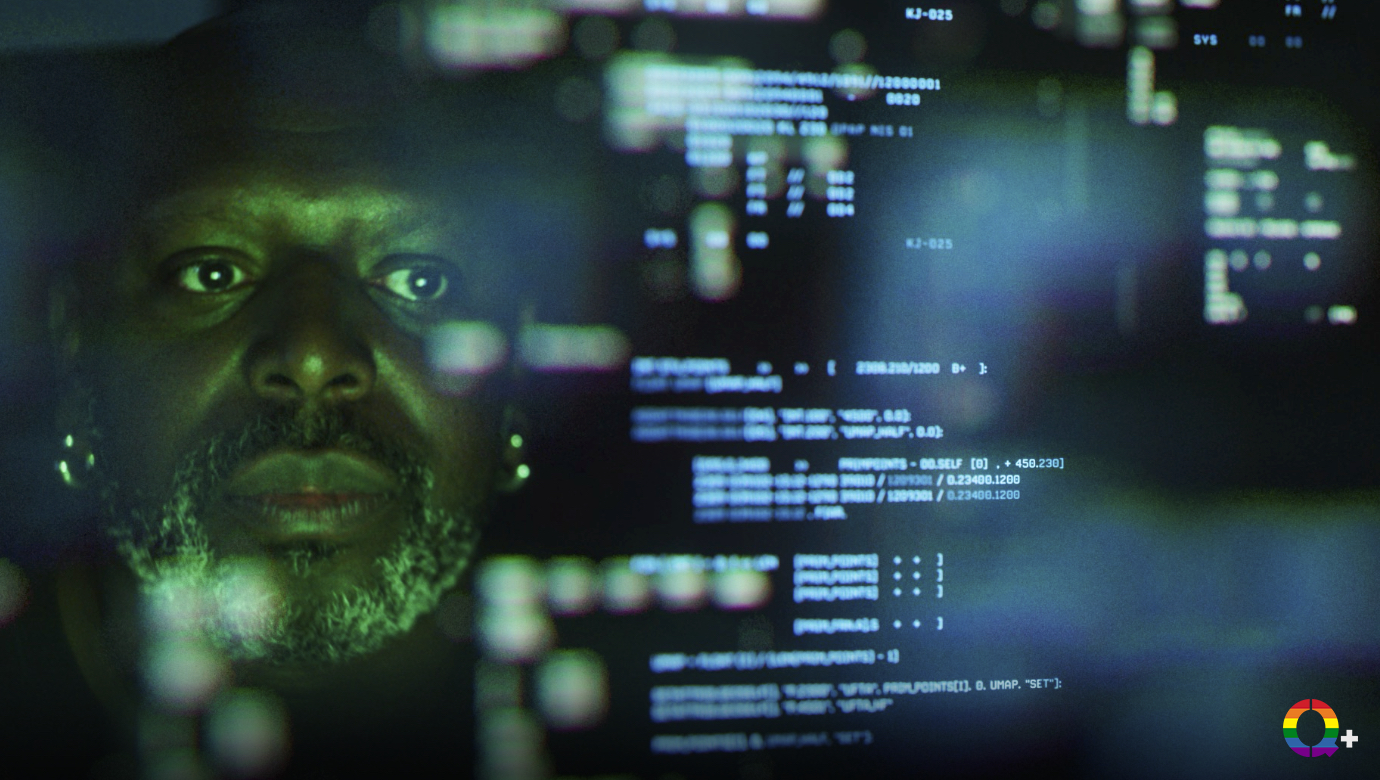
The documentary’s exploration of technology is equally thoughtful. Newsome’s AI creation, Being, could easily have become a gimmick or distraction. Instead, Being emerges as one of the film’s most fascinating contributions. Trained on the works of Black thinkers, activists, and scholars, the non-binary AI functions as a digital griot capable of engaging visitors in conversations about oppression, liberation, and collective responsibility.
What makes these sections work is Newsome’s refusal to present technology as inherently good or bad. Assembly argues that technology reflects the values of the people who create it. Systems built around exploitation will reproduce exploitation. Systems built around care, curiosity, and education can encourage something different.
That argument feels particularly relevant in a cultural moment where conversations about AI are often dominated by fear or blind optimism. Assembly proposes a more nuanced alternative. Technology, like art, is ultimately a reflection of human intention.

The film reaches its emotional peak during its engagement with loss. A sequence addressing the HIV/AIDS crisis draws connections between past and present forms of grief, combining choreography, music, archival footage, and testimony into one of the documentary’s most affecting passages. Later, the performance honors trans women lost to violence, reminding viewers that the threats facing Black queer communities are not relics of history but ongoing realities.
These moments carry significant emotional weight because they never feel detached from the larger themes of the documentary. Assembly is constantly looking backward and forward at the same time. It remembers those who were lost while making space for those who are still here.
Visually, the documentary mirrors that approach. Archival material, performance footage, installation art, and mixed-media digital visuals overlap throughout the film, creating a layered aesthetic that reflects the project’s interest in collapsing boundaries between past and future, memory and imagination. Some viewers may find the approach dense, but it feels entirely appropriate for a work concerned with interconnectedness. The documentary rarely moves in straight lines because neither do the lives, histories, and communities it seeks to capture.

What stayed with us most after the credits rolled was not any individual performance, conversation, or visual sequence. It was the sense of possibility running through all of them. Throughout the documentary, performers describe feeling safer, more confident, and more fully themselves inside Assembly than they often do outside it. The exhibition becomes a place where Black queer people are not merely accepted but celebrated. A place where history is honored, creativity is nurtured, and community is treated as a form of survival. The project itself was temporary, but the connections it fostered were not.
In bringing together art, history, technology, and community, Assembly achieves something remarkable. It invites viewers to imagine liberation not as an abstract ideal, but as a practice rooted in care, creativity, and collective memory.
That is what makes the film’s fascination with fractals so effective. The pattern repeats, adapts, expands, and survives. Assembly becomes a celebration of those patterns: Black queer people finding one another across borders and generations, histories that refuse to disappear, and communities creating spaces where people can imagine something larger than survival.
By the time Newsome tells Being that liberation is a journey rather than a destination, the documentary has already demonstrated exactly what he means. The performance ends. The conversations do not. The connections remain, and the assembly carries forward.
Editor’s Note: We’ve updated this review to clarify that Assembly does not feature AI-generated visuals. If you’d like to learn more about the film’s specific use of AI and the creative process behind it, you can read the filmmakers’ explanation here.
Assembly is available on PBS’ Independent Lens and YouTube, check local listings for more information. Follow us on X and Instagram for all queer stuff!
Featured Image: Rashaad Newsome creates Being the AI in his studio. Photo: Keenan Newman.
Discover more from Q+ Magazine
Subscribe to get the latest posts sent to your email.


