Every Song on The Vampire Lestat’s The Failures, Ranked
There are few things the Q+ team loves more than an unnecessarily heated debate over music. So naturally, the moment The Vampire Lestat surprise-dropped The Failures this past Friday (July 24)—collecting every song from the season alongside four additional tracks—we did what any respectable publication would do: we ignored our group chats, cleared our schedules, listened to the album from beginning to end more times than we’d like to admit, and immediately started arguing.
Were voices raised? Allegedly. Did someone threaten to quit over the placement of Butterscotch Bitch? We can neither confirm nor deny. Did one of us repeatedly remind everyone that Pitchfork somehow looked at this album and landed on a 3.1? Constantly. Frankly, we’re still processing that one.
Months ago, we began covering this musical rollout one EP at a time. We dissected every lyric, celebrated every release, cried over Stained Glass Eyes, proudly declared ourselves Beautiful Unwell after Cabbage, and collectively lost our minds when Brutal Love arrived and permanently rewired our brain chemistry. Looking back now, it feels less like we were covering an album rollout and more like we were documenting the emotional unraveling of one very dramatic bisexual vampire in real time—and honestly, what a privilege that has been.

That’s what made this soundtrack so fascinating. None of these songs ever existed in isolation. Every new episode reshaped the way we heard them. Songs we initially dismissed suddenly gained heartbreaking new context, while others somehow became even better once we understood exactly who they had been written for. By the time the finale rolled around, we weren’t just listening to a collection of rock songs anymore. We were listening to a season’s worth of character development.
Now that The Failures is finally complete, bringing together every previously released track alongside Le Petit Coup (Lestat’s Version), a stripped-back Stained Glass Eyes (Bare Bones), the long-awaited full version of Hit the Lights, and The Loneliness (REMIXXX), it only felt right to revisit the entire project and answer the question we’d been quietly asking ourselves for weeks: where do all these songs actually rank?
A quick disclaimer before y’all come for our necks: there isn’t a bad song on this album. Seriously. Ranking these tracks wasn’t about deciding which ones deserve to be skipped. It was about figuring out which ones have stayed with us the longest, which ones hit the hardest, and which ones we’d happily loop until Spotify politely asks whether everything is okay.
For the sake of our collective sanity, we’re also treating the Bare Bones versions as part of the same ranking as their full counterparts. We love both versions of Stained Glass Eyes and Hit the Lights, but comparing them against each other felt less interesting than talking about why we connected with one interpretation just a little more than the other. Same case with Le Petit Coup.
But we’re rambling… after far too many listens, countless editorial debates, and enough coffee to keep us awake for another season (Queen of the Damned here we go!), here’s where every song on The Failures landed in our ranking.

20. “The Loneliness (REMIXXX)”
Sorry.
We have nothing against remixes, we swear, and putting this song here feels almost unfair. But we’re being honest, and this last-place finish says far more about the impossible standard set by the original The Loneliness than it does about this new take on it. Matthew Santos undoubtedly brings an interesting perspective to the track, and there’s something admirable about trying to reinterpret what was already one of the strongest songs on the album. The problem is that The Loneliness was already perfect.
Every new production choice, every different rhythm, every added flourish only reminded us why the original worked so brilliantly in the first place. Rather than discovering something new inside the song, we kept finding ourselves wanting to go back to the version we’d already fallen hopelessly in love with. And don’t take this the wrong way, because this isn’t a criticism of Matthew Santos as an artist. His contribution is genuinely solid, and in another universe we’re convinced one of his own songs could have landed much higher on a ranking like this. Here, though, he was handed the unenviable task of remixing what we already considered one of the best songs on The Failures.
So, we’re sorry, Matt. You never stood a chance.

19. “Black Licorice”
If ever there were a grower on this album, it’s Black Licorice. When we first heard it during the Detroit EP rollout, it felt comfortably at home alongside Long Face, introducing the version of Lestat (Sam Reid) that wanted the world to see him as an untouchable rock star. It’s flashy, campy, theatrical, and absolutely dripping with celebrity ego, which is precisely why it works.
The song isn’t trying to reveal Lestat’s soul. It’s selling a persona. Beneath all the swagger lies a surprisingly clever commentary on modern fame, branding, and the performative nature of celebrity culture, allowing Lestat to hide behind a larger-than-life version of himself before the rest of the album slowly strips those layers away. Before the music begins forcing him to confront grief, guilt, love, and everything else he’s spent centuries trying to outrun, Black Licorice introduces us to the image he wants the public to buy rather than the person hiding underneath.
That’s why we appreciate this song even more now than we did when it first dropped. Looking back after finishing the season, it almost feels like the last carefree smile before everything starts falling apart. It’s doing exactly what it needs to do narratively, but when we compare it to the emotional heights the rest of The Failures eventually reaches, it simply doesn’t leave the same lasting mark. That’s less a criticism of Black Licorice than it is a testament to just how much stronger the album becomes once Lestat finally lets us see the man behind the rockstar.

18. “Le Petit Coup (Lestat’s Version)” / “Le Petit Coup (Demo by Fates Entourage)”
Le Petit Coup has always felt like the soundtrack’s best-kept secret. Long before The Failures arrived, the song quietly appeared on The Devil’s Road EP, performed by Fates Entourage (Daniel Hart), and we immediately found ourselves wondering what Lestat’s own version would sound like. Mostly because it felt wrong for him to leave one of his own compositions in someone else’s hands. Thankfully, he finally corrected that.
As much as we enjoyed the Fates Entourage demo, Lestat’s version is easily our preferred of the two. The original has a charming, understated quality to it, but hearing the song performed by its “author” gives it the theatrical flair only Lestat could bring. It’s bigger, more dramatic, and unmistakably his, making it feel less like a cover (which is what the Fates Entourage’s version kinda is) and more like a long-overdue reclamation of one of his own creations.
The only thing holding Le Petit Coup back in our ranking is that it never really became part of the show’s emotional journey. Like Black Licorice, it feels as though it belongs to that first wave of songs that introduced us to The Vampire Lestat before the music began peeling back the layers of the man beneath the persona. We would’ve loved to see it find a place somewhere in the series because we’re convinced it would’ve landed even harder with that added narrative context. As it stands, though, it’s simply a really enjoyable song that never quite had the opportunity to become something more.

17. “Plastic Fiends”
Poor Plastic Fiends suffers from the same problem as a handful of songs on The Failures: we never really got to experience it in its entirety within the show. Most viewers only heard snippets of it accompanying the cold open in The Devil’s Road, leaving the full version to make its proper debut on the EP rather than alongside a defining moment in the series.
That’s a shame, because it’s a genuinely great rock song. The driving guitars give it an unmistakable road-trip energy that perfectly captures Lestat’s cross-country wanderings, while its critique of American excess, consumerism, and superficiality feels perfectly in character for someone who’s both fascinated by and exhausted with modern America. It’s the kind of song you can imagine blasting through the speakers of Lestat’s tour bus as he rolls into another city looking for his next audience.
Its placement here has very little to do with the song itself and everything to do with circumstance. Unlike many of the tracks ranked above it, Plastic Fiends never became attached to one unforgettable scene or emotional turning point, leaving it to exist mostly as a terrific standalone rock song that occasionally drifted through the soundtrack as background music. We enjoyed every minute of it, but without that extra narrative connection, it never quite reached the same iconic status as the songs that came to define The Vampire Lestat.

16. “All Fall Down”
If The Failures has an unfairly low placement, this might be it. Let’s be clear: we adore this song. The only reason it lands this far down the list is that it’s barely over a minute long. As the show’s opening theme, All Fall Down simply doesn’t have enough time to grow into something as emotionally or musically expansive as many of the songs surrounding it. Its biggest crime is leaving us wanting another two or three minutes.
That doesn’t stop us from singing it constantly, though. Seriously, does anyone else randomly find themselves walking around the house mumbling, “I’m the little killer, I’m the lonely one, I’m the chill creeping up your spine telling you to run…” before confidently making up the rest of the lyrics because your brain has decided that’s close enough until reaching the bang bangs? No? Just us?
Anygay… television has slowly drifted away from memorable opening themes over the years, making All Fall Down feel like a gift from the universe. Within seconds it establishes the show’s theatrical tone, worms its way into your brain, and absolutely refuses to leave. We’re not saying it’s become our latest vocal stim… but we’re also not not saying that. At this point, hearing those opening notes is enough to transport us straight back into The Vampire Lestat, and honestly, that’s exactly what every great TV theme song should do.

15. “Long Face”
#JusticeForLongFace.
We know, okay? We know this is the song everyone loves to clown on—including Lestat himself—but we’re done pretending it’s secretly terrible because it simply isn’t. If anything, Long Face is one of the catchiest songs on the entire album, and we suspect half the people who claim to hate it would still know every word if it started playing right now.
The glam-rock swagger, the theatrical vocal performance, and the delightfully unserious lyrics all understand the assignment perfectly. Sure, it’s more superficial than many of the songs that followed, but that’s also exactly the point. This was never supposed to be The Loneliness or Brutal Love. It exists to introduce the world to The Vampire Lestat: loud, larger than life, completely convinced of his own brilliance, and pretending to have the time of his immortal life while doing it. As a mission statement for his rockstar era, it succeeds spectacularly.
Maybe we’re also a little biased because the opening has always reminded us of Hedwig and the Angry Inch, tapping into that same irresistible blend of glam rock, theatrical excess, and unapologetic queer performance. Whether that inspiration was intentional or not, it’s impossible for us not to hear those echoes, and they immediately endeared the song to us from the very first listen.
So yes, we’ll happily keep defending Long Face. It may never be the deepest or most emotionally devastating song on The Failures, but not every track needs to leave us emotionally shattered. Sometimes all you need is a ridiculously fun rock song that knows exactly what it wants to be, and Long Face has never pretended to be anything else.

14. “La Fontaine De Sang”
There’s something wonderfully disarming about watching Lestat sit behind a piano and transform one of Charles Baudelaire’s poems into a haunting musical performance. On an album packed with glam rock anthems, biting diss tracks, and arena-ready choruses, La Fontaine De Sang almost feels like the moment the curtain falls, and we’re left alone with the artist instead of the rockstar.
The arrangement is simply stunning. The piano has consistently been one of Lestat’s strongest musical weapons throughout the season, and here it becomes the emotional centerpiece. Rather than overwhelming Baudelaire’s words, the music gently carries them, allowing the melancholy, longing, and romantic despair woven throughout the poem to seep into every note. It also serves as a quiet reminder that, long before Lestat was selling out intimate venues, he was a young French nobleman whose understanding of the world had always been shaped by art. Songs like this make The Failures feel richer because they acknowledge that history instead of asking him to leave it behind.
The result is something deeply intimate, not a concert performance, but a private confession. And before y’all come for us, yes, we’ve seen people criticize the French pronunciation. We’re choosing not to. Mostly because none of us are remotely qualified to start grading French diction, but also because we’d rather focus on what actually matters. The atmosphere this song creates is absolutely immaculate, and by the time the final piano notes fade away, it’s hard not to feel like you’ve just witnessed one of the most beautiful moments on the entire album.

13. “Big Bad Wolf”
Every great rock album deserves at least one spectacular diss track. Actually, scratch that, The Failures deserves two. Where Big Boss gleefully tears Armand (Assad Zaman) to shreds, Big Bad Wolf aims somewhere far more complicated: Louis (Jacob Anderson).
On the surface, it has everything you’d want from a rock anthem. The guitars are loud, the chorus is instantly memorable, and Lestat delivers every line with the kind of swagger that makes it sound as though he’s completely unbothered. The more you listen to it, though, the clearer it becomes that this isn’t a song written by someone angry about being criticized. It’s written by someone who’s devastated at being misunderstood.
That’s what makes the fairy tale imagery so clever. Lestat isn’t upset because Louis painted him as flawed in the in-universe Interview with the Vampire. He knows he’s flawed. What hurts him is being reduced to nothing more than the Big Bad Wolf in someone else’s story, stripped of every contradiction, every act of love, and every moment of tenderness until all that’s left is the villain everyone else can comfortably hate. In that sense, this isn’t really a diss track at all. It’s Lestat trying to claw back ownership of his own narrative.
Like a few songs lower on this ranking, Big Bad Wolf never received a full performance in the series, with the show only giving us glimpses of it while the band was recording the album. The difference is that this song never needed a complete musical number to leave its mark. The moment it arrived on the EP, we immediately understood exactly who it was about and why it mattered, giving it an emotional weight that some of the soundtrack’s other standalone tracks never quite reached. It’s one of the strongest songs from Lestat’s swagger-filled rockstar era, but the emotional giants waiting higher on this list ultimately edged it out. After all, sometimes the sharpest teeth belong to the most wounded wolf.

12. “Dancing With Myself”
We’ll defend this cover forever. Billy Idol’s Dancing With Myself already possesses the kind of glam-punk energy that feels tailor-made for Lestat, but hearing him completely throw himself into it somehow makes the song feel like it had been waiting decades for a vampire rockstar to get his hands on it. It’s playful, reckless, and just the right amount of over-the-top, proving that sometimes the best musical decisions are the ones made simply because they’re fun.
What makes the song even more special, though, is the context surrounding it. This isn’t Lestat unveiling another deeply personal original composition or trying to process centuries of heartbreak through music. It’s a rehearsal. It’s a band killing time, musicians bouncing ideas off one another and just playing music. There’s something incredibly endearing about watching one of the season’s most emotionally complicated characters forget about all his baggage for a few minutes and simply enjoy making music with his band.
It also tells us something about Lestat himself. For someone with famously impossible standards when it comes to music, he barely needs convincing to jump in and sing a Billy Idol classic, which says everything about the respect he has for the original. As for why it lands just outside our Top 10? Honestly, it’s mostly because it’s a cover. An excellent cover, mind you, and one we’ll gladly blast whenever it comes on, but when we’re handing out those ten precious spots, we’d rather save them for Lestat’s own songs. However, if he ever decides to release an album of glam rock covers, we’ll happily revisit that decision.

11. “Nothin’ To Lose”
This one sparked one of the biggest debates in our office. More than one member of the Q+ team argued that Nothin’ To Lose deserved one of our ten precious spots, and honestly? We get it. It’s filthy, theatrical, larger than life, and packed with enough blood, swagger, sexuality, and rockstar confidence to make it one of the album’s most unapologetically fun listens.
Musically, it’s one of the heaviest tracks on The Failures. The Led Zeppelin-inspired vibe gives it an unmistakable classic rock feel, while Lestat sounds completely at ease embracing the larger-than-life persona he’d spent the first half of the season constructing. If Long Face introduced The Vampire Lestat, Nothin’ To Lose is the moment that version of him feels fully realized.
Ironically, the only thing keeping it just outside our Top 10 has very little to do with the song itself. In the series, we only hear the opening verse as The Devil’s Road comes to a close, serving as our first indication that Lestat has finally begun recording the album we’ve been waiting for all season. It’s a fantastic moment, but unlike many of the songs ranked above it, Nothin’ To Lose never gets a full performance or a scene that forever changes the way we hear it. By the time the complete version arrived on the EP, we already loved it—we just wished the show had given it one unforgettable sequence to match the sheer size of the song itself.
Then again, missing our Top 10 by a single spot on an album this stacked isn’t exactly a defeat. If anything, it’s proof that The Failures is so ridiculously good that a song like Nothin’ To Lose somehow ends up at number eleven, and that still feels almost unfair.

10. “Big Boss”
We seriously love a good diss track. Actually, let us rephrase that: we seriously love a campy vampire diss track aimed at your manipulative ex who kidnapped your first love, helped destroy him, killed your daughter, dated the love of your life for nearly eight decades, and somehow still walks around acting like the victim. If that’s not enough material to write a hit, honestly, nothing is.
Big Boss is everything a diss track should be. It’s vicious without being needlessly cruel, razor-sharp without ever feeling self-important, and absolutely dripping with theatrical flair. Every verse lands like another perfectly calculated jab, balancing biting humor with genuine resentment in a way that only Lestat could pull off. It’s the kind of song that gets funnier the more you listen to it because you keep catching another insult that flew over your head the first time.
Then the show gave us the performance, and suddenly a song we already adored became one of the defining moments of the season. Lestat climbing off the stage just to dance around Armand while singing directly to him before casually making his way back to finish the performance is exactly the kind of ridiculous, gloriously petty behavior we’ve come to expect from him. We were kicking our feet the entire time.
What really earns Big Boss a place in our Top 10, though, is how perfectly it understands its assignment. This isn’t just a rock song about an ex. It’s years of grief, anger, guilt, and unresolved trauma condensed into four minutes of arena-ready catharsis. The Vampire Lestat consistently uses music as another way to tell its story, and Big Boss might be its funniest example of that. Sometimes healing looks like therapy. Sometimes it looks like writing the pettiest song imaginable, performing it in front of a sold-out crowd, and making sure the person it’s about is standing in the front row to hear every single word.

9. “Hit the Lights” / “Hit the Lights (Bare Bones)”
This was one of the hardest placements on the entire list. Not because deciding where Hit the Lights belonged was difficult, but because choosing between these two versions felt almost impossible. We genuinely love them both.
When Hit the Lights (Bare Bones) first appeared in the series, its stripped-down production perfectly mirrored where the story was emotionally. With little more than Lestat’s voice and a sparse guitar arrangement, it felt raw, exhausted, almost as though he were writing the song while trying not to fall apart. It was one of the soundtrack’s most intimate moments, and for weeks we couldn’t imagine preferring another version.
Then the full recording arrived… and that violin completely changed the conversation.
When we first reviewed the song, we wrote that it almost refused to belong to a single person. We heard traces of Nicki (Joseph Potter), Gabriella (Jennifer Ehle), even Louis woven throughout the lyrics, as though Lestat had accidentally written one love song that carried pieces of everyone he’d ever lost. Then Daniel Hart confirmed that Hit the Lights had always been written with Nicki in mind, and suddenly everything clicked into place. The longing, the tenderness, the specific kind of grief running through every verse—it all made perfect sense.
Maybe we’re biased because we’re absolute suckers for a recurring musical (and romantic) motif, but that violin completely seals it for us. It doesn’t just make the arrangement richer; it feels like Nicki’s presence lingering inside the song, quietly haunting every verse in a way the Bare Bones version intentionally couldn’t. That’s what gives the full version the slightest edge in our ranking.
The Bare Bones recording is still absolutely beautiful, and honestly, it deserves all the praise it received when it first arrived. It captures Lestat in a moment of complete emotional exposure, while the full version feels like the memory behind that pain finally taking shape. They aren’t competing versions as much as they are two sides of the same heartbreak, and we’re grateful The Failures gave us both.

8. “When I Call Out Your Name”
If you’ve been following our coverage all season, then you already know how… complicated our feelings are regarding Lestat and Gabriella. We understood why the show expanded that relationship. We appreciated what it was trying to accomplish narratively. We also spent several weeks loudly wishing everyone involved would simply go to therapy and that Gabriella would pack her bags and never come back.
And yet, this damn song refuses to leave our heads. Seriously. We’ve caught ourselves randomly humming it while making coffee, walking the dog, answering emails, and doing absolutely nothing related to vampires. It’s just that catchy. The melody soars, the chorus lodges itself permanently inside your brain, and emotionally it’s one of the most revealing songs on the entire album because it captures so many conflicting feelings at once: longing, admiration, confusion, and the desperate need to understand someone who shaped so much of who you became.
That’s what makes When I Call Out Your Name work so well. It’s not a simple song written for someone special. It’s Lestat trying to make sense of a bond that is impossible to categorize, one filled with both devotion and hurt. The song carries the weight of someone looking back at a relationship that defined his earliest understanding of family, art, and identity, while still trying to figure out why that connection became what it did.
The only reason it doesn’t climb even higher comes down to perhaps the pettiest criticism imaginable. Many of us are longtime readers of Anne Rice’s novels, and every single time Lestat reaches that chorus with its repeated “ga-ga-ga-ga…” phrasing, our brains instinctively complete it as Gabrielle, not Gabriella. We know it’s ridiculous, but we can’t help hearing it.
The show intentionally renamed the character to reflect its adaptation, and we completely respect that decision. But somewhere deep inside our book-reader brains, the rhythm still feels like it was originally written with the French spelling in mind. At this point in the ranking, we’re splitting hairs because the competition is brutal. The fact that a tiny pronunciation difference is the thing keeping When I Call Out Your Name from climbing even higher probably says everything about how much we love this song.

7. “Cabbage”
“Be damaged, be cabbage. When the curtain drops, be baggage.” Only Lestat de Lioncourt could write those words with complete sincerity and somehow create one of the most affirming queer anthems we’ve heard all year.
We’ve talked about Cabbage extensively throughout the season, and our feelings haven’t changed. If anything, they’ve only grown stronger. On paper, this song is ridiculous. It’s loud, chaotic, self-deprecating, and built around an insult that somehow transforms into a rallying cry. In practice? It’s brilliant.
Instead of rejecting every insult that’s ever been thrown at him, Lestat embraces them. He turns shame into celebration and refuses to apologize for existing exactly as he is. And yes, as the gay scholars that we are, we immediately recognized that message goes far beyond vampires.
Queer people know what it’s like to be told they’re too much. Too loud. Too complicated. Too damaged. Cabbage rejects the idea that anyone needs to become more acceptable before they deserve love and belonging. Lestat isn’t asking anyone to fix themselves before joining him. He’s opening the doors and saying: come exactly as you are.
Even the repeated chants of “Make more” become something bigger than simply creating more vampires. They become an invitation to find your people, build your community, and stop apologizing for taking up space. If the world insists on calling you a monster, then maybe the answer is finding other monsters who understand you.
That’s why Cabbage lands at number seven. It’s one of the funniest songs on The Failures, but it’s also one of the most sincere. And if ranking it this high means we’re spreading the gay agenda one vampire rock anthem at a time… well, we were already doing that anyway.

6. “Why Do I Have to Feel?”
Long before the emotional devastation of Brutal Love or Stained Glass Eyes hit the Q+ towers, this was the song we couldn’t stop returning to. For most of the season, Why Do I Have to Feel? comfortably lived in our Top 3, and honestly? On another day, it might still be sitting there.
There’s something almost unfairly relatable about its central question. Yes, Lestat is singing from the perspective of an immortal vampire carrying centuries of grief, heartbreak, and emotional baggage that would make even the longest therapy session impossible. But the frustration underneath it all feels deeply human. Why do we keep caring about people who hurt us? Why do memories refuse to disappear? Why does feeling everything have to be so exhausting?
That tension is what makes the song work so beautifully. Lestat spends so much of his life trying to convince everyone—including himself—that he is untouchable, but Why Do I Have to Feel? is him admitting that he never really was. His greatest strength and his greatest curse have always been the same thing: he feels everything.
And then there’s that bridge. When Lestat admits that he tried to write the prettiest love song in the world but got distracted, it hits differently once we understand what was happening around him. The distraction wasn’t random. It was Louis, it was the book, it was seeing his own story rewritten in a way that deeply wounded him. Watching him slow time itself just to throw Louis the annotated copy of the in-universe Interview with the Vampire is such a devastating visual because it shows exactly how much those words got under his skin.
Suddenly, every earlier listen carries even more weight. Why Do I Have to Feel? remains one of the soundtrack’s strongest emotional moments because it captures the impossible contradiction of Lestat perfectly: a creature who has lived for centuries but still cannot stop being affected by love, loss, and the people who matter most to him.
So yes. Why? Why? Why do we have to feel? We’d also like an answer.

5. “Your Biggest Fan”
The circumstances surrounding this song are… let’s call them deeply upsetting. Its existence is rooted in one of the darkest chapters of Lestat’s life, making it almost uncomfortable to admit just how absurdly catchy it is. But here we are. Only Lestat could take the trauma of what Magnus (Damien Atkins) did to him and transform it into one of the most memorable rock ballads on The Failures.
When Your Biggest Fan first dropped, we joked that we couldn’t get it out of our heads. Months later, that’s still true. The hook is massive, the melody is infectious, and the song somehow manages to balance horror, vulnerability, and swagger without letting any one of those elements overpower the others. It sounds like a classic rock anthem, but underneath all that confidence is one of Lestat’s most painful memories being turned into music.
What makes the song even more fascinating is the perspective. Lestat isn’t simply recounting what happened to him. He’s stepping into Magnus’ voice, using the very words and twisted logic of the man who changed his life forever and turning them into a performance. The result is deeply unsettling because the song carries the arrogance of its abuser while still revealing the devastation left behind. It is trauma processed through theater, through rock and roll, through the only language Lestat has ever truly trusted.
And somehow, that’s what makes it work. Your Biggest Fan isn’t powerful because it makes what happened easier to digest. It’s powerful because Lestat takes something that was meant to define him and transforms it into something entirely his own. He turns a moment of horror into a song that can be screamed, performed, and remembered on his terms.
We hate that he had to live through the experiences that inspired Your Biggest Fan, but we’re incredibly grateful it exists. Because somewhere inside this outrageous, larger-than-life rock ballad is proof that even the worst moments of Lestat’s life could never fully take away his ability to create.

4. “Butterscotch Bitch”
This song had us confused for months. Not because we didn’t love it—we absolutely did—but because we couldn’t figure out where it belonged. When it first arrived, Butterscotch Bitch existed in its own strange little corner of The Failures. It was too emotionally layered to sit comfortably beside Long Face and Black Licorice, but far too playful and self-assured to feel like a sibling to Brutal Love or Stained Glass Eyes. It was chaotic, flirty, ridiculous, and somehow still deeply personal.
Then the show finally revealed where it belonged, and suddenly everything clicked.
Learning that Butterscotch Bitch was the final song Lestat intended to perform inside his own mind concert before death claimed him completely changed the way we heard it. This wasn’t just another fun rock song. This was supposed to be his final statement. His last performance. His final chance to stand on a stage and remind everyone exactly who Lestat de Lioncourt was.
And then he doesn’t sing it. The music starts. The audience waits. The moment is there. But instead of performing, Lestat simply speaks over the melody. After a lifetime spent turning everything into a performance, he is finally too exhausted to put on the show.
And that’s what makes the song devastating. Not because the lyrics are sad—they’re actually some of the most playful and defiant on the entire album—but because we know the person singing them couldn’t bring himself to finish. What once sounded like pure rockstar confidence suddenly becomes something else entirely: one final joke, one final middle finger, one last laugh directed at death itself.
“Hang every rope, burn every witch, but you’ll never catch the Butterscotch Bitch.” Honestly? If you’re going to stare death in the face, there are few better ways to do it.

3. “Stained Glass Eyes” / “Stained Glass Eyes (Bare Bones)”
Oh, how we cried with this song. Waterfalls. Rivers. Entire oceans. Seriously, when New York aired, and Stained Glass Eyes first appeared on our screens, we had to pause the episode multiple times just to recover enough to continue. So realistically, there was never any doubt this song would finish near the top of our ranking. The only question was which version deserved the higher placement.
The full studio version is magnificent. Bringing TC (Sarah Swire) into the arrangement and allowing Claudia’s (Delainey Hayles) presence to almost echo alongside Lestat was an inspired creative decision that somehow made an already devastating song feel even more overwhelming. It expands the grief, turning a deeply personal confession into something that feels almost like a conversation across time.
And yet, after much deliberation, we have to admit that we’re hopelessly biased toward the Stained Glass Eyes (Bare Bones) version. There is something devastating about hearing only Lestat, his piano, and a pain so deep that it feels like the song was never meant for an audience at all. It feels private. Like we accidentally walked in on a moment that was never supposed to be witnessed.
There is nowhere to hide in the Bare Bones version. Every crack in Lestat’s voice, every pause between lines, every lingering piano note carries the weight of everything left unsaid between him and Claudia. The full version may be bigger, with its strings and harmonies adding another emotional layer, but the stripped-down recording hurts in a completely different way because it leaves nothing between the grief and the listener.
Maybe that’s our daddy issues talking. Maybe it’s because grief rarely feels as grand as we imagine it. Sometimes it is just sitting alone with everything you wish you could have said and knowing you’ll never get the chance.
Whatever the reason, Stained Glass Eyes remains one of the most emotionally devastating songs on The Failures. It is a song about love, regret, and the impossible weight of losing someone before you ever had the chance to truly make things right. We sincerely don’t think we could have ranked it anywhere lower than this.

2. The Loneliness
For most of the season, this was our number one. Not just on this ranking, but in our personal rotation. When The Loneliness arrived during Toronto, we still had four more episodes of Lestat’s emotional journey ahead of us, and yet the song immediately stood out. We didn’t know where the story was going next, but we knew we had something special.
And that’s what makes this song so difficult to rank. The Loneliness works because, first and foremost, it is just an exceptional song. It’s one of those rare tracks that feels like it could exist completely outside the show that created it. Remove the vampires, the immortality, and all the complicated history surrounding Lestat, and it would still be a song we’d happily put on repeat. It has the kind of melody, structure, and emotional honesty that doesn’t require any additional context to connect.
Then you add the context, and it somehow becomes even better.
What makes The Loneliness such a perfect Lestat song is that it refuses to offer him an easy escape. It understands that loneliness isn’t something he can simply outrun through love, attention, pleasure, or performance. No matter how much he tries to bury it, it remains there waiting for him. The song captures that uncomfortable moment when Lestat finally has to acknowledge the parts of himself he has spent centuries avoiding.
And yet, it never feels hopeless. The music keeps pushing forward even as the lyrics sit with pain, creating that perfect contradiction that defines Lestat: someone carrying immense sadness while still refusing to stop moving, creating, and feeling.
That’s why The Loneliness remained at the top of our list for so long. It isn’t simply a great song from The Vampire Lestat; it feels like one of the songs that defines the entire project. It takes everything complicated, messy, and impossible about Lestat and turns it into something that somehow feels universal.
The only reason it lands at number two is that the song above it managed to reach a very specific emotional place we simply couldn’t ignore. But make no mistake: when we started ranking The Failures, this was the song we expected to win.
And maybe that’s the best compliment we can give it. After an entire season of new releases, emotional revelations, and songs constantly changing meaning with every episode, The Loneliness remained one of the few tracks that never lost its power. It was our favorite for a reason, and even coming in second, it still feels almost impossible to beat.

1. Brutal Love
Did anyone really expect a different winner? The moment Brutal Love was released, the entire conversation changed. We didn’t just review it—we wrote thousands of words trying to explain why this song affected us so deeply. Some songs are enjoyable. Some songs are impressive. And then there are the rare ones that completely change the way you understand an entire album. Brutal Love belongs firmly in that last category.
What makes this song so powerful is that it understands love as something complicated. Not the easy, perfect version of love that exists in fairy tales, but the kind that leaves scars. The kind that can save you and destroy you. The kind that can become your greatest source of happiness and your deepest wound at the same time.
Everything about the song reinforces that feeling. The aching melody. The restraint of the arrangement. The vulnerability of the lyrics. Nothing feels exaggerated, and that somehow makes it hit even harder. Brutal Love doesn’t need to scream to communicate the magnitude of what Lestat is feeling. It simply lets the emotion exist, and that honesty is devastating.
Because this isn’t just a song about loving someone. It’s a song about what happens when love becomes part of who you are. When someone has shaped your entire existence so completely that even the pain attached to that relationship becomes impossible to separate from the love itself.
And yes, maybe we’re hopeless romantics. Maybe we’re unapologetic Loustat truthers. Maybe it’s both. But there is something undeniably special about a song that can capture centuries of longing, devotion, resentment, heartbreak, and hope without losing sight of the fact that, underneath everything, this is a song about two people who loved each other deeply.
That’s why Brutal Love claimed the top spot the second it arrived. Not because the other songs on The Failures aren’t incredible—they are. This album is ridiculously stacked. But no other song reached the same emotional place for us. No other song made us stop, replay it immediately, and think, “Oh. This is something different.”
For us, Brutal Love isn’t just the best song on The Failures. It’s one of the best original songs television has given us in years. Period.

If there’s one thing The Failures proves, it’s that this soundtrack was never simply an accompaniment to a television series. It told its own story. Across twenty-three tracks, Lestat de Lioncourt gave us vanity and vulnerability, rage and romance, camp and confession. Some songs made us laugh. Others left us staring silently at the ceiling long after the credits rolled. A few somehow managed to do both within the same three minutes. That’s a remarkable achievement.
And yes, before anyone accuses us of spending this entire ranking pretending Lestat really released an album, we know there were actual humans behind this musical masterpiece. We spent every EP review finding new ways to praise them, so it would feel wrong not to do it one final time. For this season, at least.
Sam Reid didn’t simply sing these songs. He became their vessel. Lestat’s music required someone who could understand every contradiction that makes him who he is: the arrogance, the heartbreak, the theatricality, the vulnerability, and the overwhelming need to feel everything at maximum volume. Reid brought all of that into every performance, proving that he isn’t an actor who happens to sing—he is a performer who can do both. We can only hope this opens the door for more opportunities to hear what else he can do beyond this universe.
And then there’s Daniel Hart, who has been crafting the sound of Interview with the Vampire since Season 1, so we already knew he was capable of emotionally destroying us with a composition. But with The Failures, he took on an entirely different challenge: creating the complete musical identity of Lestat de Lioncourt and allowing an entire season of emotional history to unfold through these songs. That is not an easy task. Somehow, he made every track feel like a different piece of the same complicated, beautiful, deeply damaged person.
So, thank you, Sam Reid and Daniel Hart, for giving The Failures your talent, your creativity, and your absolute commitment. We would not be sitting here ranking a full-length Lestat de Lioncourt album if you hadn’t made this impossible fictional reality feel so real.
Now, with all that praise out of the way, we should probably remind everyone that this ranking is only ours. Maybe you think Nothin’ To Lose deserved the Top 5. Maybe, like some members of our team, you’re still demanding justice for Long Face. Maybe The Loneliness never left your number one spot, or perhaps you’re one of the brave souls willing to defend the REMIXXX. We support your courage.
In fact, we want to hear it all. Share your own Top 20 with us—or, if putting twenty-three songs in order feels like emotional torture, your Top 5 or even your Top 3. Are we all looping the same songs, or did a completely different track sink its teeth into you? Share it with us!
And now, if you’ll excuse us, we have a challenge for ourselves: when Spotify Wrapped rolls around at the end of the year, we want to see just how high The Vampire Lestat can climb on our listening habits. Those 260,000-plus monthly listeners are only going to grow, and we’re proudly counting ourselves among them. We’re not saying we’re aiming for Lestat’s top 1% of listeners… but we’re also not saying we aren’t.
After spending an entire season watching Lestat turn centuries of pain, love, grief, and chaos into music, we have accepted that The Failures is not leaving our rotation anytime soon. We came into this season ready to cover a fictional vampire’s musical journey and somehow ended up becoming devoted fans of an album that feels far too real for something that technically shouldn’t exist.
But honestly? That feels very on brand for us. If being part of the Beautiful Unwell means embracing the chaos, supporting a queer vampire rockstar, and proudly screaming along to centuries of emotional damage set to guitar riffs, then count us in.
We’ll see you in the Spotify Wrapped results, Mr. de Lioncourt.
Seasons 1 and 2 of Interview With the Vampire, and Season 3 of The Vampire Lestat are available to stream on AMC+, Netflix, and Prime Video (depending on the region). Follow us on X and Instagram for all queer stuff!
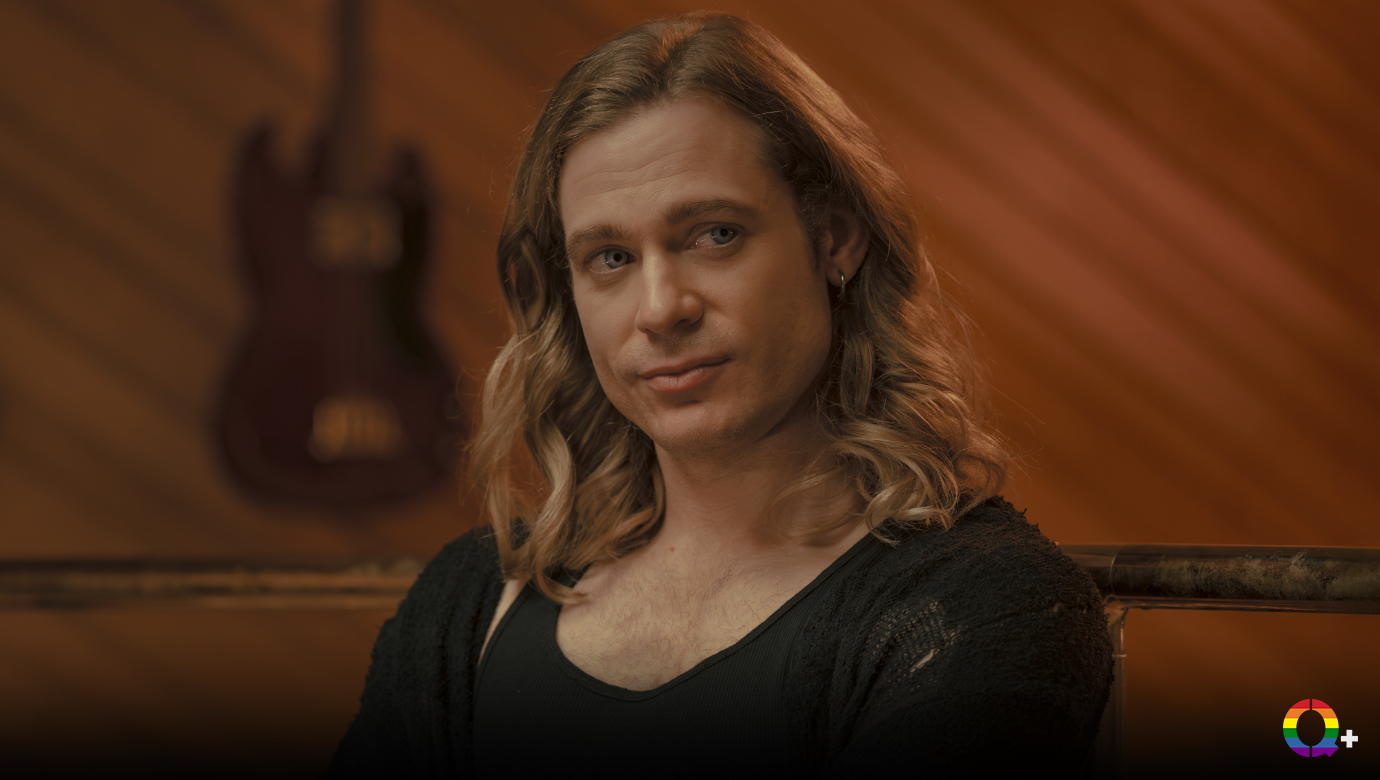
Featured Image: Image Courtesy of AMC. Photo by Sophie Giraud.
Discover more from Q+ Magazine
Subscribe to get the latest posts sent to your email.


