
Here the Whole Time Review: A Queer Coming-of-Age Story About Realizing the Love Story Can Be About You
There’s something particularly cruel about growing up believing that the love stories you see on screen simply aren’t meant for people like you. We’ve all seen the romantic comedies where the impossibly attractive protagonist gets the boy or the girl no matter the circumstances, where everyone seems to know exactly how to flirt and fall in love, and where somehow they all manage to look perfect while doing it. For Felipe (Miguel Lallo), the protagonist of Here the Whole Time (Original Title: Quinze Dias), those stories are exactly what he loves the most, but they’re also exactly what he believes he can never have.
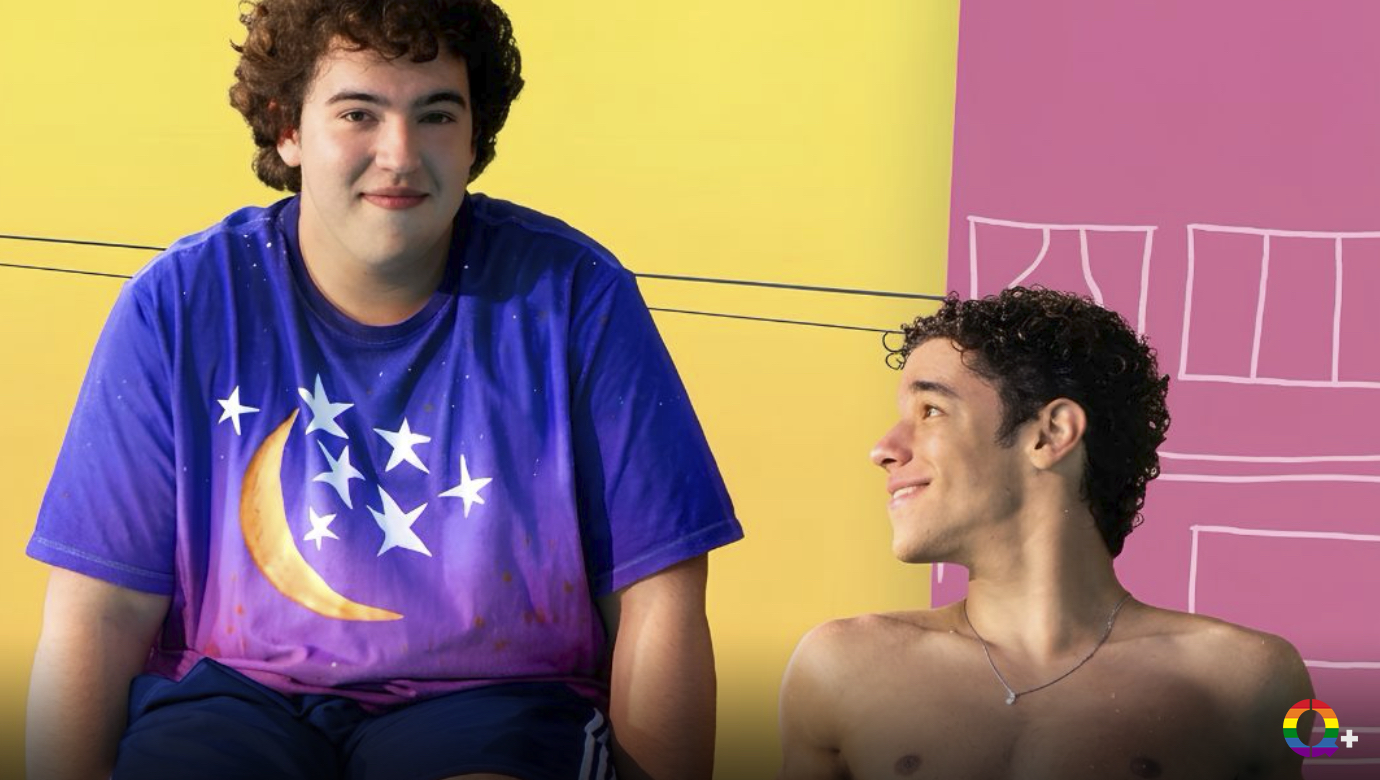
Adapted from Vitor Martins’ bestselling novel of the same name, the Brazilian coming-of-age film follows Felipe, a sensitive teenager who would much rather spend his summer vacation binge-watching movies, playing video games, and reading manga than dealing with the outside world. Unfortunately for him, his carefully planned month of solitude is interrupted when Caio (Diego Lira), his popular childhood friend and longtime crush, moves into Felipe’s home for fifteen days while his parents are away.
And if having your childhood crush suddenly sleeping in your house for half of your summer vacation wasn’t complicated enough, Felipe also has to deal with the fact that he hasn’t spoken to Caio properly in years. The boys have grown apart; Felipe has convinced himself that Caio is the stereotypical straight, athletic guy who would never be interested in someone like him, and neither of them seems particularly thrilled about being forced back into each other’s lives.
From there, Here the Whole Time gives us a familiar queer coming-of-age setup: two boys who have history, unresolved feelings, and considerably more chemistry than either of them is prepared to acknowledge. The story doesn’t exactly reinvent the coming-of-age romance, but it doesn’t need to. Its appeal comes from who gets to be at the center of that romance and the way both boys are forced to confront the assumptions they’ve made about themselves and each other.

Felipe is an immediately lovable protagonist, even when his insecurities make him frustrating and reckless at times. He is a hopeless romantic who has spent years consuming love stories and imagining himself inside them. He can picture every possible scenario in his head, from dramatic confrontations to elaborate romantic moments, but when it comes to actually living those experiences, he assumes they belong to someone else. That’s because Felipe’s biggest obstacle isn’t simply his sexuality, but the way he sees himself.
From the beginning, the film is very open about Felipe’s relationship with his body. As a child, he loves swimming, but being mocked by other kids about his weight eventually takes that joy away from him. By the time we meet him as a teenager, bullying has become such a regular part of his life that he has internalized the idea that his body makes him inherently unlovable. He doesn’t see himself as the cute, slightly chubby protagonist who will eventually get the guy. He sees himself as someone who takes up too much space to ever be desired.
That’s where the film’s representation becomes particularly powerful. We talk a lot about the importance of queer representation, and rightly so, but representation isn’t limited to sexuality or gender identity. It also means allowing people with different bodies, races, ethnicities, and experiences to see themselves as the person who gets the love story. Here the Whole Time understands that beautifully.
Felipe is fat. Caio is athletic and conventionally attractive. The movie doesn’t treat that difference as an obstacle that has to be overcome before Felipe can become worthy of romance. He doesn’t need to lose weight before someone wants him. He doesn’t need a makeover or a sudden transformation into a more conventionally attractive version of himself. The hot boy likes him exactly as he is.
That might sound like a small thing, but we can’t stress enough how significant it is to watch an overweight teenager be the romantic lead in a queer love story and for him to actually get to experience desire, intimacy, heartbreak, and happiness. He gets to be wanted. He gets to be kissed. He gets to have butterflies in his stomach. He gets to be nervous about sex. He gets to have a boyfriend. He gets to be the romantic lead rather than the funny best friend standing on the sidelines.
For anyone who has ever watched a romantic comedy and thought, “That could never happen to me,” there’s something incredibly reassuring about Here the Whole Time and the message it conveys. The film doesn’t ask us to imagine what it would be like if someone like Felipe got the guy someday. It simply lets him get the guy.

The film is equally thoughtful about how easily we can make assumptions about other people while believing that everyone else is making assumptions about us. Felipe spends much of the story convinced that Caio is too straight, too masculine, and too conventionally attractive to possibly be gay. He creates an entire version of Caio in his head based on the things he likes, the way he dresses, and the people he associates with.
The irony, of course, is that Felipe is doing exactly what he hates other people doing to him: judging someone based on appearances.
There is no single way to be gay, just as there is no single way to look, dress or behave if you’re queer—or even straight. Caio can like sports and fantasy books. He can be athletic. He can have a traditionally masculine appearance. Felipe can love musicals, romantic comedies, and pop culture while also being insecure about his body. None of those things determine who they are attracted to, and Here the Whole Time has a lot of fun watching Felipe slowly realize that he has been trying to solve Caio’s sexuality like a pop-culture puzzle.
That conversation expands beyond Felipe and Caio, too. Beca (Mika Soeiro) and Melissa (Bel Moreira), Caio’s friends and another queer couple, are an especially welcome addition because they give the boys something that queer coming-of-age stories don’t always provide: community. Their presence means Felipe and Caio aren’t navigating their sexuality and blooming romance entirely alone. There are people around them who understand, tease them, support them and, naturally, want them together.
Their friendship also gives the movie another opportunity to explore body image. Felipe is surprised when Melissa, whom he considers beautiful and skinny, admits that she feels uncomfortable being seen in a swimsuit. Her insecurities are different from his, but they’re still insecurities. The scene works because it doesn’t suggest that one body type has somehow “earned” insecurity more than another. We can all carry complicated feelings about our bodies, regardless of what they look like from the outside.
That idea runs throughout Here the Whole Time: how much of what we believe about ourselves has been shaped by other people’s judgments, and how much of what we believe about other people is shaped by our own experiences. We can spend so much time assuming that everyone else is judging us that we forget we’re capable of making the same judgments ourselves.
It’s also one of the reasons Felipe and Caio’s relationship works so well.

Their romance is built on something that existed long before either boy understood what it meant. They were childhood friends before they became distant teenagers, and watching them slowly rediscover each other gives the romance an extra layer of tenderness. There’s something lovely about seeing these two boys remember who they were before the world started telling them who they were supposed to be.
The film is especially good when it lets them simply talk. Some of their best moments aren’t grand romantic gestures. They’re conversations late at night, shared interests, old memories, awkward attempts to connect, and little discoveries about the person they thought they already knew. Felipe gradually realizes that Caio isn’t the person he imagined him to be, while Caio begins to understand how much Felipe has been carrying on his own.
That childhood connection also makes the film’s recurring imagery particularly sweet. Their memories of swimming together as kids eventually become connected to Felipe’s relationship with the pool, his body and the confidence he lost along the way. It’s a simple idea, but the movie understands the emotional weight of giving someone back something they thought they had lost forever.
There’s plenty of room for humor along the way, too. The film knows that teenage romance can be dramatic without making every moment feel like a crisis. Felipe’s imagination provides some of the funniest sequences, as he constantly turns ordinary situations into elaborate movie scenarios. There are playful nods to romantic comedies and pop culture throughout, which feel natural because those stories are such an important part of how Felipe understands romance in the first place.
And then there’s Rita (Débora Falabella), Felipe’s mother, who deserves her own paragraph because we absolutely love her.
Rita is the kind of parent queer teenagers deserve to have. She loves her son loudly and unconditionally, but she also knows when to call him out. She sees his insecurities even when he tries to hide them, and she understands that his biggest struggle isn’t simply finding someone who will love him. It’s learning to believe that he deserves that love.
Her relationship with Felipe is one of the film’s biggest emotional strengths. Their conversations give the story a warmth that balances the teenage angst, and her support never feels like a convenient plot device. She’s simply his mother; she loves him, and she wants him to see the things she already sees in him.

One of the film’s most beautiful ideas comes through that relationship: we should be as kind to ourselves as we are to the people we love. Felipe is capable of telling his mother that she is beautiful, iconic, and deserving of better when she is heartbroken. He can defend his friends. He can encourage other people who are struggling with bullying. He can see the beauty in everyone around him. Yet he struggles to extend that same kindness to himself.
For many of us, that contradiction feels painfully real.
We also appreciate that the film doesn’t portray Felipe as a permanently miserable teenager because of his body. Yes, his body image issues affect him deeply. Yes, bullying has changed the way he moves through the world. But there’s still a spark in him that nobody has managed to extinguish.
Even when Felipe is alone, he sings. He imagines. He gets excited about movies. He loves stories. He has a huge capacity for affection. He is, despite everything, a happy kid who has been convinced that he shouldn’t be when someone else is watching. There’s something beautiful about watching him slowly take that happiness back and let it shine into the world.
Caio’s journey is different, but it complements Felipe’s. While Felipe is learning to believe that he is beautiful and can be loved, Caio is learning that he can be himself. His sexuality has been shaped by a mother who has spent years policing his behavior and discouraging anything she considers too feminine or too gay. As a result, Caio has learned to hide parts of himself.
The film doesn’t make his journey identical to Felipe’s, and that’s important. They’re dealing with different kinds of shame and insecurity, even if those experiences eventually bring them together.
Caio has to learn that hiding himself doesn’t protect him forever. Felipe has to learn that hiding himself doesn’t protect him either. And perhaps that’s where the original title, Quinze Dias (“Fifteen Days”), becomes especially meaningful.
Felipe begins the movie watching life happen from his bedroom, imagining the romantic comedy he wishes he could live. He thinks he has already figured out the rules: people like him don’t get the hot guy, people like him don’t get the grand romantic gesture, people like him stay spectators. But fifteen days with Caio slowly prove him wrong.

There are messy moments, misunderstandings, and heartbreak along the way, because this is still a teenage romance and apparently teenagers cannot go fifteen consecutive days without making their lives unnecessarily complicated. But Here the Whole Time never loses sight of the tenderness underneath it all.
The performances help tremendously. Miguel Lallo gives Felipe a warmth that makes his character easy to root for, while Diego Lira brings an appealing vulnerability to Caio beneath his confident exterior. Their chemistry is electric, fun and tender, particularly in those quieter scenes where they’re simply getting to know each other again. The supporting cast also works well as an ensemble, with Débora Falabella standing out for her ability to ground the story and give Felipe’s relationship with his mother the emotional weight it deserves.
But what stays with us most is the film’s refusal to make Felipe’s body a problem that needs solving.
We’ve seen countless coming-of-age stories where an insecure teenager eventually learns to love themselves after changing their appearance, becoming more confident, or receiving validation from someone conventionally attractive. Here the Whole Time takes a different route. Felipe’s body doesn’t have to change for his story to change. He has to change the way he sees himself, and watching that shift happen is one of the film’s most rewarding parts.
The film doesn’t pretend that bullying disappears because you fall in love. It doesn’t suggest that one kiss magically fixes years of insecurity. Felipe still has moments when he doubts himself. Caio still has to deal with his complicated relationship with his mother. Their friends have their own insecurities. There are no magical solutions waiting at the end of fifteen days. What they do find is something much more valuable: people who make them feel less alone.
And that’s what makes Here the Whole Time such a lovely addition to the queer coming-of-age canon. It isn’t trying to reinvent the genre’s structure. We know the ingredients: childhood friends, a crush, forced proximity, misunderstandings, an almost first kiss, a real first kiss, a heartbreak, a grand romantic gesture and, yes, a happy ending. We know how the story works.
But representation changes the meaning of those familiar ingredients. Because when Felipe finally gets his romantic comedy, he isn’t transformed into someone else first. He doesn’t become thinner, cooler, or more conventionally attractive. He doesn’t stop loving the things he loves. He doesn’t have to become a different version of himself to deserve the ending he has been imagining. He simply has to step into the story and claim it as his own.
And maybe that’s the most beautiful thing Here the Whole Time gives us. For queer kids (and basically anybody) who have spent years believing that they’re going to be spectators in everyone else’s lives, seeing someone like Felipe finally realize that the story can be about him too can mean everything.
Sometimes we don’t need a coming-of-age movie to tell us something we’ve never heard before. Sometimes we just need it to show us that the things we were told could never happen to us can happen after all.
Here the Whole Time gives Felipe the kind of ending he has spent his entire life watching other people get. He doesn’t have to change his body, his personality, or the things he loves to earn it. He just has to stop watching from the sidelines long enough to realize that he was always worthy of being the love interest, too.
Here the Whole Time is available to stream on Netflix now. Follow us on X and Instagram for all queer stuff!
Featured Image: Image Courtesy of Netflix.
Discover more from Q+ Magazine
Subscribe to get the latest posts sent to your email.


