The Vampire Lestat’s Montreal EP Gives Us the Most Romantic Song of the Season
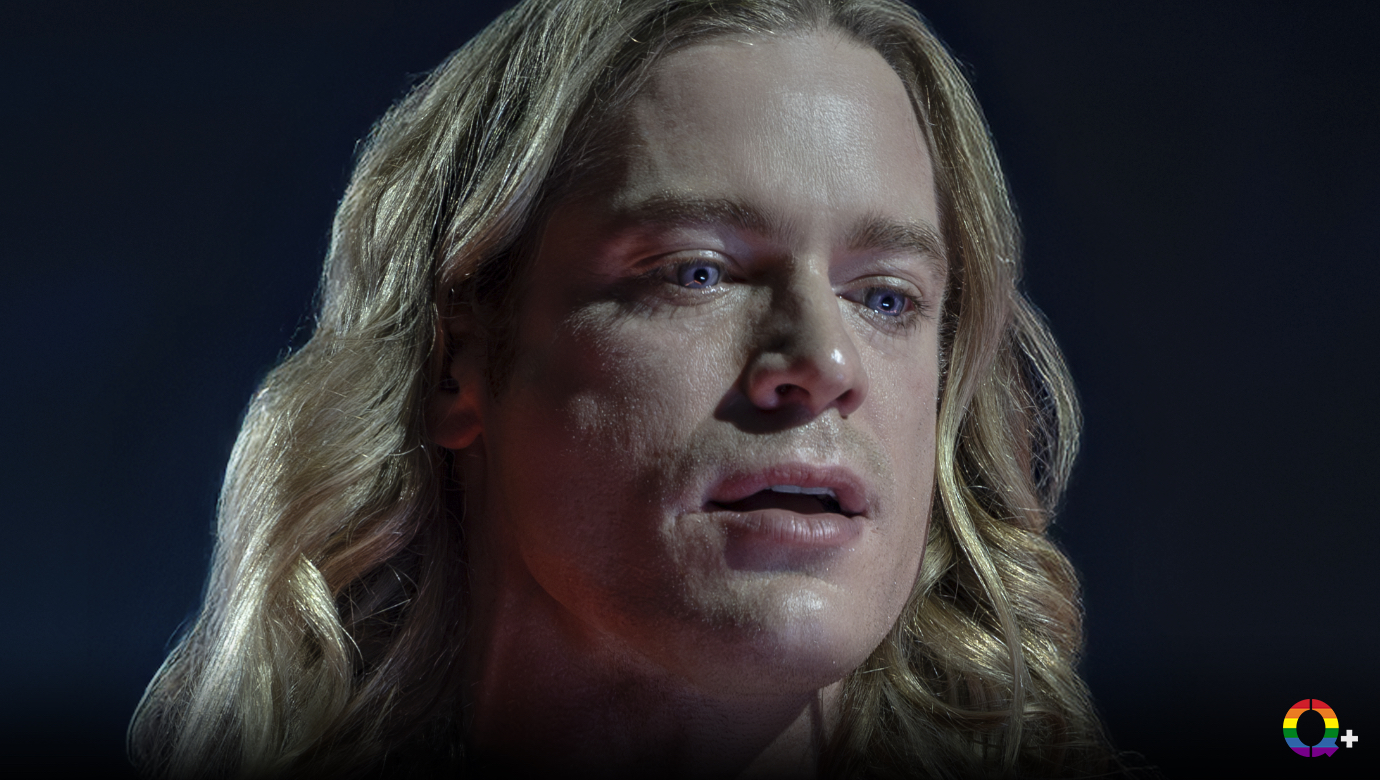
With every new release, The Vampire Lestat continues proving that its soundtrack isn’t simply accompanying the story; it’s telling it. Each EP has offered another piece of Lestat’s (Sam Reid)) emotional puzzle, and now the Montreal EP arrives with just two songs that somehow manage to say more than albums with ten times the tracklist. One of them we’ve known for months, while the other immediately climbed to the very top of our personal ranking.
When AMC first released The Vampire Lestat’s cover of Billy Idol’s Dancing with Myself, we spent an embarrassing amount of time dissecting it. We talked about how layered the arrangement felt and how its rock foundation constantly wove together with hints of paso doble, theatrical flourishes, and contemporary trap influences. Rather than recreating Billy Idol’s classic, the band reshaped it into something unmistakably Lestat.
Looking back now with the context that The Vampire Lestat Episode 6, Montreal, gives us, that interpretation feels even richer. Instead of functioning as part of the band’s official repertoire, the song becomes part of the rehearsal process. It’s musicians playing together, experimenting, teasing one another, and simply enjoying themselves before stepping on stage.
That relaxed atmosphere suddenly explains the playful, almost whimsical energy we noticed months ago. The theatricality isn’t there because they’re trying to impress an audience or make a statement as we originally thought; it’s there because this is simply who they are when nobody’s watching. So we won’t spend more time revisiting the song since we already dedicated an entire article to breaking down the cover, but watching it find its place within the story makes us appreciate it even more. Sometimes a song doesn’t change; the context around it does.
That also means we can dedicate the rest of the word count our lovely editors approved to the song we’ve been dying to talk about since Montreal dropped: Brutal Love.

We’ve noticed a pattern throughout the season where almost every episode has one song that completely steals the conversation. For the New York EP, it was Stained Glass Eyes, Lestat’s heartbreaking song for Claudia (Delainey Hayles). Before that, we couldn’t stop listening to Big Boss because who doesn’t love a diss track, and, of course, The Loneliness, which somehow managed to cling to the top of our ranking week after week despite every new release threatening its position.
Well, congratulations to Brutal Love because it has officially dethroned it. We’re romantics at heart, so finding out this episode’s emotional centerpiece is the song Lestat writes for the love of his life, aka the one and only Louis De Pointe du Lac (Jacob Anderson), meant we never really stood a chance. This song was destined to become our favorite.
There’s just something about a great rock ballad that completely disarms us. Give us soaring strings, devastating lyrics, and a vocalist processing several centuries’ worth of emotional damage, and we’re already halfway sold. Brutal Love is exquisite. Ever since we first heard it, we’ve been obsessing over every line, disappearing down rabbit holes involving mythology, astronomy, religion, Shakespeare, and folklore.
At one point, we’re fairly certain our editor questioned every hiring decision that led to us after reading our increasingly chaotic notes on the lyrics. So, naturally, we’re going to share a few of those thoughts. But before we go any further, though, we should probably clarify that everything that follows is simply our interpretation.
That’s part of what makes great songwriting so rewarding in the first place. Lyrics invite different readings, and this is simply ours. If composer Daniel Hart somehow stumbles across this article, please know we’d happily spend hours picking your brain about every single song on this soundtrack because this one completely broke us.
Seriously. Our inbox is open.

But anygays… the first thing that struck us is how rarely Lestat talks about love in ordinary human terms. He never simply says he misses Louis or wishes he could see him again. Instead, he reaches for the language of the universe itself: threads, stars, planets, atoms, meteors, dust. It’s almost as if everyday language isn’t expansive enough to contain what he’s feeling, so he has to borrow imagery from creation itself. Louis stops being merely the person he loves and instead becomes a force woven into the very structure of existence.
The opening line, “I can feel it, the pull on my thread from a distant, restless hand,” immediately sent our brains in two completely different directions. The first was the East Asian legend of the red thread of fate, the invisible thread said to bind two people destined to find each other no matter how tangled, stretched, or separated they become. Distance doesn’t matter because the connection can never truly be broken.
The second was Greek mythology and the Moirai, the Fates who spin, measure, and cut the thread of every person’s life. Usually that thread connects someone to destiny itself, but here we’d like to think Lestat transforms that idea entirely. His thread doesn’t lead him toward some abstract future; it leads him toward Louis. His fate has become another person.
Even separated by continents, decades, heartbreak, and enough emotional baggage to fill an entire airport, he still feels that invisible pull. The lyric almost blends these two traditions into one beautiful image where love stops being an emotion and instead becomes something fundamental, as undeniable as gravity. After all, gravity doesn’t stop existing because objects drift apart, and neither, apparently, does whatever force keeps these two finding their way back into each other’s orbit.

Then we get “Show me that bitter star,” a lyric that immediately reminded us of Shakespeare’s Romeo and Juliet. Shakespeare constantly frames Romeo and Juliet as star-crossed lovers, governed by a fate written before either of them has any hope of escaping it, trapped inside a love story that promises beauty and tragedy in equal measure. A bitter star feels like that same kind of fate.
Stars usually symbolize hope, guidance, or destiny, but this one carries pain with it. Yet Lestat isn’t asking for a happy ending or an easier path. He’s asking to see the very thing that governs his fate. He’s choosing love even knowing the suffering attached to it.
That also makes the chorus’ title phrase feel almost like a mission statement for Louis and Lestat’s relationship. “Gimme that brutal love” isn’t peaceful or gentle. It isn’t comfortable. It’s obsessive, ecstatic, consuming, devastating, transcendent, and destructive all at once. The song never tries to separate joy from suffering because, for Lestat, the two have become inseparable. The very thing that gives his existence meaning is also the thing capable of breaking him.

One lyric we haven’t been able to stop thinking about is, “Every atom like a planet on fire raging at the sun.” We love the way it collapses the smallest and largest scales of existence into a single image. Atoms become planets, the body becomes a universe, and every single part of Lestat burns with the same impossible longing.
That idea of burning reaches its clearest expression in the meteor, which might be the richest symbol in the entire song. Lestat doesn’t compare himself to a star. He compares himself to a meteor, and that distinction feels incredibly important. Stars shine because they exist (and because gravity keeps smashing hydrogen atoms together through nuclear fusion, but we digress). Meteors shine because they’re burning themselves away. Their brilliance comes from their own destruction.
That’s such a perfect metaphor for Lestat because he isn’t saying his love survives despite the suffering. He’s saying his love creates the suffering, and yet he embraces it anyway because the burning itself has meaning. And that inevitably brought to mind figures like Icarus, Phaethon, and even Lucifer, characters whose brilliance and spectacular falls are inseparable from who they are.
Lestat fits surprisingly well into that tradition. He’s dazzling, proud, larger than life, and repeatedly chooses love, knowing exactly how much it will cost him. If burning is the price of loving Louis, we know he’ll burn, and somehow that’s one of the most beautiful declarations of love imaginable.

The line that completely shattered us, though, was “Writing your name in dust as I fall.” We wish we could tell you we reacted normally to that lyric. Instead, we found ourselves opening a Bible for the first time in decades just to make sure we were remembering the right passage. Dust carries enormous symbolic weight in religion. In Genesis, it’s said that humanity comes from dust and eventually returns to it. It’s a reminder of mortality, impermanence, and human fragility.
But dust is cosmic too. The atoms that make up our bodies were forged inside ancient stars long before Earth even existed. Suddenly, the image begins operating on multiple levels at once. Lestat is writing Louis’ name across the earth, across the stars, across creation itself. The heartbreaking part is that dust never stays still. Wind scatters it. Time erases it. It’s a declaration of love made in one of the most temporary mediums imaginable, and somehow that impermanence only makes the gesture more beautiful.
The lyric “Fuck this crown of blood, cast it to the horizon” fascinated us just as much. Whether you read the crown as Akasha’s blood, immortality, power, responsibility, or some combination of all of them, the gesture feels like total rejection. He doesn’t want it. He doesn’t want power. He doesn’t want immortality’s rewards. He wants Louis. Even the word “cast” carries an almost ritual quality, echoing biblical language about casting away sins, idols, burdens, or earthly temptations.
The song never explicitly mentions God, yet it borrows so much of the emotional language of religious devotion. Everything revolves around Louis. Everything moves toward Louis. Every sacrifice is made for Louis. Mystical writers often describe union with the divine as the organizing purpose of existence, and that’s exactly how Brutal Love makes Lestat describe his love here. Louis becomes the center around which his entire universe turns.

Maybe that’s why Brutal Love refuses to leave our heads. It feels so much bigger than a traditional love song. It layers together mythology, religion, astronomy, literature, and folklore, all in service of expressing one impossible feeling. Fate, gravity, sacrifice, devotion, destruction, creation… they all become different languages trying to describe the same thing: love.
Lestat isn’t merely telling Louis that he loves him. He’s trying to explain that his love has become the law by which his entire universe operates, and ordinary language was never going to be enough for that.
So yes, we owe y’all a small apology for accidentally turning a single song from The Vampire Lestat into what probably qualifies as the introduction to a graduate thesis. Then again, if you’ve been reading our coverage of The Vampire Lestat—or honestly, anything else that lands on our desks—this level of overthinking shouldn’t surprise you anymore. We’re gay scholars, and we take our jobs extremely seriously.
Pitchfork may have given Lestat’s album a 3.1, but in our hearts it’s still a perfect 10. So keep supporting our favorite vampire rockstar, stream the Montreal EP and the rest of his songs wherever you get your music, and if you’ll excuse us, we’ll be listening to Brutal Love on repeat until next week’s release inevitably gives us another excuse to overanalyze vampire feelings.
The Vampire Lestat’s Montreal EP is available to stream on all major music platforms. The Vampire Lestat Episode 6, Montreal, is available to stream on AMC+. Episode 7, The Failures, will premiere on AMC on Sunday, July 19, at 9 pm ET/PT. Seasons 1 and 2 of Interview With the Vampire are available to stream on AMC+, Netflix, and Prime Video (depending on the region). Follow us on X and Instagram for all queer stuff!
Featured Image: Image Courtesy of AMC. Photo by Sophie Giraud.
Discover more from Q+ Magazine
Subscribe to get the latest posts sent to your email.


