
The Vampire Lestat Episode 6 ‘Montreal’ Recap: Brutal Love
Well… somehow we’ve already reached the penultimate episode of The Vampire Lestat Episode 6, Montreal. It honestly feels like just yesterday when we were kicking off this weekly journey in Detroit, wondering where Lestat’s rockstar ambitions would take us. Six weeks later, it’s safe to say the answer has been: absolutely everywhere. We’ve laughed, we’ve cried (a lot), we’ve questioned everyone’s motives, and with only one episode left, this show is somehow still finding new ways to emotionally destroy us.
If New York reopened old wounds and created new ones, Montreal spends the next hour pressing directly on every single one of them. It’s brutal in every sense of the word. We finally get the Loustat we’ve been manifesting all season long, Daniel Molloy (Eric Bogosian) returns for one last interview, long-buried truths are dragged into the light, Lestat (Sam Reid) debuts perhaps his most romantic song yet, the Unholy Family reunites under devastating circumstances, and the episode ends with the kind of emotional whiplash that left us instinctively checking whether our own necks were still attached. We’ll get to how Louis (Jacob Anderson) and Lestat end up in that situation—and, more importantly, how they might get out of it—but we’re getting ahead of ourselves.

Before we dive into everything The Vampire Lestat Episode 6, Montreal, has to offer, we’d like to repeat something we’ve mentioned in every recap. Yes, we know we sound like a broken record, but there’s a reason we keep bringing it up: pay close attention to Lestat’s narration throughout The Failures. What first looked like a stylish framing device has slowly revealed itself to be one of the season’s most important storytelling tools. Lestat was never just recounting the past or reshaping memories for the audience—or whoever eventually gets their hands on The Failures. He’s been leaving breadcrumbs all season long and, every so often, warning us about what’s still waiting around the corner. With only one episode left, those hints have never felt more important.
But anygays, as always, we’re only discussing the events of The Vampire Lestat Episode 6, Montreal. The season finale, future book material, and speculation about what’s still to come won’t be part of our analysis, so you can read freely without worrying about spoilers beyond this episode.
With that said, let’s get into everything The Vampire Lestat Episode 6, Montreal.
PSA: From this point forward, there will be major spoilers for The Vampire Lestat Episode 6, Montreal. If you haven’t watched the episode yet, we recommend coming back once you have. You’ve been warned, so tread carefully.
TW: This recap discusses emotional abuse, grief, sexual assault, child abuse, racist language, and incestuous abuse as depicted or referenced in the episode.

Home Again, But Nothing Is the Same
If The Vampire Lestat Episode 6, Montreal, begins by setting up the season finale, it also gives us something we’ve been waiting years to see: Louis and Lestat functioning like… well, Louis and Lestat. Not as lovers again. Not yet. But something that almost feels more surprising after everything they’ve survived together: companions.
The episode opens with Lestat reflecting on the many versions of himself that have existed across the centuries: the stutterer, the actor, the Keeper, the tourist, the recluse, the rockstar. He describes them as nesting dolls of identity, each version containing another beneath it, before admitting that the autumn of 2025 became another period of hibernation for him. His album has already been released to disappointing mortal reviews, but among vampires it has become something far more dangerous: the soundtrack to the Great Conversion. Fifty thousand vampires are now descending upon Montreal to hear him perform it live.
Despite what the world believes, Lestat never intended to become the face of a revolution. The movement has simply outgrown him, and Gabriella (Jennifer Ehle) has helped steer it into something much bigger than her son ever imagined. Even the concert itself isn’t really for him anymore. It’s his “final gift” to her before he disappears and begins whatever comes next.
We also learn that his band still lives across the street from him, now as newly transformed vampires, with Larry’s (Noah Reid) death still casting a shadow over everyone, especially Alex (Seamus Patterson), whose silence says far more than any confrontation could. Meanwhile, Lestat is tying up loose ends. Fake passports lie waiting on his piano, and a phone call confirms Merrick Mayfair (Sarah Afful)—the powerful witch he’s recruited for one final favor—is already on her way to Montreal.
Before we continue, though, we have to interrupt ourselves for one tiny detail that completely melted us. Back in New York, Louis’ contact name was still saved as “Thomas Pitty He’s a Whore.” Somewhere during the last episode that became simply “Lui.” It’s a blink-and-you’ll-miss-it detail tucked away on Lestat’s phone, but it says an awful lot. “Lui” means “him” in both French and Italian while also sounding almost identical to the way Louis is pronounced. It’s affectionate, understated, and unmistakably personal.

But back to the episode. As Lestat narrates that he’s “coming out of a coma” and finally “feeling alive,” he briefly wonders if perhaps that feeling comes from “him.” Right on cue, Louis walks out of the bedroom. It’s a beautifully simple editing choice that says everything without explaining anything. After spending so much of the season drifting through grief, guilt, and obligation, Lestat finally feels awake again, and Louis has become part of the reason why.
From there, Montreal wastes no time showing us just how much their relationship has changed. They bicker over coffins, argue about their plans, and Lestat complains about Drake releasing fifty songs at once. Figures, right? But more importantly, though, Louis and Lestat have found an effortless rhythm together. The kind that only exists between people who’ve known each other for so long that cohabiting becomes second nature.
It’s really remarkable how natural all of it feels. Louis insists they should cancel the bad idea, meaning their séance with Merrick. Lestat argues they should cancel dinner instead. Louis reminds Lestat that dinner was his idea. Lestat counters that perhaps they should simply stay home answering trick-or-treaters. They sound exactly like the married couple they’ve always been, arguing over their evening plans instead of centuries-old betrayals. And honestly? Good. They’ve earned this.
Even their conversation about Merrick takes an absurd detour when Lestat casually reveals they met through a book club that somehow included Merrick’s uncle Cortland Mayfair (Harry Hamlin), former New Orleans mayor Ray Nagin, and political strategist James Carville. Only The Vampire Lestat could deliver a sentence like that with a completely straight face.

As they walk through teh streets of Montreal, The Failures quickly fills in the gap since New York. It’s been about six weeks since Louis called Lestat in desperation over Regina (Delainey Hayles), and during that time, they’ve simply remained in each other’s lives. We don’t need to see every phone call or text message to understand what happened. Little by little, they’ve rebuilt something they both thought was gone: trust.
Of course, rebuilding trust doesn’t mean they’ve suddenly started agreeing on everything. Louis still thinks the concert is a terrible idea, while Lestat insists the thousands of vampires now swarming the city aren’t his responsibility, even if they’re all there because of him. More importantly, he asks Louis for something surprisingly simple. As his friend, couldn’t he just congratulate him on what he’s accomplished?
Before Louis can answer, Lemuel (Moses Sumney) calls, giving Lestat fresh ammunition to tease both Louis’ affectionate nickname (“Lem”) and the suspiciously warm “you too” he offers before hanging up. Louis immediately fires back, but Lestat is ready with a comeback of his own, reminding him about the money he sent Regina and the phone call she made to him. Honestly, it’s the kind of effortless back-and-forth we’ve been waiting to see all season.
Our favorite exchange, however, comes when Lestat points out just how conveniently close Louis’ restaurant happens to be to his own townhouse. Louis insists it’s nothing more than “a catastrophic coincidence.” Sure, Louis. Whatever helps you sleep during the day.
By the time they arrive at the restaurant, one thing has become impossible to ignore. This is probably the healthiest dynamic we’ve ever seen between them. They’re teasing each other instead of hurting each other, sharing meals instead of accusations, and disagreeing without trying to destroy one another. Somewhere between Toledo, New York, and now Montreal, they’ve become friends again.
That warmth follows them inside. Despite the Halloween disguise, every vampire in the restaurant immediately recognizes Lestat, breaking into applause as though welcoming the reluctant star of the movement he accidentally inspired. Whether he likes it or not, his influence now extends far beyond the music he recorded.
The celebration doesn’t last long. A host soon escorts them to a private dining room, where their mysterious dinner guest is already waiting. It’s Daniel. And suddenly, we realize this was never just dinner: it’s one last interview.

The Man Holding All the Cards
If the first act of The Vampire Lestat Episode 6, Montreal, lets Louis and Lestat settle into an unexpectedly comfortable rhythm together, dinner with Daniel shifts the balance of power entirely. For once, they’re not the ones steering the conversation. Daniel is.
From the moment the three vampires sit down together, something feels… different. After his conversation with Armand (Assad Zaman) in New York, Daniel already knows far more than he’s letting on. He isn’t searching for answers anymore. He’s testing reactions, deciding which truths to reveal and which ones to keep in reserve.
His opening question proves it immediately. Daniel asks what happened after Louis found Lestat in New Orleans following the revelations in Dubai. Seventy-seven years of silence ended in the middle of a hurricane, and Daniel naturally wants to know what either of them said. Neither vampire gives him the satisfaction. Louis claims he doesn’t remember. Lestat insists he couldn’t hear anything over the storm. They joke that they mostly nodded at each other until Daniel finally calls them both assholes.
Honestly? We hope that conversation stays between them forever. After watching the most intimate parts of their relationship become in-universe books, interviews, documentaries, and public spectacle, it feels important that something finally belongs only to Louis and Lestat.
When Daniel realizes that the story isn’t happening, he abruptly stops recording, seemingly ready to settle for whatever footage he already has. Louis immediately senses something’s wrong. Daniel never gives up that easily. So he asks whether that’s really it, and sure enough, one final “gotcha” question appears.
He asks Louis whether “the vampiric love fog” kept him from discovering Daniel’s own secret during the Dubai interviews. It’s the same question Daniel asked Armand back in The Devil’s Road, and now he finally has the chance to ask Louis directly. Louis explains that he never tried. He deliberately stayed out of Daniel’s head because he wanted to respect his privacy.
Daniel thanks him. Well… “thanks” might be generous. His response drips with sarcasm, making it clear something beneath his usual confidence is simmering. It’s the first sign that Daniel arrived carrying something far heavier than we know, and the rest of dinner only reinforces that feeling.

He asks whether Pitchfork’s brutal review has made Lestat’s transition from rockstar to Dark Monarch any easier. Lestat dismisses the criticism altogether. The album no longer belongs to him. He gave the Great Conversion its anthem. Whatever happens next belongs to everyone else.
Then Daniel asks what Sheridan Blackhood (Lestat’s latest identity) plans to do once all of this is over. Lestat’s answer is wonderfully ordinary. He dreams about forests, a small cabin, spending his nights transcribing birdsong, maybe playing Sondheim and Ryuichi Sakamoto in a hotel lounge for a decade. It’s almost surreal hearing someone who’s spent centuries chasing greatness dream about something so peaceful. And, almost instinctively, he looks toward Louis while describing that future.
Louis smiles, because of course he does. But the moment doesn’t last.
The restaurant’s chef presents a distant descendant of the Lioncourt family, whose blood is shared ceremoniously between all three vampires. It should feel celebratory. Yet Daniel refuses to let the atmosphere stay warm for long. Instead, he asks whether Lestat is still fanging Sofia. It’s such an oddly specific question that the mood shifts instantly.
Lestat hesitates before landing on a maybe. Daniel follows up by asking whether Louis has met her yet, then volunteers the story of how Lestat met Sofia in the 1980s before asking, without breaking eye contact, whether Lestat is ready to “drink his own.”
The exchange is deeply unsettling. Daniel isn’t making conversation. He’s setting something in motion, carefully watching every reaction while holding back the one piece of information that could unravel everything Louis and Lestat have spent the past six weeks rebuilding. Neither of them seems to notice what he’s really doing. Vampire love fog, perhaps?

Back in the car, Louis immediately comments on how strange Daniel seemed throughout dinner. Lestat dismisses it as Daniel simply being Daniel, though even he sounds unconvinced. Their conversation is interrupted when a nearby car starts blasting Cabbage, and its passengers excitedly wave at Lestat. Louis encourages him to roll down the window and give them something. After a little resistance, he does.
Watching Lestat happily sing along with complete strangers is unexpectedly delightful. It also reveals something about Louis. Despite insisting all episode that the concert is a terrible idea, he can’t hide how proud he is of everything Lestat has accomplished. He tells him exactly that, and judging by Lestat’s face, those words mean far more than any review ever could.
Louis then thanks him for the custom coffin, prompting Lestat to finally ask something that’s clearly been on his mind since reading Daniel’s book. Were the visions Louis had of him throughout his years in Paris real? Louis admits they were, not because Lestat’s spirit was actually there, but because of the guilt he’d carried all those years. Guilt over sharing a coffin before slitting Lestat’s throat. Guilt over leaving him behind. Guilt over believing he’d killed him.
In return, Louis wonders whether Lestat has ever seen him too. It’s fascinating watching Lestat answer without really answering. He never admits that Louis has haunted him just as persistently—even though we’ve spent an entire season watching Louis become one of the muses behind his music. Instead, he vaguely blames the songs for “shaking loose a bone or two.”
Louis immediately calls him out. It’s classic Lestat. He expects emotional honesty from everyone else while revealing as little of himself as possible.

One of the episode’s standout conversations comes here. Louis jokingly points out that after dragging him to countless operas, Lestat somehow forgot to mention starring as Lélio or founding a murderous theater company with his ex-boyfriend. Lestat simply explains that he wanted to experience his life with Louis as though he’d only just been dragged out of the bayou—a fresh start, untouched by everything that came before.
Naturally, Louis brings up Antoinette (Maura Grace Athari) because New Orleans wasn’t just the two of them. Lestat insists she was only a voice he could fuck. Louis reminds him that she cut off one of her fingers because of him. Lestat argues that part wasn’t actually his fault; she genuinely thought the Dark Gift would make it grow back.
Eventually, the jokes give way to something much heavier. Lestat admits he kept Antoinette around to provoke Louis out of his depression and later to punish him. When Louis asks why he keeps hurting the people he loves, Lestat instinctively blames the blood of Akasha (Sheila Atim). Louis refuses to let him hide behind that excuse. “It’s not the blood,” he says, “It’s what you do with it.”
The almost motivational quote makes them both burst into laughter, with Lestat joking that Louis’ next business venture should be a chain of vampire gyms. Still, Louis isn’t finished. He wants to know the answer, so he asks one last time: Why?
Lestat lowers his eyes before answering with devastating simplicity: ”Because I’m a monster.” It’s heartbreaking, not because Lestat has never done monstrous things. He absolutely has. It’s heartbreaking because, after everything we’ve learned over the last six episodes, he still believes that’s the truest thing about himself. And he still can’t imagine that Louis—or anyone else—might someday see him differently.

A Brutal Love Song, A Brutal Truth
If the first half of The Vampire Lestat Episode 6, Montreal, lets us believe Louis and Lestat have finally found some peace, the second half immediately reminds us that peace has never lasted very long for either of them.
Louis finally meets Sofia, greeting her in Italian before discovering she’s every bit as charming, observant, and unsettling as he imagined she might be. She already knows far more about Louis than he expects, teasing that she’s delighted to meet the “infamous” Louis while subtly making it clear she’s been hearing stories about him for quite some time.
As they settle in, the band eases into a cover of Billy Idol’s Dancing with Myself, encouraging Lestat to sing along. It’s a surprisingly playful moment that also gives new context to one of the season’s earliest musical releases.
When AMC first released Lestat’s cover months ago, plenty of viewers questioned why this particular song had been chosen or why it had been given so many different arrangements. Seeing it performed here suddenly makes everything click into place. It isn’t a random cover or simply another album track. It’s part of the band’s rehearsal process, capturing the relaxed atmosphere before the episode completely pulls the rug out from underneath everyone.
As the music continues, Louis and Sofia keep talking. Louis jokingly wonders whether she’s really responsible for bringing thousands of vampires to Montreal, observing that it sounds like a disaster waiting to happen. Sofia doesn’t disagree. Instead, she subtly marks her territory, mentioning that Lestat told her Louis didn’t want him to perform tomorrow. It’s an almost imperceptible move, but it says a lot. Sofia wants Louis to know she’s been part of Lestat’s plans, his confidence, and his private conversations. Louis simply smiles and replies that none of it matters anyway. Lestat is going to do whatever Lestat wants.
Sofia then suggests Louis should be the one missing the concert. Vampires are arriving from Paris, Dubai, and Detroit. Some admire him, sure. Others would happily see him dead. But Louis can’t imagine missing it because he knows Lestat would be hurt if he didn’t show up. Sofia says that if he insists on coming, he should stay close to her because she’ll protect him.
It’s an incredibly loaded conversation because we know who Sofia really is. Louis has no idea he’s speaking to Gabriella de Lioncourt, Lestat’s mother, the woman who’s been quietly helping orchestrate the Great Conversion from the shadows. So her warning doesn’t feel casual; it feels informed.

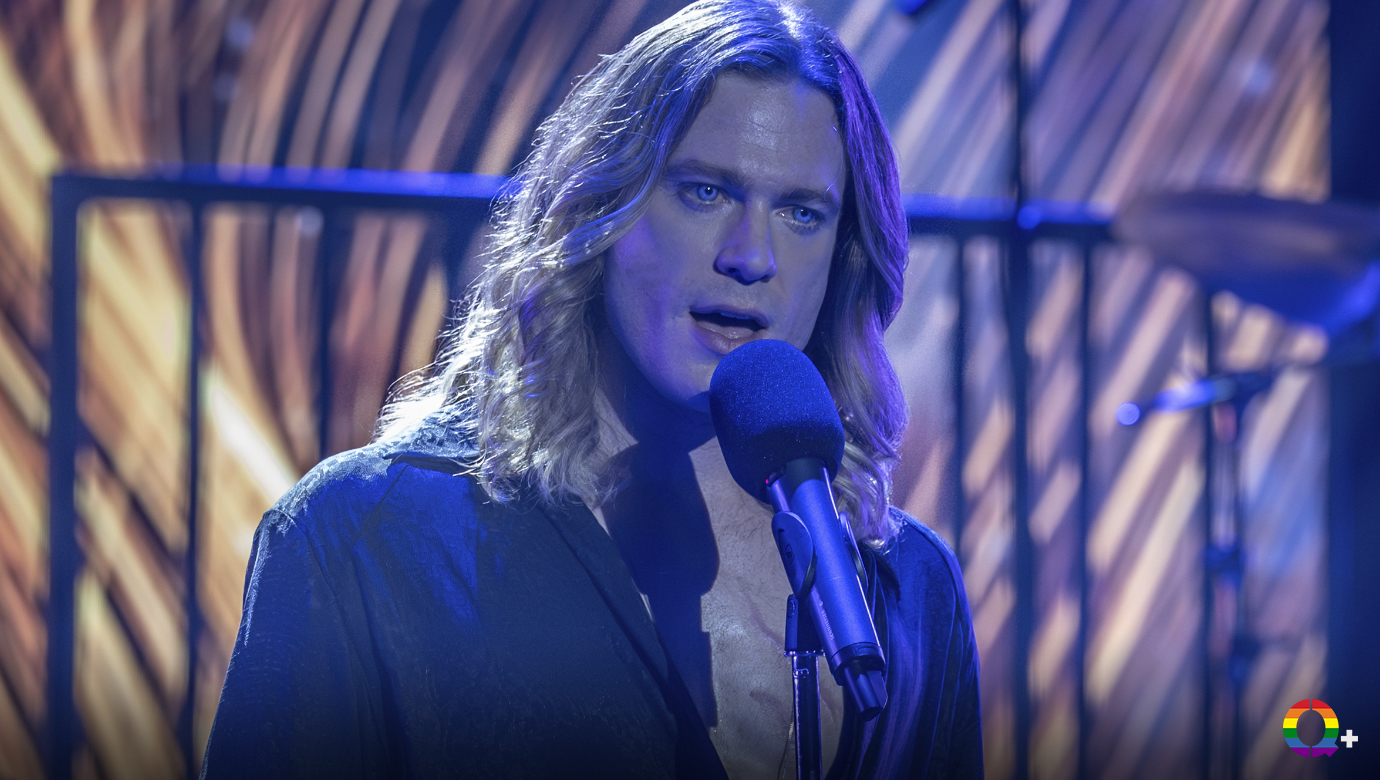
Eventually, Lestat asks Louis—and yes, Gabriella too, but let’s be honest, he’s only interested in Louis’ opinion—to help settle a debate within the band. They can’t decide whether one particular song belongs in tomorrow night’s setlist, so Lestat asks for “brutal truth for a brutal song.” Then he begins singing Brutal Love.
The song is not exactly a surprise for the Beautiful Unwell. It appeared on the setlist during The Vampire Lestat: One Night Only event back in June, but we’ve all been waiting to discover where it fits within the story. Now we know.
It’s a love song for Louis and Louis only. Every lyric reaches directly toward the man sitting in the audience, transforming what should be a simple rehearsal into a love confession. Lestat is no longer asking whether the song belongs in tomorrow’s concert. He’s serenading Louis, and it’s every bit as emotionally devastating as we’d hoped.
Louis does everything he can to keep his composure, but the emotion is written all over his face. Gabriella notices too. Back in Toledo, she first realized just how important Louis was to her son when Lestat froze time to sing directly to him. There, Louis represented an inconvenience. Here, Gabriella finally understands the truth. Louis isn’t simply another chapter in Lestat’s immortal life. He’s the one person capable of pulling him somewhere Gabriella cannot follow.
That realization lingers after rehearsal ends. Before Louis returns to the car, Gabriella asks Lestat if she can have a moment alone with him. It’s a telling request. She hasn’t really managed to get him by himself all evening because Louis has been at his side from the moment he arrived. At first, the conversation feels practical. Gabriella reminds him about the passports she left behind and continues outlining the plan for after tomorrow’s concert.
Then she kisses him. But for the first time since we’ve known these characters, Lestat doesn’t simply endure it. He visibly recoils, gently but unmistakably pulling away before the kiss can deepen. Neither of them comments on it because they don’t have to. Whatever complicated relationship exists between them, something has shifted. For one brief moment, Lestat reclaims a piece of himself by drawing a boundary his mother never allowed him to have.
Tragically, that moment of agency lasts only a few minutes.

Waiting in the car, Louis receives a YouTube link from Lemuel. Daniel has uploaded an “exclusive” clip from his upcoming documentary Interview With the Vampire: Lestat. And suddenly, his strange behavior during dinner makes perfect sense. The questions about Sofia. The sarcastic tone. The repeated attempts to provoke Lestat. Daniel wasn’t making conversation. He was baiting them while already holding the knife.
The video itself is devastating. Using secretly recorded footage, we assume Alex filmed, Daniel, with Armand’s help, publicly identifies Sofia as Gabriella de Lioncourt before revealing intimate footage of her and Lestat together inside the recording studio. Rather than presenting the relationship for what it actually is, the clip repackages centuries of abuse as a salacious scandal, inviting outrage, ridicule, and voyeurism.
It’s cruel. It’s sensationalized. And, perhaps worst of all, it weaponizes one of the most traumatic experiences of Lestat’s life for public consumption. That’s exactly the reaction Daniel and Armand intended to provoke.
Louis, who has absolutely no understanding yet of how that relationship came to exist, responds exactly the way most people probably would: he’s horrified. Trying to make sense of what he’s just learned, he demands explanation after explanation, each question landing harder than the last. Based solely on what Daniel’s video presents, Louis believes he’s confronting a consensual relationship.
We, however, have enough context to understand that the truth is far more complicated. So when Lestat becomes physically ill, it’s impossible to keep viewing this as an exposé about some vampire affair. This isn’t a scandal being exposed. It’s abuse being stripped of its context and broadcast to the world as entertainment.
That becomes even clearer the more Louis presses. Lestat doesn’t seem defensive so much as desperate to explain something he has spent centuries struggling to understand himself. His breathing becomes uneven. His thoughts fracture. Eventually, words stop being enough altogether. And he simply falls apart.

And this may be one of Sam Reid’s finest performances across the entire series. Lestat doesn’t manipulate. He doesn’t perform. He doesn’t redirect the conversation. As Louis struggles to process Daniel’s version of events and even calls Lestat’s relationship with Gabriella a sickness, Lestat responds through tears, panic, and overwhelming shame.
He reminds Louis that only weeks earlier, Louis called him while paying strangers to impersonate Claudia and Madeline, trapped inside grief so overwhelming he could barely distinguish reality from fantasy. Lestat never called him sick. Never judged him. Never walked away. Instead, he opened his home, listened, and spent weeks helping Louis find his footing again.
Watching Louis realize the depth of Lestat’s pain changes everything. His anger evaporates. Rather than continuing the argument, he steps forward, apologizes, and simply holds him. It’s an astonishingly intimate moment because, as far as we can remember, this may be the first time in Lestat’s entire life—human or vampire—that someone has responded to one of his complete emotional collapses with comfort instead of abuse, fear, anger, or rejection. And Lestat lets himself accept it.
Later, sitting together in a bar, the conversation shifts from confrontation to understanding. Lestat tries to explain Gabriella as best he can, describing a woman trapped by the limitations of her century, the only person who ever showed him genuine affection growing up. When Louis carefully asks whether anything had happened before Paris, Lestat answers with silence. He doesn’t deny it. He simply can’t say it. And that says more than any explanation ever could.
Louis also throws in one particularly strange line, casually mentioning that a cousin once stuck his fingers in him and gave him a dollar afterward. We want to be careful discussing this moment because, despite the disturbing wording, the series offers almost no context. On rewatch, the exchange almost plays as Louis’ dark attempt to lighten an impossibly uncomfortable conversation, something Lestat’s immediate “Louis!” seems to reinforce. But whether the line is meant as gallows humor, a genuine disclosure, or something in between, the episode simply doesn’t tell us. What we can say is that, regardless, Louis is trying to meet Lestat with empathy. And by the end of the conversation, something important has shifted.
Louis apologizes—not because he suddenly understands everything, but because he realizes he judged before he listened. Lestat, meanwhile, is understandably devastated that millions of people can now watch Daniel’s video. But when Louis suggests the public’s attention will eventually move on, Lestat reveals what truly terrifies him.
It’s not the internet. It’s not the headlines. It’s Louis.
Because if it matters to Louis, it matters to him. For all the public humiliation Daniel and Armand have unleashed, the only opinion that truly matters to Lestat is still Louis’.

The Unholy Family’s Last Conversation
If Brutal Love and everything that followed left us emotionally exposed, the séance that follows tears away whatever defenses we still had left. For weeks, Louis and Lestat have circled the same impossible question. They’ve mourned Claudia (Delainey Hayles) separately, blamed themselves in different ways, and wondered whether contacting her spirit was even a good idea. Neither of them, however, seems prepared for the possibility that Claudia might not want the apology they’re so desperate to give.
When they arrive back at Lestat’s townhouse, Merrick is already waiting. Over the past month and a half, she’s listened as they’ve gone back and forth over whether they should attempt this at all, and now that they’ve finally committed, she offers one warning after another. Spirits are unpredictable. Those taken violently from life, even more so. Calling upon a murdered daughter through the men who shaped—and ultimately destroyed—her life has all the potential to end badly. But they don’t listen.
Even before the ritual begins, the room feels impossibly heavy. Merrick immediately senses the lingering tension between Louis and Lestat and is forced to separate them around the circle before she can continue.
When Claudia finally appears, she doesn’t arrive as the forgiving daughter either man has secretly hoped to find. She arrives furious. At first, she manifests only briefly through Merrick, violently slamming the medium against the table before disappearing again. Louis and Lestat beg Merrick to continue despite the obvious danger, willing to pay whatever price she asks. She channels Claudia once more, but the spirit quickly overwhelms her body. Merrick collapses, and Claudia steps into the room herself.
There will be no reconciliation tonight. Only reckoning.

One of the episode’s greatest strengths is that it refuses to soften Claudia’s anger simply because she’s dead. Too often, stories treat death as something that automatically brings wisdom, forgiveness, or peace. The Vampire Lestat rejects all three ideas. Claudia isn’t calmer. She isn’t healed. If anything, she’s even angrier than she was in life. And honestly? She has every reason to be.
So she starts with Louis.
Everything Louis believed this séance might accomplish collapses almost immediately. His attempts to explain his grief, his guilt, and the decades he’s spent preserving Claudia’s memory are met with absolute contempt. The dress hanging on the wall, the diaries he carefully protected, every ritual of remembrance he’s built around her become, in Claudia’s eyes, another monument to his inability to let her go rather than an act of love.
It’s painful because Louis isn’t lying. He truly has spent decades drowning beneath the weight of losing her. But Claudia didn’t come back to comfort her father. She came back to finally say everything she’d never had the chance to say.
Her words become increasingly brutal, deliberately reaching for the deepest wounds she knows Louis carries. She attacks his guilt, his dependence on her, his inability to define himself outside the people he loves, and even weaponizes the racial trauma that shaped his mortal life because she knows those words will hurt the most.
We also want to be careful discussing this scene. The language Claudia uses is intentionally cruel, not because we believe the series is endorsing it, but because Claudia is trying to inflict maximum pain. Every insult is carefully chosen, and every accusation lands exactly where she intends. Eventually, Louis reaches his breaking point, demanding to know whether any of what he did for her mattered and wondering about everything he believes she should be thanking him for.
Claudia immediately turns that argument back on him. She reminds him that, seventy years later, he only killed Bruce (Damon Daunno) for himself, not for her, before delivering perhaps her most devastating observation of all. The words from her diaries—the words she wrote while trying to process her abuse—ended up being used by two of the men she hated most.
It’s a brutal indictment of how Claudia’s own voice continued to be filtered through the people who hurt her, even after her death.

Then she turns toward Lestat. The anger doesn’t disappear. It simply changes shape. Unlike Louis, Lestat already knows Claudia hated him. She doesn’t need to convince him of that. Instead, she chooses humiliation. She gleefully recounts how thoroughly she outplayed him in New Orleans, how she manipulated events to take Louis away from him, and how completely she dismantled the carefully controlled world he’d built.
That humiliation carries an even deeper sting. Back in Toledo, Lestat recalled his father predicting that one day his own children would shame him the way Lestat had shamed him. Watching Claudia revel in recounting her victory feels like that prophecy is finally coming full circle.
She also finally settles one of the season’s longest-running mysteries. Claudia openly admits she lied about the train incident. For weeks, viewers have wondered why Lestat repeatedly insisted it never happened when Claudia herself documented it in her diaries. Now we know why. She fabricated the accusation because she knew it would permanently turn Louis against him. It was never a contradiction in the writing. It was a lie that survived because everyone believed Claudia over Lestat—and with good reason. By then, she’d become every bit the storyteller he was.
But Claudia isn’t finished. She mocks his revenge. She mocks his grief. She mocks the songs he’s written in her memory.
“A dress on the wall. A song on the radio.” She tells her parents. Neither changes what they did to her.
Then, Claudia wonders about Madeline. For the first time since appearing, Claudia stops trying to hurt them and instead asks where she is. She can’t find her. She doesn’t understand why she’s alone. The only person who ever truly chose her is missing, and Claudia admits she’s spent what feels like an eternity searching for her without success. It’s one of the most heartbreaking revelations the series has delivered all season.
The one person who loved Claudia without trying to possess her, shape her, or use her isn’t there. Even in death, Claudia remains trapped inside someone else’s story while being separated from the one person she actually wants to spend eternity with.
Watching Louis and Lestat realize that is almost unbearable. Neither of them can offer comfort. Neither of them has an answer. Neither of them can fix it. Louis can do little more than stare in stunned silence while Lestat can’t stop the tears from falling as Claudia repeatedly screams Madeline’s name, until her voice finally disappears and Merrick closes the gate.
In the end, that’s what makes the séance so extraordinary. Neither Louis nor Lestat receives the forgiveness they wanted. Neither gets closure. Neither even gets to explain themselves. Instead, Claudia finally receives something the series denied her throughout both Interview with the Vampire and The Vampire Lestat: the last word. And after everything she endured, it couldn’t have ended any other way.

Tomorrow Was Finally Within Reach
After everything that happens during the séance, Louis and Lestat don’t immediately rush into another argument. They simply walk. Claudia gave them exactly what they asked for: one last chance to hear her voice and talk to her. It simply wasn’t the conversation either of them imagined. Louis admits that, for one brief moment, he found himself expecting gratitude from Claudia and is horrified to realize that impulse even existed inside him. Lestat, meanwhile, points out that at least she spared them the ambiguity. They finally know exactly where they stand with their daughter.
They don’t dwell on Claudia’s words for very long. Not because they don’t care, but because, deep down, neither of them heard anything they haven’t already spent decades believing about themselves. The séance didn’t create new guilt. It confirmed the guilt they’ve both been carrying all along. Now all that’s left is learning how to live with it.
The conversation gradually shifts away from Claudia and back toward themselves, and for a few precious minutes, The Vampire Lestat Episode 6, Montreal, becomes one of the most hopeful episodes the series has ever given us.
Sitting together on a park bench, the two begin asking questions they’ve spent decades avoiding. Lestat admits he still doesn’t understand why he continually sabotages himself. Looking back on everything involving Gabriella, he realizes some part of him must have wanted Louis to know the truth. After all, he was the one who brought Gabriella into Louis’s orbit. He invited Louis to meet her. He hung her portrait over their coffins back in New Orleans. Somewhere beneath all the shame, avoidance, and self-loathing, he wanted that secret to come into the light.
He just doesn’t understand why. Or why now. It’s another remarkable piece of vulnerability from Lestat. For perhaps the first time, he isn’t trying to justify his behavior or wrap it in theatrical language. He’s simply acknowledging that he doesn’t fully understand his own patterns.
Louis, surprisingly, meets that confession with compassion rather than judgment. Instead of blaming Lestat, he wonders whether self-destruction is simply part of the vampire condition itself. When death no longer exists as an ending, what replaces it? What keeps eternity moving forward? Maybe creating chaos is the only way some immortals know how to keep living. It’s one of those beautifully understated exchanges where neither of them claims to have the answer. They’re simply trying to understand each other.

Then comes one of the sweetest conversations these two have ever shared. Louis finally asks the question we’ve known he’s wanted answered ever since Toledo. Were the songs about him? Lestat smiles and admits that most of them. It’s a wonderfully understated payoff. Louis never truly believed Lestat when he insisted the songs weren’t about him, and now he finally gets the confirmation he’d wanted all along.
That honesty becomes contagious. Lestat asks the question Louis previously dismissed as nothing more than “a catastrophic coincidence.” Did Louis really open a restaurant only three blocks away from his townhouse because of him? This time, Louis doesn’t dodge it. He smiles and admits he did.
After an entire season built around miscommunication, half-truths, and emotional avoidance, these two finally start choosing honesty. And then, Louis does something even bigger: he imagines a future together. Not an extravagant one. Not penthouses or billion-dollar hotel empires. Just the two of them somewhere in the desert, living in a trailer park surrounded by flower boxes, watching birds, growing evening primroses, and existing together in peace. It’s almost painfully ordinary. Which is exactly what makes it so romantic.
One of our favorite little details comes when Louis asks whether there are birds in the desert. Earlier in the episode, Lestat confessed to Daniel that his dream was to spend the next decade transcribing birdsong. Louis remembered. Without drawing attention to it, he quietly folded Lestat’s dream into the future he was imagining for both of them.
For the first time all season, Louis and Lestat aren’t talking about surviving; they’re talking about living. Their fingers brush together. They smile. And for a brief, beautiful moment, it genuinely feels like tomorrow might finally belong to them. Which, of course, is exactly when The Vampire Lestat reminds us that tomorrow is never promised.
Louis notices someone watching them from across the park. Lestat immediately recognizes that it’s Alex. Before either of them has time to understand why he’s there, two dark figures emerge from the shadows. Two blades flash. In a single horrifying instant, Louis and Lestat are decapitated.
Only after their heads hit the ground do the attackers reveal themselves. The Devil and his minion: Armand and Daniel.

The Vampire Lestat Episode 6, Montreal: Final Thoughts
If there is one thing The Vampire Lestat has consistently excelled at this season, it’s rewarding patience. Back in Detroit, we suggested paying close attention to the way Lestat narrated his own story because something about his voice would gradually change. Week after week, those subtle shifts kept revealing themselves. The bravado started cracking. The performance became harder to maintain. The narrator became more honest. And in Montreal, the mask finally begins to fall away completely.
This isn’t just the episode where Louis and Lestat begin finding their way back to each other. It’s also the episode where Lestat stops pretending to be invincible. He lets Louis see him at his most broken. He admits he doesn’t understand why he keeps sabotaging himself. He imagines a future that doesn’t revolve around reinvention, rock concerts, or becoming the face of someone else’s revolution. Instead, he dreams about forests, birds, hotel lounges, and eventually, a quiet trailer somewhere in the desert with the only person who’s ever truly felt like home.
For about five minutes, it genuinely feels possible. But we’re watching The Vampire Lestat, so of course it’s not—or at least not yet.

That final attack is undeniably shocking, but we don’t think the real question is whether Louis and Lestat survive. The season itself has quietly prepared us for that answer. We already know Louis lives long enough to attend the 2026 auction we saw back in Detroit. Lestat’s narration throughout The Failures has repeatedly pointed toward the final concert he definitely attends. Even Dr. Fareed (Gopal Divan) hinted back in Toronto that exceptionally powerful vampires can survive decapitation far longer than most would assume.
The real question is: why did Armand and Daniel do it? Assassination clearly isn’t the goal. If it were, there would be easier ways to kill these two vampires. Besides, the Great Conversion has already created fifty thousand new immortals. Decapitating Louis and Lestat isn’t going to stop that now. So what exactly are they trying to accomplish? Is this simply revenge for a disastrous interview, a humiliating prank, and a very public diss track? Or is it part of something much larger?
And also…Why now? Their timing is terrible for our Loustat agenda. For the first time in decades, Louis and Lestat had finally allowed themselves to imagine tomorrow. They’d stopped talking about guilt and started talking about ordinary lives. They’d stopped looking backward at everything they’d lost and begun imagining what healing might actually look like. Then, in a single instant, that future was ripped away.

We know now that everything comes down to the final episode, and we honestly couldn’t ask for a stronger setup. Armand has finally stepped fully onto the board after orchestrating events from the shadows all season. Daniel has made it clear he’s no longer interested in simply documenting history—he intends to shape it and has chosen a side. Gabriella’s Great Conversion continues building toward the catastrophe Lestat has been warning us about since the premiere. Somewhere beyond all of that, Akasha is still waiting to awaken.
If The Vampire Lestat Episode 6, Montreal, accomplished anything, it’s proving that this season was never simply about a vampire becoming a rockstar. It has always been about everything that concert is destined to unleash.
Now we want to hear from you. What did you think of The Vampire Lestat Episode 6, Montreal? How did you react to Daniel exposing the truth about Lestat and Gabriella’s relationship to the entire world? Did Brutal Love completely destroy you the way it destroyed us? How did you interpret Claudia’s final conversation with Louis and Lestat? And what do you think Armand and Daniel are really planning with that decapitation?
Come talk to us across all our social media, and we’ll see you next week one last time as we break down the season finale of The Vampire Lestat, Episode 7, The Failures.
The Vampire Lestat Episode 6, Montreal, is available to stream on AMC+ now. Episode 7, The Failures, will premiere on AMC on Sunday, July 19, at 9 pm ET/PT. Seasons 1 and 2 of Interview With the Vampire are available to stream on AMC+, Netflix, and Prime Video (depending on the region). Follow us on X and Instagram for all queer stuff!
Featured Image: Image Courtesy of AMC. Photo by Sophie Giraud.
Discover more from Q+ Magazine
Subscribe to get the latest posts sent to your email.


