
Twinless: James Sweeney and Dylan O’Brien Deliver a Twisted, Tender Tale of Grief and Connection
Some movies are best experienced with as little information as possible, and Twinless falls firmly into that category. You know how sometimes you think you’ve got a film pegged—you see the poster, the cast, the premise, and assume you know what’s coming—but then it swerves into entirely different territory? That’s exactly what James Sweeney’s latest does. Written, directed by, and co-starring Sweeney himself alongside Dylan O’Brien, this dark comedy-turned-psychological drama is nothing you’d expect. Instead, it’s a film full of surprises, curveballs, and unexpected tenderness, exploring grief, obsession, love, and the complicated ties that bind us to others.
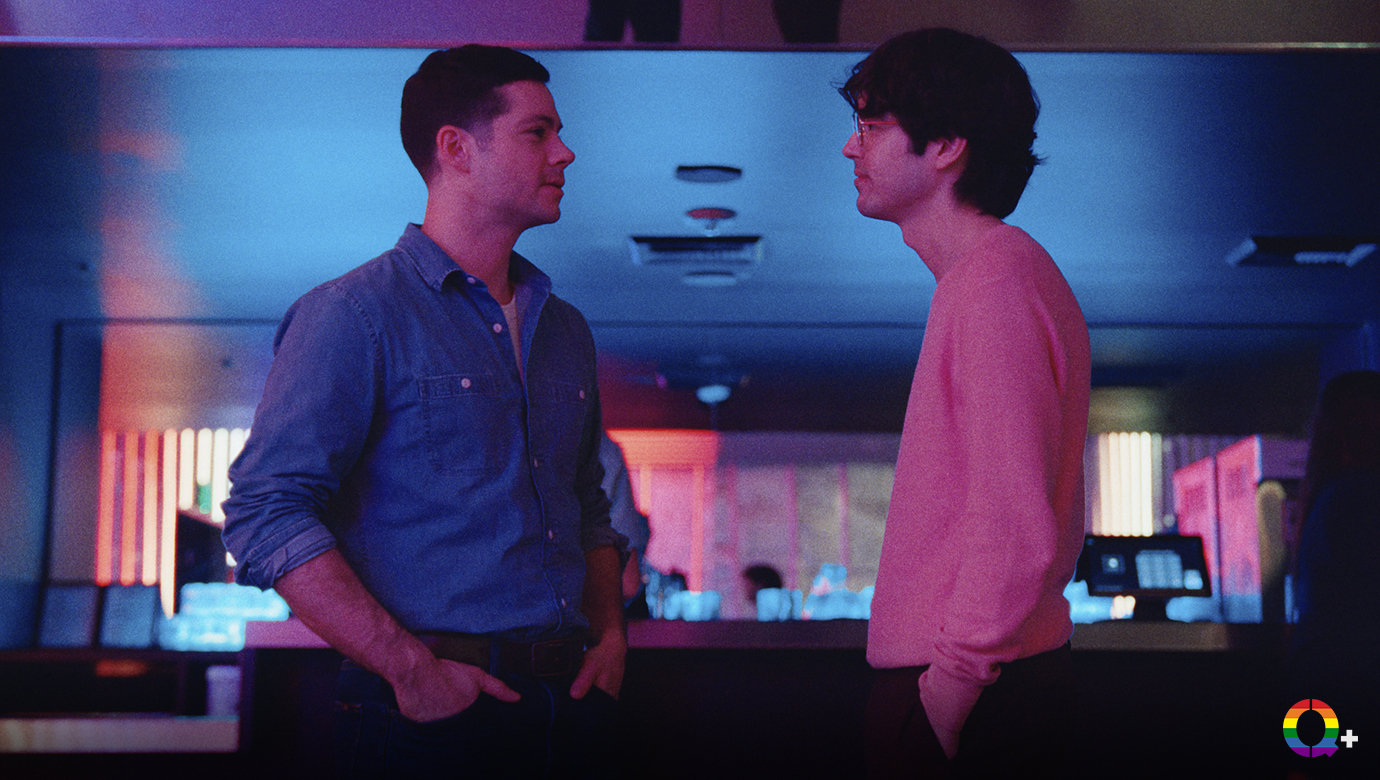
The story begins with Roman (O’Brien), who has just lost his twin brother, Rocky (also played by O’Brien). Their mother, Lisa (Lauren Graham), is grieving too, but her relationship with Roman is strained, leaving him to navigate his loss in isolation. Roman moves into Rocky’s old apartment, a decision that doesn’t ease his pain but pulls him deeper into it. His attempt at healing leads him to a support group for twinless twins—yes, that’s a real thing—where he meets Dennis (Sweeney). The two men forge a tentative connection, awkward but immediate, bonded by the unique grief of losing a sibling who once felt like half of themselves.
From there, Twinless spirals into unexpected territory. What begins as a story about grief and recovery slowly becomes a tangled exploration of memory, obsession, and the different ways people carry love and guilt. Without spoiling every twist (and there are plenty), we’ll say this: through shifting perspectives, flashbacks, and revelations that come at the least expected moments, the film reframes what we think we know about Rocky, Roman, and Dennis. Every new piece of information complicates their relationships, blurring the lines between friendship and fixation, truth and deception, healing and harm.

That narrative choice makes Twinless more than just a story about grief. It’s also about how fractured our perspectives can be, how one person’s tragedy can look entirely different when seen through someone else’s eyes. We come to understand Rocky not just as Roman’s twin, but as a queer man whose life and loves reverberate long after he’s gone. His presence lingers, not only as a source of grief but also as the reason Roman and Dennis meet at all.
Queerness in Twinless isn’t treated as an afterthought; it’s at the very center of the story. Rocky’s sexuality and the way it shaped his relationships ripple through the film, exposing both the love and the fractures within his family. At the same time, Dennis’ connection to Rocky, and later to Roman, asks deeper questions about queer desire, intimacy, and the sometimes-blurred line between wanting closeness and fearing loneliness. By weaving queerness so tightly into every layer of the narrative, the film underscores how identity, love, and loss are inseparable from one another.
At its heart, though, the film is about connection. Roman and Dennis’ relationship—complicated, messy, and at times uncomfortable—is proof that even in our most broken moments, human connection has the power to reshape us. The bond they share doesn’t erase their grief or make their pain disappear, but it does transform it into something survivable. That feels profoundly honest, because Twinless doesn’t offer easy resolutions; instead, it insists that healing is imperfect, that people are flawed, and that sometimes our greatest comfort comes from the most unexpected places.

Performance-wise, both Sweeney and O’Brien are outstanding. Sweeney plays Dennis with equal parts humor, vulnerability, and unease, walking a fine line between sympathetic and unsettling. O’Brien, meanwhile, proves his range by bringing two distinct brothers to life: Rocky, confident and charismatic, and Roman, lost in grief but clinging desperately to connection. We wish Rocky had more screen time, but O’Brien’s dual performance is still remarkable. Lauren Graham and Aisling Franciosi (as Marcie) bring additional emotional texture, reminding us how grief spreads outward, touching everyone in unexpected ways.
What makes Twinless stand out is its ability to surprise. Just when we think we know where it’s headed, it veers off, challenging us to reconsider what we know about love, loss, and the ways people cope with both. By the time the credits roll, we’re left thinking not only about how fragile life is, but also about how profoundly other people shape who we are…in their presence, and even in their absence.
Twinless is bold, messy, and deeply human. It’s a queer story, a grief story, and a story about how even the most broken hearts can find connection again. What lingers isn’t just the shocks or the twists, but the reminder that grief doesn’t have to end in silence. It can carve out space for new bonds, new understandings, and even new love—not replacements, but continuations of the people we’ve lost. The film leaves us sitting with the bittersweet truth that survival isn’t about erasing pain. It’s about carrying it forward, reshaped by the people, and the ghosts, who have made us who we are.
Twinless is out in US theaters today. Follow us on X and Instagram for all queer stuff!
Featured Image: Image Courtesy of Roadside Attractions and Lionsgate
Discover more from Q+ Magazine
Subscribe to get the latest posts sent to your email.


Pingback: The 37th Annual GLAAD Media Awards Nominees Are Here – Q+ Magazine
Pingback: Pride 2026: A Q+ Celebration – Q+ Magazine