
‘Strange Journey: The Story of Rocky Horror’ Review: A Love Letter to the Misfits Who Made It Immortal
Few cultural artifacts have managed to transcend boundaries quite like The Rocky Horror Show and its film adaptation, The Rocky Horror Picture Show. Even for those who have never sat through a midnight screening or learned the choreography to Time Warp, its DNA is everywhere—woven into pop culture, queerness, camp, and rebellion itself. It’s one of those rare phenomena that exists beyond language, geography, identity, or ideology. And that’s exactly where Strange Journey: The Story of Rocky Horror begins: as both a love letter and a deep dive into how something so unapologetically unique became a global touchstone.
Right from the start, the documentary makes it clear that this isn’t going to be a distant, clinical retelling. Opening in New Zealand, with creator Richard O’Brien revisiting his childhood home, there’s an immediate sense of intimacy that sets the tone for everything that follows. And it makes sense, this story is being told by director Linus O’Brien, Richard’s own son. That perspective gives Strange Journey a level of access and emotional depth that feels rare for documentaries like this. We’re not just hearing about Rocky Horror, we’re being welcomed into its inner circle.
As we trace the origins of the stage musical, what stands out most is how accidental its brilliance feels. Built on limited resources but limitless imagination, Rocky Horror emerged as a scrappy, rebellious experiment, born out of necessity, creativity, and a refusal to conform. The documentary leans into that energy, showing us how Richard O’Brien and his collaborators weren’t trying to create a cultural reset; they were simply making something weird, fun, and honest. That authenticity is ultimately what made it resonate.

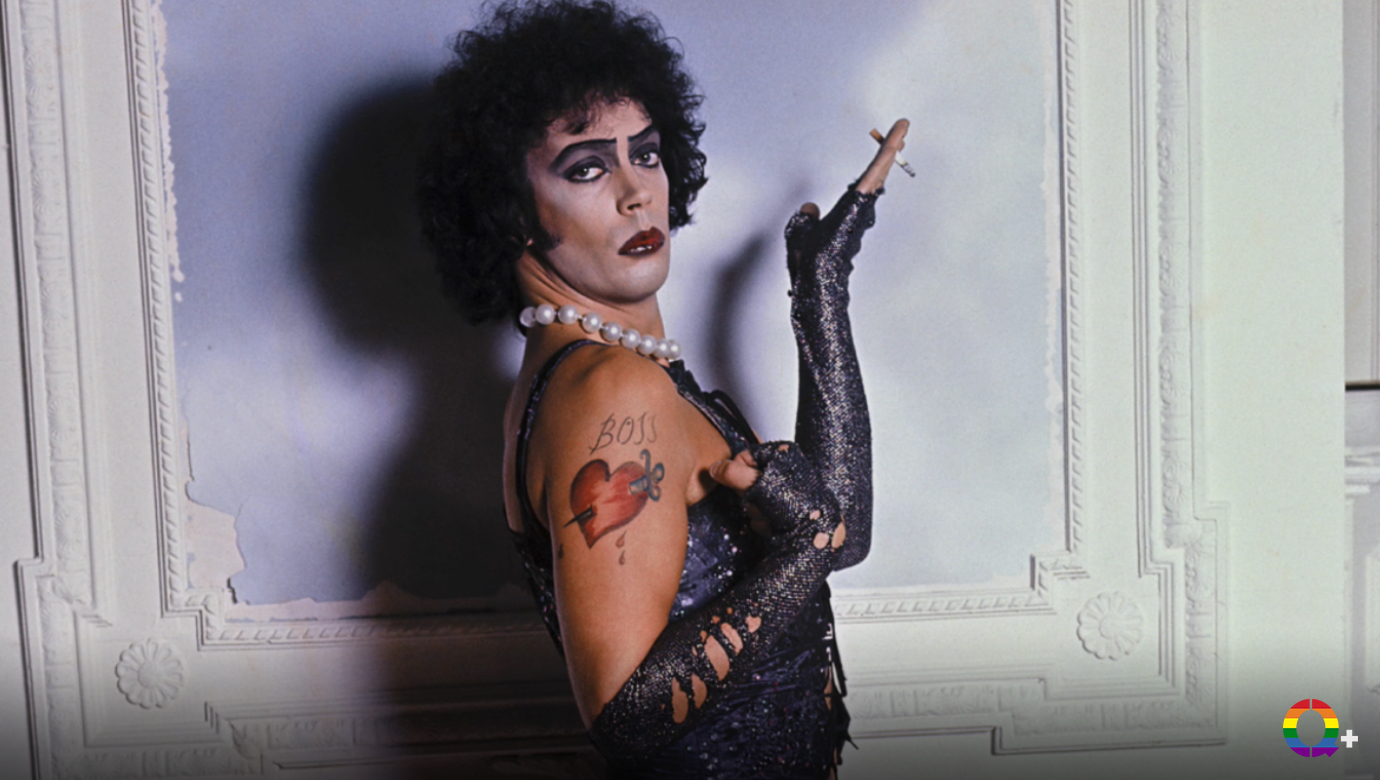
Of course, we can’t talk about Rocky Horror without talking about its queerness, and thankfully, the documentary doesn’t treat that as a footnote. Instead, it places it front and center. Long before mainstream media began embracing LGBTQ+ stories, Dr. Frank-N-Furter strutted onto the stage as a disruptor of the norm. At a time when queer identities were largely erased or demonized on screen, here was a character who was bold, loud, fluid, sexual, and completely unapologetic. Through reflections from Tim Curry, who immortalized the role, and others, we’re reminded just how groundbreaking that was, and how much of that impact still lingers today.
What’s especially powerful is how the film connects that onstage rebellion to real-world impact. Voices like drag queen Trixie Mattel offer firsthand testimony of how Rocky Horror became a tool for self-acceptance, reclaiming identity, and finding power in what once felt like shame. There’s a recurring idea running throughout the documentary that feels especially resonant: sometimes art can reveal truths about ourselves before we’re ready to face them.
Richard O’Brien’s own journey with identity becomes a quiet but powerful backbone of the story. There’s something deeply moving about realizing that Rocky Horror, in all its fluidity and defiance, was in many ways an expression of something O’Brien himself was still coming to terms with. It adds a layer of vulnerability that elevates the entire narrative, highlighting how art can be affirming, especially for queer folks searching for a sense of belonging.

The documentary also doesn’t shy away from the bumps along the road: the Broadway run that faltered, the film’s initial failure to connect with mainstream audiences. These moments of “failure” are treated not as setbacks, but as necessary steps in Rocky Horror’s evolution. Because what came next—the midnight screenings—didn’t just revive the film, they reinvented what cinema could be.
And honestly, this is where the documentary becomes something truly special. The exploration of the midnight screenings is nothing short of electric. What started as a way to salvage a struggling film turned into a full-blown cultural movement. Audiences didn’t just watch The Rocky Horror Picture Show, they participated in it. Callbacks, costumes, props, shadow casts—it all emerged organically, creating a communal experience that blurred the lines between performer and spectator. People kept coming back, bringing friends, adding their own flair, until it became the phenomenon we know today.
For queer audiences especially, these screenings became a sanctuary. Safe spaces where identity could be explored without judgment, where being “different” was the whole point. In a time when society often demanded silence or conformity, Rocky Horror offered something radical: visibility, joy, and community. Watching the documentary trace how these spaces formed, evolved, and spread globally, without the help of modern connectivity, feels almost mythic.

There’s also a broader cultural lens present throughout, with figures like Jack Black reflecting on how the film shaped his understanding of performance and creativity. His story, like Trixie Mattel’s, reinforces the idea that Rocky Horror didn’t just influence queer audiences, it reshaped how entire generations understood performance, identity, and self-expression.
By the time we reach the documentary’s final act, Strange Journey brings everything full circle. From a fringe London stage to the longest-running theatrical release in history, Rocky Horror has become something bigger than its creators. And the film acknowledges that with a sense of humility and awe. As Richard O’Brien reflects on how the story no longer belongs to him, but to the audience, it lands as a powerful reminder that the true magic of it isn’t just in what was created, but in what people have done with it ever since.
As a documentary, Strange Journey: The Story of Rocky Horror succeeds not because it reinvents the wheel, but because it understands its subject so deeply. It’s informative without feeling clinical, nostalgic without being stuck in the past, and deeply personal without losing sight of the collective experience. If we had to nitpick, we might say that its only “flaw” is that it occasionally feels so close to its subject that it resists deeper critique. But honestly, that closeness is also what makes it so compelling. This is a story about connection, and the film captures that through both its history and the personal lens behind it.
As the credits roll, we’re left with a renewed appreciation not just for Rocky Horror itself, but for the community it built. Every story, every song, every callback shouted into the void and echoed back by a crowd that understands matters. And in a world that still struggles with difference and acceptance, that message hits just as hard as ever.
So whether you’re a longtime fan or a curious newcomer, Strange Journey: The Story of Rocky Horror invites us all to step into the lab, throw on some fishnets, and remember that it’s not just about dreaming it.
It’s about being it.
Strange Journey: The Story of Rocky Horror is playing in select theaters starting today (April 24), with an expansion to follow. Check your local listings for showtimes. The film will be available to rent or buy on June 2 via Apple TV, Fandango, and Prime Video. Follow us on X and Instagram for all queer stuff!
Featured Image: Image Courtesy of Magenta Light Studios.
Discover more from Q+ Magazine
Subscribe to get the latest posts sent to your email.


