
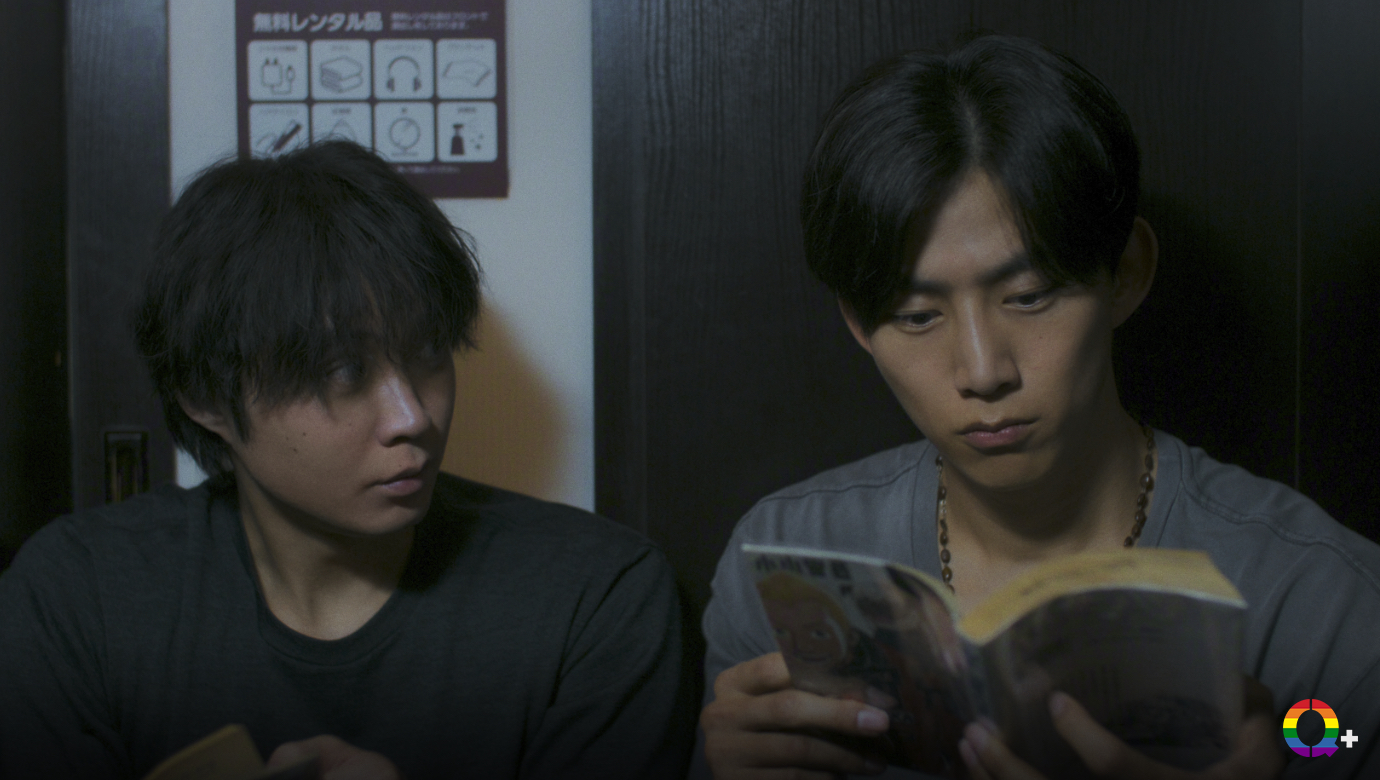
‘Soul Mate’: Why the Debate Surrounding Ryu and Johan’s Relationship Is More Complicated Than It Seems
Now that audiences have finally watched all eight episodes of Soul Mate ( if you haven’t, please take this as your cue to stop reading, there will absolutely be spoilers ahead), one particular debate has quickly taken over social media: whether Ryu (Hayato Isomura) and Johan’s (Ok Taec-yeon) relationship is actually a romance at all.
The lack of physical intimacy in the series has understandably led many viewers online to refer to Soul Mate as a bromance rather than a queer love story, arguing that the show dances around the concept of love without ever fully committing to its central relationship. And honestly, we understand why that reaction exists. Queer audiences have historically been asked to settle for implication, subtext, or stories that stop just short of openly embracing intimacy. So when a series spends eight episodes building a connection this emotionally intense, it’s natural for viewers to expect some kind of physical confirmation.
But after spending time with Soul Mate, we also think reducing Ryu and Johan’s relationship to just a bromance misses what the series is actually trying to say about love. Because Soul Mate is not built around physical intimacy as much as it is built around emotional permanence.

Throughout the series, Ryu and Johan’s relationship unfolds less like a traditional romance and more like two people whose lives become permanently intertwined across years, countries, heartbreak, and missed timing. Their connection shapes nearly every major decision they make, even during the periods when they’re apart. That’s not casual friendship, that’s a partnership. It may not look traditional, nor conventional, but it still functions as a relationship rooted in love, devotion, and emotional dependence.
The series constantly returns to the idea that some people leave fingerprints on your life forever, regardless of whether the relationship fully materializes in the exact way you imagined it would. That sense of lingering attachment becomes the emotional foundation of Soul Mate, shaping the series’ quiet approach to intimacy and romance from beginning to end.
Western audiences sometimes approach queer media with a very understandable expectation that visibility must also include physical intimacy, because for decades, queer stories were censored precisely by removing those moments. But Japanese dramas still operate through a different emotional language, one where longing, restraint, silence, and unresolved tension often carry more narrative weight than overt displays of affection.
That doesn’t automatically excuse every limitation in representation, nor does it mean audiences are wrong for wanting more. The series itself invites viewers to emotionally invest in these characters as soulmates, which naturally creates frustration when the show stops short of explicit physical intimacy. But in this case, context matters.
Especially because Japan and South Korea still occupy a more complicated space when it comes to mainstream LGBTQ+ storytelling than many viewers outside those countries may fully realize. While both industries have absolutely made progress and produced meaningful queer stories, large-scale productions still tend to approach LGBTQ+ narratives with more caution than many Western audiences are accustomed to seeing. That doesn’t mean viewers have to accept less representation without criticism, but it does mean Soul Mate exists within a very specific cultural and industrial context that shapes the way intimacy is portrayed onscreen.

That’s also part of why the series feels significant regardless of whether it delivers the kind of explicit romance some viewers hoped for. Soul Mate places a queer relationship at the emotional center of a sprawling, decade-spanning story without ever treating that love as shameful, scandalous, or disposable. Ryu and Johan’s bond is never framed as a phase, a joke, or a source of confusion. The series never tries to undermine the sincerity of their connection. Instead, their relationship becomes the emotional backbone of the entire show.
And honestly, there’s something powerful about that, too.
Because queer stories should be allowed to exist across different emotional registers. Some stories are passionate and physically explicit. Others are quiet, melancholic, and built around yearning rather than consummation. Some celebrate desire openly, while others focus on companionship, memory, timing, or emotional dependency. Soul Mate firmly belongs to that second category.
In many ways, the show reframes romance as something deeper: a mediation on love itself and on the people who alter us permanently, even when life never fully allows us to hold onto them in the ways we want. Calling Soul Mate just a bromance ultimately oversimplifies a much more complicated conversation.
Could the show have gone further physically? Absolutely. And viewers are completely valid in critiquing those boundaries. But we also think it’s important to recognize that Soul Mate never once denies the reality of Ryu and Johan’s love. The series doesn’t hide their connection behind ambiguity or plausible deniability. It simply chooses to express intimacy through emotional devotion rather than physical confirmation.
And by the time the final episode ends and the two ride into the sunset together, the show leaves very little doubt about how deeply these two men love each other.
Even if they never seal it with a kiss.
Soul Mate is available to stream exclusively on Netflix. Follow us on X and Instagram for all queer stuff!
Featured Image: Image Courtesy of Netflix.
Discover more from Q+ Magazine
Subscribe to get the latest posts sent to your email.


