
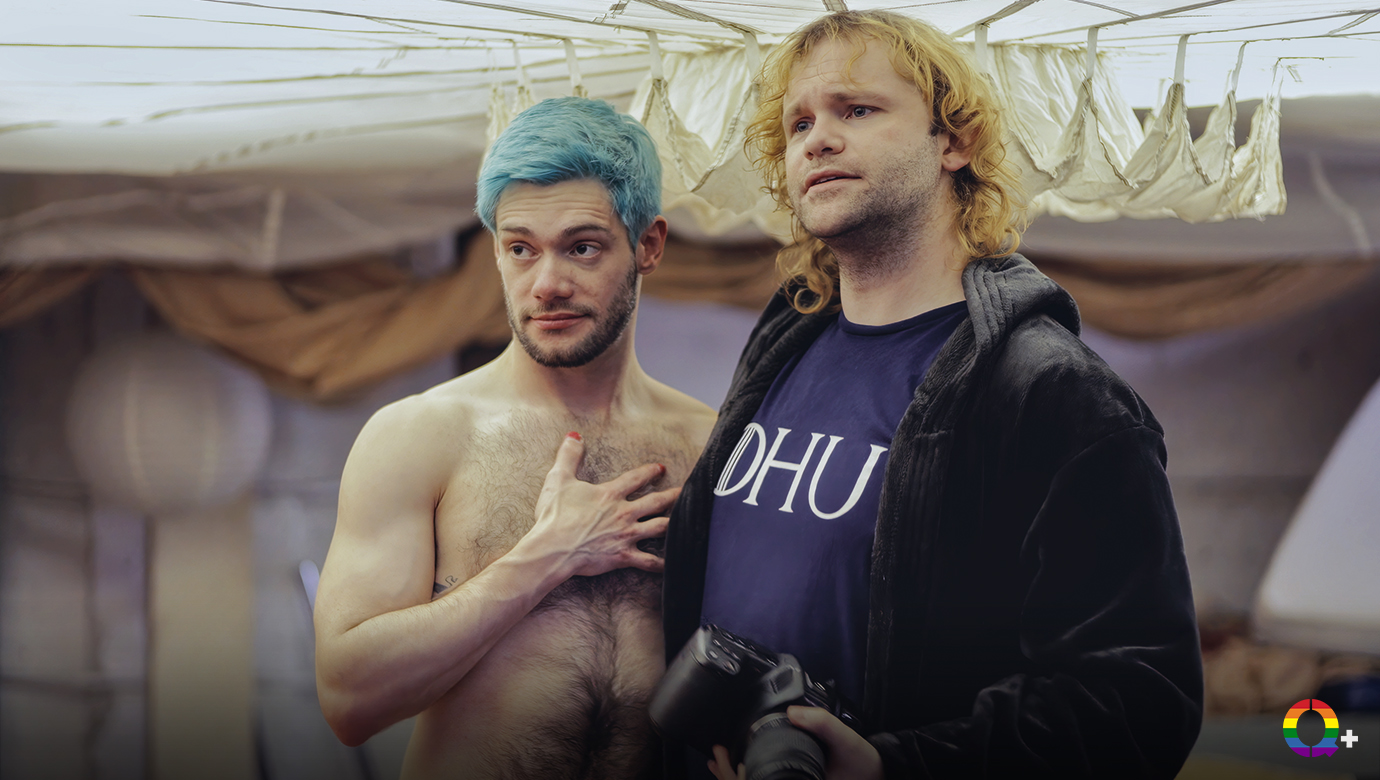
Cutaways Review: An Indie Comedy-Drama About Making Art After the Fall
Independent filmmaking has long been a space for stories that exist outside the spotlight, and Cutaways fits comfortably within that tradition. Written, produced, and directed by Mark Schwab, this single-location queer comedy-drama unfolds almost entirely inside a grimy warehouse, where dreams, dignity, and desperation collide over the course of one very long day. It’s uncomfortable, often darkly funny, and deeply invested in the idea that creative ambition alone isn’t enough to shield artists from an unforgiving industry.
At the center of Cutaways is Evan Quick (Silas Kade), a former Sundance-winning filmmaker whose career has collapsed in the wake of public cancellation. When we meet him, Evan is barely holding himself together. He’s broke, homeless, unwashed, and emotionally hollowed out, squatting in the same warehouse where he now shoots low-budget porn to survive. Schwab doesn’t romanticize this fall from grace. Evan’s depression is presented plainly, without melodrama, and the film quickly establishes that this is not a story about instant redemption, but about endurance.
Evan’s current gig—directing adult content for slimy producer Sammy Slade (James Duval)—sets up the film’s central irony. Evan is wildly overqualified for the job, and he can’t help but treat each porn shoot like a serious artistic endeavor. He obsesses over blocking, tone, and intention, even as everyone else is just trying to get through the scene and get paid. That disconnect becomes the film’s sharpest commentary on creative labor, where survival often means compromising the very thing that once defined you.

The ensemble cast gives the warehouse a sense of chaotic, lived-in energy. Fernando’s Andy Clive, a blue-haired former child actor clinging to relevance, brings jittery charm and visible fragility to the screen. Andy’s relationship with Evan feels rooted in shared disappointment, two men who’ve both aged out of the industry’s favor in different ways. Diogo Hausen’s Ryan, meanwhile, represents a different kind of delusion: youthful optimism and blind faith in an industry that sees him as disposable. His belief that he’s on the brink of mainstream stardom is played for laughs, but it also lands with a sting of recognition.
Schwab’s decision to keep the film confined to one location is both a practical indie move and a thematic one. The warehouse becomes a pressure cooker where egos clash, secrets spill, and the power dynamics between director, producer, and performers are constantly renegotiated. Cinematographer Jessica Gallant makes smart use of the space, carving it into zones of intimacy and conflict, while reinforcing the sense that no one here can really escape, emotionally or professionally.
James Duval’s Sammy Slade embodies a particular brand of villainy: slick, manipulative, and always two steps ahead. His arrival, alongside his younger boyfriend Trace Wicks (Jason Caceres), shifts the energy of the film. Trace is eager, curious, and openly ambitious, fascinated by Evan’s past success and hungry for proximity to legitimacy. Their interactions reveal one of Cutaways’ most interesting tensions: how mentorship, desire, and exploitation can blur in environments built on imbalance.

When the film takes a darker turn midway through, Schwab pushes the story into uncomfortable territory, challenging both the characters and the audience. The tonal shift may feel jarring for some viewers, but it sharpens the film’s central question: how far will people go to protect themselves, their careers, or the illusion of control? The humor that follows is uneasy by design, rooted in denial and moral compromise rather than easy laughs.
Silas Kade’s performance anchors the film with restraint. Evan is sarcastic, defensive, and often difficult to like, but Kade allows flickers of vulnerability to emerge at key moments. His Evan isn’t seeking forgiveness or even understanding; he’s simply trying to remain relevant in a world that’s already moved on. That ambiguity makes the character compelling, even when his choices test our patience.
Rather than focusing on labels or overt commentary, Cutaways centers its themes on marginalization, precarity, and the cost of staying visible in an industry that is quick to discard people once they no longer fit its needs. The characters’ experiences reflect broader anxieties around aging, replacement, and compromise, grounding the film’s perspective in something recognizably human.

As an indie comedy-drama, Cutaways is uneven but sincere. Some exchanges feel more written than lived-in, and a few emotional moments could have lingered longer to fully land. Still, Schwab’s voice remains confident, and his affection for these messy, flawed characters is evident throughout. The film doesn’t aim to be groundbreaking; instead, it offers a raw, intimate look at what’s left when the spotlight fades.
Cutaways won’t be for everyone, and it knows that. It’s a modest, character-driven film about failure, reinvention, and the quiet resilience required to keep creating when the industry stops asking for you. In that sense, it feels grounded and sincere, and that sincerity ultimately carries it through.
Cutaways is available on Prime Video and Video on Demand. Follow us on X and Instagram for all queer stuff!
Featured Image: Image Courtesy of Diamond in The Rough Films.
Discover more from Q+ Magazine
Subscribe to get the latest posts sent to your email.


