
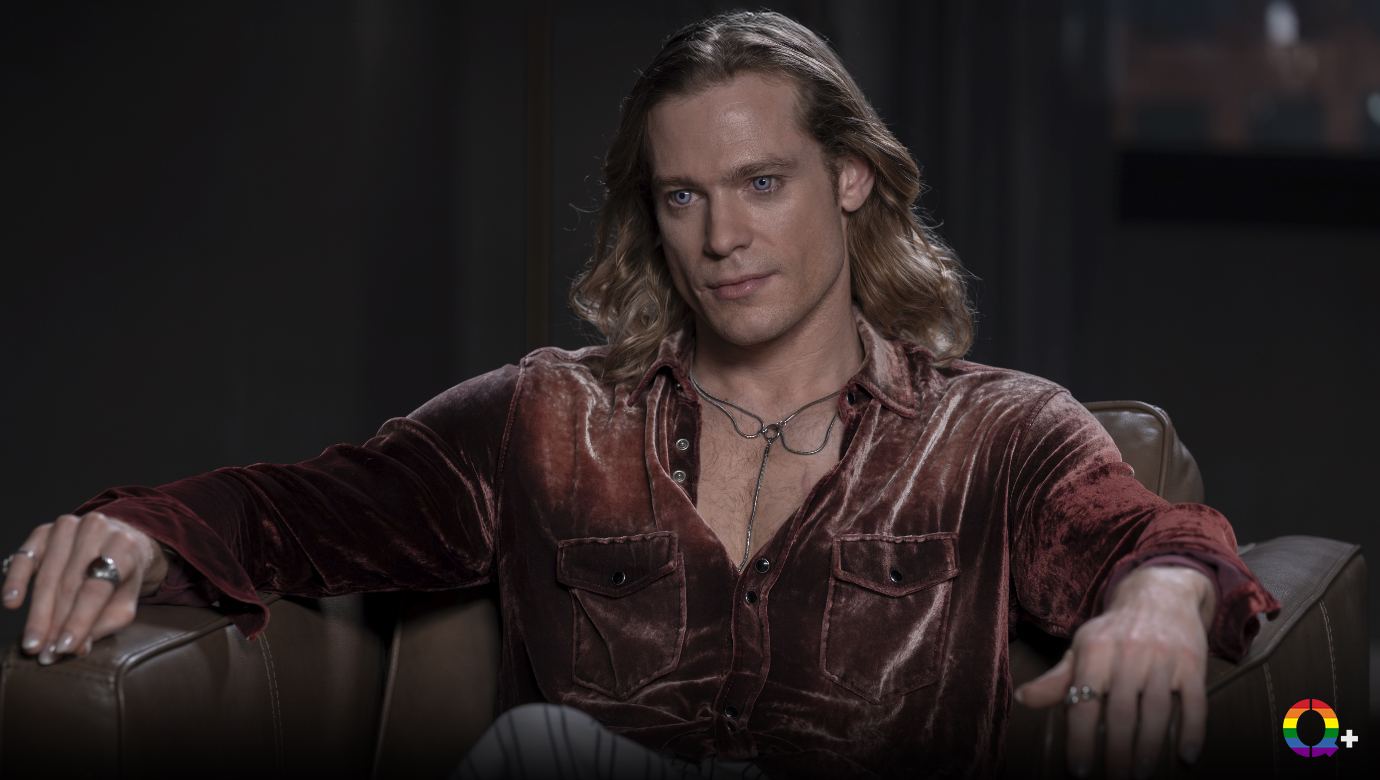
The Vampire Lestat Episode 3 ‘Toronto’ Recap: Breaking Open the Monster
Beautiful Unwell, if you’re reading this, we genuinely hope you’re doing okay. And we don’t mean that as a joke or a bit. The Vampire Lestat Episode 3, Toronto, deals with some incredibly heavy material, and we know parts of this episode may be difficult or even triggering for some viewers. Before we dive in, we want to take a moment to share a resource that may be helpful.
If you’re a survivor, a victim, or someone who needs support, you can visit Find A Helpline. The website can connect you with crisis lines, mental health resources, and support services in countries around the world. No matter where you are, if you need help, please don’t hesitate to reach out. You’re not alone.
With that said, let’s talk about Toronto.

After two episodes spent introducing rockstar Lestat (Sam Reid) and peeling back some of the layers of his past, The Vampire Lestat’s third chapter turns inward. Rather than expanding the world around its protagonist, Toronto spends most of its runtime forcing Lestat to confront pieces of himself he’d much rather keep buried.
It’s a deeply emotional hour of television built around two seemingly separate storylines that gradually move toward each other until they collide in what might be one of the strongest parallels the series has pulled off so far.
Toronto gives us a sit-down interview that begins as a carefully constructed performance before evolving into something far more revealing. It sends Louis (Jacob Anderson) on a mission that quickly becomes much more personal than revenge. It introduces one of the most important relationships in Lestat’s life. And just when you think the episode has already given you enough to process, it still has a few tricks left up its sleeve.
Oh, and somehow it also manages to give us two of the best songs released by the Vampire Lestat so far.
Before we continue, two quick reminders: Lestat is still telling this story from The Failures, looking back on events that have already happened. The further we get into the season, the more that perspective matters. And, as always, we’re approaching The Vampire Lestat one episode at a time. This recap focuses exclusively on what unfolds in Toronto, so you don’t need to worry about spoilers for what’s still to come.
But enough preamble. Let’s get into all things The Vampire Lestat Episode 3, Toronto.
PSA: From this point forward, there will be major spoilers for The Vampire Lestat Episode 3, Toronto. If you haven’t watched the episode yet, we recommend coming back once you have. You’ve been warned, so tread carefully.
TW: Mentions of sexual abuse.

An Interview That Was Never Going to Work
After spending most of Detroit and Toledo watching Lestat control the narrative through concerts, songs, and carefully curated performances, Toronto opens by placing him in a situation where none of those tools are guaranteed to work: a sit-down interview with Daniel Molloy (Eric Bogosian).
After a brief cold open in which Lestat and Gabriella (Jennifer Ehle) hunt their way through Canada by turning a newlywed couple into dinner, the episode quickly establishes its central conflict. Daniel wants to get some truth out of Lestat. Lestat still wants control of the story. Neither vampire has any intention of giving the other what he wants.
Once Lestat finally arrives at the studio—with Gabriella and two freshly drained bodies still sitting in the car—the interview begins. Daniel introduces a new camera setup designed to create the illusion of direct eye contact between interviewer and subject. The technology is meant to encourage intimacy. Unfortunately for Daniel, intimacy is exactly what Lestat is trying to avoid.
When asked to introduce himself, Lestat immediately slips into performance mode. He identifies himself as immortal, lists several things that may or may not be capable of killing him, and generally treats the entire exercise like an opportunity for theater rather than self-reflection.
That instinct only becomes more obvious once Daniel decides to approach Lestat through his music. Since Lestat repeatedly insists that the songs tell his story, Daniel proposes taking him at his word and using them as a roadmap. It’s a sensible strategy. It just happens to involve asking questions Lestat doesn’t particularly want to answer.

What follows is a masterclass in pushing someone’s buttons. Daniel spends most of his time alternating between genuine journalistic inquiry and what can only be described as professional antagonism. He asks about Long Face. He asks about Black Licorice. He recites increasingly ridiculous lyrics out loud. Gabriella openly laughs from off-camera. Lestat grows increasingly irritated with every passing minute.
The songs themselves almost don’t matter. Daniel isn’t really interested in discussing musical structure or artistic intent. He’s using them as an entry point, looking for some glimpse of the person behind the persona. Lestat recognizes the tactic immediately.
Every answer becomes an act of deflection. Black Licorice stops being a song and becomes a philosophical discussion about modern humanity. Questions about desire become discussions about death. Every time Lestat tries to redirect the conversation toward art, music, philosophy, or performance, Daniel circles back to the same topic: the stutter.
The reaction is immediate. Lestat becomes visibly uncomfortable, then irritated, then angry. By this point, it’s obvious that for Daniel, the stutter isn’t important because of the speech impediment itself. It’s important because Lestat doesn’t want to talk about it, and Daniel has spent enough time around him to recognize the difference.

That’s the opening Daniel sees. He isn’t simply asking questions. He’s bruising Lestat’s ego. Every observation cuts a little deeper than the last. He points out the shrinking crowds. He questions the artistic significance of the songs. He refuses to treat the Vampire Lestat like a mythic figure. For perhaps the first time all season, someone recognizes the insecurity lurking beneath the rockstar persona and decides to make use of it.
It’s dirty work, but it works—at least for a moment.
Lestat admits that the stutter embarrasses him. His voice falters. His expression crumbles. Bloody tears seem to well up in his eyes. He shares that he’s done forty shows in forty-three nights and insists nobody should care who he used to be. Even Christine (Jeanine Serralles) looks ready to shut everything down.
Then Lestat starts laughing.
What initially appears to be a breakthrough turns out to be another performance. Mocking what he imagines the sit-down for Interview With The Vampire looked like, Lestat launches into a parody of Louis breaking down under Daniel’s questioning and transforms the entire moment into a joke at everyone else’s expense. It’s ridiculous. It’s petty. But it’s also revealing.
Because beneath all the jokes, interruptions, and power plays, both vampires have already shown exactly how they intend to approach this conversation. Daniel is looking for the pressure points. Lestat is determined to keep ownership of the narrative, even when that means turning sincerity into spectacle.
The interview may have only just begun, but The Vampire Lestat Episode 3, Toronto, wastes no time establishing the battle lines. If this opening stretch is any indication, both men have arrived with their own agenda, and neither seems particularly interested in giving the other an advantage.

Paris, Nicki, and the Man Who Found His Voice
As their interview continues, Daniel points out that Lestat stuttered from the ages of nine to twenty-nine. Lestat jokingly claims every kill he’s ever made can be traced back to those twenty years of humiliation, but buried beneath the sarcasm is something worth paying attention to. For all his bravado, Lestat is describing a wound that helped shape the person he eventually became.
When Daniel asks what happened at nine, the answer is immediate. Lestat recalls being taken to witness the execution of several women accused of witchcraft. More strikingly, perhaps, is the fact that he remembers their names. Lestat tries to brush that detail aside, treating it like a mundane childhood experience, but the fact that he still remembers them at all tells a different story. More than two and a half centuries later, he can still recall the sound of their voices, the violence of their deaths, and the terror of watching it unfold. The fact that he remembers it so vividly says far more than he ever could.
Then Daniel asks what happened at twenty-nine, and Lestat’s answer is much simpler: he heard music.
The episode then transports us back to 18th-century Paris, where a newly arrived Lestat spots a violinist playing in the street. The musician is Nicolas de Lenfent (Joseph Potter), the man who would become his first love. Technically, this isn’t their first meeting. The two grew up in the same village and clearly recognize each other immediately. What we’re watching is a reunion, but it’s also the beginning of an entirely different chapter of Lestat’s life.
For the first time all season, the version of Lestat we see onscreen feels noticeably different from the human we just met in Toledo. He’s still shy and uncertain, but he’s also hopeful and full of life. Watching him reconnect with Nicki, it’s impossible not to notice how open he seems. He compliments his music without a trace of irony. He listens more than he talks. Even his smiles feel different.

That change isn’t just about Nicki. It’s about what Paris represents. Until now, we’ve mostly known human Lestat as someone reacting against the world that shaped him. Paris is the first place where he appears to be moving toward something instead. He reinvents himself. He finds work at the Théâtre Renaud. He spends years practicing exercises to overcome his stutter. He begins imagining a future that belongs to him rather than one imposed by his family.
Nicki becomes inseparable from that transformation. He’s the person standing beside Lestat during the first period of his life that genuinely feels like freedom. The music, the theatre, the romance, the possibility of becoming someone new—all of it becomes tangled together.
Which is why it’s very telling that Lestat repeatedly tries to minimize what Nicki meant to him. In front of Daniel, he frames it as a first love rather than a great one. He leans on irony, jokes about tortured artists and doomed romances, as if distance alone can soften its significance. Yet there are moments where it feels like he’s doing something else, too. Throughout Toronto, Daniel repeatedly pushes into stories that Lestat clearly considers deeply personal. It seems that Nicki becomes another subject that Lestat tries to keep partially out of reach. Not because he doesn’t matter, but because he does.
Lestat’s relationship with Nicki isn’t important because it was perfect. It’s important because it represents the first time Lestat got to become someone other than the boy trapped among the cabbages of Auvergne. For a man who spends most of The Vampire Lestat Episode 3, Toronto, insisting certain things don’t matter, that’s a truth he accidentally reveals with every answer he gives.

Louis Goes Hunting
While Daniel spends the episode trying to pry answers out of Lestat, Louis is busy pursuing a much more straightforward objective. Following his meeting with the Talamasca in Toledo, he arrives at a remote property in Detroit carrying the files they gave him on Killer/Bruce (Damon Daunno). The Talamasca may have pointed him in the right direction, but Toronto quickly makes it clear that Louis isn’t here on anyone else’s behalf. He’s here for Claudia (Delainey Hayles)—or at least that’s what he tells himself.
The moment he steps onto the property, the hunt begins. When one of the resident vampires attempts to turn him away, Louis responds by removing his head with a single swing. From there, the episode turns into a swift and brutal search. One by one, the members of the Detroit coven fall as Louis tears through the house looking for their leader.
What makes the sequence effective is its focus. Toronto isn’t interested in turning this into an extended action set piece. Louis has a target. Everyone else is simply standing between him and that target.
The brief stop he makes in the basement only reinforces that point. There, he discovers a group of imprisoned humans being kept as a living food supply. Rather than leave them behind, he frees them, points them toward an escape route, and tells them not to look back.
It’s a small moment, but an important one. For all the violence unfolding around him, Louis remains fundamentally different from the vampires he’s hunting. The mission may be fueled by vengeance and grief, but it isn’t indiscriminate, and it still leaves room for moments that don’t quite align with its stated purpose.

The storyline picks back up later in the episode, when Toronto finally reveals why Baby Jenks’ (Ella Ballentine) wedding announcement in Detroit received attention. Her mysterious groom turns out to be none other than Killer/Bruce himself. While the newlyweds return home celebrating their marriage, Louis is already waiting for them in the basement.
The version of Louis we see here is arguably one of the most intimidating the series has ever given us. He doesn’t grandstand. He doesn’t threaten. He barely even raises his voice. Instead, he congratulates the couple, apologizes for missing the ceremony, and casually informs them that he invited himself to the honeymoon. It’s funny, unsettling, and deeply ominous all at once.
Killer initially assumes this visit is about Lestat and the failed assassination attempt in Detroit. Louis shuts that theory down almost immediately. After incapacitating him with frightening ease (he snatches some vertebrae from his spine!), he repeatedly forces Killer to acknowledge the name he’s spent years trying to hide behind: Bruce.
That’s the moment Bruce realizes who he is really facing: Louis De Pointe Du Lac.
Louis doesn’t bother with a speech. He simply pulls out a plastic bag containing pages from Claudia’s diary and calmly informs Bruce that they used to have a friend in common. It’s a striking image, though perhaps not for the reasons Louis intends. It seems that eighty years after Claudia’s death, her words are about to become part of this confrontation. Whether that’s an act of remembrance, vengeance, guilt, grief, or some complicated combination of all four remains an open question.

The Lies We Tell About Monsters
Back at the interview, Daniel eventually turns the conversation toward Magnus (Damien Atkins). The subject comes up through Biggest Fan, a song Lestat performs every night on tour, and one that Daniel quickly identifies as being about his maker. What follows becomes less a discussion about the song itself and more an examination of how Lestat chooses to remember one of the most traumatic events of his existence.
Daniel describes Magnus as Lestat’s abuser. Lestat rejects the label immediately. Instead, he calls Magnus a liberator, an emancipator, even a god. It’s a fascinating response. Throughout the first three episodes of this season, we’ve watched Lestat reshape painful memories into stories he can live with. The details may still be there for anyone paying close enough attention, but the framing changes. The wounds become lessons. The betrayals become acts of devotion. The suffering becomes destiny. Daniel, however, has little interest in accepting that version of events.
Drawing from what Louis told him in Interview With the Vampire, Daniel recounts the story as he understands it: a young man taken from his room in Paris, imprisoned against his will, fed upon for days, and transformed without his consent. Lestat’s defense is simple: Louis wasn’t there when it happened. Daniel counters that Louis was there when Lestat told the story himself in New Orleans. Lestat dismisses the account as faulty recall and insists he wasn’t in Dubai to correct it.
But there’s another layer to this exchange that The Vampire Lestat Episode 3, Toronto, quietly asks us to consider. Daniel may be right about Magnus, yet he’s also using one of the most traumatic experiences of Lestat’s life as leverage in an argument. The story he’s citing isn’t something Lestat chose to share with the world. It’s something he confided to Louis, who later passed it on to Daniel, who then published it for millions of readers.
That doesn’t make Daniel wrong. It does, however, help explain why Lestat reacts so strongly whenever the subject comes up. Beyond the trauma itself, there’s a question of agency. The narrative surrounding Magnus has already been shaped, published, debated, and consumed long before Lestat ever gets the chance to tell his side of it. Whether his version is reliable is another matter entirely, but Toronto makes it clear that part of what Lestat is fighting for here is the right to reclaim ownership of his own story.
That’s why, rather than settling the argument through dialogue, Toronto visualizes it.

As Biggest Fan begins to play, the episode abandons its traditional flashback structure and slips into a full-blown music video. Through dreamy imagery and stylized editing, we’re shown a version of Magnus and Lestat’s relationship that borders on romantic. The horror is softened. Magnus’ obsession is reframed as devotion. The violence is muted. Even the transformation itself carries an air of inevitability rather than violation.
The sequence is amusing to look at, which is precisely what makes it so unsettling. What we’re watching clearly isn’t what happened; it’s just the story Lestat wants to tell—a version polished by trauma that transforms something frightening into something more digestible.
When the music video ends, Lestat continues reinforcing that narrative. He argues that Magnus recognized something extraordinary in him. He suggests he understands why his maker became obsessed. He even frames Magnus’ suicide as a final gift rather than an act of abandonment. The more he talks, however, the harder it becomes to ignore what he’s leaving unsaid.
Every time Daniel tries to steer the conversation back toward the harm Magnus caused, Lestat redirects it somewhere safer. He intellectualizes. He reframes. At one point, he even turns the conversation back on Daniel, suggesting that Daniel’s perspective is shaped by his own complicated feelings about being turned by Armand (Assad Zaman).
Neither man is particularly interested in conceding ground. The result is a temporary stalemate.
The problem is that Toronto isn’t finished examining this story yet. Before the episode is over, the version of events Lestat is presenting will become much harder to maintain. And in the process, we’ll gain a much clearer understanding of why this particular chapter of his life remains so difficult for him to revisit.

Nicki’s Tragedy and the Truth Daniel Finally Finds
For most of The Vampire Lestat Episode 3, Toronto, Daniel has been trying to force his way past the version of Lestat that exists for public consumption. The rockstar. The provocateur. The vampire who can turn every uncomfortable question into a joke or a philosophical debate. It takes nearly the entire episode, but eventually Daniel finds the one story Lestat can’t perform his way through.
It starts when Daniel returns to the question of hiding his vampirism from Nicki. After presenting his heavily romanticized version of Magnus and his transformation, Lestat admits that at least one part of Interview With the Vampire got the story right. Armand’s coven did abduct Nicki. Lestat did rescue him. And despite everything that had happened, he still tried to hide the truth from the person he loved most.
The flashbacks that follow are some of the most painful the series has delivered. When Nicki awakens after his rescue, he immediately recognizes that something is wrong. Every explanation Lestat offers falls apart almost as soon as he says it. The marks on his body are a rash. Gabriella is recovering from her illness. Lestat’s disappearances, his wealth, and his changed appearance all supposedly have reasonable explanations. Nicki doesn’t buy any of it.
What makes this so heartbreaking is that Nicki is clearly tired of the lies and simply wants honesty. Instead, every answer he gets uncovers another lie. The divide between them only grows once Nicki realizes that whatever changed Lestat has also changed Gabriella. In the present, Daniel is equally surprised to learn that Lestat’s mother became his first fledgling, another major piece of the story that never made it into the final draft of Interview With the Vampire.
Back in Paris, and despite Gabriella’s repeated warnings, Lestat makes the decision he will spend centuries regretting and gives Nicki the Dark Gift. The tragedy of Nicki’s story is that it doesn’t unfold because Lestat stops loving him. It unfolds because he loves him too much to let him go.
From that point onward, the episode offers one of its bleakest depictions of vampirism. Nicki’s fears become obsessions. His obsessions become delusions. Gabriella immediately recognizes the disaster unfolding in front of them. Armand loses patience with it. Lestat, meanwhile, remains trapped between guilt, responsibility, and hope, convincing himself that Nicki will eventually find his footing.
He never does.

His behavior becomes increasingly erratic. His fixation on music turns obsessive. Conversations lose all coherence. By the time he begins wandering through their apartment searching for a letter opener that isn’t there, everyone involved knows where this story is heading.
Then comes the axe, and Nicki self-mutilates. The scene isn’t played for shock value. It’s the physical manifestation of a mind that has completely lost its ability to separate reality from obsession. While Gabriella watches with detached amusement and Armand stands in frustration, Lestat looks devastated.
Every choice he made to save Nicki has led them here. The show never presents his decision to turn Nicki into a selfish choice. If anything, it presents it as a terrible act of love. Gabriella warned him. Yet Lestat ignored her because he couldn’t bear the alternative.
And that’s what makes his eventual confession so painful.
Back in the interview, the performance finally ends. The jokes disappear. The bravado fades. All that’s left is a man remembering one of the worst nights of his existence. As bloody tears begin streaming down his face, Lestat recalls telling Nicki that he loved him from the moment he saw him in Paris. He was consumed by that love. Drunk on it. Engulfed by it. He remembers the firelight reflecting across Nicki’s face. He remembers the warmth of the room. What he cannot bear to remember is the wound.
Most devastating of all, he admits that when the moment came, he couldn’t do what needed to be done, so Armand did it for him. The revelation lands not as a plot twist, but as a confession. Because for all the stories Lestat tells about his life, this is the one that still hurts too much to reshape into something prettier. Centuries later, Nicki’s death remains an open wound.

By this point, Daniel looks like he has finally struck gold. After months of interviews, arguments, and dead ends, he has finally reached something genuine. But Lestat doesn’t let him enjoy the victory for long. Overwhelmed and exhausted, he tears off his microphone and walks away from the interview. Before leaving, however, he offers Daniel one final piece of honesty. The tour isn’t selling particularly well. The big venues aren’t filling. His ego is bruised. The entire thing is far more difficult than he’s willing to admit publicly.
Then he delivers what might be the defining line of their entire exchange. “Never say I didn’t give you anything.” For once, Daniel thinks he gets exactly what he’s been chasing. No deflections. No performances. No made-up stories. Just the truth. The irony is that he doesn’t get to keep it.
After Lestat leaves, Daniel reviews the footage only to discover that none of the confessions appear on tape. As far as the cameras are concerned, Lestat simply sat there in silence while Daniel stared back at him. Every painful memory, every tear, every admission about Nicki exists only in Daniel’s mind.
It’s petty. It’s cruel. It’s objectively one of the funniest things Lestat has done all season.
As Lestat later admits from The Failures, it was a mean-spirited telepathic prank, one that left Daniel furious enough to nurture a grudge for episodes to come. But after spending an entire session fighting for control of his own story, Lestat makes sure this particular chapter belongs to him alone. It’s a low blow, but an earned one. After all, as Lestat puts it: “Serving cunt has its consequences.”
After everything The Vampire Lestat Episode 3, Toronto, reveals about his grief, guilt, and heartbreak, it feels appropriate that Lestat exits the moment the only way he knows how: by turning genuine vulnerability into one final act of theater.

Claudia, Magnus, and the Parallel That Broke Us
After spending most of the episode watching Daniel trying to pull uncomfortable truths out of Lestat one question at a time, The Vampire Lestat Episode 3, Toronto, eventually arrives at the sequence that completely recontextualizes everything we’ve heard so far. Not because it reveals some shocking secret hidden from the audience, but because it finally forces Lestat to confront a truth he just tried to reshape into something easier to live with.
The sequence begins after Lestat leaves the interview. Emotionally exhausted from revisiting parts of his past, he drives alone through Toronto while another muse decides to pay him a visit. This time it’s Magnus. At first, the exchange unfolds with the same dark humor that has defined most of these encounters. Magnus critiques the interview, pokes fun at Lestat’s omissions, and reminds him that he wasn’t exactly forthcoming with Daniel. Lestat dismisses him, mocks his appearance, and tries to brush him off, but Magnus isn’t there to haunt him with regret. He’s there to remind him of the parts of the story Lestat left out.
At the same time, the episode returns to Louis and Bruce. Sitting calmly across from the man who destroyed Claudia’s life, Louis finally reveals why he’s really there: to make Bruce answer for what he did to Claudia. Earlier, the decision to bring Claudia’s diary into this confrontation raised questions about whose needs this act was truly serving. By the time Louis starts reading, the line between justice, grief, and personal catharsis has already begun to blur.
With deliberate precision, Louis begins recounting Claudia’s trauma back to the man who hurt her. Every sentence lands exactly where it needs to. Every detail is allowed to breathe. And as the narration unfolds, The Vampire Lestat Episode 3, Toronto, makes what may be its most devastating and harrowing storytelling choice.
Rather than presenting Claudia’s account through a traditional flashback, the episode intertwines her words with the reality of Lestat’s transformation. Not the version from the Biggest Fan music video, but the truth.

While Louis reads Claudia’s description of what Bruce did to her, we watch Magnus abduct Lestat from the bed he shared with Nicki. We watch him imprison him alongside corpses that resemble him. We watch him terrorize him night after night. Every trace of that early glamour vanishes completely. There is no romantic framing nor ambiguity about what kind of power dynamic exists between them. The audience is forced to sit with the reality of what happened to him.
What makes the sequence extraordinary isn’t the revelation that Magnus was, indeed, Lestat’s abuser. The series has already given us enough pieces to confirm that as true. The brilliance lies in the way the show stages the telling. Claudia’s words become the bridge connecting these two stories, transforming what begins as Louis’ confrontation with Bruce into something much larger.
As Louis recounts the shame she carried, the damage done to her sense of self, and the struggle to live with what happened, the episode repeatedly cuts back to Lestat’s own ordeal. The details aren’t identical, but the emotional aftermath is unmistakably familiar. Both emerge from their abuse carrying wounds that extend far beyond the physical. Both internalize blame that was never theirs to carry. Both spend years trying to survive something that changed them forever.
That realization adds an entirely new dimension to one of the franchise’s most complicated relationships. Claudia and Lestat spent years hurting and resenting each other, and at times, failing to understand one another. Yet despite everything that happened between them, Lestat was still one of Claudia’s parents. He helped raise her. He watched her grow up. And now, decades after her death, it is Claudia’s story that finally strips away the mythology surrounding his own trauma.
With this parallel, the show isn’t trying to excuse Lestat’s mistakes, nor is it attempting to rewrite the damage he caused throughout Claudia’s life. Instead, it’s asking us to recognize how trauma echoes across generations, how victims can wound other victims, and how understanding someone’s pain doesn’t erase the pain they’ve inflicted on others.

By the time Louis reaches the final pages of Claudia’s diary, the emotional weight becomes almost unbearable. Bruce continues to dismiss what happened. He minimizes it. He mocks it. Louis doesn’t bother arguing with him. Claudia’s words have already said everything that needs to be said. Whether this final confrontation belongs to Claudia or to Louis is another question entirely.
One passage in particular lands especially hard. As Claudia admits she struggled to like herself after what happened to her, we watch Magnus drain Lestat of blood, agency, and dignity. By the time she confesses that she began to see herself as the monster lurking in the shadows, the connection between their stories has become impossible to ignore. The tragedy isn’t simply what was done to them. It’s the way both were left believing that their victimization somehow reflected something broken within themselves.
The parallel ultimately reaches its conclusion through two acts of reckoning. Louis finishes reading Claudia’s words and uses the pages to set Bruce ablaze. And Lestat loses control of his car and crashes headfirst into the truth he has spent too much time avoiding.
The vehicle flips violently through the air before coming to rest in a heap of twisted metal and fire. When Lestat emerges from the wreckage, there’s a sense that something else has been shattered alongside the car, and all that’s left is the survivor.
It’s a brutal parallel, but what lingers isn’t the violence. It’s the decision to connect these two stories in the first place. Toronto could have revealed the truth about Magnus in any number of ways. Instead, it chooses to tell that story through Claudia. In doing so, it transforms a backstory revelation into the emotional and thematic heart of the episode. And it’s, without a doubt, one of the most powerful scenes Interview with the Vampire/The Vampire Lestat has produced so far.

The Loneliness and the Surprises Waiting in the Wings
After everything The Vampire Lestat Episode 3, Toronto, puts Lestat through, it would be easy to assume the episode is building toward some kind of breakthrough. In a way, it is. It just doesn’t arrive through answers or absolution. It arrives through The Loneliness.
Standing before another audience that remains far smaller than the superstar crowds he clearly envisioned for this tour, Lestat finally stops pretending he has everything under control. The music isn’t fixing him. The muses aren’t going away. The memories are getting louder. The line between past and present has become increasingly difficult to navigate. He knows he’s unraveling.
And yet he gets back on stage anyway.
Through narration, Lestat reflects on the crash and the question hanging over the entire episode: why didn’t he simply let it end there? Why climb out of a wrecked car and return to the stage the very next night? His answer is surprisingly simple. He loves the music. Not the fame. Not the attention. Not the carefully crafted image of the Vampire Lestat… the music.
For the first time all season, that passion feels completely genuine. Lestat describes his art as something capable of carrying him through the walls he has spent centuries building around himself. It’s no longer a distraction from his problems. It’s the thing forcing him to confront them.
And that’s what makes The Loneliness such a fascinating song in the context of this episode. On the surface, it’s about the isolation that has followed Lestat throughout his life. No matter how many people he loves, how many centuries he survives, or how many identities he reinvents himself through, some part of that loneliness always remains.
But the song isn’t really about escaping that loneliness. It’s about accepting its existence.
By the end of Toronto, Lestat seems to arrive at a realization he has spent the entire season resisting: the muses, the memories, the grief, the guilt, and the trauma aren’t obstacles standing between him and the music. They’re part of it. The only way through them is through them. Maybe the process will break him. Maybe it will heal him. Either way, he’s finally willing to stop running. “Bring on the muses!”

As the song unfolds, the episode checks in with several characters whose stories continue moving forward in parallel. Louis receives a call from Lemuel (Moses Sumney), who asks whether he’s safe and whether he got what he wanted from his business in Detroit. Louis says that he did, though his expression suggests that killing Bruce has not brought the closure he hoped it would. Baby Jenks quietly sifts through the ashes of her husband to recover his wedding ring. And meanwhile, Lestat’s muses fill the audience once again, watching from the crowd like living reminders of every wound he carries with him.
But something has changed. For the first time, one of the muses willingly leaves.
As Lestat surrenders himself completely to the performance, Magnus quietly walks away. Whether that means Lestat has finally begun processing what happened to him or whether Magnus has simply served his purpose remains to be seen. Either way, the moment feels significant. After an episode spent tearing apart the mythology Lestat built around his maker, seeing Magnus walk away feels like the first step toward something resembling healing.
Of course, this being The Vampire Lestat, the episode still has a few surprises waiting in the wings.
The first belongs to Louis. After leaving Detroit behind, he arrives at a diner in New York City, confirming that his journey has taken him back to the city he now calls home. There, a waitress named Regina serves him coffee. At first, the moment seems entirely ordinary. Then the camera reveals her face. Regina looks exactly like Claudia.
The resemblance is impossible to miss and immediately calls back to the conversation Louis and Daniel shared in Toledo about the Claudia doppelgänger Louis encountered. Whether Regina is simply another stranger who reminds him of his daughter or something more remains unclear. What matters is the effect it has. Even after everything Louis has done in Claudia’s name, he still can’t escape her absence.
And then comes the final surprise.

Back in our Toledo recap, we mentioned that Alex (Seamus Patterson) leaving the band felt far too significant to be a one-episode storyline. The Vampire Lestat Episode 3, Toronto, proves that suspicion correct. The final scene takes us to a support group meeting, where Alex speaks candidly about his struggles, his regrets, and the temptation to fall back into old habits after walking away from the tour.
When the moderator asks if anyone else would like to share, another attendee raises his hand. The camera pans, and we see Armand introducing himself as Arun and sharing with all that he’s an addict.
The reveal lasts only a few seconds, but it instantly changes the shape of everything moving forward. We haven’t seen Armand in the present-day storyline, but Toronto makes it clear that his absence was never permanent. And now that he’s found his way back into Lestat’s orbit, it seems that no matter how hard Lestat tries to outrun his past, sooner or later it always catches up with him.
And with The Devil’s Road waiting just around the corner, it looks like the past is finally ready to step back into the spotlight.

The Vampire Lestat Episode 3, Toronto: Final Thoughts
There are episodes that answer questions, and then there are episodes that completely change how you understand a character. Toronto firmly belongs in the second category. Over the course of an hour, The Vampire Lestat dismantles several of the stories Lestat has been telling about himself. Some are lies he’s told other people. Others are lies he’s told himself. Through Daniel’s relentless questioning, the tragedy of Nicki, and the horrifying truth behind his transformation, the episode forces him to confront memories he’s spent centuries reshaping into something easier to live with.
The parallel between Claudia’s diary entry and Lestat’s real transformation is one of the strongest sequences AMC’s Immortal Universe has produced to date. It’s devastating, uncomfortable, and at times genuinely difficult to watch, but it transforms years of character history in a matter of minutes. Rather than having Lestat finally explain his trauma out loud, the episode lets his memories speak for themselves while Louis reads Claudia’s account of abuse. The result is a sequence that reveals the truth of what happened to Lestat while forcing us to reckon with the painful irony of Louis reading those words to the very person Claudia wrote them about.
At the same time, The Vampire Lestat Episode 3, Toronto, continues proving that no matter how much the season centers on Lestat, everyone around him remains fascinating in their own right. Louis’ pursuit of Bruce begins with Claudia, but the episode increasingly suggests it’s just as much about Louis himself. Every step of that storyline reminds us that her absence still shapes the choices of the people she left behind, and it seems the show continues finding new layers in Louis’ grief even years after her death.
Then there’s Daniel. For most of the episode, Daniel functions as an antagonist, poking at old wounds and refusing to let Lestat hide behind performance. But by the time the interview collapses, it becomes clear that he and Lestat have far more in common than either of them would probably care to admit. Both are stubborn. Both are proud. Both are carrying wounds they’d rather not examine too closely.
As for the episode’s biggest surprises, seeing Delainey Hayles return as Regina feels like a gift. Exactly how her presence will shape Louis’ journey moving forward is both exciting and nerve-racking to theorize about, but we’re more than ready to see where the story takes her next.
Then there’s Armand. We knew there was absolutely no way this season was going to keep him off the present timeline for more than three episodes. Still, we weren’t expecting him to casually appear at a support group where Alex just happens to be and completely hijack the final moments of the episode. The man has impeccable timing, and we love him for that.
Toronto leaves us with a version of Lestat that’s very different from the one we met in Detroit. The rockstar is still there. The ego is still there. The theatrics are definitely still there. But for the first time this season, we also see the wounds underneath them with complete clarity. Whether that makes him easier to understand, harder to forgive, or somehow both at once is a question the episode leaves for each viewer to answer.
Now we want to hear from you. What did you think of The Vampire Lestat Episode 3, Toronto? How are you feeling about the reveal of what really happened to Lestat during his transformation? Did Nicki’s storyline break your heart as badly as it broke ours? Were you as impressed by the Claudia and Lestat parallel as we were? What role do you think Regina will have? And on a scale from one to ten, how worried should we all be that Armand has re-entered the chat?
We’ll be back next Sunday to break down everything that happens in Episode 4, The Devil’s Road. Until then, we’ll be listening to The Loneliness on repeat and pretending we’re emotionally equipped to handle whatever this season throws at us next.
The Vampire Lestat Episode 3, Toronto, is available to stream on AMC+ now. Episode 4, The Devil’s Road, will premiere on AMC on Sunday, June 28, at 9 pm ET/PT. Seasons 1 and 2 of Interview With the Vampire are available to stream on AMC+, Netflix, and Prime Video (depending on the region). Follow us on X and Instagram for all queer stuff!
Featured Image: Image Courtesy of AMC. Photo by Sophie Giraud.
Discover more from Q+ Magazine
Subscribe to get the latest posts sent to your email.


Pingback: The Vampire Lestat releases Toronto EP featuring the devastating ‘The Loneliness’ – Q+ Magazine
Pingback: The Vampire Lestat Episode 4 'The Devil's Road' Recap: The Ones We Can't Let Go – Q+ Magazine
Pingback: The Vampire Lestat Episode 5 'New York' Recap: Nothing Stays Buried – Q+ Magazine
Pingback: The Vampire Lestat Episode 7 'The Failures' Recap: The Soul at the Long Table – Q+ Magazine