Twisted Review: A Con, A Mad Surgeon, and a Thriller That Plays It Too Safe
There’s something inherently delicious about watching a con unravel. In horror and thriller spaces especially, we crave the moment when power shifts hands—when predator becomes prey, when control slips, when morality collapses under pressure. Twisted, directed by Darren Lynn Bousman (Saw II, Spiral) and written by Jonathan Bernstein and James Greer, wants to live in that tension. It gives us con artists, brain transplants, grief-driven madness, blood, betrayal, and a lesbian couple at the center of the chaos. And while we were undeniably entertained, we couldn’t shake the feeling that the film stops just short of the sharp edge it promises. We kept waiting for the twist to truly twist.
The story follows Paloma (Lauren LaVera), a gifted con artist who seduces her way into elaborate real estate scams under literary-inspired aliases. Alongside her partner Smith (Mia Healey), she glides through luxurious mansions and brownstones, charming victims and pocketing deposits with practiced ease. Their dynamic is built on risk, adrenaline, and love. Their chemistry is immediate and sensual, their lifestyle glamorous in that reckless, morally gray way thrillers adore.
When Paloma targets the Brooklyn brownstone of renowned neurosurgeon Dr. Robert Kezian (Djimon Hounsou), the con spirals into captivity. What begins as another scam mutates into a grotesque experiment: Kezian, still grieving his wife Rebecca (Alicia Witt), has been perfecting partial neuro-transplantation. After a violent altercation with a “client” (David Call) leaves Paloma injured and vulnerable, she becomes the unwilling donor in his god-complex crusade to resurrect his wife’s failing brain.
On paper, it’s a chilling premise. In execution, it’s… fine.

Republic Pictures (a Paramount Pictures label)
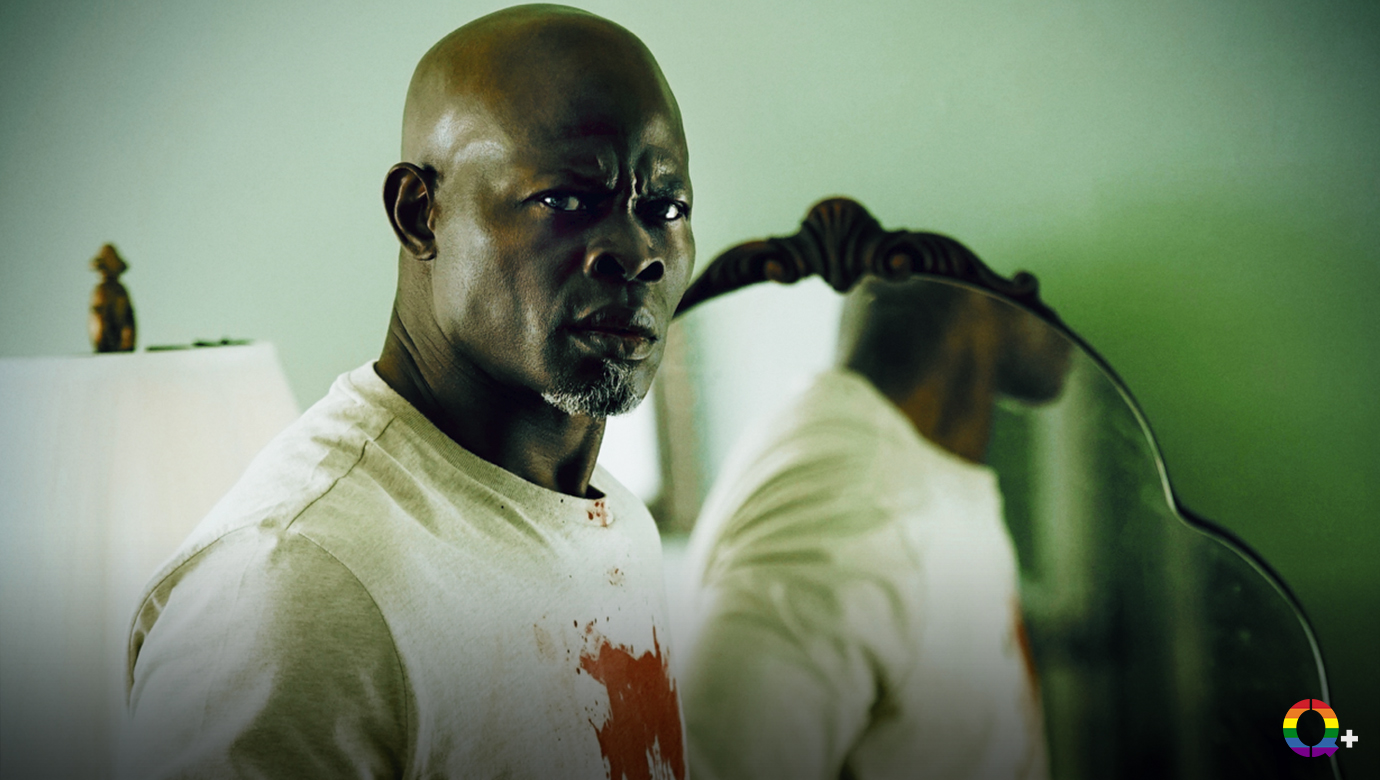
Let’s start with what works. The performances are strong across the board. Hounsou delivers a measured, quietly terrifying performance. His Dr. Kezian isn’t a mustache-twirling villain; he’s a man who genuinely believes he’s on the brink of saving humanity. That self-righteous conviction makes him far more unsettling than outright cruelty would. Lauren LaVera is equally compelling as Paloma, balancing seductive confidence with raw terror once the power dynamic shifts. We feel her intelligence, her desperation, and eventually her grief. Even when the script boxes her in, she fights to make Paloma feel alive. The cast does solid work with what they’re given, and it shows.
But here’s the thing: for a horror-thriller, Twisted is shockingly predictable.
The moment the doctor’s intentions are fully revealed, the trajectory becomes clear. We kept waiting for the stakes to escalate—for the police investigation to tighten, for Paloma’s escape attempts to spiral into something edge-of-your-seat breathless. Instead, the film hovers in a kind of narrative middle ground. Scenes unfold exactly as expected. Revelations land with a dull thud instead of a gasp. Even the final twist, while conceptually satisfying, feels telegraphed long before it arrives.
And that’s frustrating, because the ingredients are there: brain transplants, identity disintegration, a morally bankrupt doctor playing god. Horror has always been fascinated with the body—how easily it can be violated, reshaped, possessed. But the best thrillers understand that the real terror isn’t in the blood; it’s in the choices, in obsession, in love twisted into something unrecognizable. The choices here simply aren’t daring enough. This film should be bonkers in the best way. Instead, it often feels restrained, almost cautious.

Republic Pictures (a Paramount Pictures label)
Where Twisted becomes more complicated, at least for us as a queer publication, is in its representation.
At the center of the story is a lesbian couple. That alone is significant in a genre that often sidelines queer women. Paloma and Smith are not side characters; they are, in many ways, the emotional core because their love drives the climax. Their intimacy is framed as passionate and sensual. And yet, we couldn’t shake the feeling that their relationship was written through a male-gaze lens.
Their bar make-out scenes are shot with a glossy, eroticized energy that feels more performative than intimate. Their emotional beats—particularly Smith’s vulnerability—don’t always get the breathing room they deserve. The “I love you” versus “same” dynamic is compelling, but it’s never fully explored. When tragedy strikes, we’re meant to feel devastated, but because their relationship hasn’t been given enough quiet, human moments, the impact is blunted.
And that’s a shame. Because the most interesting thematic layer of Twisted is the idea of love surviving, or corrupting, through obsession.
In fact, the film’s most effective queer moment comes at the very end. The final twist—implying that Paloma’s consciousness ultimately overtakes Rebecca’s body—adds a darkly poetic layer to everything that came before. It suggests that identity cannot be surgically contained, that the mind remembers, and that queer love, even twisted and flawed, refuses to be erased. The line Rebecca repeats—echoing Paloma’s earlier flirtation—lands with a chilling sense of inevitability. In that moment, the film finally taps into something unsettling.
It’s just that we saw it coming.

We also found ourselves wishing the police subplot carried more weight. There are hints of a procedural cat-and-mouse game that never fully materializes. The sense of danger plateaus instead of escalating. For a film that introduces scams, missing persons reports, tampered security footage, and deeply unethical medical experimentation, the tension never quite spikes the way it should.
None of this makes Twisted bad. It’s entertaining, it kind of moves. It has blood and bodies and moral decay. It gives us a lesbian antihero who is messy, selfish, and still worthy of empathy. It gives us a Black surgeon whose villainy is rooted in grief rather than caricature. It uses body horror as a metaphor for possession, loss, and control. There’s ambition here.
We just didn’t love it.
In a genre built on shock and subversion, predictability is a hard flaw to overlook. And when queer relationships are central, we want more than stylized sensuality: we want emotional depth that hits as hard as the violence.
Twisted flirts with greatness. It has moments where it almost slices deep. But in the end, it feels like a con that shows its hand too early. We were entertained, intrigued even, but we just weren’t left breathless.
And in horror, that makes all the difference.
Twisted is available to rent or buy on Apple TV and Prime Video. Follow us on X and Instagram for all queer stuff!
Featured Image: Djimon Hounsou as “Dr. Kezian” in the Horror, Thriller, Suspense film, TWISTED. Photo Courtesy of Republic Pictures (a Paramount Pictures label).
Discover more from Q+ Magazine
Subscribe to get the latest posts sent to your email.


