
Cherri Review: A Heartbreaking Story of Love, Devotion, and Wanting More
There’s something incredibly exciting about watching Latin American cinema continue to grow, evolve, and carve out space on the global stage. Time and time again, it brings us stories that feel deeply personal yet universally resonant. Stories that challenge norms, celebrate culture, and push representation forward. Cherri, the latest film from Cuban director Fabián Suárez, sits firmly within that tradition, offering a poignant, layered narrative that quietly defies multiple stereotypes while opening space for stories we rarely see centered.
Describing what Cherri is about isn’t exactly straightforward, and that’s part of its strength. It immerses us in the everyday life of a man who refuses to be reduced to a single label. Inspired by the life of renowned Cuban dancer and choreographer Juan Miguel Más, who also takes on the title role, the film carries an intimacy that feels inseparable from its lead performance. From the outset, we can feel how personal this project is, how much it lives and breathes through Más himself. What unfolds is an emotionally complex portrait of a man navigating love, desire, responsibility, and heartbreak in contemporary Havana.

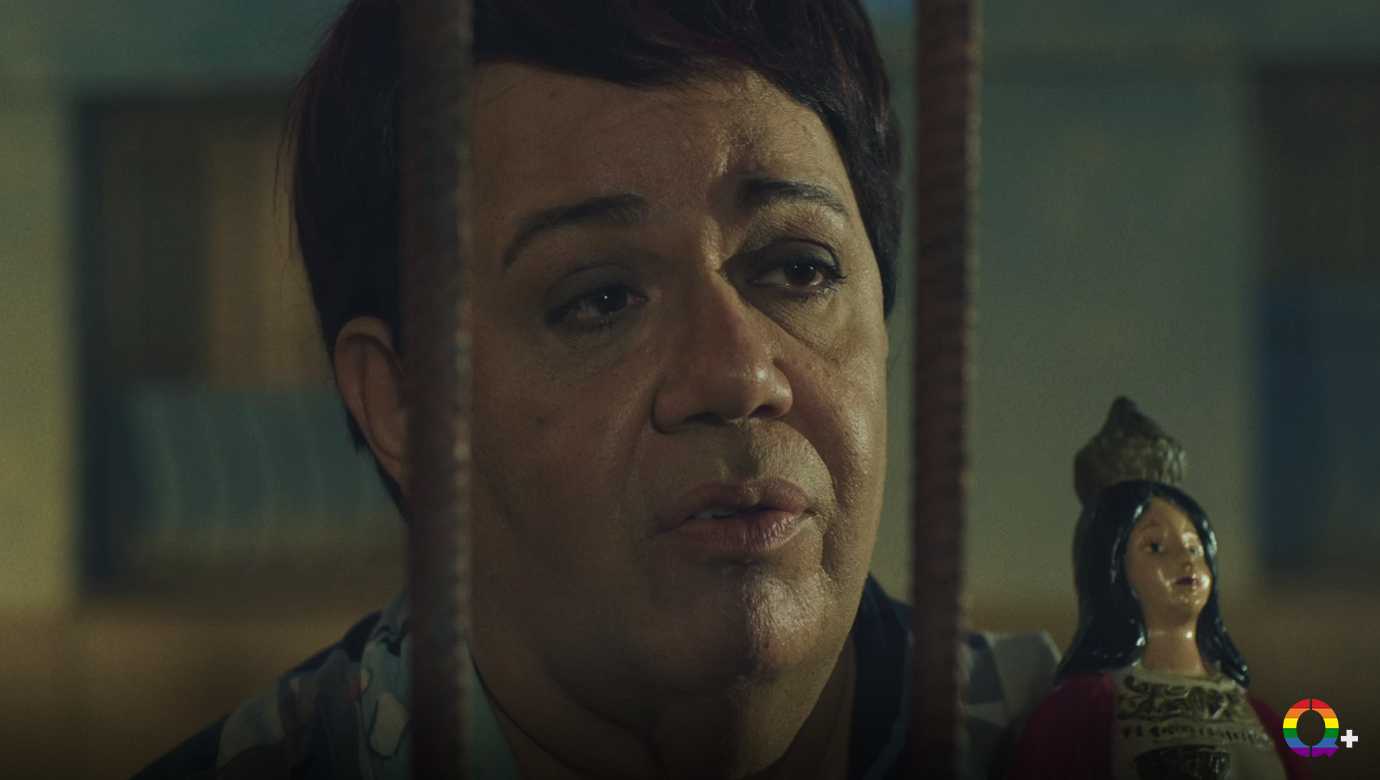
Cherri (Más) is many things at once: flamboyant, tender, stubborn, lonely. Through him, Suárez builds a character who feels both singular and deeply familiar. He’s an antiques dealer holding onto fragments of a more prosperous past, a caregiver devoted to his disabled husband (Roberto Díaz Gomar ✝︎), and the passionate leader of a plus-size ballet troupe at a local weight clinic. It’s within this tension—between duty and desire, between past and present—that the film finds its emotional center.
Set against the backdrop of contemporary Havana, the film draws a striking contrast between its visual richness and its emotional undercurrent. The city feels alive—colorful, musical, textured—while Cherri’s inner world is marked by solitude and quiet longing. This duality is one of the film’s most compelling elements: beauty and hardship coexisting without ever softening one another.
Cherri’s life is defined by care. He tends to his husband’s needs with tenderness and unwavering commitment, preserving a bond rooted in a shared past that once felt full of life and possibility. But while that love remains, it has shifted into something quieter, more static. And Cherri, still vibrant and capable of desire, finds himself craving connection in a way that his current reality cannot fulfill.
That longing takes shape in Tim (Noslen Sánchez), a young security guard who becomes the object of Cherri’s affection. What unfolds between them is not a romance, but a dynamic marked by imbalance and discomfort. From the beginning, it’s clear Tim’s presence is transactional, and at times openly dismissive. What makes these interactions difficult to watch isn’t just Tim’s detachment, it’s Cherri’s willingness to accept it in exchange for fleeting moments of attention. The film captures this with unsettling clarity, exposing the vulnerability of wanting to be chosen, to be desired, even when reality offers every reason to walk away.

And yet, Cherri is not solely defined by heartbreak. It’s also about resistance, particularly through the body. As the leader of a ballet troupe of plus-size performers, Cherri challenges long-standing ideas of beauty, grace, and legitimacy in dance. Watching him and his group dance is genuinely moving; their rehearsals and eventual performance feel raw, liberating, and full of intention. These moments don’t just add aesthetic value, they become central to the film’s emotional and thematic resonance.
In centering a plus-size queer protagonist who is allowed to desire, to hurt, and to take up space unapologetically, Cherri pushes against the limits of representation we’re accustomed to seeing on screen. It reminds us that bodies like Cherri’s are rarely afforded this level of complexity or visibility, especially within stories about love and sensuality. And here, that visibility doesn’t feel incidental, but essential.
The film also grounds itself in Cuban cultural specificity. From glimpses of Santería practices to the presence of live music and nightlife, there’s a lived-in authenticity that shapes the film’s world. These elements don’t function as ornamentation; they are integral to the atmosphere, adding texture and context to Cherri’s experience. Even in moments of scarcity and emotional strain, culture remains a site of connection and expression.

As the narrative progresses, Cherri becomes increasingly entangled in his attachment to Tim, even as the warning signs grow impossible to ignore. Friends intervene, moments of clarity surface, but the pull of connection proves difficult to resist. The film doesn’t excuse these choices, but it understands them. It recognizes how the desire for intimacy can blur judgment, how the hope for something more can keep us tethered to what ultimately harms us.
When the story reaches its breaking point, Cherri resists the urge for dramatic spectacle. Instead, it leans into emotional precision. Love cannot be forced, and desire cannot be secured through devotion or sacrifice. The fallout is understated but devastating, unfolding in quiet, intimate moments that carry more impact than any overt confrontation. Cherri’s breakdown, set against the culmination of his ballet work, becomes a striking convergence of art and emotion, where everything he’s been holding inside finally spills over.
But what lingers most, however, is the film’s closing note. Cherri’s return to the sea feels deliberate: an act of release, of reckoning, of choosing himself after everything he’s endured. It’s not a neatly wrapped resolution, but it doesn’t need to be. There’s something honest in that ambiguity, in the recognition that healing is neither immediate nor guaranteed, but possible.
Cherri is, ultimately, a film about resilience. About the courage to keep feeling, to keep loving, even in the face of rejection. It asks difficult questions about how we live with loneliness, how we navigate desire, and what it means to start over when things fall apart. But more than anything, it invites us to look beyond appearances, to see beauty where the world often refuses to. And to understand that the need for connection is universal, no matter our bodies, our identities, or our circumstances.
With Cherri, Fabián Suárez delivers a film that is as specific as it is universal. He invites us to rethink the way we see bodies, love, and connection. And in doing so, it becomes more than just a character study. It becomes a quiet, unflinching act of visibility.
Cherri is available to rent or buy at Fandango at Home and Google Play Movies. Check local listings for availability. Follow us on X and Instagram for all queer stuff!
Featured Image: Image Courtesy of Breaking Glass Pictures.
Discover more from Q+ Magazine
Subscribe to get the latest posts sent to your email.


