
The Queen of My Dreams: A Story About Family, Identity, and What We Carry
There’s something uniquely powerful about telling our own stories, especially as queer people navigating the intersections of identity, culture, and family. We know what it means to feel split between worlds, to carry inherited histories while trying to carve out a future on our own terms. That’s why films like Fawzia Mirza’s The Queen of My Dreams resonate so deeply. They don’t just reflect queer experiences—they explore how memory, love, and generational legacy shape who we are.
If we had to describe The Queen of My Dreams in just a few words, we’d say it’s a love letter to Bollywood, to our mothers, and to the ache of being caught between generations, cultures, and identities. But it’s actually much more than that. It’s vibrant, emotional, sometimes funny, and always full of heart.
Set in 1999, the film follows Azra (Amrit Kaur), a queer Pakistani-Canadian woman living in Toronto. She’s navigating young adulthood—balancing love, ambition, and identity—while contending with the ever-present pressure of parental expectations.

Her mother, Mariam (Nimra Bucha), is conservative, devout, and disappointed in nearly every choice Azra has made. Their relationship is fraught, defined more by tension than tenderness. But when Azra’s father dies unexpectedly during a trip to Pakistan, she’s pulled back to Karachi for the funeral. The homecoming is layered with grief, with tension, and with the emotional distance that’s long existed between mother and daughter.
Azra finds herself facing not only her grief but also the family and culture she’s tried to distance herself from. What starts as a reluctant obligation becomes something much more profound, as Azra begins to uncover the version of her mother that existed long before she was, well, her mother.
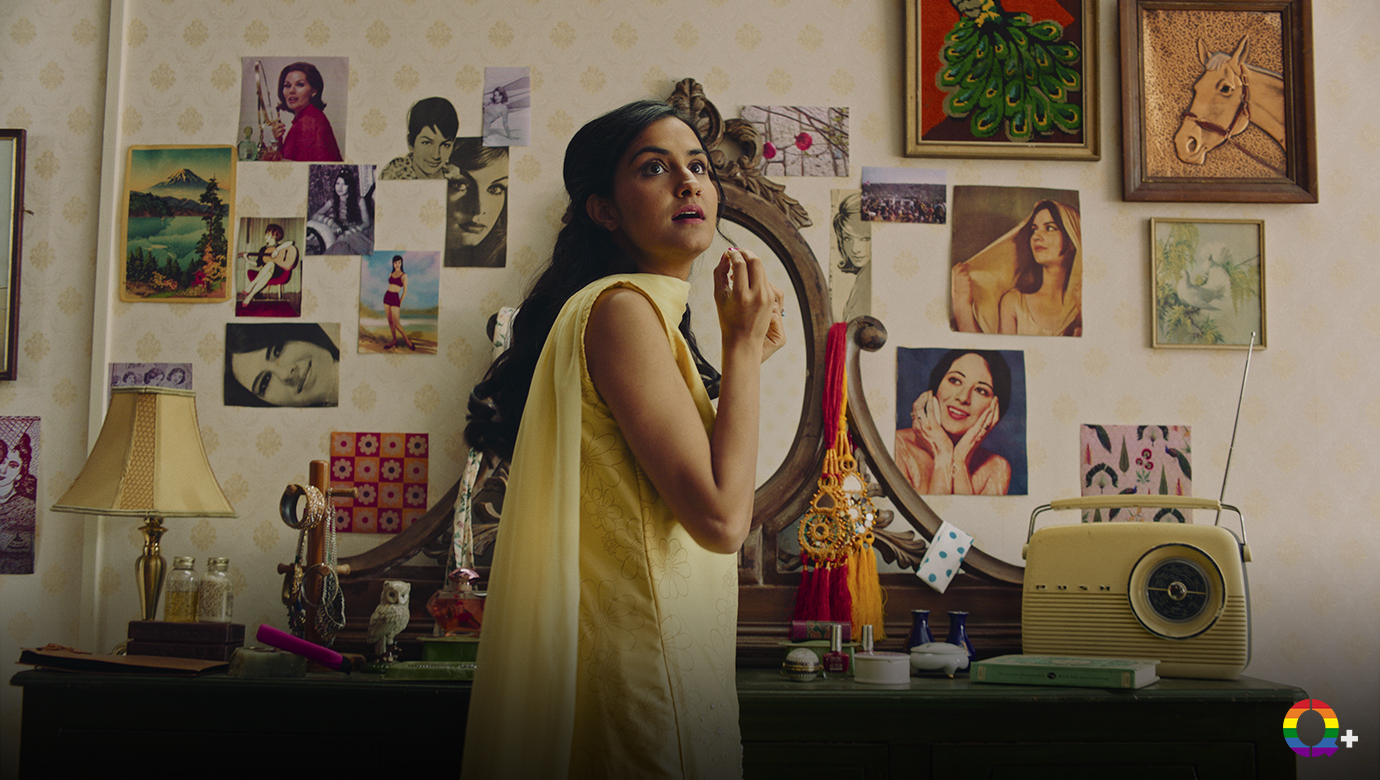
Here’s where the film makes a brilliant storytelling move: The Queen of My Dreams doesn’t stay rooted in the present. It jumps back and forth between Azra’s perspective and flashbacks to 1969 Karachi, where we meet a young Mariam (also played by Amrit Kaur)—bold, romantic, utterly consumed by her love of Bollywood, and daring enough to defy her family to marry the man she loves: Azra’s father, Hassan (Hamza Haq).

Having Kaur play both Azra and young Mariam isn’t just a nod to Bollywood or a clever stylistic choice, it’s a deeply intentional tool that forges a visceral connection between mother and daughter. By casting the same actress in both roles, the film blurs the lines between past and present, self and parent, and reminds us that generational connection isn’t just inherited, it’s lived. Sometimes in ways we don’t even realize.
Kaur’s performance is remarkable. As Azra, she’s guarded but searching, shaped by disappointment yet still chasing her sense of self. As Mariam, she’s wide-eyed and fiery, caught between familial duty and a longing for love. Watching Kaur embody both women reveals just how much they mirror each other, even when they can’t see it themselves.
The 1969 flashbacks are steeped in the glow and glamor of golden-age Bollywood, full of saturated colors, sweeping musical cues, and a sense of heightened emotion. Mirza doesn’t just pay homage to the films that inspired her, she weaves them into the emotional fabric of the story. A recurring motif built around the song Mere Sapno Ki Rani (which loosely translates to The Queen of My Dreams) from the 1969 classic Aradhana becomes more than a nostalgic reference. It’s a thread between generations, a melody that follows both Mariam and Azra, echoing their desires, dreams, and that longing for love that lives in both of them.

What’s especially moving is how the film reframes Azra’s understanding of her mother. The rigid, judgmental woman she knows begins to soften in memory, revealing layers of love, heartbreak, and compromise. Through this rediscovery, Azra isn’t just learning about Mariam, she’s learning about herself. She begins to see that the fire she carries, the will to live on her own terms, might just come from the very woman she’s spent so long pushing away.
And that’s the thing about this film—it’s doing so much, but it never feels like too much. On the surface, it’s a coming-of-age story about a queer woman trying to live authentically in a world (and family) that doesn’t always make room for her. But underneath, it’s about migration, memory, grief, generational trauma, the pieces of ourselves we silence to survive, and the echoes that still find their way through. It’s about the weight of dreams and the cost of love. And at its heart, it’s about that quiet, life-altering moment when you realize your parents were people before they were your parents.
Azra doesn’t find all the answers in Karachi. Her relationship with her mother doesn’t magically resolve. But she does begin to see the woman behind the mother, the full life that existed before the hurt. She starts to understand that even the most closed-off people carry their own kind of fire, and that sometimes that fire is the very thing they passed down to us. The same one we’re still learning how to hold. And that? That’s a kind of healing we don’t see enough on screen.
The Queen of My Dreams is lush, emotional, and deeply human. It’s a story about connection—between mothers and daughters, between generations, between the past we inherit and the future we choose to build. It explores queerness not as an isolated identity, but as something shaped by history, family, and culture.
It’s a film that invites us to look back, not with nostalgia, but with curiosity and compassion. It asks what gets lost in the space between who we were and who we become, and whether love—complicated, imperfect, hard-won—can still connect us across that distance. It’s the kind of story that lingers long after the credits roll, not just because of how it’s told, but because of the space it opens…for healing, for joy, and for possibility.
For those of us who’ve felt the pull between identities, between generations, between continents, The Queen of My Dreams hits. It reminds us that our stories don’t have to be clean to be beautiful. That love doesn’t always look like we expect it to. And that maybe healing starts not with rewriting the past, but with finally seeing it clearly.
The Queen of My Dreams is now playing in select U.S. theaters—check here to find a screening near you. It’s also available to stream on Prime Video, MUBI, and Apple TV+ in select regions. Follow us on X and Instagram for all queer stuff!
Featured Image: Image Courtesy of Willa/Product Of Culture. Amrit Kaur as Young Mariam.
Discover more from Q+ Magazine
Subscribe to get the latest posts sent to your email.


Pingback: Pride 2025 Spotlight: Fawzia Mirza Talks ‘The Queen of My Dreams’ and Storytelling with Heart – Q+ Magazine
Pingback: The 37th Annual GLAAD Media Awards Nominees Are Here – Q+ Magazine
Pingback: Pride 2026: A Q+ Celebration – Q+ Magazine