Plainclothes Review: A Haunting ’90s Romance That Captures the Cost of Living in Hiding
Carmen Emmi’s Plainclothes isn’t a sweeping romance or a conventional thriller; it’s a quiet gut punch. Set in the late ’90s, when queerness was more often hidden than embraced, the film explores the weight of silence and the suffocating nature of repression. What we get is not a love story in the traditional sense, nor simply a tale of cruising or forbidden desire, but a portrait of a man unraveling under the impossibility of living two lives at once.
The film transports us to an era when queer men seeking connection had to live in the shadows, navigating cruising spots, relying on unspoken cues, and risking humiliation, arrest, or worse for one fleeting moment of truth. The thrill was inseparable from the fear, and Emmi’s debut captures this tension with an honesty that feels both tender and devastating.

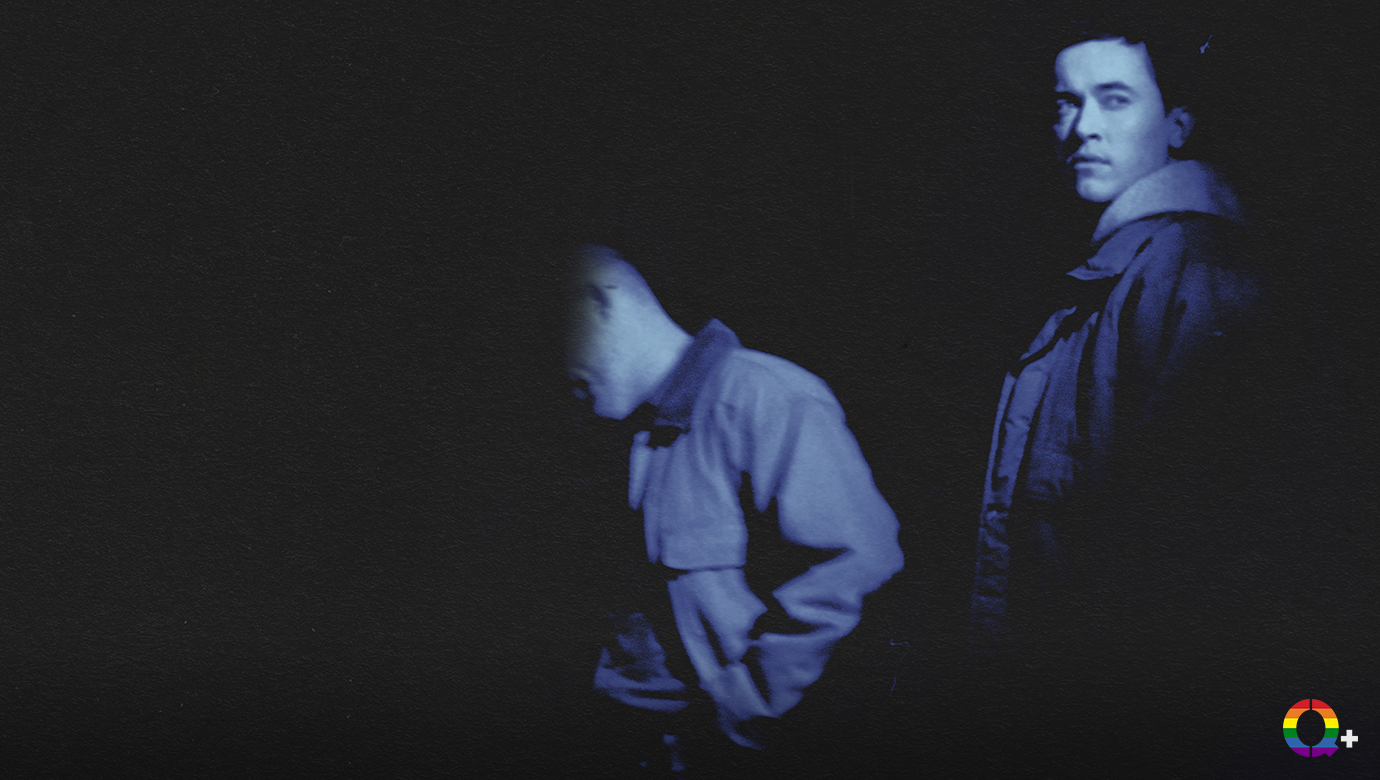
Lucas (Tom Blyth) is a second-generation cop, working undercover to lure gay men into exposing themselves in public bathrooms so they can be arrested for indecency. He embodies contradiction: an enforcer of the law, yet also its victim. His plainclothes don’t just conceal his role; they become a metaphor for a self stripped of color, individuality, and authenticity. Each arrest only deepens his own sense of entrapment. Lucas knows he is one of them, hidden in plain sight, and that contradiction gnaws at him, until one encounter pushes him out of denial.
That encounter is with Andrew (Russell Tovey), whose presence shakes Lucas’ carefully constructed façade. Their meetings—once in a restroom, again in a cinema, and finally in a greenhouse where desire overtakes hesitation—are fleeting yet seismic. For Lucas, sex with Andrew is not simply connection; it is revelation, a momentary lifting of lifelong suffocation. But Andrew has boundaries. He refuses to meet men more than once, and Lucas’ insistence on more collides with the rules of survival that defined queer life in that era.
The film’s dual structure mirrors Lucas’ fractured self. Emmi moves between timelines: the clandestine past and the stifling present, where Lucas returns home for the holidays after his father’s death, carrying a goodbye letter from Andrew that he can’t bring himself to open. The holiday scenes are heavy with unspoken truths: a family bound by tradition, grief, and denial, unaware of the secret their son conceals at the table. The letter becomes more than paper; it is proof of connection and evidence of transgression, threatening to collapse the wall Lucas has built between who he is and who he pretends to be.

What makes Plainclothes so powerful is not just its story, but how it’s told. The film captures the internal battle of a man desperate for freedom yet bound by duty, shame, and fear. Lucas’ journey is one of self-discovery, but also repression, guilt, and longing. Watching him reach for Andrew—sometimes literally in moments of intimacy, sometimes figuratively in the aftermath—we’re reminded of how many queer people of that generation were forced into impossible choices.
Blyth gives a haunting performance, embodying the contradictions of a man who is both predator and prey, cop and closeted lover. Opposite him, Tovey radiates warmth and confidence, pulling Lucas into a world he craves but can’t fully claim. Together, their chemistry makes the stolen moments between them pulse with urgency, even as we sense the odds are stacked against them.
VHS-style inserts fracture the film’s visual language, evoking both memory and paranoia. This scattered footage deepens the sense of duality, reinforcing Lucas’ splintered identity: part dutiful cop, part grieving son, part closeted man desperate for connection. Mirrors, silences, and stolen glances remind us of how queerness once survived in suggestion. Even the sex scenes resist sensationalism; they feel raw and necessary, moments where desire becomes oxygen. For Lucas, being close to Andrew isn’t indulgence; it’s survival.
And yet the oxygen never lasts. When the storylines converge, Lucas faces the inevitable: the life he’s been performing cannot hold. His uncle’s suspicion, his family’s ignorance, Andrew’s final rejection…all press against him until he can no longer contain the weight of silence. The climax, where Lucas finally speaks his truth aloud, is less triumph than necessity. It isn’t heroic, it’s human, the inevitable breaking point of someone who has been holding everything in for far too long.

Then comes the ending. A moment that lingers long after the credits roll. After a lifetime of restraint, Lucas exhales. The gesture is devastating in its simplicity. We realize the film has been about that breath all along: the weight of repression pressing in his chest until he finally admits who he is. It’s not a neat resolution, but liberation in its rawest form. That final breath is one of the most powerful closing notes that we’ve seen in a queer drama in years. The entire film feels like Lucas has been suffocating, terrified of what will happen if he lets himself breathe. When he finally does, it’s not just a release for him, it’s a release for us, too.
While the climax feels cathartic, the film never loses sight of its melancholy core. Lucas’ release is hard-earned but bittersweet; a reminder of how far we’ve come in terms of queer visibility, and of how many were left carrying the scars of secrecy. Emmi resists the temptation of a clean resolution, instead offering something more honest: a portrait of a man still searching for his San Francisco, still hoping for a freedom he’s never truly known. With Plainclothes, Carmen Emmi has crafted a debut that is both gripping and deeply moving, forcing us to remember the quiet battles queer people once had to fight just to feel alive.
Plainclothes is a film about the cost of hiding and the universal need to be seen. Lucas’ journey speaks to a generation that lived love as secrecy and intimacy as risk, but his story still echoes today because in Lucas’ story we recognize our history. Because Plainclothes speaks to a past where survival meant silence, but also to our present, where visibility is still contested and safety is still very fragile. So that exhale at the end is less an ending than a bridge, connecting Lucas’ journey to the shared story of a community still fighting to live openly.
Plainclothes is available in US theaters starting today, September 19. Follow us on X and Instagram for all queer stuff!
Featured Image: Image Courtesy of Magnolia Pictures
Discover more from Q+ Magazine
Subscribe to get the latest posts sent to your email.


Pingback: The 37th Annual GLAAD Media Awards Nominees Are Here – Q+ Magazine
Pingback: 37th GLAAD Media Awards Celebrate LGBTQ+ Storytelling With Major Wins for Heated Rivalry, Stranger Things, and More – Q+ Magazine