
LGBTQ+ Candidates Make History Across the U.S. in the 2026 Midterm Elections
The 2026 midterm elections brought important victories for LGBTQ+ representation across the United States, with queer candidates winning congressional seats, securing reelection, and breaking barriers in state legislatures. From the Deep South to the Midwest, LGBTQ+ politicians are making their way into positions of power, offering a reminder that our communities belong everywhere decisions about our futures are being made.
Among the most significant results were victories that would have been difficult to imagine in some of these states just a few years ago. New Hampshire’s Chris Pappas made history on the national stage, while Delaware’s Sarah McBride secured another term in Congress. Meanwhile, candidates in Indiana, Georgia, and Alabama broke new ground in states where LGBTQ+ representation has often faced considerable political resistance.
These results tell a story that goes beyond individual campaigns. They show LGBTQ+ candidates building coalitions, connecting with voters, and earning the opportunity to represent their communities at every level of government.

Historic Victories Break New Ground
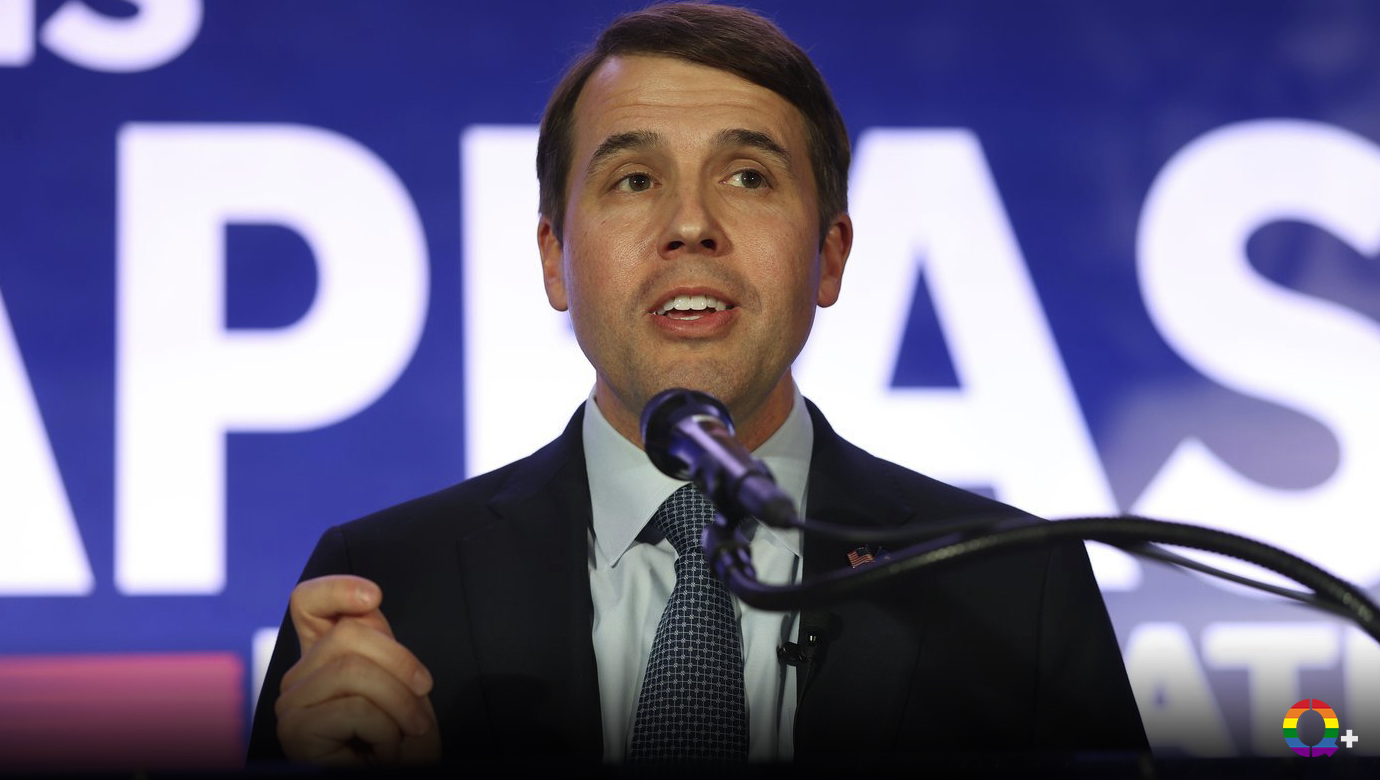
One of the biggest victories of the night came from New Hampshire, where openly gay Democrat Chris Pappas defeated Republican John Sununu in the race for the U.S. Senate. Pappas received 56.1 percent of the vote against Sununu’s 42.1 percent, with independent candidate Edmond Laplante receiving 1.9 percent. His victory makes him the first openly gay person elected to the U.S. Senate, marking a historic milestone for LGBTQ+ representation in the country’s upper chamber.
Delaware also celebrated an important victory as Sarah McBride secured reelection to the U.S. House of Representatives. The state’s first openly transgender member of Congress defeated Republican Joseph Arminio with 64.3 percent of the vote against 35.7 percent. McBride made history in 2024 when she became the first openly transgender person elected to Congress, and her reelection ensures that she will continue bringing transgender representation to the national legislature.
In Indiana, Democrat J.D. Ford defeated Republican incumbent Victoria Spartz in the state’s 5th Congressional District, winning 51.7 percent of the vote against 48.3 percent. Ford becomes the first openly gay person elected to Congress from Indiana. He is no stranger to breaking political barriers: in 2018, he became the first openly gay member of the Indiana General Assembly after unseating a 13-year incumbent who had campaigned against same-sex marriage. His move to Washington represents another milestone in a state that has rarely sent Democrats to Congress.

Georgia also made history with the election of Bentley Hudgins, who will become the state’s first openly transgender and nonbinary state lawmaker. Hudgins defeated Republican Samantha Boston by a commanding margin, receiving 92 percent of the vote against 8 percent. They will also become the Georgia legislature’s first Japanese American member. A 2026 Out100 honoree who uses they/them pronouns, Hudgins has built their political career around issues that directly affect people’s everyday lives, including affordable housing, reliable water, public transportation, wages, and investment in underserved neighborhoods.
Another historic victory came from Alabama, where Democrat Allison Montgomery defeated Republican incumbent Phillip Rigsby in House District 25, receiving 53.2 percent of the vote against 46.7 percent. Montgomery will become the state’s first transgender legislator. Her victory is particularly meaningful in a state where LGBTQ+ people have faced significant political challenges, and it represents another important step toward greater transgender visibility in Southern politics.

LGBTQ+ Representation Gains Ground in Congress
Beyond these historic firsts, several LGBTQ+ candidates secured congressional victories, either by winning their first election to the House or returning to Washington for another term.
In Michigan, Democratic state Sen. Jeremy Moss defeated Republican Ethan Baker in the 11th Congressional District, receiving 60.9 percent of the vote against 36.8 percent. Moss will become the state’s first openly LGBTQ+ member of Congress. He has spent years working to secure explicit civil rights protections for LGBTQ+ Michiganders, and his election brings that experience to the national legislature.
Arizona’s 6th Congressional District remains one to watch. Openly LGBTQ+ Democrat JoAnna Mendoza currently leads Republican incumbent Juan Ciscomani with 53 percent of the vote against 45 percent, while independent candidate Jereme Peters has 1.2 percent. With 79.5 percent of expected votes counted, Mendoza holds a promising lead, although the race has not yet been called. Ciscomani would need to win approximately 64.5 percent of the remaining vote to catch or overtake her. We’ll be keeping an eye on this one as the remaining ballots are counted.
California also welcomed a new LGBTQ+ representative to Congress. Democrat Marni von Wilpert defeated Republican Jim Desmond in the 48th Congressional District, receiving 59.6 percent of the vote against 40.4 percent. The openly bisexual San Diego City Council member brings her experience in local government to Washington, adding another bisexual voice to the national legislature.

Meanwhile, several familiar LGBTQ+ representatives successfully defended their congressional seats. In Kansas, lesbian Rep. Sharice Davids secured another term representing the state’s 3rd Congressional District, defeating Republican Eric Jenkins with 59.6 percent of the vote against 38.4 percent. A member of the Ho-Chunk Nation, Davids remains one of the first two Native American women elected to the U.S. House and the first openly LGBTQ+ person elected to Congress from Kansas.
New York’s Ritchie Torres, the first openly gay Afro-Latino member of Congress, also won reelection to a fourth term representing the Bronx. Torres received 76.8 percent of the vote, while Republican Stylo Sapaskis received 10.6 percent and independent candidate Andre Easton received 8.7 percent. His victory ensures that one of the most prominent LGBTQ+ voices in the House will continue representing his constituents.
Illinois Rep. Eric Sorensen, the first openly LGBTQ+ person elected to Congress from his state, secured a third term after receiving 60 percent of the vote against Republican Dillan Vancil’s 40 percent. California Rep. Robert Garcia also won reelection, defeating Republican Brian Burley with 59.6 percent of the vote against 40.4 percent. Garcia, who previously served as Long Beach’s first openly LGBTQ+ mayor, has been the top Democrat on the House Oversight Committee and is set to take over as its chair.

Other returning members include California Rep. Mark Takano, who secured an eighth term with 65.3 percent of the vote against Republican Steve Manos’s 34.7 percent. Takano is one of the longest-serving openly gay members of Congress and chairs the Congressional Equality Caucus.
Vermont Rep. Becca Balint, the first woman and openly LGBTQ+ person elected to represent her state in Congress, also secured a third term. She defeated Republican Gerald Malloy with 65.2 percent of the vote against 30.9 percent. Washington Rep. Emily Randall, the first LGBTQ+ Latina in Congress, won a second term representing the state’s 6th Congressional District, receiving 64.7 percent of the vote against Republican Teresa Fox’s 35.2 percent.
Wisconsin Rep. Mark Pocan, another longtime LGBTQ+ member of the House, also secured an eighth term. His race was uncontested, meaning he received 100 percent of the vote. Together, these victories ensure that LGBTQ+ voices will continue to have a presence in congressional debates and decisions that affect millions of Americans.

Queer Governors and State Lawmakers Hold Their Ground
The victories weren’t limited to Washington. Across the country, LGBTQ+ candidates also secured important positions in state government, including two governors who will continue leading their states.
Massachusetts Gov. Maura Healey won reelection, receiving 62 percent of the vote against Republican Michael Minogue’s 34.7 percent. Independent candidate Andrea James received 3.4 percent. Healey made history in 2022 when she became the first openly lesbian governor elected in the United States, and her victory ensures that Massachusetts will continue to have an openly LGBTQ+ person in its highest state office.
Oregon Gov. Tina Kotek also secured another term after defeating Republican Christine Drazan in a rematch of their 2022 contest. Kotek received 51.7 percent of the vote against Drazan’s 45.5 percent, while independent candidate Brett Smith received 2.6 percent. Kotek became Oregon’s first lesbian governor following her previous election, joining Healey in breaking barriers for lesbian representation in executive leadership.
In Pennsylvania, state Rep. Malcolm Kenyatta won another term representing the 181st District, receiving 99.4 percent of the vote. Kenyatta made history in 2018 as the first openly gay Black person elected to the Pennsylvania legislature and has remained an important LGBTQ+ voice in state politics.

Delaware state Rep. DeShanna Neal, a nonbinary Democrat who became the state’s first nonbinary elected official in 2022, also secured reelection to represent District 13. Their continued presence in the state legislature is another meaningful step for nonbinary representation in public office.
Fellow Delaware Democrat Claire Snyder-Hall also won reelection, securing a second term representing communities around Rehoboth Beach. The openly lesbian representative defeated Republican Mike Simpler with 64.4 percent of the vote against 35.6 percent.
In Texas, lesbian Rep. Ann Johnson defeated Republican Mike Michna to secure a fourth term representing Houston’s 134th House District. Johnson received 67 percent of the vote against Michna’s 33 percent, holding her seat in a state where LGBTQ+ rights have repeatedly been targeted by lawmakers.
Montana Rep. Zooey Zephyr also secured another term representing the Missoula area. The state’s first openly transgender legislator ran unopposed in the 95th House District, receiving 100 percent of the vote. Zephyr became a national figure in 2023 when Republican lawmakers barred her from the House floor during a debate over restrictions on gender-affirming care. Her reelection ensures that she will continue advocating for transgender rights in a state where those conversations have been particularly contentious.

Why LGBTQ+ Representation Still Matters
Looking at these results together, it’s difficult not to feel that something is changing. LGBTQ+ candidates are winning in places where our communities have historically struggled to gain political representation, breaking barriers that once seemed out of reach, and returning to positions of power despite the increasingly hostile political climate surrounding LGBTQ+ rights.
And we should be clear about something: someone’s sexuality or gender identity doesn’t define their entire political career, their qualifications, or their ability to lead. Being gay, lesbian, bisexual, transgender, or nonbinary doesn’t automatically make someone a better politician, just as being heterosexual doesn’t automatically make someone qualified to govern. We shouldn’t have to prove that LGBTQ+ people can lead any more than heterosexual politicians have to prove their capabilities based on their identities. After all, we’ve had plenty of heterosexual people in positions of power throughout history, and we can certainly look around to see that simply being straight has never been a guarantee of good leadership.
But that doesn’t mean representation is irrelevant. Our identities are political whether we like it or not, particularly when laws and policies continue to determine what rights we have, which healthcare we can access, whom we can marry, and whether we can live openly and safely. Having LGBTQ+ people in Congress, state legislatures, and governors’ offices means having people who understand that these conversations aren’t abstract political debates. They affect real lives, including their own and those of the communities they represent.
We don’t need every LGBTQ+ politician to make their identity the centerpiece of their work, nor should they be expected to represent every single person in our community. We need them to have the same opportunities as everyone else to bring their experiences, ideas, and priorities to the table. Their identities are part of who they are, but they are also so much more than that.
There is still plenty of work ahead, and one election cycle won’t undo years of discrimination or guarantee that the political landscape will suddenly become friendlier to LGBTQ+ people. Still, these victories give us reasons to feel encouraged. They remind us that progress is possible, that our communities are not disappearing from public life, and that the people who want to build a better future for everyone can win.
Change is coming, hope is being reignited, and perhaps, just perhaps, we’re getting a little closer to a moment when we can finally take a breath and feel a little more at ease.
Editor’s note: Election results are based on the latest available counts at the time of publication. We will update this article if any outstanding results change.
Follow us on X and Instagram for all queer stuff!
Featured Image: Democratic Senate candidate Rep. Chris Pappas. Image via The Associated Press. Photo by Reba Saldanha.
Discover more from Q+ Magazine
Subscribe to get the latest posts sent to your email.


