
The Vampire Lestat Episode 4 ‘The Devil’s Road’ Recap: The Ones We Can’t Let Go
After the emotional devastation of The Vampire Lestat Episode 3, Toronto, it would be easy to assume the series might ease up on Lestat (Sam Reid) for a week. Instead, The Devil’s Road finds new ways to twist the knife. The difference is that this time the wounds aren’t being exposed for Daniel Molloy (Eric Bogosian), the in-universe audience, or even the wider world. They’re being exposed for Lestat himself, and we’re the only witnesses.
While Toronto forces him to confront truths he has spent centuries reshaping into something easier to live with, Episode 4, The Devil’s Road, explores what happens when those truths refuse to stay buried. The memories linger. The guilt lingers. And so do the people tied to them.
As the season reaches its midpoint, The Vampire Lestat begins weaving its seemingly separate storylines into something much larger. Lestat’s turbulent relationship with Gabriella (Jennifer Ehle) takes center stage. Louis (Jacob Anderson) drifts further into an increasingly unhealthy attempt to cope with Claudia’s (Delainey Hayles) absence. Armand (Assad Zaman) embarks on an apology tour that takes him from bowling alleys to concert venues. All while a growing manifesto threatens to turn Lestat’s increasingly reckless public experiment into something far bigger than a rock tour.

The Devil’s Road also delivers several new songs we’re already hoping receive full versions on the upcoming EP, one of which might be the diss track of the year (seriously, Kendrick Lamar, watch out), along with enough Devil’s Minion content to keep that corner of the fandom well fed.
Before we head into spoiler territory, though, one thing we do recommend paying close attention to is Lestat’s narration from The Failures. On the surface, The Devil’s Road feels much like it has in previous episodes, but several of his seemingly offhand remarks quietly take on greater importance as the story unfolds.
Like our previous episode recaps, this discussion will focus only on the events of Episode 4. Future episodes, book material, and outside speculation won’t be part of our analysis, so you can read freely without worrying about what’s still to come.
With that said, let’s dive into all things The Vampire Lestat Episode 4, The Devil’s Road.
PSA: From this point forward, there will be major spoilers for The Vampire Lestat Episode 4, The Devil’s Road. If you haven’t watched the episode yet, we recommend coming back once you have. You’ve been warned, so tread carefully.

Viral Fame, Old Wounds, and a Mother Who Keeps Leaving
The Devil’s Road opens with Lestat finally getting exactly what he always wanted: the world’s attention. Footage of him levitating during his performance of The Loneliness has gone viral, briefly turning the band into the internet’s latest obsession. Or, as Lestat dryly explains in The Failures, both “irrefutable proof of the Cloud Gift” and “the deep fake Antichrist”—depending on which corner of Reddit you happen to frequent.
The victory, however, is short-lived. Lestat casually reveals that much of the online attention was artificially boosted by the Talamasca’s discretionary fund, one of several comments throughout the episode that hints at where this story is headed. Even seemingly unrelated moments become vehicles for hindsight. As Lestat casually talks his way out of a police stop, he also tells us that TC (Sarah Swire) begins imagining what life as a vampire might look like, Larry (Noah Reid) wishes Alex (Seamus Patterson) had been there to witness it all, and somewhere on the East Coast, a manifesto is quietly waiting to be released. Rather than simply revisiting the past, his narration keeps planting seeds about the future, suggesting that the road ahead deserves just as much attention as the memories he’s recounting.
Success also fails to distract him from something far more personal. At the end of our Toronto recap, we deliberately chose not to dwell on Gabriella’s sudden disappearance after the concert. At the time, Magnus’ (Damien Atkins) final visit carried far greater emotional weight, and speculating about Gabriella’s exit before seeing Episode 4 felt premature. Now that The Devil’s Road is here, though, it becomes clear why the show held onto that thread. Gabriella’s temporary disappearance isn’t just another cliffhanger. It reopens one of Lestat’s oldest wounds: his fear of abandonment.
In the present, he has no idea where she’s gone, she isn’t answering his messages, and every unanswered call slowly pulls him further out of the moment. That anxiety quietly consumes him throughout the episode. While the rest of the band discusses new material, celebrates going viral, and welcomes Alex back into the fold, Lestat keeps checking his phone, texting Gabriella, and waiting for a response that never comes. Each unanswered message chips away at the confidence he continues projecting to everyone around him.

Daniel notices something is off, though not for the reasons he thinks. He first asks about Sofia’s abrupt vanishing after their Toronto stop. Lestat quickly brushes the question aside, insisting she’ll rejoin them in Albany. With that mystery temporarily settled, Daniel pivots to someone else entirely: Gabriella. Unaware of the connection, he asks to hear about Lestat’s biological mother.
The question lands harder than it should. According to the version of events Daniel already knows, Gabriella died long ago, much like Nicki (Joseph Potter). That leaves Lestat with no room to maneuver without breaking the story he’s been maintaining for decades. Rather than revealing the truth, he slips into yet another version of her life.
He claims that after becoming a vampire and leaving Paris, Gabriella simply faded away. She stopped speaking. She refused to hunt. She lacked the strength to survive on her own, forcing Lestat to care for her until she eventually asked him to leave her behind to greet the sunrise. The problem is that the flashbacks immediately expose every word as fiction.
Every time Lestat insists Gabriella became distant, the episode cuts back to eighteenth-century Europe, where she’s more alive than we’ve ever seen her. She talks constantly. She jokes about pretending to be undertakers transporting an uncle named Marius, who was “bored to death by his tart nephew Armand.” She dreams aloud about all the different people they might become now that they’re immortal. Rather than withdrawing from the world, Gabriella embraces vampirism with an excitement that even surprises Lestat. It’s arguably the happiest we’ve ever seen her—and, more strikingly, one of the happiest we’ve ever seen Lestat. For perhaps the first time in his life, he feels as though he finally has the mother he always longed for.
Even while lying, though, Lestat can’t stop remembering his mother and what he went through with her. The memories keep surfacing in fragments—a beach, a lighthouse, a coastline—small pieces of a puzzle that neither Lestat nor the audience can fully assemble just yet.
Another flashback, this time in Italy, reveals just how radically Gabriella has embraced her new existence. She tells Lestat she is no longer a daughter, wife, mother, or even a woman. She has become “a fever that comes in the night and kills by morning.” It’s one of the clearest expressions yet of what immortality means to her: complete freedom from every identity she spent her human life performing. Moments later, her attention is drawn to a handsome stranger who has just arrived, hinting at where the evening is about to lead.
Yet when Lestat later recounts that same encounter to Daniel, he quietly reshapes that final detail. Instead of Gabriella showing interest in the stranger, he claims he was the one tempted while she remained passive. By now the pattern is unmistakable. Whenever Gabriella’s actions threaten to reveal too much, Lestat instinctively edits the story before offering it to someone else.

Daniel, meanwhile, has little patience left for Lestat’s performances. Still angry over the telepathic prank in Toronto, he challenges him at every opportunity. Lestat responds the only way he knows how: by throwing another psychological grenade. He casually suggests that Daniel’s great triumph in Dubai may never have been a triumph at all. If Louis and Armand could read Daniel’s thoughts all along, perhaps his carefully orchestrated “gotcha” moment was never a surprise to anyone but him.
The possibility rattles Daniel enough to end the interview for the day, but Lestat is barely paying attention anymore. Gabriella still hasn’t answered his calls, and his thoughts drift back to her once again.
His next memory is easily one of the episode’s most unsettling moments. Lestat walks into Gabriella’s room and finds her in bed with the man she seduced for food. Disturbed, he admits he heard them together through the walls. Gabriella barely reacts. Instead, she calmly asks whether his annoyance really carried him all the way into her room.
What follows is deeply disturbing, not simply because of the incest itself, but because it exposes the tragic shape of Lestat’s longing. After spending his entire human life chasing a mother’s affection that he rarely received, he finally gets the closeness he always wanted, only in a form so profoundly distorted that he cannot recognize he is being violated.
Before the memory can continue, however, the episode abruptly pulls us back to the present. It’s a deliberate interruption, and one that leaves both Lestat and us sitting with everything we’ve just witnessed. The full story of Gabriella’s departure in the past and present remains unfinished, but one thing is already unmistakable: the interview for the documentary may still be happening, yet the most revealing parts of Lestat’s history are now unfolding entirely outside of anyone’s reach.

Louis, Regina, and the Ghost of Claudia
While Lestat spends most of The Devil’s Road wrestling with memories he can’t escape, Louis’ storyline unfolds almost entirely in the present. Spread across several encounters at the same Brooklyn diner, the episode traces a grief that has stopped looking like mourning and started resembling obsession.
Lestat introduces Louis’ story through The Failures, referring to him as “Louis du Lac, or Thomas Pitt, or he who licenses and franchises the night”—a playful jab at Louis’ ever-growing business empire and his memorable declaration at the end of Interview With the Vampire Season 2 that he now “owns the night.” The joke quickly gives way to something more ominous, though. Louis, Lestat tells us, believed he was in control. Then, almost in passing, he adds that they all believed they were in control that year.
At first, Louis’ visits to the diner feel almost harmless. Regina (Delainey Hayles) notices that he keeps ordering food he never eats, prompting him to reluctantly take a tiny bite of his burger just to satisfy the kitchen. He asks about her life, and when she assumes he’s flirting with her, Louis casually shows her a photo of Lemuel (Moses Sumney) on his phone and tells her he’s gay. It’s a small moment, but a meaningful one. After centuries of shame and repression, Louis now says the word without hesitation, treating it as the simple fact of his life that it is.
That brief exchange, however, does little to satisfy Regina’s curiosity. Thomas Pitt, the billionaire who keeps returning to a modest diner in Brooklyn, still doesn’t make much sense to her.

By the time they meet again, curiosity has replaced suspicion. Regina admits she Googled him and discovered that he’s one of the richest people in the world, the owner of Dracula Hotels and countless other ventures. She jokes that while he has a mixed set of holdings, she has a mixed set of partners, before finally asking why he keeps looking at her the way he does.
Louis’ answer is surprisingly honest. He admits that she’s been helping him simply by being herself, that she happened to find him during a lonely chapter of his life. When Regina keeps guessing who she reminds him of, Louis realizes she’ll never arrive at the truth on her own. Instead of explaining, he quietly shows her a digital copy of Interview with the Vampire and tells her it’s real. “There’s a girl in it.” He confesses. When Regina asks what happened to her, Louis can’t answer. He simply apologizes, leaves an enormous tip, and walks away.
The following encounter strips away any illusion that this is simply an awkward friendship. After missing several shifts, Regina finally confronts Louis outside the diner, having figured out what he couldn’t bring himself to say outright. She knows she resembles Claudia. Louis confirms that she does.
From there, the conversation becomes increasingly uncomfortable. Louis admits that he looked her up online too, learning about her side hustles, debts, criminal record, and financial struggles. He offers to erase those problems, to pay everything off, and give her a different life.
Regina immediately recognizes the imbalance in the arrangement he’s proposing, questioning whether he expects her to become a replacement for Claudia. Louis insists that’s not what he wants, but we don’t think he’s even managed to convince himself.

For all his insistence that he’s trying to help, Louis is projecting his own unresolved grief onto someone who never asked to carry it. Regina isn’t Claudia, yet Louis keeps pulling her toward that role, hoping proximity alone might help a wound that refuses to heal.
By the time Louis returns yet again to stalk this girl from outside the diner, Lestat’s warning about everyone believing they were in control has already proven itself true. Regina motions for him to come inside. She apologizes for how harshly she spoke to him before, and immediately names her price: five hundred thousand dollars. Louis agrees without hesitation.
Then, slipping effortlessly into Claudia’s accent, she asks, “What now, Daddy Lou?”
The line lands with disturbing clarity—not because Louis gets what he wants, but because neither of them seems entirely sure what this arrangement has become. Whatever boundary once separated remembrance from reenactment has now disappeared.
If Toronto explored how grief can become vengeance, The Devil’s Road suggests something arguably even more disturbing. Grief left unresolved doesn’t simply linger. Given enough time, it begins looking for someone else to inhabit. For Louis, that search has now found Regina. It’s an impossible expectation, an incredibly unhealthy dynamic, and one that feels destined to hurt them both.

Armand’s Apology Tour
If Lestat spends The Devil’s Road on an actual rock tour, Armand seems to have embarked on one of his own: an apology tour. After everything that happened in Dubai, he begins seeking out the people he hurt, attempting to make amends one conversation at a time. Whether those apologies are enough—or even entirely sincere—is another matter altogether.
The first stop comes in a bowling alley, where Daniel and Armand come face to face for the first time since Armand transformed him. Daniel barely lets him get a word in before unleashing the kind of blistering verbal beatdown only he could deliver. Equal parts cathartic, hilarious, problematic, and vicious, he rewrites Armand’s carefully prepared apology himself, rattling off decades of pain with increasingly brutal precision. He mocks Armand for killing him, manipulating his life, Dubai, San Francisco, his vampire birth certificate being in Newark, the rehab years, the year he spent listening to Phish, and just about every miserable event he can think of before sarcastically concluding that Armand is “just a 500-year-old pussy.”
More than anything, though, the verbal barrage is revealing. Daniel has stopped looking for explanations. He isn’t interested in understanding Armand at the moment. He simply wants him to hear the damage laid out in full. To Armand’s credit, that’s exactly what he does. He doesn’t interrupt, argue, or defend himself. He simply absorbs every insult as Daniel walks away and tells him to pay the tab.

Later, after the memories of Gabriella leave Lestat visibly shaken, we discover that Daniel wasn’t Armand’s only stop. Lestat wakes to find his former…let’s call him business partner…waiting inside the tour bus, letter in hand, ready to deliver another apology from the deepest regions of his soul. Lestat’s response is immediate: Armand has no soul.
Still, he lets Armand continue reading while casually taking a shower—first in blood, then in water—making the entire exchange somehow sincere, theatrical, sexy, and completely ridiculous all at once.
Unlike Daniel, Lestat has no interest in making Armand earn forgiveness because, as far as he’s concerned, forgiveness was never an option. Instead, he repeatedly interrupts to correct the record. When Armand politely refers to the Théâtre des Vampires trial as though it were simply an unfortunate production, Lestat reminds him that it wasn’t theater. Louis, Claudia, and Madeleine (Roxane Duran) received real sentences. When Armand praises Lestat’s silence after Paris as an act of generosity, claiming it reflected the richness of his character, Lestat bluntly admits that there was no generosity involved. He stayed silent because he knew the uncertainty would torture Armand for decades—and tangentially make Louis miserable too.
It’s one of the most revealing exchanges in the episode, stripping away the mythology both vampires so often build around themselves. Armand keeps trying to frame their shared history through introspection and carefully chosen language. Lestat refuses every attempt to soften it. He is right about the trial, but even his explanation for what came after Paris reveals how easily he reshapes the past to suit the version of himself he wants Armand to see. If Daniel weaponizes his pain, Lestat weaponizes the truth—at least the parts of it he’s willing to admit.
Yet beneath all the jokes, the narration from The Failures refuses to let us get too comfortable and continues dropping breadcrumbs about where the season is headed. Lestat describes Armand as a nomad who drifted from India to Venice, Paris, San Francisco, and Dubai before quietly warning us that he “would do more damage than the Queen ever did.” Considering everything else Lestat has been quietly foreshadowing throughout the episode, it doesn’t feel like an exaggeration. It feels like another warning we’re supposed to file away for later.
And that’s exactly why it’s so difficult to fully embrace Armand’s apparent redemption.

Earlier in the episode, Alex described his mysterious AA sponsor as someone “like a god,” carefully avoiding even saying his name. We know that the sponsor is Arun—Armand—so these apologies become much harder to read at face value. They may well be genuine, especially when it comes to Daniel, but the episode also reminds us that Armand is still operating in familiar ways: quietly inserting himself into the lives of vulnerable people while keeping the full extent of those relationships hidden. That’s classic Armand, and until we know what role Alex is going to play in all of this, we’re keeping our guard up.
But anygays… by the end of their conversation, Armand finally reveals why he came. He asks Lestat to end the tour. Vampires around the world are listening to his music, embracing his philosophy, creating fledglings in unprecedented numbers, and pushing both species toward a crisis the planet simply can’t sustain. Lestat doesn’t dismiss the warning. Instead, he shrugs, admits he only has five shows left anyway, and invites Armand to attend one before it’s all over because, in his own words, he’s “quite sexy” onstage.
It’s a surprisingly cordial encounter between two vampires whose history is complicated, to say the least. Whether Armand’s apology tour marks the beginning of genuine change or simply another performance by one of television’s greatest manipulators remains impossible to say. The episode doesn’t offer an easy answer, instead leaving us to wonder whether Armand is finally confronting his past or simply finding a new way to rewrite it.

The Diss Track, the Manifesto, and the Night Everything Changed
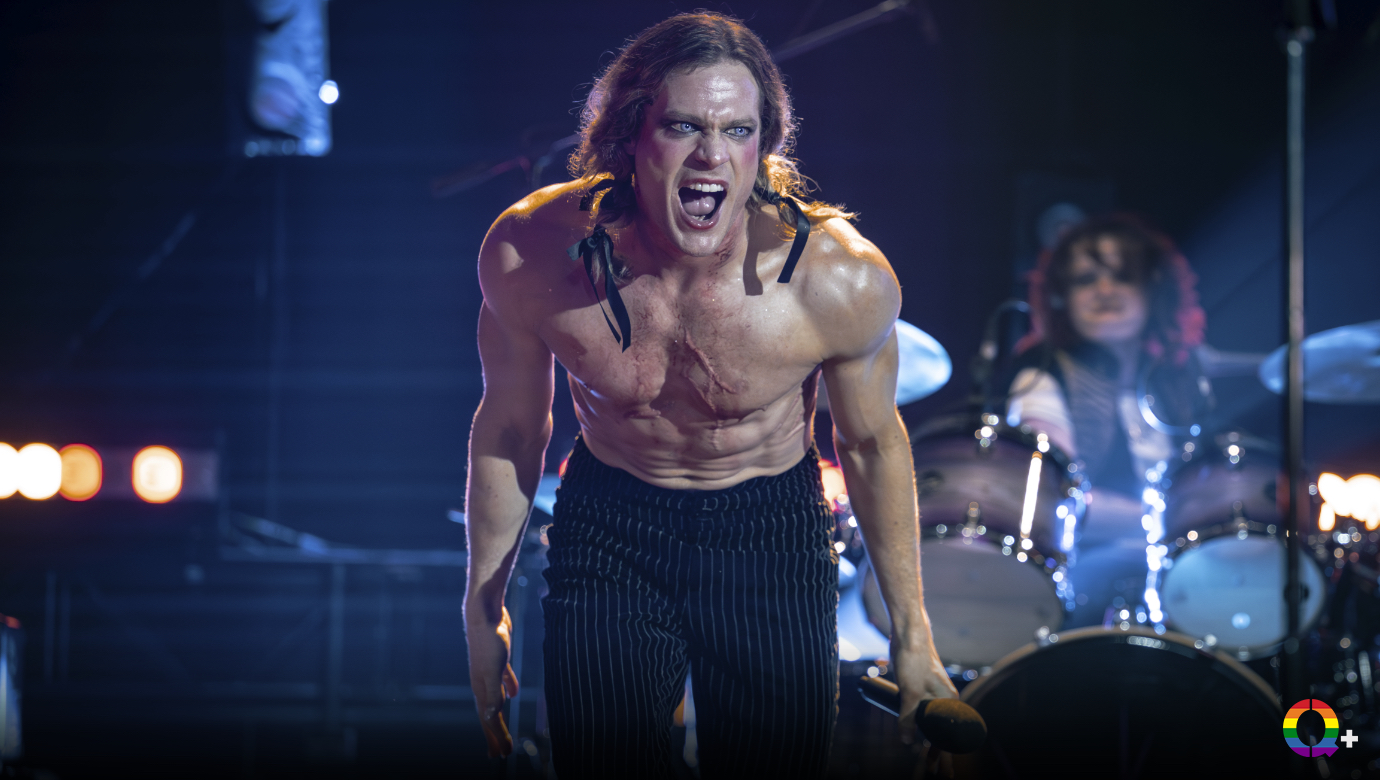
It wouldn’t be an episode of The Vampire Lestat without another unforgettable concert, and The Devil’s Road certainly delivers. But what begins as one of the episode’s funniest moments soon becomes something far more consequential. For three episodes, Lestat has insisted that vampires are real. This is the moment the world finally starts listening.
Taking the stage dressed in echoes of his Théâtre des Vampires days, Lestat wastes little time reminding the audience that performance has always been his weapon of choice. After gleefully mocking Interview with the Vampire and joking that perhaps he really is “the toxic bitch, anxiously attached, show pony with a personality disorder called Lestat,” he introduces a very special guest standing among the crowd: the Maître of Paris himself, the vampire Armand. Lestat insists that, despite everything the book says, they’re friends, even thanking Armand for once doing something brave for him, before announcing that the band has written a brand-new song in his honor.
What follows is easily the funniest musical number the series has delivered so far. Rather than responding to Armand’s heartfelt apology from earlier in the episode, Lestat debuts Big Boss, a gloriously petty diss track that roasts everything from Armand’s endless obsession with the Great Laws to his oversized ego. It’s vicious, theatrical, and completely unnecessary—which is precisely what makes it so entertaining. Armand endures part of the performance before quietly walking away, while Lestat continues performing with the confidence of someone who has clearly been waiting decades for this exact opportunity.
The concert also raises yet another question about Alex. By this point, we know he and Armand have a connection, but his reaction to Lestat’s public humiliation is what makes the situation even more suspicious. He doesn’t look shocked, angry, or even confused—he simply watches. Whatever exists between them seems far more complicated than anyone around them realizes.
When Armand leaves, Daniel follows him outside, leading to one of the episode’s most anticipated conversations. The strange bond between maker and fledgling briefly manifests itself as Daniel loses sight of the surrounding world, allowing Armand to explain that the connection works both ways. Yet Daniel isn’t that interested in vampire metaphysics at the moment. He’s interested in Dubai. Ever since Lestat suggested earlier that both Louis and Armand could have read his thoughts throughout the interview, he can’t stop wondering whether his greatest journalistic victory was ever truly a surprise.
Armand swears it wasn’t theater and claims that love was what prevented him from reading Daniel’s mind. When Daniel points out that love alone doesn’t stop vampires from using their abilities, Armand clarifies that it wasn’t his love for Louis—but it was love nonetheless. Whether Daniel fully believes that explanation remains to be seen, but for Devil’s Minion fans, it’s another significant step toward a relationship that somehow keeps becoming even more emotionally complicated.

But as Armand and Daniel reconnect, backstage at the venue, Lestat is falling apart. Nicki’s lingering muse continues haunting him, scribbling a bloody message across the dressing room, a name that carries its own weight for Lestat: Marius (Christopher Heyerdahl). Nicki also reminds him of everyone who has already left him behind. Lestat barely acknowledges him. His attention remains fixed on Gabriella, who still hasn’t answered any of his calls. Even as he jokingly leaves her a voicemail about the thousands who came to worship him that night, it’s painfully obvious that the silence hurts far more than he’s willing to admit.
Then everything changes. As Lestat leaves the venue, the fan who insisted back in Detroit that vampires were real opens fire. Christine (Jeanine Serralles) is wounded. Lestat himself is shot point-blank, yet remains standing for an inhuman amount of time, confirming exactly what the gunman wanted the world to witness: vampires are real.
In the aftermath, while Fareed (Gopal Divan) tends to Christine aboard the tour bus, Lestat once again retreats into memory. The fragmented images that have haunted the entire episode finally come together on a lonely stretch of coastline, where he and Gabriella wait beside a lighthouse for a passing ship. Gabriella speaks openly about immortality, wondering what fifty or a hundred years might look like for them. Unlike Lestat, who still imagines eternity as something they will experience together, Gabriella dreams of something far darker. She imagines vampires abandoning restraint altogether, extinguishing humanity’s light until only devils remain to rule the earth. It’s clear that their visions of immortality are fundamentally incompatible.

Lestat, however, refuses to see that. Hoping to make their future feel permanent, he cuts his hand and places a ring of blood around Gabriella’s finger like a wedding band. The gesture isn’t romantic. It’s heartbreaking. After spending his entire life craving his mother’s affection, Lestat mistakes permanence for security, desperately believing that if he can make this bond feel eternal, she’ll never leave him. Gabriella, meanwhile, has spent the entire episode embracing freedom from every identity that once defined her. The more Lestat reaches for permanence, the more she seems determined to belong to no one.
The present soon catches up with the past. News breaks that the shooter’s manifesto has been released online, spreading his warnings about vampires across the internet and turning what once sounded like a conspiracy into something far more difficult to dismiss. While the world begins grappling with the possibility that monsters truly walk among them, Lestat sits alone on the tour bus, absentmindedly playing his guitar as memory overtakes him one final time.
Back at the coast, he wakes to a new night expecting to continue the journey he and Gabriella had imagined together. Instead, Gabriella is gone. Her makeshift coffin stands empty. All she leaves behind are her necklace and a lock of her own hair. There is no goodbye. No explanation. Just absence.
It’s a devastating ending to the episode’s flashbacks, and one that finally explains why Gabriella’s disappearance in the present unsettles Lestat so profoundly. The fear isn’t rooted in these unanswered messages alone. It’s rooted in the fact that, once before, she vanished without a word—and left him carrying a wound he never truly learned how to heal. But the episode doesn’t linger on that heartbreak for long.

The Devil’s Road Leads Forward
Back in the present, Gabriella returns to the tour bus as casually as if she had only stepped away for a few minutes rather than disappearing from Lestat’s life entirely. By then, Lestat has already convinced himself that the tour—and perhaps the band itself—is over.
Their reunion couldn’t be more mismatched. He tells her he called countless times. She shrugs that she was only gone for a week. He immediately corrects her: it was nine days, and they didn’t feel like nine days. When she tells him to grow up, his frustration finally slips through. He asks where she went. He asks why she came back. And more painfully, he asks why she won’t let him hate her. Gabriella, however, refuses to engage with any of it and simply shares that she was “with the voices.” It’s an answer that immediately reframes her disappearance.
Earlier in the season, we noted Gabriella’s curious fascination with one of the dancers at the strip club in Toledo, wondering whether the moment might connect to the Great Conversion later on. The Devil’s Road confirms those suspicions. Gabriella hasn’t been wandering aimlessly. She’s been listening to the same growing chorus of restless vampires that has echoed around the edges of Lestat’s narration all season.
More importantly, unlike Armand, she doesn’t hear a warning. She hears an opportunity. Where Armand sees Lestat’s music pushing vampire society toward catastrophe, Gabriella believes it’s giving something to vampires who have spent centuries wandering without purpose. She tells Lestat they’re lost, angry, and exhausted by simply enduring. His songs are reaching them. Lestat insists he’s only singing. Gabriella answers with just two words: “Eight wolves.”
It’s a callback that reaches all the way back to Auvergne. Years before Lestat became a vampire, Gabriella challenged him to become the man capable of killing eight wolves alone. Now she challenges him again, only the wolves have changed. Once more, she refuses to tell him exactly what to do. She simply points him toward the path she believes he should take. Whether that’s encouragement or manipulation depends entirely on how one reads Gabriella.

Lestat himself refuses to explain what finally convinces him. Narrating from The Failures, he admits this would be the perfect place for the audience to interrupt and tell him to end it. Instead, he says he’ll have to paraphrase “a more eminent vampire caught in a similar situation” before borrowing Louis’ words from Interview with the Vampire: “It is difficult to explain how her words disarmed me, how efficiently succinct and impenetrable her argument was.” Then he bursts into laughter, shrugs, and simply tells us: “You had to be there.”
It’s a wonderfully frustrating moment because it works on two levels at once. On the surface, Lestat is doing what he does best: mocking Louis by throwing his own words back at him, especially a passage tied to one of the most significant moments of their history. But beneath the joke lies a rare moment of vulnerability. Lestat has spent the entire season wrestling with the version of himself that exists in Louis’ book, and this jab feels like a small act of revenge against the pain that story has caused him. Yet once the joke lands, the performance falls away. For all his flair as a storyteller, even Lestat can’t fully explain what Gabriella says to convince him.
The camera, however, offers one final clue. As he laughs, every one of his lingering muses sits beside him on the bus: Nicki, Louis, Claudia, and even his younger self. They aren’t gone. They haven’t been resolved. They’ve simply become part of him, traveling the same road.
By the episode’s final moments, Lestat’s music career is back on track. Rather than preparing for another concert, the band is in the studio recording an album, while Gabriella watches with unmistakable satisfaction.
That final image may be the most revealing one of the episode.
The Devil’s Road completely changes the way we look at Gabriella’s presence throughout the season. She didn’t return to Lestat’s life because he wanted her there. She returned because she believes in what his music is becoming. While Armand spends the episode trying to stop the Great Conversion before it kills them all, Gabriella has been quietly encouraging it all along. Without even realizing it, Lestat’s tour has become the catalyst for something much larger—and Gabriella seems perfectly content to let it happen. Cruel, isn’t it? The person encouraging Lestat to move forward may also be the one leading him toward his greatest danger.

The Vampire Lestat Episode 4, The Devil’s Road: Final Thoughts
By the time The Vampire Lestat Episode 4, The Devil’s Road, comes to an end, it feels as though every character has quietly taken one step closer to a cliff they don’t yet realize they’re approaching. Lestat finishes the hour back on his musical journey, but not because he found peace. Gabriella simply pointed him toward that destination. Louis convinces himself he’s helping Regina when every interaction suggests the opposite. Armand insists he’s trying to repair the damage he’s caused, even as the episode keeps giving us reasons to remain cautious. Nobody walks away from this hour feeling safer than when it began.
If there’s one thing this episode reinforces, though, it’s that The Failures is no longer simply Lestat recounting old stories. Between his reflections on the road ahead, the manifesto waiting to be released, his warnings about Armand, and the seemingly incidental observations he scatters throughout the episode, the larger picture is slowly beginning to emerge. We may finally be seeing the shape of what’s coming, but the reasons behind it—and the full story that led everyone here—remain just out of reach.
Louis’ storyline is probably the one we’re most worried about. His grief over Claudia has stopped looking like grief and started looking like substitution. It’s an impossible dynamic, an incredibly unhealthy way of coping with unimaginable loss, and we genuinely struggle to imagine a version of this story where either of them walks away without more scars than they already have. Honestly, we’d much rather send Louis to therapy than keep watching this unfold. Alas.

Meanwhile, Armand somehow manages to be both the episode’s funniest and most unsettling presence. Watching him awkwardly attempt to apologize to Daniel, only to be forced to confront decades of pain he caused, is genuinely delightful. And after so long apart, seeing Daniel and Armand finally share the screen again almost makes us forget Lestat’s warning about the danger Armand brings wherever he goes. Almost. Then there’s Alex, whose quiet connection to Armand continues to raise more questions than answers. This is still Armand, after all, and we’ve learned better than to ignore what he’s doing just because he’s smiling politely.
Before we move on, though, we have to talk about Big Boss. Lestat really listened to Armand’s carefully crafted apology, accepted the letter… and then responded by publicly debuting what may already be the diss track of the year. It’s gloriously petty, ridiculously catchy, and exactly the kind of theatrical chaos we’ve come to expect from him. We have absolutely no doubt the Beautiful Unwell will have this one on repeat the second the episode’s EP drops.
And finally, there’s Gabriella. Rather than answering where she disappeared to, The Devil’s Road reveals why she came back in the first place. She didn’t return simply to be with Lestat. She returned because she believes in the movement growing around him. She isn’t following her son—she’s following an idea. And that’s a far more unsettling revelation than her disappearance ever was.
Needless to say, we’re equal parts excited and terrified about where all of this is heading. Next week, the show reaches New York—a city where Louis, Regina, and now the fallout from everything we’ve seen this week are waiting. Considering where this episode leaves every major player, we have a feeling we’re nowhere near emotionally prepared for what’s coming next.
But before we all collectively brace for impact, we want to hear from you. What did you think of The Vampire Lestat Episode 4, The Devil’s Road? Do you believe Armand’s apology tour is genuine? What do you think Gabriella’s endgame really is? And how worried are you about Louis and Regina after this episode? Come talk to us on all our socials, and we’ll see you next week for our recap of The Vampire Lestat Episode 5, New York.
The Vampire Lestat Episode 4, The Devil’s Road, is available to stream on AMC+ now. Episode 5, New York, will premiere on AMC on Sunday, July 05, at 9 pm ET/PT. Seasons 1 and 2 of Interview With the Vampire are available to stream on AMC+, Netflix, and Prime Video (depending on the region). Follow us on X and Instagram for all queer stuff!
Featured Image: Image Courtesy of AMC. Photo by Sophie Giraud.
Discover more from Q+ Magazine
Subscribe to get the latest posts sent to your email.


Pingback: The Vampire Lestat Episode 5 'New York' Recap: Nothing Stays Buried – Q+ Magazine
Pingback: The Vampire Lestat Episode 6 'Montreal' Recap: Brutal Love – Q+ Magazine
Pingback: The Vampire Lestat Episode 7 'The Failures' Recap: The Soul at the Long Table – Q+ Magazine