
‘Soul Mate’ Review: A Tender, Decade-Spanning Story About Finding the Person Who Makes Life Feel Less Lonely
There’s a moment early in Soul Mate where one character sits inside a burning church and quietly decides not to move. Not because he wants death exactly, but because the weight of shame, guilt, fear, and loneliness has exhausted him to the point where disappearing almost feels easier than continuing forward. That scene says a lot about what Soul Mate is actually trying to explore underneath its premise. This is not simply a story about two men falling in love. It’s a story about what happens when two people who have spent most of their lives emotionally stranded suddenly find someone capable of understanding the parts of themselves they’ve never known how to explain.
And honestly, that distinction matters. Because Soul Mate approaches queer love from an introspective angle. Unlike streaming-era romance narratives that often feel pressured to move fast, define relationships quickly, or constantly prove intimacy through physical milestones, this series moves carefully. Sometimes painfully so. It lingers in silence, hesitation, routine, grief, and all the tiny moments that slowly build a connection between two people before either of them fully realizes what that connection has become. The result is something unexpectedly moving.
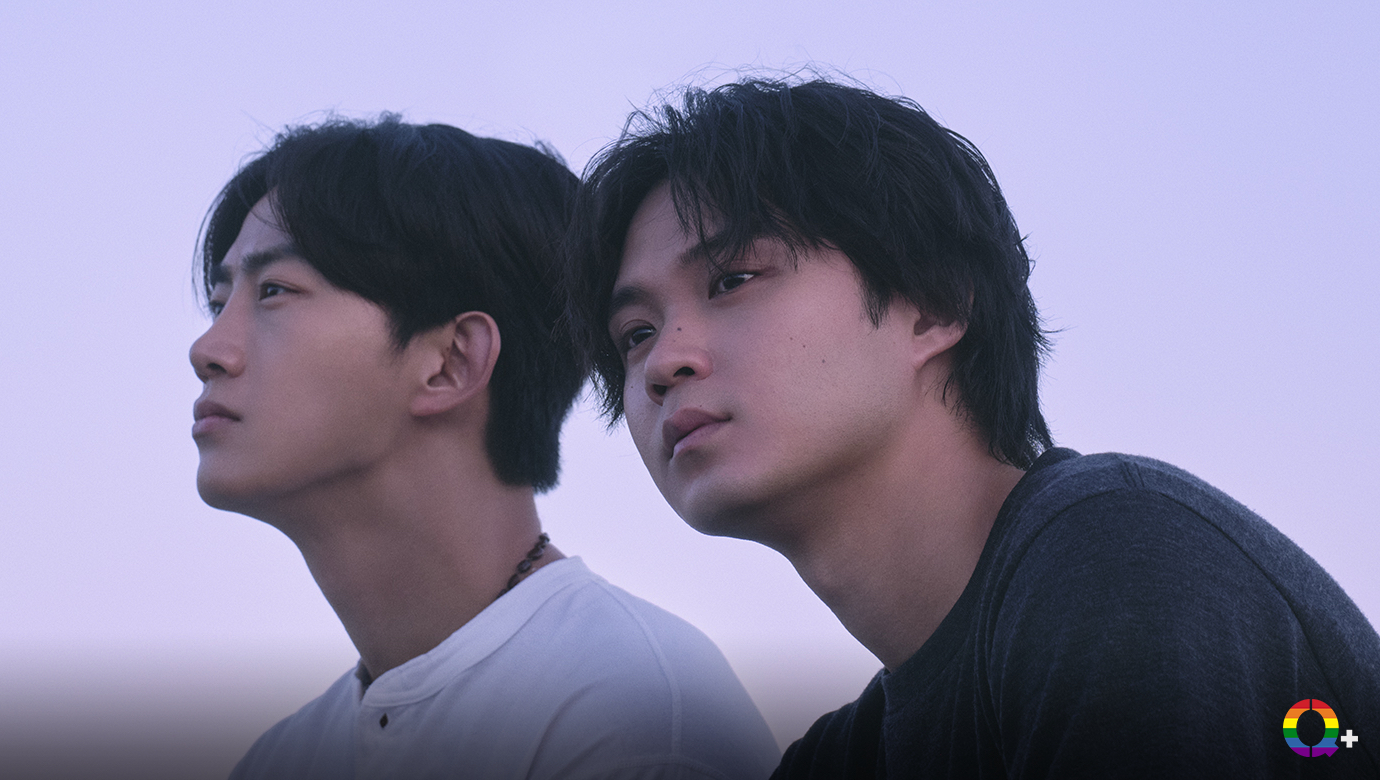
Across eight episodes, Soul Mate follows Ryu (Hayato Isomura), a Japanese hockey player carrying the emotional fallout of a traumatic event that took place back home, and Johan (Ok Taec-yeon), a Korean boxer who has spent years surviving however he can, even if it means destroying pieces of himself along the way. Their meeting in Berlin feels almost cosmic in the way the series frames it. Not in a flashy “destined lovers” kind of way, but in the quieter sense that certain people arrive in our lives at the exact moment we need them to.

In fact, the show keeps returning to that idea over and over again: timing, fate, and emotional gravity. Their first meeting quite literally happens in the middle of a disaster, and from that point forward, Soul Mate slowly traces how these two men become each other’s safe place over the course of nearly a decade. Johan and Ryu do not simply fall in love; they slowly teach each other how to keep living.
Even the episode titles feel designed to work like emotional checkpoints rather than simple chapter names. “The Gravity of Fate” (Episode 1) introduces two people being pulled toward each other long before they understand why. “Can We Save Our Souls?” (Episode 2) explores liberation and self-acceptance. “Our Sand Castle” (Episode 4) quietly foreshadows how fragile happiness can be, while “Rebirth of a Soul” (Episode 5) and “Because of Love” (Episode 7) examine the painful sacrifices people make for those they care about. By the time the series reaches “Soulmate” (Episode 8), the title no longer feels symbolic or poetic, just… earned.
There’s a clear intention behind every title, every repeated image, and the way the series revisits certain emotions and conversations throughout the story.
The series also constantly circles back to loneliness, but not in the way we usually see loneliness portrayed onscreen. Here, loneliness becomes proof that a connection existed in the first place. The show successfully argues that grief is inseparable from love because we only mourn the people who managed to leave pieces of themselves behind inside us. To miss someone, to grieve someone, or to long for someone means that person mattered deeply enough to leave a permanent mark on your life. That idea shows up repeatedly through conversations about scenery, memory, one particular painting, and the act of wanting someone else to witness life beside you.

One of the strongest recurring metaphors in Soul Mate involves the idea of finally finding someone who changes the way the world looks. Not literally, of course, but emotionally. A lake becomes more beautiful because it was experienced together. A city stops feeling unfamiliar because someone else is there too. Even silence starts feeling different depending on who’s sitting next to you. That emotional perspective is what gives the series its heart.
What we appreciated most about Soul Mate is that it understands love as something lived rather than simply declared. The show spends far more time focusing on care than romance in the conventional sense. Cooking dinner after work, learning another language, remembering small details, picking someone up when they can’t stand on their own emotionally anymore, building routines together, making room for grief. Staying… Always staying.
In many ways, Soul Mate almost feels more interested in companionship than romance itself, and ironically, that’s precisely why the relationship lands as hard as it does. The series never treats love like a finish line or a dramatic reveal. Instead, it presents love as something quieter and far more difficult: the choice to continue showing up for another person across years of change, loss, guilt, distance, hardship, and fear.

That said, we do think it’s important for viewers to understand the storytelling language Soul Mate is operating within. Following recent queer projects from Netflix Japan like 10DANCE and broader LGBTQ+ stories that have embraced more overt physical intimacy, some audiences may go into Soul Mate expecting a similarly explicit romantic framework. That’s not really what this series is aiming for. The drama takes a far more subdued and traditional approach to depicting intimacy, especially physically. But interestingly, it never feels emotionally distant. If anything, the restraint becomes part of the text itself. These characters are not people who know how to verbalize love easily. The series reflects that emotional repression in the way it stages intimacy onscreen.
Whether viewers connect with that approach will probably depend on what they’re looking for. But for us, the emotional sincerity underneath it all remained strong enough that the relationship never felt any less real.
And to be fair, Soul Mate does not shy away from queerness emotionally, even when it handles romance softly. The series openly explores outing, internalized shame, societal pressure, masculine expectations, and the emotional exhaustion that can come from constantly feeling like you have to survive instead of simply exist. One subplot in particular, involving forced exposure and public scrutiny, hits painfully hard because the show understands how quickly vulnerability can become dangerous for queer people when the world decides you no longer control your own story.

At the same time, the series balances that heaviness with warmth. There’s found family here. There’s healing. There’s humor tucked into everyday interactions. There’s an entire emotional thread about parenthood and building unconventional support systems that gives the latter half of the series an especially tender quality. As the years pass, Soul Mate quietly becomes not just a story about two people, but about the life built around them and the people they choose to carry with them.
The performances help tremendously with all of this. Both leads, Hayato Isomura and Ok Taec-yeon, rely heavily on restraint and body language, but not in a way that feels emotionally empty. There’s a lived-in quality to their chemistry that becomes more convincing the older the characters get. By the time the story reaches its final stretch, the connection between them feels less like infatuation and more like two lives that have slowly woven themselves together over time.
And that final stretch really is beautiful. Not because Soul Mate suddenly becomes louder emotionally, but because it trusts quiet feelings enough to let them remain quiet. The series understands that some of the deepest forms of love are not always the easiest to articulate out loud. Sometimes love looks like leaving. Sometimes it looks like returning. Sometimes it looks like waiting. Sometimes it looks like wanting to see the same scenery as someone else for the rest of your life—however long that life may be.
That’s the space Soul Mate lives in.
It’s tender, melancholic, occasionally frustrating in its restraint, deeply compassionate toward its characters, and far more interested in emotional permanence than romantic spectacle. It understands how precious human connection really is. It may not become everyone’s ideal version of a modern BL, especially for viewers hoping for something more openly passionate, but what it offers instead is still worthwhile: a deeply human story about queer loneliness, connection, and the people who make surviving feel a little less impossible.
A soulmate in the truest sense of the word.
All 8 episodes of Soul Mate are available to stream on Netflix. Follow us on X and Instagram for all queer stuff!
Featured Image: Image Courtesy of Netflix.
Discover more from Q+ Magazine
Subscribe to get the latest posts sent to your email.


Pingback: ‘Soul Mate’: Why the Debate Surrounding Ryu and Johan's Relationship Is More Complicated Than It Seems – Q+ Magazine
Pingback: Pride 2026: A Q+ Celebration – Q+ Magazine