Queer Eye Season 10 Says Goodbye Quietly After Eight Years of Cultural Impact
When Queer Eye returned to Netflix this past Wednesday with its tenth and final season, we felt two things almost immediately: gratitude and disappointment. Gratitude for a show that has meant so much to queer audiences over the past eight years, and disappointment that its farewell feels smaller, quieter, and more unresolved than the legacy it leaves behind. Queer Eye Season 10 isn’t bad—it’s just not enough.
With just five episodes—the shortest season in the show’s history—Queer Eye says goodbye at a moment when the world feels particularly heavy. The political climate, both in the U.S. and globally, has grown increasingly hostile toward queer and trans communities, making conversations around identity, care, and empathy feel more urgent than ever. Layered on top of that are the very public behind-the-scenes tensions among the Fab Five, as well as the uneven and, at times, challenging dynamics surrounding some of the heroes this season. When all of that collides with such a brief, scaled-back final chapter and no true grand finale, the ending feels less like a celebration and more like an exhale: tired, bittersweet, and unfinished.
In our opinion, Queer Eye deserved more.

Premiering in 2018, the reboot quickly became more than a makeover show. It was a cultural reset. A reminder that queer people could lead with softness without sacrificing strength, that vulnerability could be transformative, and that care both for yourself and for others is a radical act. For many of us, Queer Eye was comfort viewing in the truest sense: something we watched with friends, cried through together, and returned to during moments when life felt overwhelming. That history makes this final season feel especially personal, and maybe that’s why its rushed nature stings so much.
Queer Eye Season 10 ends not with a reunion, nor with a big reflection on the many lives the show has touched, but with brief, personalized farewell videos during the credits of all five episodes, spotlighting a different member of the Fab Five. It’s sweet, it’s thoughtful, and it still feels insufficient. It is closure, yes, but not the kind this show earned.
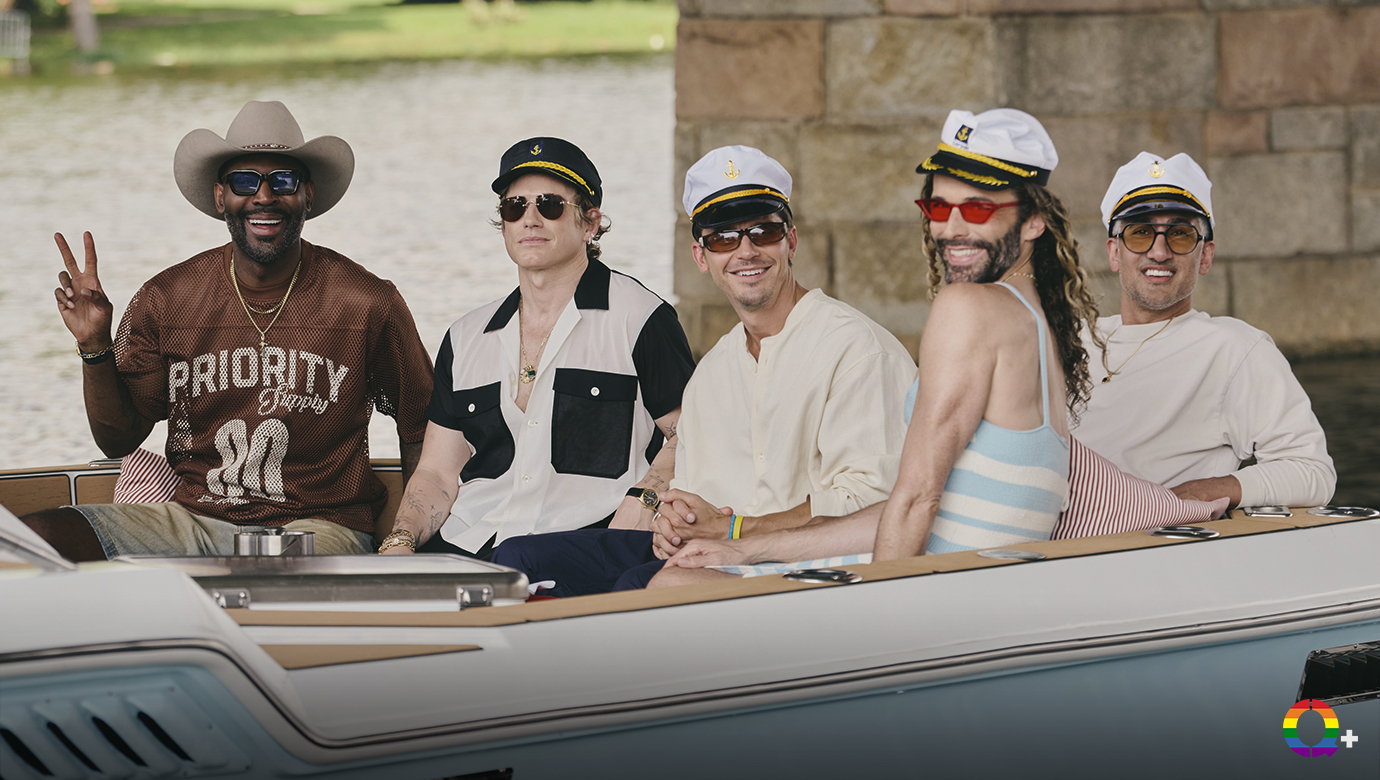
That said, this final chapter takes Antoni Porowski, Jonathan Van Ness, Tan France, Karamo Brown, and Jeremiah Brent to Washington, D.C., where they meet six new heroes. The season opens strong with Jo and Dorrine, two senior sisters living together but emotionally estranged. Dorrine, a lesbian who lost her wife of 40 years, has retreated inward, shaped by grief and a lifetime of guardedness that comes from growing up queer in a less forgiving time. Jo, meanwhile, is a cancer survivor who lost her son to addiction, and who’s trying her best to connect with her sister.
What unfolds is a story about communication, or the lack of it: Jo recalls their upbringing as good, while Dorrine left home at 14 and never looked back, revealing a fracture that’s been quietly widening for decades. Their episode works because it understands that healing doesn’t always mean resolution. The Fab Five don’t magically fix their relationship; instead, they help the sisters listen to one another, acknowledge their vastly different experiences, and begin building a shared sense of home. Karamo taking Dorrine to the DC Rainbow History Project to preserve her love story is one of the season’s most meaningful moments, grounding Queer Eye firmly in queer history and reminding us that queer love, especially from older generations, deserves to be seen, honored, and remembered.

Episode two shifts focus to Mike, an ex-pastor turned U.S. history teacher who has dedicated his life to helping others while often neglecting himself. It’s one of the season’s most illustrative episodes of what Queer Eye has always been about, largely because it widens its lens beyond a single hero. Helping Mike also means supporting the teachers who work alongside him and, by extension, the students he shows up for every day.
As Jeremiah so poignantly points out, Mike is still in the business of teaching belief: he once taught people to believe in God, and now he teaches kids to believe in themselves. Renovating the teachers’ lounge isn’t just a design choice; it’s a political one, smartly highlighting how undervalued educators are. Jeremiah continues to be a standout addition to the Fab Five, leading with emotional intelligence, intention, and an almost disarming sincerity that feels especially resonant in a show built on trust.
The season’s emotional low point, and arguably its most challenging episode, comes in episode three with Kate, a firefighter and single mother who is visibly overwhelmed by grief, trauma, and exhaustion. This is not an easy watch, and Queer Eye Season 10 doesn’t try to make it one. Kate’s resistance isn’t framed as stubbornness but as self-preservation, and the episode wisely avoids forcing a tidy transformation. However, watching the Fab Five try to connect with her is uncomfortable, raw, and at times heartbreaking.
It’s important to remember that we’re only seeing a single week of Kate’s life, filmed during an intensely vulnerable period. Not everyone is ready to open up on camera, and most importantly, not everyone is ready to accept help, even if they so desperately need it. Jeremiah, in particular, stands out here again, knowing when to step back and when to gently push. He shines by meeting her exactly where she is, offering honesty without spectacle. Kate doesn’t “fix” herself by the end, and that realism feels necessary, even if it leaves us emotionally raw.

Episode four, centered on Greg, a 40-year-old nautical mechanic living on a houseboat, is where the season starts to wobble. Greg isn’t unkind or unlovable, but his avoidance of responsibility makes the episode frustrating rather than illuminating. It’s one of the few moments where the show’s usual framework feels strained, less about growth and more about basic accountability. The Fab Five do what they can, but the episode struggles to justify itself, saved only by Greg’s charming daughter, who unintentionally becomes its emotional anchor.
The final episode introduces Nick, a charismatic D.C. tour guide with a big personality and an even bigger family. He works nonstop to provide for his wife and five children (only one of whom is biological), but that hustle has come at the cost of presence. With his eldest son preparing to leave for college, the clock is ticking. This episode shines when Tan, Jeremiah, and Karamo, all fathers themselves, sit down with Nick to talk openly about parenthood. Seeing men share these experiences so candidly is rare and long overdue. Still, as a series finale, the episode feels oddly modest. Pleasant, yes. Memorable enough, maybe. But not quite the emotional crescendo that an almost decade-long cultural phenomenon calls for.

What lingers after the credits roll isn’t dissatisfaction with the season’s individual moments, but with what’s missing. There’s no reunion, no huge reflection from past heroes, no collective reckoning with what Queer Eye has represented during an era when queer visibility has been both celebrated and fiercely contested. Instead, the show bows out quietly, almost cautiously, and that’s what feels saddest. This ending doesn’t fully honor the legacy Queer Eye built over ten seasons.
And that legacy matters.
Across its run, Queer Eye didn’t just help its heroes; it created a ripple effect. It reminded so many of us to be gentler with ourselves, to challenge the way we talk to our own reflection, and to practice compassion not just outwardly, but inwardly. In a world that often feels cruel and exhausting, the show insisted on softness as strength, especially for queer people who are so often denied it.
In the end, Queer Eye was never about perfection. It was about permission: permission to feel, to soften, to start again. Its greatest achievement wasn’t the makeovers, but the way it encouraged audiences to treat themselves, and each other, with more grace. So yes, even if this final season doesn’t fully live up to that legacy, it doesn’t erase it.
At the same time, that legacy now exists alongside a reality we can’t ignore.

The off-screen tensions that have surfaced around this final season are unfortunate, and their timing undeniably colors how this goodbye lands. Still, we believe it’s important to hold nuance. The Fab Five, or perhaps more accurately, the Fab Six, are not symbols or moral benchmarks; they are people. People who were thrust into fame quickly, who made mistakes, and who navigated power, ego, and expectation in full public view. We don’t have the full story of what transpired between them, and without it, judgment feels premature. What we hope for them, sincerely, is that time allows for reflection, accountability, and, if possible, reconciliation. Not for optics, but because the values Queer Eye has championed for years demand it.
But only time will tell.
Queer Eye Season 10 is a bittersweet ending. The show, its hosts, its heroes, and its audience all deserved a bigger goodbye. But we fully believe that its impact—on queer visibility, on emotional storytelling, and on the idea that care itself can be revolutionary—will outlast this imperfect farewell. And for that, we’ll always be grateful. Because even in its imperfection, Queer Eye Season 10 remains worth watching, if only to remember why it mattered in the first place.
Queer Eye Season 10 is available to stream exclusively on Netflix. Follow us on X and Instagram for all queer stuff!
Featured Image: Image Courtesy of Netflix.
Discover more from Q+ Magazine
Subscribe to get the latest posts sent to your email.


