
The Boyfriend Season 2, Part 1 Review: New Faces, Old Wounds, and Emotional Fallout
Netflix’s The Boyfriend is back for Season 2, and while the streamer is once again opting for a staggered, batch-style release, the first six episodes already give us plenty to chew on. Even with only part of the season available, it’s clear that The Boyfriend hasn’t lost sight of what makes it special: its commitment to emotional honesty, its patience with queer vulnerability, and its refusal to rush love for the sake of drama.
Now, because we still have to wait a couple of weeks to see how this season ends and who ends up with whom, this review will exclusively cover Part 1, aka Episodes 1–6 (released on January 13), with our final thoughts coming on February 3 once all episodes are available. So this serves as our first deep dive into a season that feels colder in setting, but arguably warmer, and maybe messier, in feeling.
PSA: From this point forward, there will be spoilers for the first 6 episodes of The Boyfriend Season 2. If you haven’t watched the new season yet, we invite you to go watch the episodes first and then come back. You’ve been warned.

The Boyfriend Season 2 Part 1: A Winter Setting That Shapes the Story
The Boyfriend Season 2 moves the Green Room to Hokkaido, Japan, trading the coastal atmosphere of Season 1 for a striking winter landscape. Snow-covered streets, frozen lakes, hot springs, and ski resorts aren’t just pretty backdrops—they actively shape the emotional rhythm of the show. Conversations feel more intimate when they happen indoors against the cold, silences linger longer, and physical closeness carries more weight. It’s a smart tonal shift that heightens both tenderness and tension.
As always, the premise of the show is simple but emotionally demanding. A group of men live together for two months, running a coffee truck to make some money while navigating romance, attraction, and self-discovery. Each work shift pairs two housemates together, offering rare one-on-one time that often becomes the catalyst for deeper feelings, or in some cases, deeper misunderstandings.
Guiding us through it all is the returning emcee panel, MEGUMI, Chiaki Horan, Thelma Aoyama, Durian Lollobrigida, and Yoshimi Tokui—whose commentary continues to strike that perfect balance between empathy, humor, and emotional clarity. They don’t manufacture drama; they contextualize it, guiding us through every flutter, confession, and emotional spiral with warmth, humor, and just the right amount of commentary.

Meet the Boys—Different Ages, Different Readiness for Love
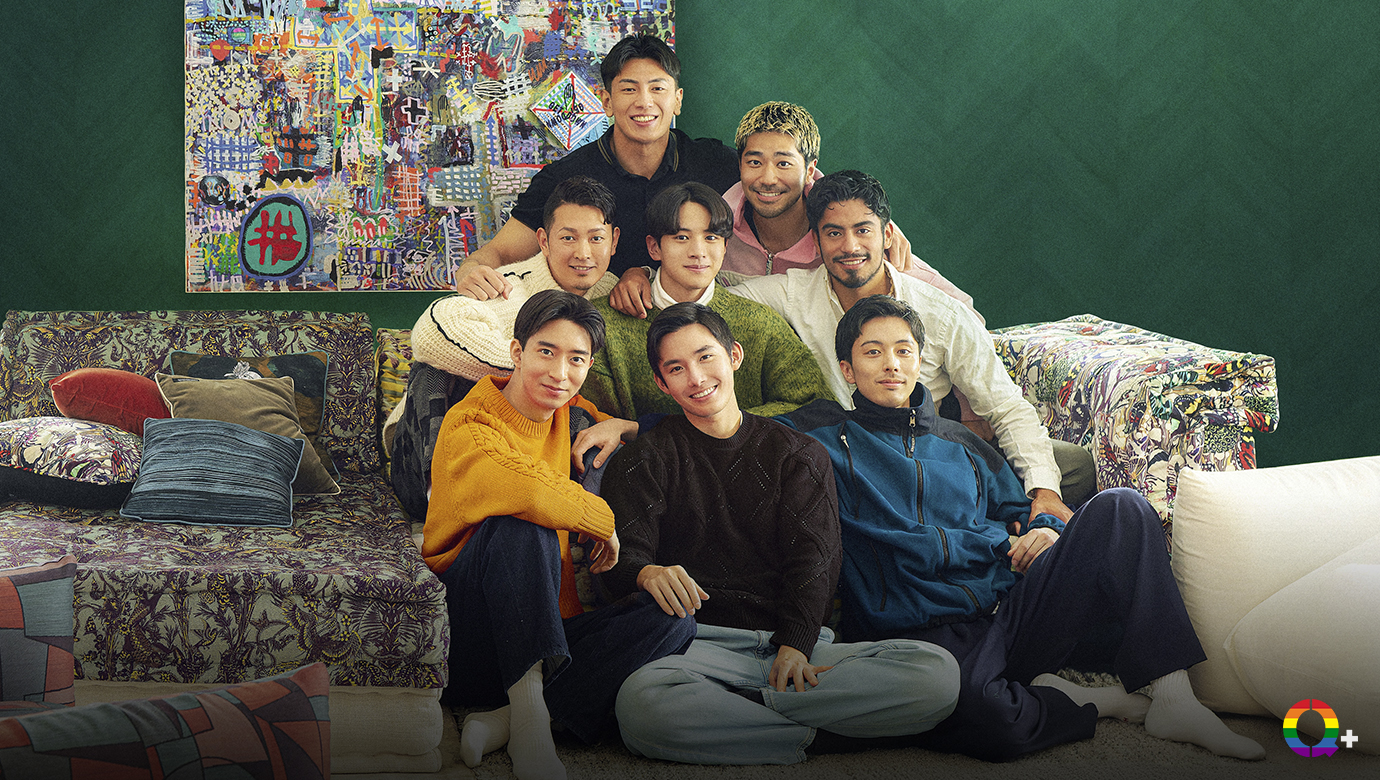
The first episode introduces us to seven of the ten participants, and one of the season’s strongest choices is how openly it foregrounds different life stages within queer dating.
The first boy who enters the Green Room is Bomi, a 23-year-old university student from Tokyo who has never had a boyfriend. He enters the house hoping for a pure, innocent first love, and his inexperience isn’t framed as naïveté, but as courage. Watching Bomi learn how to articulate desire, jealousy, and insecurity in real time becomes one of the season’s emotional anchors.
He’s followed by Jobu, 26, a marketer from Osaka who represents the opposite end of the emotional spectrum: expressive, affectionate, and unafraid to confess his feelings—the kind of person who fills a room with energy. His openness makes him easy to root for, and, unfortunately, easy to hurt.
Next comes Izaya, 32, an IT sales professional based in Tokyo who is deeply serious about relationships and very future-oriented. Izaya is looking for a partner who shares his values and long-term vision. He’s here with the explicit goal of finding a life partner, and his clarity about that desire contrasts sharply with others who are still figuring themselves out. His emotional intensity becomes a driving force of the season.
Hiroya, 29, an art director from Hokkaido, is gentle, soft-spoken, and deeply considerate, sometimes to a fault. Having spent years prioritizing work over romance, he enters the Green Room determined to finally choose himself, even if it means risking rejection.

Then there’s William, 34, a project manager with roots in Peru who has lived abroad, including time in Barcelona. He is charismatic and emotionally guarded. He wants marriage, but unresolved trauma from past relationships makes him hesitant, inconsistent, and at times frustratingly unclear. He also happens to know Izaya from the past, and not just casually.
Kazuyuki, 40, from Osaka, brings a completely different life stage into the mix. Fresh out of a 15-year relationship, he naturally assumes a supportive, older-brother role in the house. His presence adds emotional depth and perspective, especially in a genre that often sidelines older queer men. He’s reflective, supportive, and still grieving, using the experience less to pursue romance and more to process what love has meant, and might still mean, to him.
Rounding out the first arrivals is Huwei, 26, a graduate student from Thailand studying gender theory and anthropology. Multilingual, athletic, and intellectually curious, Huwei brings a global perspective to the show’s exploration of queer love across borders. He’s thoughtful and emotionally curious, and we also learn he already knows Bomi, yet another pre-existing thread woven into this group.
Right away, it’s clear this isn’t a group of strangers. Past connections—romantic, platonic, and unresolved—hover over the house, making everything feel more emotionally charged from day one.

Letters, Fireworks, and First Cracks. How Feelings Form and Fracture
From the very first day, The Boyfriend Season 2 makes emotional imbalance visible. After their first dinner together (complete with fireworks interrupting the meal in true The Boyfriend fashion), the boys are asked to write an anonymous letter to one housemate they’re interested in. These first confessions reveal who is drawn to whom, and who is left unseen—a dynamic that quietly sets the tone for much of what follows.
Bomi, Kazuyuki, and Huwei receive no letters. Hiroya and Jobu each get one letter. William receives two. Izaya receives three. It’s only day one, but already the emotional stakes feel very real. Even this early, attraction isn’t evenly distributed, and the show doesn’t soften that reality. Many of these men are still figuring out what they want, what they’re capable of giving, and what baggage they’re carrying into new connections.
But like last season, the coffee truck becomes the show’s emotional engine. Each leader chooses one partner to work with, creating structured intimacy that often accelerates feelings faster than participants expect and other times, stops them abruptly. These pairings are where the season’s central dynamics take shape. Bomi chooses Huwei. Jobu chooses William. Izaya chooses William. Hiroya chooses Huwei. Patterns begin to emerge, and so do cracks.

The most dominant, and probably complicated, storyline is the triangle between Izaya, William, and Jobu. Izaya reveals that years earlier, he and William briefly dated before William ghosted him when Izaya wanted something more serious. William remembers the past differently—or barely at all—and this mismatch in memory and meaning becomes a source of constant tension.
Watching Izaya wrestle with unresolved feelings while William remains emotionally elusive is both gripping and deeply frustrating. Jobu, meanwhile, develops feelings for William in the present. He’s affectionate, hopeful, and eventually brave enough to confess, only to be met with hesitation and, later, rejection. Watching Jobu realize that clarity isn’t coming is one of the season’s quiet heartbreaks.
William’s indecision sits at the center of much of the house’s emotional turbulence. He sends mixed signals, avoids clarity, and repeatedly justifies his behavior. There’s trauma behind all that, and at some point in the season, he shares it. He was abruptly abandoned by a partner when he was in Barcelona, and while his pain is real, the emotional fallout for those around him is impossible to ignore.
In contrast, Bomi and Huwei’s connection feels gentler and more organic. Their conversations are curious rather than intense, and their date—wandering through a snowy town and exchanging small gifts—feels emotionally reciprocal. It’s the kind of connection that grows through comfort, not urgency. With Bomi and Huwei, there’s laughter, tenderness, and mutual effort. It feels easy, at least at first.
Hiroya, quietly developing feelings for Huwei, represents another emotional thread this season: the fear of falling behind. His eventual confession is handled with remarkable tenderness, and the heartbreak that follows is understated but deeply felt.
It’s also around this point in the season that Ryuki joins the house, and his arrival subtly but decisively shifts the emotional landscape. Coming in before the solo dates for Izaya, William, Bomi, and Huwei, Ryuki isn’t framed as an immediate romantic disruptor so much as a reminder that the house is still in motion. His presence heightens the quiet anxiety already brewing among the group: the sense that connections are fragile, timing is everything, and opportunities can change overnight.

Trust, Trauma, and Emotional Readiness
As the episodes progress, emotional fatigue sets in. The house tackles heavier conversations: cheating, long-distance relationships, emotional boundaries, and what commitment actually means. These discussions aren’t filler; they actively reshape how the men see each other.
Izaya’s history of being cheated on makes William’s admission that he has cheated in the past particularly destabilizing. Kazuyuki’s lingering attachment to his ex underscores how long relationships can take to mourn. Huwei’s indecision reflects the pressure of being desired by multiple people while still unsure of his own feelings.
The ski resort trip in Episode 6 brings all these tensions to a boiling point. Roles that felt established seem to reverse: William and Izaya grow closer, even holding hands in bed, while Bomi and Huwei drift apart. By the time the group returns to the Green Room, we’re left with emotional whiplash—certainty feels further away than ever.
The final conversation between Izaya and William is the emotional peak of this batch of episodes. Izaya opens up about losing his mother at a young age and how that loss shaped his need to express love openly and honestly. William, still gripped by fear, admits he isn’t sure he can fully trust Izaya’s feelings, or his own. It’s raw, painful, and deeply human. And it leaves Izaya completely devastated.

Where We’re At After Six Episodes
After six episodes, The Boyfriend Season 2 Part 1 feels emotionally dense but intentionally unresolved. Connections have formed, fractured, and re-formed, and yet nothing feels settled. William and Izaya are circling each other, bound by unresolved history and emotional imbalance. Bomi and Huwei, who were starting to feel like the season’s emotional anchor, now seem uncertain and fragile.
At this point, we’re more instinctively drawn to Bomi and rooting for him to find a connection that meets his openness with certainty. We’re hoping Huwei figures out what he truly wants before more hearts get caught in the crossfire. As for William and Izaya, our feelings are… complicated. We’re conflicted about them as a couple. There, we said it. Their chemistry is undeniable, but their emotional readiness feels mismatched.
Still, that’s the magic of The Boyfriend. It doesn’t rush love; it lets messiness breathe. It understands that queer relationships, especially under the weight of past trauma and societal pressure, are rarely simple. Love is chaotic, timing is cruel, trauma doesn’t disappear just because attraction exists, and vulnerability, while beautiful, doesn’t guarantee safety. For now, Season 2 has laid a clear foundation, one built not on spectacle, but on the slow, sometimes painful process of learning how (and whether) to love again.
But anygays… We’ll be back next week with our review of Episodes 7–9, where the emotional stakes are only set to rise. The plot is thickening, feelings are deepening, and we’re hoping a few of these men finally give themselves, and each other, a real chance at the connection they came here for.
Episodes 1-6 of The Boyfriend Season 2 are available to stream exclusively on Netflix. Follow us on X and Instagram for all queer stuff!
Featured Image: Image Courtesy of Netflix.
Discover more from Q+ Magazine
Subscribe to get the latest posts sent to your email.


Pingback: The Boyfriend Season 2 Part 2 Review: Love Grows, Doubts Linger, and New Faces Arrive – Q+ Magazine