
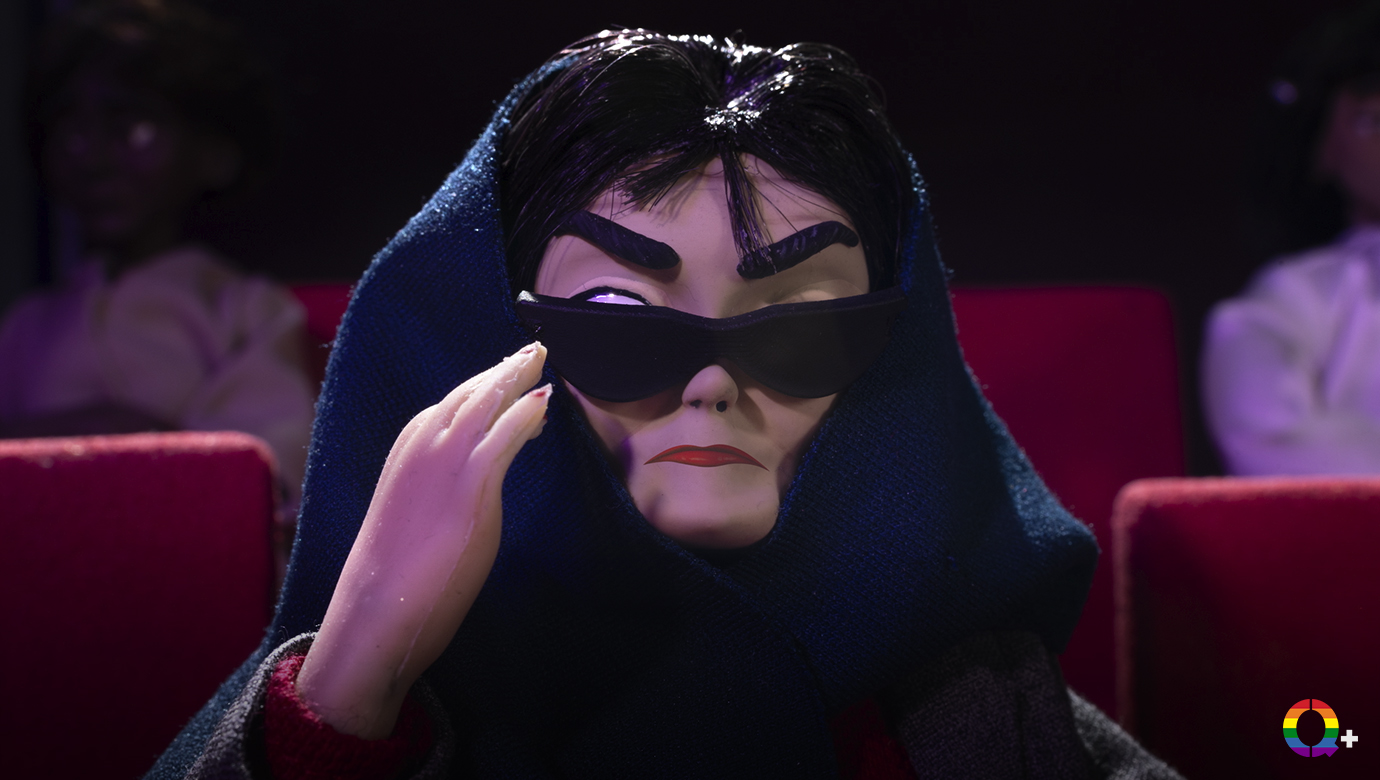
Women Wearing Shoulder Pads Review: Stop-Motion, Telenovelas, and Queer Chaos in Spanish
Adult Swim has always embraced strange and daring animation, but Women Wearing Shoulder Pads marks a true leap into new territory. Premiering August 17, 2025, it’s the network’s very first Spanish-language series—a stop-motion comedy that dares to mix camp, melodrama, and magical realism with unapologetic queerness. Produced in partnership with Mexico City’s Cinema Fantasma and Williams Street, the series offers something rare: a show that is deeply Latin American in voice and style, yet universal in its emotional pull.
The story is set in a fictionalized 1980s Quito, Ecuador, where the arrival of Marioneta Negocios (voiced with delicious flair by Pepa Pallarés) turns an entire community upside down. Marioneta is a glamorous Spaniard on a mission that sounds absurd on paper: to stop Ecuadorians from eating cuyes (South American guinea pigs) and convince them to adopt the animals as beloved pets. Standing firmly in her way is Doña Quispe (Laura Torres), a butcher-turned-restaurateur whose empire depends on cuy cuisine and who will do anything to protect her business. What begins as a simple conflict quickly escalates into a full-blown melodrama involving masked stalkers, forbidden affairs, revolutionary speeches, and even oversized cuyes galloping through crowded streets.

Women Wearing Shoulder Pads works not just because of the absurdity or the queer heart beating underneath all the chaos, but because the characters are both heightened archetypes and painfully human. Marioneta’s romance with the cuy-fighter Espada Muleta (Kerygma Flores) drips with sapphic electricity, while her increasingly complicated connection to Nina (Nicole Vazquez), Doña Quispe’s daughter and an idealistic activist, makes loyalty a slippery thing. Coquita (Gabriela Cartol), Marioneta’s loyal but secretive assistant, grows into one of the most fascinating presences on screen, her story threading the season with equal parts menace and longing.
The final stretch of episodes leans harder into raw emotion. Nina finds her own voice; Coquita stages an avant-garde play that lays bare her deepest wounds; and Marioneta, ever the drama queen in shoulder pads, is forced to reckon with her own failures and illusions of grandeur. Even Doña Quispe, who begins the story as the villain, emerges as something more complex: a woman whose ferocity masks a longing she cannot name. This is melodrama at its most delicious, but also a surprisingly nuanced exploration of desire, power, and survival.
What makes it all land is how seriously the show treats all of this. It never winks at the audience; instead, it embraces the grand speeches, the shocking twists, and the overwrought emotions that define telenovelas, but infuses them with queer desire and surrealist humor. By the time Nina declares herself a dictator in the name of the cuyes’ liberation movement, it feels both ludicrous and completely natural within the logic of this heightened world.

Visually, Women Wearing Shoulder Pads is nothing short of dazzling. Cinema Fantasma turns stop-motion into spectacle, filling every frame with bold colors, textures, and exaggerated designs. The camera swoops dramatically through tiny worlds, giving each stare-down and monologue the grandeur of an opera. There’s a tactility to the animation that makes every scene pulse with life, whether it’s a quiet confrontation in a dimly lit apartment or a high-stakes showdown in the cuy-fighting ring.
The writing, led by creator Gonzalo Cordova, is just as dynamic. It pokes fun at Latin American soap clichés—schemes, affairs, sudden revelations—while treating them with respect. The result is a show that understands why melodrama endures: because it gives shape to emotions too messy for everyday life. Marioneta may be ridiculous in her crusade, but she also represents the desire to reinvent oneself, to erase pain through spectacle. Coquita’s story speaks to abandonment and recognition, Nina’s to the weight of family expectations, and Doña Quispe’s to the tragedy of denied desire. Beneath the camp lies a sincerity that makes the laughs cut deeper.
So by the time the eight episodes reach their conclusion, the world of Women Wearing Shoulder Pads feels startlingly complete. It juggles camp absurdity, queer passion, and political satire without collapsing under its own weight, instead offering us something outrageous, hilarious, heartbreaking, and profoundly Latin American.

The final three episodes will air September 14, 21, and 28 on Adult Swim, with next-day streaming on HBO Max. And for those who want to binge, a feature-length cut of Season 1 arrives September 29 on HBO Max, complete with Spanish audio and an English dub. But take our advice: watch it in Spanish with subtitles. The melodrama resonates best in the language it was written in.
Because Women Wearing Shoulder Pads isn’t just about empowered women and oversized cuyes. It’s about how our stories—messy, queer, and unapologetically dramatic—deserve to be seen in all their glory. More than a show, it’s a revolution in queer melodrama rendered in stop-motion, one that reminds us that camp can carry as much weight as tragedy.
Adult Swim’s embrace of this project proves that Spanish-language, queer-centered stories belong in the spotlight, celebrated for their specificity rather than sanded down for mass appeal. For us, a queer magazine with Latin roots, it feels like a milestone—one that validates our traditions of melodrama and excess while proclaiming, once and for all: our stories matter, and the world is ready for them.
Women Wearing Shoulder Pads airs on Sundays on Adult Swim. A feature-length cut of Season 1 will be available to stream on HBO Max on September 29. Follow us on X and Instagram for all queer stuff!
Featured Image: Image Courtesy of Adult Swim


