
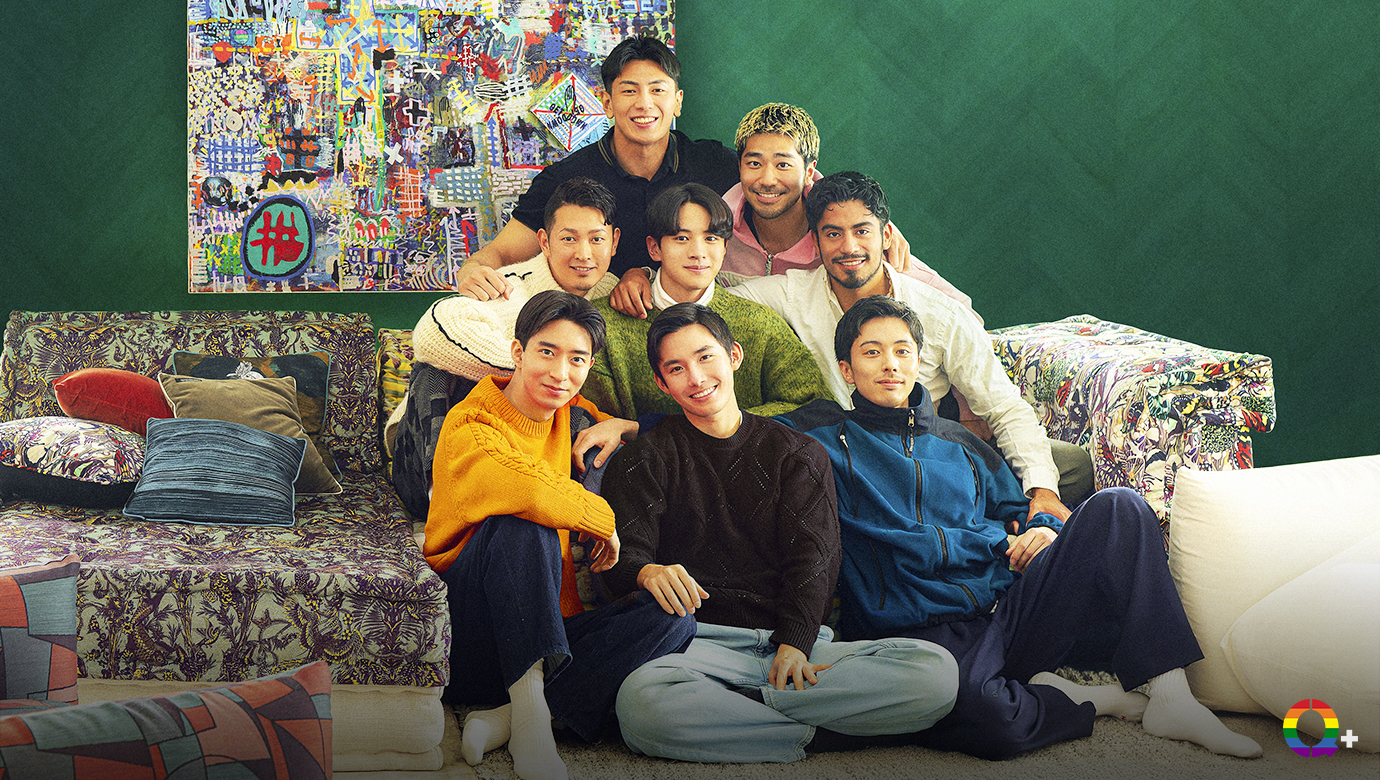
The Boyfriend Season 2 Review: Learning How (and When) to Choose Love
Netflix’s The Boyfriend has always understood something that many reality dating shows don’t: love isn’t just about attraction, chemistry, or even compatibility. It’s about readiness, timing, and whether someone is willing to sit with discomfort long enough to grow through it. Season 2 takes that philosophy and deepens it, delivering a quieter and emotionally richer chapter that lingers long after the Green Room doors close.
Set against the snowy backdrop of Hokkaido, The Boyfriend Season 2 trades the sun-soaked ease of its first season for something more introspective. Winter shapes everything here: conversations happen indoors, silences stretch longer, and emotional proximity becomes unavoidable. It’s a season defined less by spectacle and more by interiority, asking its cast and its audience not just who they want, but what they’re actually capable of giving.
Across fifteen episodes, ten men enter the Green Room carrying vastly different histories, expectations, and emotional toolkits. What unfolds is not a race toward romance, but a slow, sometimes painful examination of how queer men learn to love under the weight of past trauma, cultural pressure, and personal fear. The Boyfriend Season 2 isn’t simply a dating experiment; it’s a meditation on timing, honesty, and the many forms love can take.
Rather than centering competition or manufactured drama, the series continues to distinguish itself by asking more difficult questions. What does it mean to want love but not be ready for it? How do past wounds shape present behavior? And how much courage does it take to admit—not just to others, but to yourself—what you can and cannot offer?
Season 2 doesn’t promise neat answers. What it offers instead is something far more meaningful: space to form them.

A Cast Defined by Difference, Not Destiny
One of the season’s greatest strengths lies in its casting. From the outset, The Boyfriend Season 2 foregrounds difference, not just in personality, but in age, experience, and emotional bandwidth.
We meet Bomi, a 23-year-old university student who has never had a boyfriend, and he enters the Green Room hoping for a first love that feels mutual and sincere. His openness and emotional curiosity quickly position him as one of the season’s emotional anchors. At the other end of the spectrum is Kazuyuki, 40, newly out of a fifteen-year relationship and still actively grieving its loss. He arrives not exactly chasing romance, but seeking understanding, and his presence brings depth and perspective rarely afforded to older queer men on reality television.
Between them is a set of men navigating their own thresholds. William, 34, charismatic and guarded, wants something meaningful but remains deeply shaped by abandonment trauma. Izaya, 32, emotionally expressive and future-oriented, enters the house with clarity about what he wants—and a complicated history with William already in tow. Jobu, 26, affectionate and emotionally open, wears his heart on his sleeve and often pays the emotional cost for it. Hiroya, 29, gentle and introspective, struggles with prioritizing himself after years of emotional self-erasure.
Huwei, 26, a graduate student from Thailand, approaches connection with quiet intention, preferring observation over impulsivity. Ryuki (20) and Tomoaki (31) arrive later, bringing with them their own insecurities around family, self-image, and belonging. The season also introduces a surprise return: Taeheon, a fan-favorite from Season 1, now 35, reenters the Green Room for a second chance at love.
What makes this ensemble compelling isn’t how easily they pair off, but how unevenly desire moves between them. Attraction is rarely reciprocal. Timing is rarely perfect. And the show refuses to soften that reality.

When Chemistry Isn’t Enough: William, Izaya, and Jobu
Much of the season’s early emotional turbulence centers around William. His unresolved trauma—stemming from being abruptly abandoned by a former partner—casts a long shadow over his connections in the Green Room. Both Izaya and Jobu are drawn to him, but for different reasons, and with very different outcomes.
Izaya and William’s shared history complicates everything. Their past relationship, remembered unevenly by both men, resurfaces unresolved feelings and unmet needs. Their chemistry is immediate and undeniable, but their emotional timelines are misaligned from the start. Izaya’s desire for reassurance and long-term intention repeatedly clashes with William’s hesitation and emotional self-protection.
Their relationship only becomes viable once William is willing to confront his avoidance, and once Izaya learns that reassurance cannot replace internal security. Their eventual decision to become a couple, and later to leave the Green Room together before the season’s end, feels less like a promise of permanence and more like a leap of faith. What propels them forward isn’t certainty, but willingness.
Jobu’s experience is more painful. His feelings for William are sincere and brave, but ultimately unreciprocated. What matters most, however, is not the rejection itself, but how Jobu responds to it. Rather than shrinking inward, he learns to step back, protect himself, and remain open to new possibilities. His journey underscores one of the season’s quiet truths: vulnerability doesn’t guarantee safety, but it does foster growth.

Love That Takes Its Time: Bomi and Huwei
If William and Izaya’s arc is shaped by history, Bomi and Huwei’s is shaped by patience, mutual respect, and emotional safety. Their connection grows slowly, through shared work shifts, gentle conversations, and small acts of care. From the beginning, their relationship unfolds without pressure or performance, offering a different model of intimacy. Where other relationships flare and fracture, theirs develops almost imperceptibly—until suddenly, it’s undeniable.
Bomi enters the Green Room inexperienced but open-hearted, while Huwei approaches connection with thoughtfulness and restraint. Neither rushes the other, and that choice becomes foundational. Bomi’s inexperience fuels courage rather than fear: he asks questions, names insecurities, and ultimately chooses honesty over silence. In the final episodes, when doubts resurface about whether Huwei truly reciprocates his feelings, Bomi voices them directly.
Huwei’s response defines their relationship. He listens, reflects, and responds with clarity, not through grand declarations, but through steady presence. His affection has always been rooted in trust rather than reassurance, and once Bomi understands that difference, their connection settles into something secure.
When Bomi asks Huwei to be his first boyfriend in the final episode, it doesn’t feel like a dramatic climax, but like a natural arrival. Their relationship doesn’t announce itself loudly, but it comes fully formed, on their own terms—something rare for the genre, and deeply moving to witness.

Late Connections and Emotional Crossroads: Taeheon and Jobu
Taeheon’s return to the Green Room introduces one of the season’s most compelling late-stage dynamics. Initially emotionally guarded, he gradually opens up, revealing a deep desire for communication and emotional depth. His connection with Jobu emerges slowly, shaped by missteps, difficult conversations, and moments of genuine self-reflection.
What makes their arc resonate isn’t how seamlessly they come together, but how intentionally they choose to try despite their differences. Taeheon articulates his needs clearly, without softening them for comfort. Jobu, in turn, acknowledges his tendency to deflect and commits to meeting Taeheon with more emotional presence.
Their decision to leave the Green Room as a couple isn’t framed as certainty; it’s framed as commitment to growth. Love here is not about perfection, but about effort.

Growth Outside Romance: Kazuyuki, Hiroya, Tomoaki, and Ryuki
Not every journey in The Boyfriend ends in romance, and Season 2 is careful to treat those paths with equal care, insisting that romantic success is not the only valid outcome. Kazuyuki’s decision to leave the Green Room to reconnect with his former partner stands as one of the season’s most quietly powerful moments.
By witnessing younger men navigate first loves, romantic connections, and emotional risks, Kazuyuki comes to recognize the value and rarity of what he once had. His arc reframes growth not as moving on, but as seeing clearly: choosing to return with intention, honesty, and renewed commitment.
Hiroya’s journey centers on learning to prioritize himself and examine his internalized biases. His emotional generosity, particularly in moments of rejection, speaks to his quiet resilience. Tomoaki’s struggle with self-image and internalized homophobia adds depth to the season’s exploration of queer identity, while Ryuki’s gradual readiness to come out highlights the ongoing negotiation many queer people face with family, safety, and visibility.
Together, these arcs reinforce a central idea: readiness is not linear, and choosing yourself can be as transformative as choosing someone else.

The Boyfriend Season 2: Final Thoughts
By the time the Green Room closes its doors, The Boyfriend Season 2 has earned its emotional weight. It doesn’t manufacture certainty or reward spectacle. Instead, it honors hesitation, misalignment, and growth in all its uneven forms.
Across fifteen episodes, we witness love as something negotiated rather than assumed—romantic, platonic, communal, and self-directed. Some connections bloom quickly. Others take time. Some never arrive, but still leave a lasting impact. What unites them is the courage to engage honestly. Every man leaves changed, carrying something forward into the world beyond the show.
The Boyfriend Season 2 doesn’t promise forever; what it offers instead is sincerity. It leans into vulnerability without exploiting it, explores love without over romanticizing it, and treats queer emotional life with patience and respect.
Ultimately, this is a season about learning how to choose—choosing honesty over comfort, growth over familiarity, and love not as an abstract idea, but as a daily, sometimes difficult practice. In doing so, The Boyfriend cements itself not just as a dating show but as one of the most emotionally intelligent reality series currently on television. And in a genre so often built on illusion, that choice to prioritize honesty over certainty feels like its greatest achievement.
The Boyfriend Season 2 is available to stream exclusively on Netflix. Follow us on X and Instagram for all queer stuff!
Featured Image: Image Courtesy of Netflix.


Pingback: The Boyfriend Season 2, Part 4 Review: When Love Finally Speaks Out Loud – Q+ Magazine