
Inside ‘Juan Gabriel: Debo, Puedo y Quiero’ with the Women Who Shaped His Story
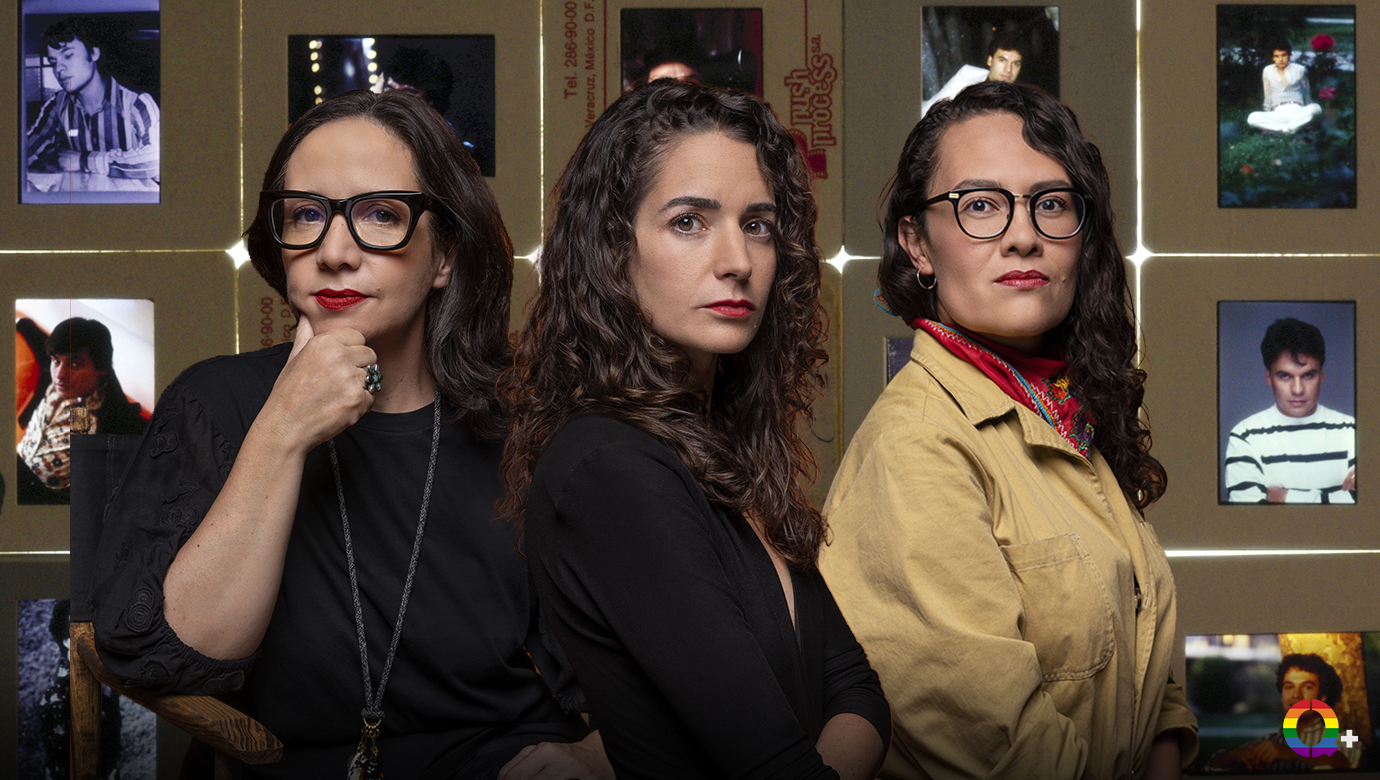
Ahead of the release of Juan Gabriel: Debo, Puedo y Quiero, now streaming on Netflix, we sat down with director María José Cuevas (Bellas de Noche, La dama del silencio: El caso de la Mataviejitas) and executive producers Laura Woldenberg and Ivonne Gutiérrez (La dama del silencio: El caso de la Mataviejitas) to talk about the creative and emotional process behind one of the most ambitious portraits ever made of the Mexican icon.
Unlike many biographical documentaries that rely on narration or commentary from others, Debo, Puedo y Quiero gives Juan Gabriel the space to tell his own story through the thousands of tapes, photographs, and recordings he left behind. The result is a deeply human series that blurs the line between the man and the myth, between Alberto Aguilera and the larger-than-life performer the world knew as Juan Gabriel.
When we asked María José about the emotional and creative experience of having the artist narrate his own life, she recalled the feeling of discovery that guided the project. “We had access to this wonderful archive that he left, which had been stored in a warehouse for years, even without being seen, and so I think the process was that: we’d pop a cassette in and we’d find everyday life, Alberto Aguilera’s home videos—him being a dad, going to the supermarket, whatever—and then suddenly we’d put in another cassette and it was Juan Gabriel. The one we all know on stage that gives you goosebumps singing all his hits,” she told us.

For Cuevas, that contrast became the series’ heartbeat. “We were constantly moving from private to public, and those two personas were always in dialogue; Alberto and Juan Gabriel were always talking to each other and vice versa,” she said. “The more we got into knowing Alberto, in that intimacy and honesty that home video gives you, the more we understood the character we all knew. Where his songs come from, how he composes them… All of this was like archaeology of the character, to understand and get to know him.”
As Ivonne explained, the production itself was monumental: “From production it was a huge challenge to have this volume of material—there were more than 2,000 tapes in different formats, 30,000 digital photos.” The team spent nearly two years reviewing hundreds of hours of footage and cataloguing an archive that was both overwhelming and profoundly intimate.
But for Cuevas, Woldenberg, and Gutiérrez, the task went far beyond simply organizing a legacy. It was an act of ethical storytelling. “Every time we put a cassette in without knowing what we would find, we always started from the perspective of absolute respect,” María José said. “At the same time, we didn’t want to make something completely sugarcoated either; we wanted to show the light and dark sides of the character because, in the end, that’s what we all are. When you humanize idols, that’s when we see ourselves as human beings.”
This tension between reverence and realism defines Cuevas’ documentary style. “As documentarians, we never cross that line that can feel sensationalist or like gossip. That’s always been our approach to our work,” she explained. And it shows. Rather than exploiting Juan Gabriel’s personal life, Debo, Puedo y Quiero celebrates its complexity: the artist’s contradictions, his tenderness, and his unshakable creative drive.

One of the series’ most striking elements is how it builds a chorus around Juan Gabriel’s voice. “In the beginning it was like a sea of voices because you’re beginning to get to know the character from another place,” Laura told us. “When it was decided that this project would be guided by the archive—his personal archive—and that his point of view would be the central one, we realized that the voices we had to interview and the doors we had to knock on were the ones that appeared in the archive, because there no one can lie to you. They’re his people, you see them interacting with him, you see how they accompany him over time; they are his closest people, people with whom he shares good moments.”
Many of these testimonies had never been heard before. “Many speak for the first time from a very personal, very transparent place, not in a gossip tone but very honestly,” Laura continued. “A good part of the story is contributed by his children; Laura Salas, who was very close to him, also appears; and people who accompanied him from the management side… those are voices that might not be the obvious ones. Not the big famous names who accompanied Juan Gabriel onstage, but rather people who were behind the scenes of his life.”
María José added, “I also want to remember Adán Luna—let’s not forget Adán Luna—who is our third character, and to go back to that Adán Luna of the ’60s and have Meche and Tijuana who were really there in that stage of his life, it was incredible.” Adán Luna, of course, was the name Alberto Aguilera used early in his career, before the world came to know him as Juan Gabriel—a reminder of the many transformations that shaped his journey. Some of those witnesses, including Meche and Jesús Salas (another close friend of Alberto), sadly passed away during production. “Their testimonies are very valuable,” Laura said. “Their lives will now be recorded here to be remembered.”

Through these voices, the series captures not only Juan Gabriel’s creative genius but also the resilience, freedom, and authenticity that defined him. For a new generation of viewers, especially those who didn’t grow up with Juan Gabriel’s music, Debo, Puedo y Quiero offers a window into a time when his very existence was revolutionary. “To understand Juan Gabriel’s greatness, you have to return to the context in which a character like Juan Gabriel is created—the seventies and then the eighties, when he was on top. What kind of Mexico was that? A super conservative, macho Mexico, ruled by a single television network,” María José reflected. “And despite all of that, this character appears…free, with this attitude of ‘I will overcome all obstacles and I will conquer every audience. I will even win over the most macho man in existence,’ and he didn’t give up.”
That resilience, Ivonne added, is also a powerful message of self-acceptance, of “the pride of being who he was.” María José nodded and smiled. “Yes, yes—and I’ll end with the phrase that’s on the mural in Ciudad Juárez: ‘Congratulations to all the people who are proud of being who they are.’” She considers it divine, she explained, because Juan Gabriel was alive when that message was inaugurated, “so it’s also what he leaves us.” It’s a simple message, yet one that perfectly encapsulates what Juan Gabriel: Debo, puedo y quiero achieves: a portrait of an artist who celebrated individuality long before the world caught up.
Juan Gabriel: Debo, puedo y quiero is available to stream exclusively on Netflix now. Follow us on X and Instagram for all queer stuff!
Featured Image: Image Courtesy of Netflix.


Pingback: Netflix’s 'Juan Gabriel: Debo, puedo y quiero' Lets El Divo Tell His Own Story – Q+ Magazine