
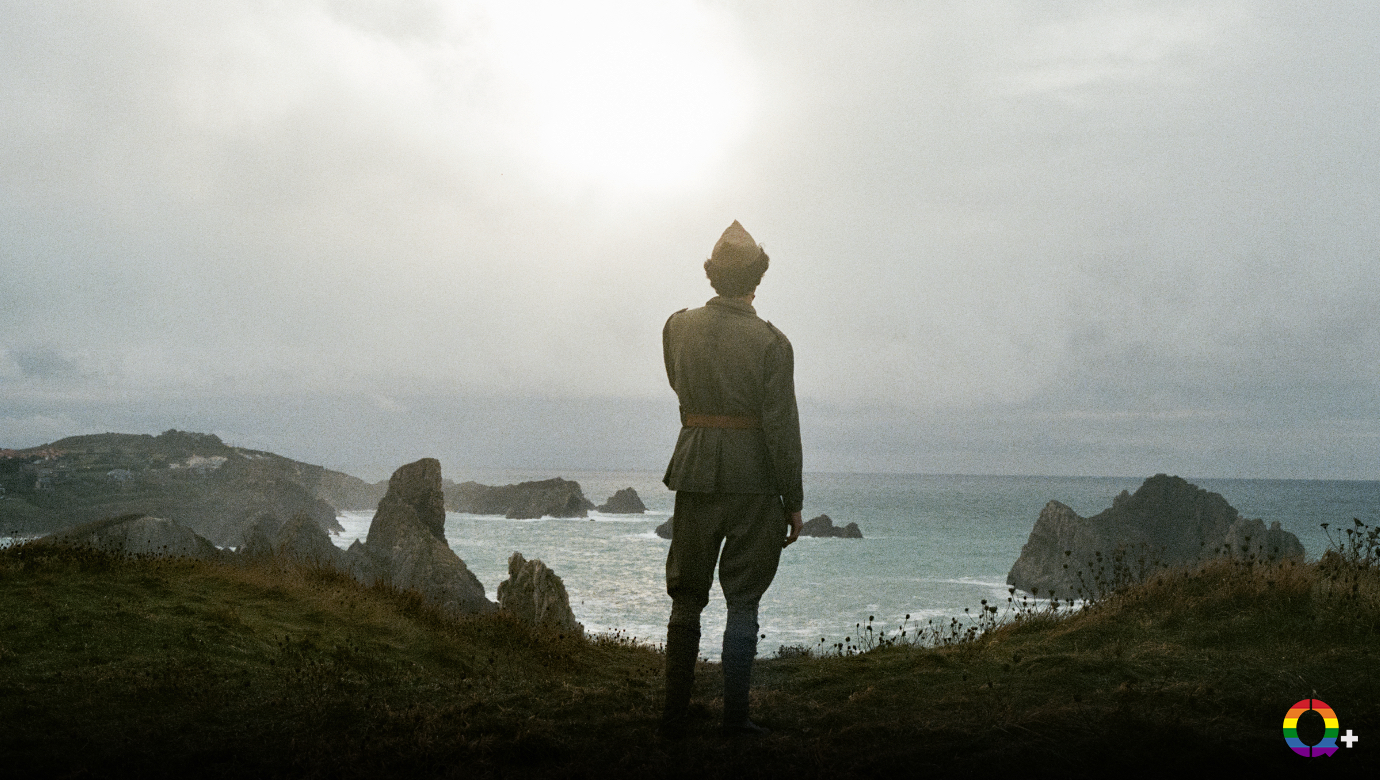
La Bola Negra Review: The Stories That Silence Could Not Erase
Some films leave us thinking about the stories they tell. Others leave us thinking about the stories we have never heard, the lives that were never allowed to unfold, and the truths that families have carried in silence for generations. La Bola Negra, directed by Javier Calvo and Javier Ambrossi, known together as Los Javis, belongs to the latter category. Its title refers to an act of rejection, a black ball cast to decide who deserves to belong and who must be turned away. But the questions it raises reach far beyond that single gesture. How many people have been made to feel that there is something wrong with who they are? How many love stories have been buried because the world refused to accept them? And what happens when the consequences of that rejection outlive the people who first experienced it?
Drawing inspiration from the unfinished play of the same name by Federico García Lorca, La Bola Negra tells a story of queer love and the consequences of denying people the freedom to live openly. Written by Los Javis and Alberto Conejero, the story unfolds across three periods in Spanish history: 1932, 1937, and 2017. We follow Carlos (Milo Quifanes), Sebastián (Guitarricadelafuente), and Alberto (Carlos González), respectively, whose lives initially seem unrelated. As their stories gradually come together, we begin to see how the past can shape the present, even when the people living with its consequences have no idea what came before them.
The film doesn’t simply document the violence of a particular historical period or the persecution LGBTQ+ people endured. It asks us to consider what happens when oppression outlasts the original act of violence, when rejection becomes a family secret, and when a love that could not be lived openly becomes a story no one knows how to tell. The people who come later may never experience the same circumstances, but they can still find themselves living with the fear, shame, and unanswered questions left behind by those who did.
The subject matter is heavy, raw, and painful, yet the film never reduces its characters to their suffering. Homophobia, war, and exclusion are inseparable from the worlds they inhabit, but these men have lives that extend far beyond the violence directed at them. There is tenderness, desire, humor, and the universal longing to be accepted without having to hide. Los Javis and Conejero understand that telling queer stories means making room for the fullness of queer lives, not simply documenting the harm inflicted on them. That sensitivity allows the film’s most painful moments to hit hard without making suffering the only thing we see in these characters.

To understand the significance of the story, we need to understand the literary legacy that inspired it. Federico García Lorca remains one of the most important figures in Spanish literature, celebrated for poetry and theater that explored desire, repression, social expectations, and the suffering inflicted on people who could not conform to the roles imposed on them. He lived through a period of artistic experimentation and political upheaval in Spain, when conservative social structures and the influence of the Catholic Church placed enormous pressure on sexuality, family life, and public reputation. Lorca was murdered in 1936, during the early days of the Spanish Civil War, before he could complete La Bola Negra.
Only a few pages of the play survive. They introduce a young man from an affluent Granada family who is denied admission to an exclusive social club because he is homosexual. The club’s members cast black or white balls to decide whether applicants will be accepted. For this young man, the black ball makes discrimination visible: a collective decision that he does not belong.
There is something devastating about the simplicity of that premise. The protagonist is not asking for special treatment. He wants access to an institution that recognizes his father’s standing and that should, by the standards of its own social world, be within his reach. Yet his family name and social position cannot protect him from people who believe his sexuality makes him unworthy of belonging. The black ball turns prejudice into a verdict, giving a physical form to the shame others want to place on him.

We will never know how Lorca intended to finish the play. The surviving pages offer a beginning, not a complete narrative, and that distinction matters. Los Javis and Conejero aren’t simply adapting a lost ending or filling in a few missing scenes. They are imagining what might grow from the story Lorca was unable to finish, creating their own narrative in conversation with his work and the historical circumstances that surrounded it. The absence becomes a creative possibility: what might Lorca have written about a gay protagonist if he had been allowed to complete the play, and how might that story speak to queer lives almost a century later?
Through its three timelines, the film explores those questions. The editing allows one story to illuminate another, with later revelations changing how we understand the experiences we’ve already witnessed. Importantly, La Bola Negra never suggests that being queer in 1937 was the same as being queer in 2017. The social and legal realities had changed considerably, but fear and exclusion could still leave their mark long after the circumstances that created them had changed. A family can carry a secret without knowing where it began, and someone can spend years searching for answers without realizing that the history they’re trying to understand has been part of their own life all along.
At one point, Alberto’s boyfriend, Juan Pablo (Julio Torres), asks, “¿No te parece interesante que la única historia que no te importa es la tuya?” (Don’t you find it interesting that the only history you don’t care about is your own?) Juan Pablo’s question reaches beyond Alberto’s story. We can spend so much time learning about the past as something distant that we forget to ask what happened within our own families, what people were forced to conceal, and which experiences were deemed unworthy of being remembered. The film asks us to look at those silences differently, not as proof that nothing happened, but as a reason to wonder what might have been too painful or dangerous to say.
Recovering queer history isn’t only about correcting omissions in the historical record. It’s also about restoring dignity to people whose lives were denied recognition. The absence of a story doesn’t make the life behind it any less real. Sometimes, all that remains is a fragment, an inherited object, or a question no one can answer. Those fragments may seem small, but they can still tell us something about the lives that history left behind.

The film’s recurring snow imagery adds another layer to its exploration of vulnerability and belonging. Without giving away the full meaning of one of its most affecting sequences, we can say that the snow becomes an image that stays engraved in the soul of the film, carrying a tenderness that feels inseparable from its sadness. It made us think about all the people who have been made to feel that, like Carlos, they’re snow boys, fragile in a world that has taught them they could disappear if they reveal too much of themselves. We thought of those who have been rejected by their families, those who have hidden their relationships to survive, and those who have spent years believing that acceptance must come at the cost of honesty. There is something deeply moving about the way the film makes room for these people, reminding us that their lives have value even when the world refuses to acknowledge it.
On a technical level, La Bola Negra is an achievement in storytelling, sound and visual composition. The cinematography is stunning, with frames that could easily be mistaken for paintings if we paused the film at almost any moment. The period detail gives each timeline its own character, while recurring visual motifs allow the different eras to speak to one another. Everything feels carefully considered without becoming stiff or overly concerned with showing off its research.
The editing deserves particular recognition, too. A film that moves so frequently between three periods could easily become exhausting or confusing, especially across a runtime of more than two and a half hours. Instead, the transitions create a conversation between the stories rather than interrupting them. The connections are not always immediately clear, but we’re rarely left wondering why we’ve moved from one life to another. Each shift adds something to our understanding, and the gradual accumulation of details makes the eventual convergence feel earned. La Bola Negra trusts us to pay attention and allows the pieces to fall into place without explaining every connection before we’re ready to see it.
The performances are equally extraordinary. Guitarricadelafuente brings a striking vulnerability to Sebastián, while Milo Quifanes gives Carlos a mixture of pride, fear, fragility, and longing that makes his struggle for acceptance deeply affecting. Carlos González grounds Alberto’s storyline in curiosity and uncertainty, guiding us through the discovery of a family history that changes his understanding of the people who came before him. Their performances capture the differences between these men’s lives while making the connections between them feel tangible.
Miguel Bernardeau is a compelling counterpart to Guitarricadelafuente, bringing emotional depth to Rafael and making their relationship feel especially poignant against the perils of the Civil War. The rest of the ensemble is just as deserving of praise. Lola Dueñas brings a heartbreaking authenticity to Teresa, Penélope Cruz is dazzling as Nené, and Glenn Close gives Isabelle Durand, the Lorca scholar, a distinctive presence. Even the supporting performances contribute to a world that feels populated by people with histories and concerns beyond what we see on screen.

The cast never lets the film’s larger ideas overshadow the people living through them. We’re watching men who want to love, to belong, and to be understood, not simply characters standing in for different forms of historical oppression. That distinction matters in LGBTQ+ storytelling, where queer characters have so often been defined by the suffering they endure rather than the lives they deserve to live.
We also have to talk about language. We wish we could give everyone the ability to understand Spanish so they could experience La Bola Negra in all its beauty. The subtitles allow its story to reach audiences around the world, but hearing and understanding these words in their original language adds another dimension to the experience. There’s an emotional nuance and musicality to the Spanish that make the dialogue especially affecting, reminding us of what language can do in the hands of people who understand its power. Words can wound, exclude, and condemn, but in this film, they can also preserve a memory, recognize a love, and give a voice to someone who has been denied one.
The final moments bring this into sharp focus. As Sebastián recites Lorca’s poem, “El amor duerme en el pecho del poeta” (Love Sleeps in the Poet’s Chest), to Rafael, the moment recalls the connection between the poet and the man he loved. It’s impossible not to be moved as the words lead us to the film’s final warning: “¡Mira que nos acechan todavía!” (Beware, they are still lying in wait for us!). These aren’t simply sentiments belonging to the past. They remind us that the forces that have persecuted queer people haven’t disappeared, and that the passage of time alone cannot guarantee prejudice will end.
Even now, in 2026, those words carry weight. The rights and freedoms LGBTQ+ people have fought for represent real progress, but they remain vulnerable to challenges, and the hostility directed at our community reminds us how much is still at stake. Lorca’s warning feels less like a distant echo than a reminder not to let our guard down. Because remembering those who came before us means recognizing how far we’ve come without pretending that everything they suffered has been left behind.

This is why La Bola Negra feels so important right now. It asks us to look backward not simply to mourn what was lost, but to listen to the stories that survived and acknowledge those that were never recorded. It also asks us to consider our responsibility toward people whose lives were shaped by a world that refused to accept them. When a story disappears because someone was ashamed, frightened, or forbidden to tell it, the loss extends beyond that person to everyone who might have learned from their life.
Remembering the past means looking beyond dates and names in the official record and asking whose experiences were left out, whose love was denied, and who was forced to remain silent to survive. It means making space for those lives in our understanding of history, not as footnotes to someone else’s story, but as lives that mattered in their own right. We may never know how Lorca intended to finish his play, but the story Los Javis and Conejero have built around those surviving pages offers a moving answer to a different question: what can we do with the stories that have been left unfinished?
We can listen. We can remember. And we can make sure those stories are no longer forced to remain in the dark. As the film reminds us, “Este país tiene demasiadas historias de amor enterradas en los campos. Hay que arañar la tierra para que salgan.” (This country has too many love stories buried in the fields. We have to scratch the earth so they can emerge.)
With La Bola Negra, Los Javis and Alberto Conejero do exactly that. They dig into the past, bring to light the lives that intolerance tried to bury, and remind us that no one should have to surrender their identity to deserve a place in the world. And they do it brilliantly. We would be remiss not to say that La Bola Negra is the best film we’ve seen this year, and perhaps the one that has moved us the most as an LGBTQ+ publication. It is a film that understands why these stories must be told, because some may remain unfinished, but they do not have to remain forgotten. A black ball may close a door, but it does not have to be the final word on a life.
La Bola Negra is currently in select theaters in the US and Canada, with an international rollout over the coming months. La Bola Negra will be available to stream on Netflix in the US on December 2, 2026. Follow us on X and Instagram for all queer stuff!
Featured Image: Image Courtesy of Netflix.
Discover more from Q+ Magazine
Subscribe to get the latest posts sent to your email.


