Vivien’s Wild Ride Review: Seeing, Listening, and Becoming Again
There’s a particular kind of reckoning that comes with losing something that once defined you. It forces a reorientation, not just of habit, but of identity. Vivien’s Wild Ride understands this deeply. Rather than presenting itself as a conventional life story, Vivien Hillgrove’s documentary unfolds as a meditation on what it means to keep living, loving, and creating when the very way you’ve understood the world begins to vanish.
Through sound, memory, texture, and silence, Hillgrove invites us into her life, crafting an intimate and immersive memoir that reflects not only who she has been, but who she is still becoming. Vivien’s Wild Ride marks Hillgrove’s directorial debut, but she is far from a newcomer. An acclaimed dialogue, sound, and picture editor, Hillgrove has spent her life shaping other people’s stories, and now, at 78, she turns that expertise inward. The film moves between past and present not to catalog events, but to reveal patterns: how loss echoes, how identity reshapes itself, and how reinvention becomes a form of survival.
At the center of the present-day narrative is Hillgrove’s diagnosis of macular degeneration, an incurable disease that is steadily erasing her vision. Watching a lifelong film editor confront the loss of sight carries an unavoidable irony, but the documentary refuses easy symbolism. Instead, it lingers in the practical and emotional realities of disability: distorted faces, unsafe streets, the exhausting labor of adaptation. Hillgrove speaks openly about the fear of being seen as incapable, of becoming invisible in an industry that prizes exactly what she’s losing.

These present-day struggles are interwoven with memories from Hillgrove’s youth, growing up as the eldest of five children and becoming pregnant while in high school in a world that offered her no real choices. With abortion and contraception inaccessible, her parents hid the pregnancy and sent her away to give birth. The trauma of that experience—and of being pushed to give her daughter up for adoption—reverberates throughout Vivien’s Wild Ride. Even decades later, that decision remains a defining silence in her life.
What the documentary does especially well is resist framing this loss as a singular tragedy. Instead, it shows how it became one of many thresholds Hillgrove crossed. Just before Stonewall, she began exploring her attraction to women, embracing a queerness that allowed her to step outside the rigid expectations placed on her as a young woman. That sense of rebellion and self-definition runs parallel to her artistic awakening, which begins almost accidentally when she enters the Bay Area film scene.
Vivien’s Wild Ride situates Hillgrove’s career within a larger cultural moment, when experimental filmmaking and feminist labor shifts opened doors for women in roles long dominated by men. Working with figures like Philip Kaufman and Francis Ford Coppola, Hillgrove honed her craft in sound and editing, eventually moving into picture editing and later into documentary work. Her collaboration with Mexican filmmaker Lourdes Portillo on Señorita Extraviada marks a turning point, pushing Hillgrove away from feature films and toward politically engaged, socially conscious storytelling.

Queerness and partnership are central to this journey. In the 1980s, Hillgrove met Karen Brocco, her partner in life and art. Their relationship becomes one of the film’s emotional anchors: a queer love story built on collaboration, patience, and care. Together, they build a life that moves between the intensity of film work and the quiet of farm living. Brocco’s role becomes especially significant when she helps track down Hillgrove’s daughter years later, navigating sealed records and institutional barriers with unwavering determination.
That search leads to Kathleen, whom Hillgrove meets for the first time in 1988. Their first meeting is tentative and emotionally fraught, but it opens the door to a relationship neither of them ever thought possible. That relationship, however, is anything but simple. As Kathleen begins unpacking her past, she realizes that what she once understood as a strict upbringing was, in fact, abuse. That realization fractures her connection to Hillgrove, as anger and resentment surface. Vivien’s Wild Ride doesn’t shy away from this pain. Instead, it sits with it, allowing both women to speak honestly about blame, responsibility, and the long shadow of adoption trauma.
As Hillgrove’s vision deteriorates, these emotional reckonings intensify. The film repeatedly asks what it means to “see,” a question that becomes both literal and philosophical. Hillgrove learns Braille, adapts her garden with audio labels, and begins to understand sound and touch as primary modes of perception. In one of the documentary’s most striking artistic choices, the image drops away entirely, leaving us with only sound. It’s a gesture that doesn’t explain itself; it simply invites us to adjust.

By the time the documentary reaches its final reflections, Vivien’s Wild Ride reveals itself as a film about transformation without resolution. It acknowledges that some losses cannot be undone and some questions will never be answered. What remains is the act of paying attention: to people, to memory, to the present moment. Hillgrove reflects on how losing her sight has paradoxically brought her closer to others, teaching her that joy and grief are not opposites, but companions.
The way we see ourselves is never static. It’s shaped by our choices, our regrets, the things we survive, and the versions of ourselves we’re forced to become along the way. That’s why stepping into Vivien’s Wild Ride feels so singular: this isn’t just a documentary about a life lived, but about a life continuously reassembled. It doesn’t ask for pity or admiration. Instead, it offers exactly what its title promises, a wild but deeply human ride through love, loss, and reinvention. It’s an invitation to witness a life still in motion, still learning how to belong, even as the world comes into focus in entirely new ways.
Vivien’s Wild Ride premieres tonight on PBS’s INDEPENDENT LENS at 10 p.m. (check local listings). The film will also be available to stream on the PBS app. Follow us on X and Instagram for all queer stuff!
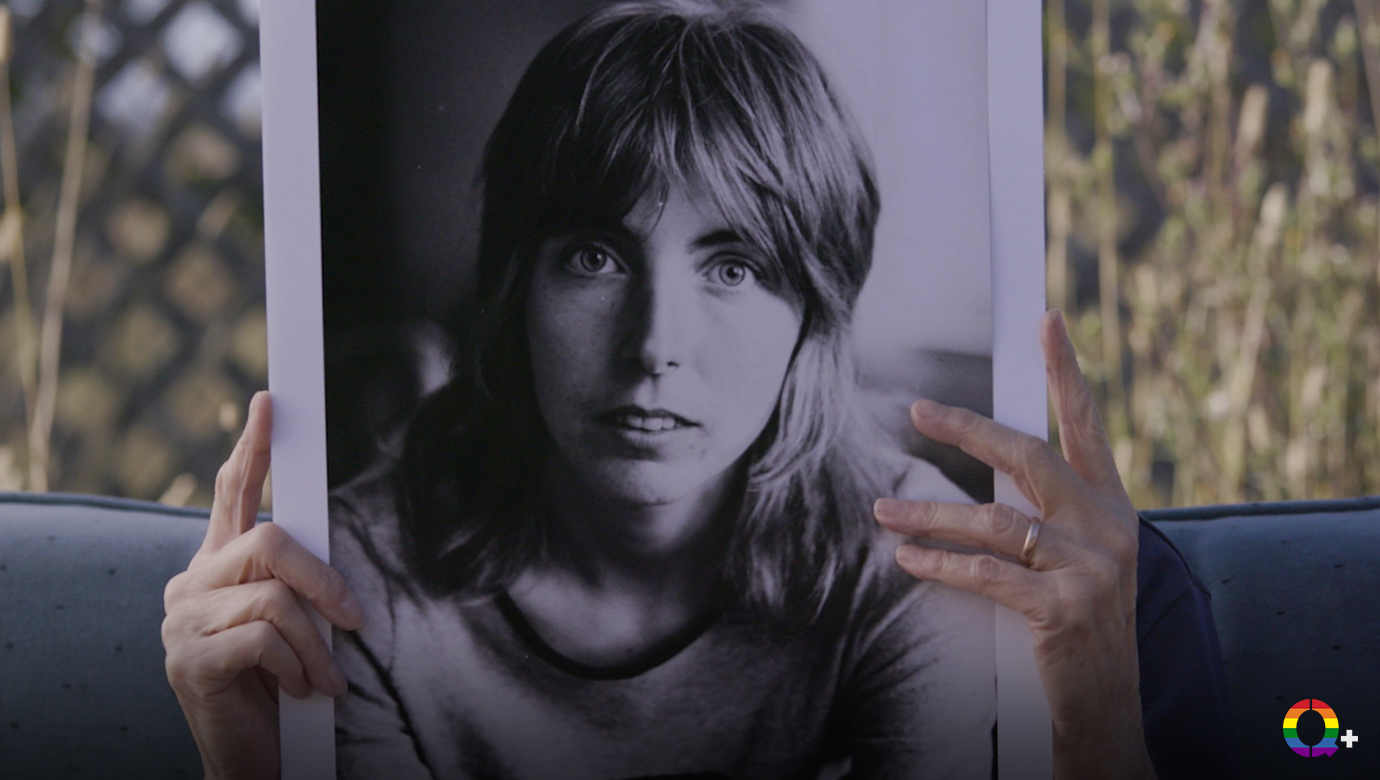
Featured Image: Image Courtesy of PBS/INDEPENDENT LENS. Photo by Eric Ivey.


