Pride 2025 Spotlight: Fawzia Mirza Talks ‘The Queen of My Dreams’ and Storytelling with Heart
Fawzia Mirza has never been one to take the obvious route. A former lawyer turned playwright, actor, filmmaker, and fierce advocate for queer Muslim visibility, her career has been anything but linear. What has remained constant, though, is her commitment to telling stories that haven’t always had space to be told; stories that are at once deeply personal and powerfully universal.
Her debut feature, The Queen of My Dreams, is the culmination of more than a decade of artistic and emotional evolution. Expanding on her early short film and later stage play Me, My Mom, and Sharmila, this rich, genre-blending film follows Azra, a queer Pakistani Canadian woman grappling with her identity and her complicated relationship with her mother. But this isn’t just a coming-out story. It’s a kaleidoscope of love, memory, and intergenerational reckoning, told with the vibrancy of golden-era Bollywood and the emotional depth of an immigrant family saga.
Through bold choices—like casting Sex Lives of College Girls star Amrit Kaur as both Azra and her young mother Mariam—Mirza collapses timelines and expectations, inviting us to see ourselves, our parents, and our cultural inheritances with fresh eyes. The film spans decades and continents, from 1960s Karachi to turn-of-the-millennium Nova Scotia to contemporary Toronto, asking what gets passed down across generations and what we can choose to reclaim for ourselves.
We were lucky enough to speak with Fawzia for our Pride 2025 series, and, as with our past interview, we split the conversation into two parts. In the first, we dove into The Queen of My Dreams; in the second, we talked with Fawzia about her broader work as a filmmaker, mentor, and unapologetic force at the intersection of queerness, Muslim identity, and South Asian heritage. Here’s our full conversation.

The Queen of My Dreams blends queer coming-of-age with intergenerational storytelling in such a vivid, emotionally rich way. What inspired you to revisit your original short and expand it into this layered feature?
FAWZIA MIRZA: I am obsessive. When a story, a person, or a place gets stuck in my head, I never want to leave there and I always want to return. This story has stuck with me, partially because making the short film saved my life, and sharing it gave me a community I was craving. But also because as I kept scrutinizing my identity and family, more questions needed answers—which is where the one person show Me, My Mom, & Sharmila came from. I developed that with a Chicago company, Catharsis Productions, and Brian Golden. That continued to ask a question centered on much of my work, “How do we become who we are?”, and through that, I was seeking an answer to why my mother changed. Changed from who she was in the 60s. I found an answer through that play—fictional answers, but answers that nonetheless comfort the soul. I was an actor at the time, so the play was the big dream. But after I started writing more, making more films—I made a feature in 2017 Signature Move—I started to think there was more of the story to tell, in a longer form, on the big screen. The art was evolving because I was also evolving.
The choice to have Amrit Kaur play both Azra and young Mariam is striking, it visually and emotionally bridges mother and daughter. What led you to that casting decision, and what does it symbolize for you?
MIRZA: There’s a line in the film early on—“We’re not subtle. We like to whack you over the head with symbolism.” And what better way to symbolize the mother is the daughter than having the actor playing the daughter play the mother. But this wasn’t my original intent. It was a casting idea that came to me as I was writing the breakdowns for our casting director. I pitched it to my producers, and they loved it. And the ‘doubling’ it’s also a nod to the genre it’s referencing—Bollywood.
Bollywood runs like a heartbeat through the film. What role has Bollywood played in your own personal or creative life, especially as a queer Muslim artist?
MIRZA: Bollywood was comfort. Connection to home, culture, community, and country. My parents went to the closest South Asian grocery store where I grew up in Sydney, Nova Scotia, Canada, and bought burlap bags of Basmati rice, bags of orange lentils, packages of spice mixes, and armloads of the latest Bollywood movies on VHS. They watched, so I watched. And let me be clear: I love love. I love big, dramatic, singing from the mountain tops kind of love. I believe anything is possible. I believe we can be whoever we want to be; I’m a Pisces. So Bollywood suits me.
You grew up in Nova Scotia and set part of the film there, but The Queen of My Dreams also spans Toronto and 1960s Karachi. What was it like to revisit those places—especially Nova Scotia—through Azra’s eyes and from this layered, intergenerational perspective?
MIRZA: Nova Scotia has places that feel stopped in time. It was an incredible place to revisit and film, but also a wonderful place to recreate but also romanticize. This film is absolutely inspired by pieces of my life, my family’s life, but it’s also fantasy—a collective history and memory. When I went to Sydney, Nova Scotia again, I realized how much I had romanticized, place. Being there, capturing these moments, finding joy there as an adult, feeling free, felt very healing. Also, the people in Nova Scotia are amazing.

One of the film’s most moving elements is how it reframes the way we see our parents. As you were crafting Mariam’s past, how much of her journey was informed by your own reflections on your mother, or mothers more broadly?
MIRZA: I began with my mother, but had to let the character go where she wanted. And the more truthful you are in that writing, no matter how specific, the more relatable and universal. Mothers are people. As much as we think we’re different from them, we’re also incredibly similar. No matter the country. No matter the era. The cycle, the similarities continue.
The Queen of My Dreams is filled with color, texture, and musicality, but it also tackles grief, identity, and isolation. How did you balance the visual vibrancy of Bollywood with the film’s emotional weight?
MIRZA: For me, directing is a feeling. We found the balance in the edit. And my editor, Simone Smith, is a genius. Everyone should hire her immediately (but don’t make her unavailable to me!). We found the pace, the balance, the ups and downs in the edit. Also, we showed the movie to folks outside our little film bubble. I trust my friends, colleagues, and mentors to give me great advice. And they did.
That recurring motif of “Mere Sapno Ki Rani” is so evocative, it almost becomes its own character. Can you talk about what that song means to you, and why you made it the film’s emotional through-line?
MIRZA: That song is from the 1969 film Aradhana (the film referenced within my film) and loosely translates to ‘The Queen of My Dreams.’ It’s a song I heard growing up as a kid; it’s a song from my mother’s era. It’s a song that everyone knows. Whether the original version or remixed by DJ Rekha on a dance floor. It means something to so many of us. I used to fantasize that I’d be the queen of someone’s dream, like in the scene from the original movie. A man in a green turtleneck and a brown corduroy jacket, he’d be singing about the search for the ‘queen of his dreams’ or the love of his life, to a woman he just met on a train, reading a book, draped in a blue sari. I imagined some guy would sing to me like that. When I came out as queer, I had to re-imagine the scene—a woman would be in the jacket and turtleneck and sing to me. But one of my realizations has been that I am the queen of my own dreams. Not my mother’s. Not Bollywood’s. We get to define who we are.
The film ends on a quiet but powerful note of connection—not resolution, but understanding. What did you want queer audiences, especially those navigating cultural and generational tension, to take away from that final beat?
MIRZA: It is possible to step outside of our intergenerational trauma and make a different choice than those who came before us. That there is strength in love, power in forgiveness, and that love is revolutionary.

In the past, you’ve said that for a long time, you weren’t sure if you could be queer, Muslim, and still love Bollywood. How did you come to a place where those identities could coexist, and even flourish creatively?
MIRZA: Making my short film The Queen of My Dreams was step one. I processed my internal struggles very publicly, through my art. Through my comedy. Through my performance. Through social media. Making and sharing my art was therapeutic. Everything I have ever made is a reflection of where I was at in that moment. And looking back, you can see how far I had to go. No one can tell you who you are—or who you aren’t. I refuse to give up parts of what I love about myself and my communities and identities because someone says it is not possible. Of course, it’s possible. I’m right here, bitch. I’m not a hologram.
Your journey from lawyer to filmmaker is remarkable. Was there a particular turning point where you realized art wasn’t just a side path, it was the path?
MIRZA: I made a lot of spontaneous decisions, for better or worse. Like, should I have left the law to be an actor with no money on a lawyer’s debt? Probably not. But I did what moved me. I’m a hopeless romantic who believes in the fantasy. Honestly? I think it was only in the last five years. When I stopped acting and focused on directing. When I married my wife, Andria Wilson Mirza, I grounded and focused on what was in front of and ahead of me rather than what was happening all around me.
From digital series to your feature film, you’ve built a body of work and storytelling that’s both deeply personal and rooted in community. What continues to fuel your creative vision?
MIRZA: Love. Hope. Joy. People. Possibility. Untold stories. My wife. My community. And what I see as my mission.
You’ve mentored for a number of programs, including the Queer Muslim Project and 1497. What’s the most urgent lesson you try to pass on to emerging queer and Muslim filmmakers?
MIRZA: Write what you know and what is honest to who you are. No matter what is in fashion, who is in fashion, or how much we are being persecuted in our queer and trans communities, our immigrant communities, our fight for a free Palestine, we must write what moves us. Fashion changes, but you need to trust yourself. I also want folks to know who you are—the more you know yourself and what moves you, what drives you, what your passion is, the more you can talk about the work and why it needs to be in the world, the more you can talk about why you are the perfect person for the job. The more you just…are.

With Baby Daal Productions, you and your wife are building a production company rooted in inclusion and love. What kind of stories are you both most excited to champion next?
MIRZA: Our mission is to produce my work (like the queer besties heist comedy I cannot wait to make!) but also champion others. Andria is producing work that I’m not a part of—like a feature with the incredibly talented writer, director, Ben Lewis, whose short she produced, She Raised Me. We’re also championing emerging acting talents like Akbar Hamid and his film Poreless and the beautiful trans Muslim short film co-directed by Radha Mehta and Saif, Witness and the next generation of queer Muslim Pakistani filmmakers like Shehrezad Maher with her film that will world premiere later this year, The Curfew. I didn’t have someone who was able to champion me when I first started, so it’s important for me, for us, to be able to do that. Also, my wife is the greatest champion of artists in the world. IYKYK.
We talk a lot about “representation” in media, but your work goes further, into reclamation and reframing. How do you define success when it comes to telling underrepresented stories?
MIRZA: Audience reaction. I make for us. When you laugh, when you cry, maybe even at the same time, mission accomplished. When I can use my knowledge to help someone else’s film, either on the page, in the edit, or getting into a festival, we’ve done good.
As someone who has built community through both your work and mentorship, what does Pride mean to you now—personally and artistically?
MIRZA: Pride was a riot. And it is a fight. Pride is knowing who you are and not being afraid to be you every single day. Pride is self-love. Pride is community. Pride is universal health care and four-day work weeks. Pride is liberation for the most marginalized. Pride is trans rights, Black Lives Matter, Palestinian rights, and immigrant rights. Pride is about our collective voices coming together for each other.
And lastly: If you could go back and talk to your younger self, what would you say to her?
MIRZA: You’re going to find the queen of your dreams. Just wait. Have patience. And stop plucking your eyebrows so much.
Fawzia Mirza’s journey is a testament to what happens when we choose to tell our own stories—and make space for others to do the same. The Queen of My Dreams is more than just a film; it’s a reclamation of narrative, identity, and joy. And in speaking with her, it’s clear that Fawzia isn’t just creating queer Muslim futures on screen—she’s helping build them in real life, too. Her work, like the best of Pride, reminds us that there is power in truth, beauty in complexity, and freedom in finding your own voice.
If you missed our previous Pride 2025 feature, you can find it here. Follow Fawzia Mirza on IG. Follow us on X and Instagram for all queer stuff!
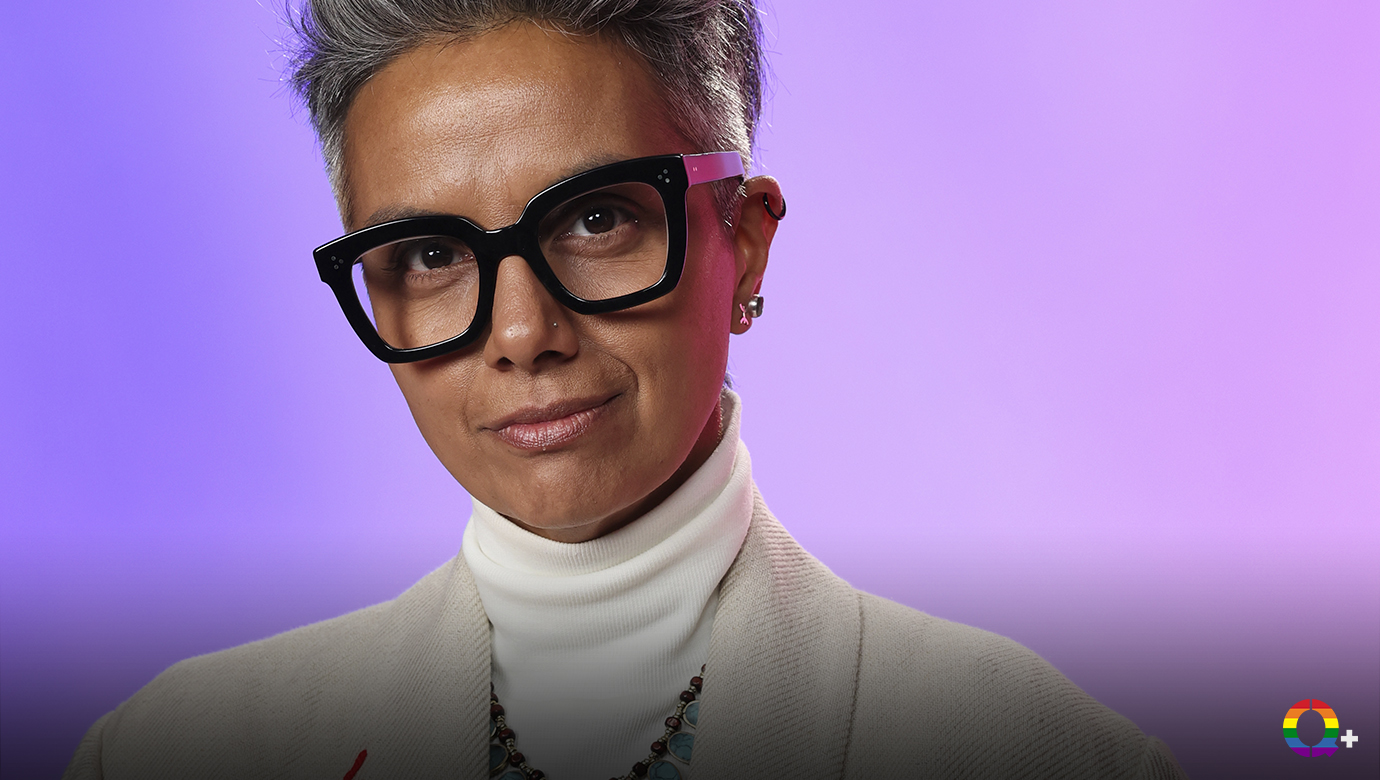
Featured Image: Image Courtesy of Fawzia Mirza. Photo by Monica Schipper/Getty Images for IMDb.


Pingback: The Queen of My Dreams: A Story About Family, Identity, and What We Carry – Q+ Magazine
Pingback: Pride 2025 Spotlight: Inside the Fabulous, Inclusive World of Fay and Fluffy – Q+ Magazine