
EU Same-Sex Marriage Ruling: Court Says All Member States Must Recognize LGBTQ+ Marriages
We’re waking up today to one of the most significant legal wins the EU’s LGBTQ+ community has seen in years. Just yesterday—Tuesday, November 25—the European Court of Justice issued a landmark decision that’s already sending ripples across the bloc. In this landmark EU same-sex marriage ruling, the court declared that every member state must recognize same-sex marriages legally concluded in any other EU country, regardless of their national laws.
Even though the ruling is only hours old, its impact is immediate and undeniable. For queer couples across Europe, this isn’t abstract policy; it’s the difference between having a family recognized or erased the moment they return home.

The case that set all of this in motion centers on two Polish citizens who married in Berlin back in 2018. When they returned to Poland and asked the authorities to register their German marriage certificate, the request was denied because Poland does not recognize same-sex unions of any kind. What should have been a simple administrative step became a full legal battle, eventually landing before the ECJ, and now shaping EU law for all 27 member states.
In their ruling, the judges stated that refusing to recognize a same-sex marriage validly performed elsewhere in the EU is “contrary to EU law because it infringes [the] freedom and the right to respect for private and family life.” They stressed that EU citizens must be able to “lead a normal family life when exercising [their] freedom” of movement, and that creating a family in one EU country must guarantee continuity in another.
They also noted the real-world consequences of denial: couples being forced to live as “unmarried persons,” facing barriers in everything from housing and healthcare to banking and parental rights. And for LGBTQ+ people, we know those “inconveniences” aren’t minor; they’re destabilizing, isolating, and sometimes dangerous.

Importantly, the court clarified that this decision doesn’t force member states to legalize same-sex marriage domestically. Countries like Poland can still maintain their restrictive marriage laws internally, but they cannot refuse to recognize a marriage legally concluded elsewhere in the EU. That recognition must happen fully and “without distinction.”
This nuance matters. Right now, just over half of EU countries recognize same-sex marriage, with others offering civil unions, and a handful—including Poland—still offering neither. Prime Minister Donald Tusk has tried to advance LGBTQ+ rights, but conservative coalition partners and President Karol Nawrocki, who has said he would veto any bill affecting the “constitutionally protected status of marriage,” have blocked progress again and again.
And that’s exactly why yesterday’s EU same-sex marriage ruling is such a breakthrough. It steps in where national governments have stalled, ensuring that queer families don’t lose their legal status simply because they cross a border. It offers stability in a region where LGBTQ+ rights are still deeply uneven. And, for thousands of same-sex couples, it gives something that shouldn’t be a luxury: certainty.
Even if this doesn’t change domestic marriage laws overnight, it does change lives…starting today.
Follow us on X and Instagram for all queer stuff!
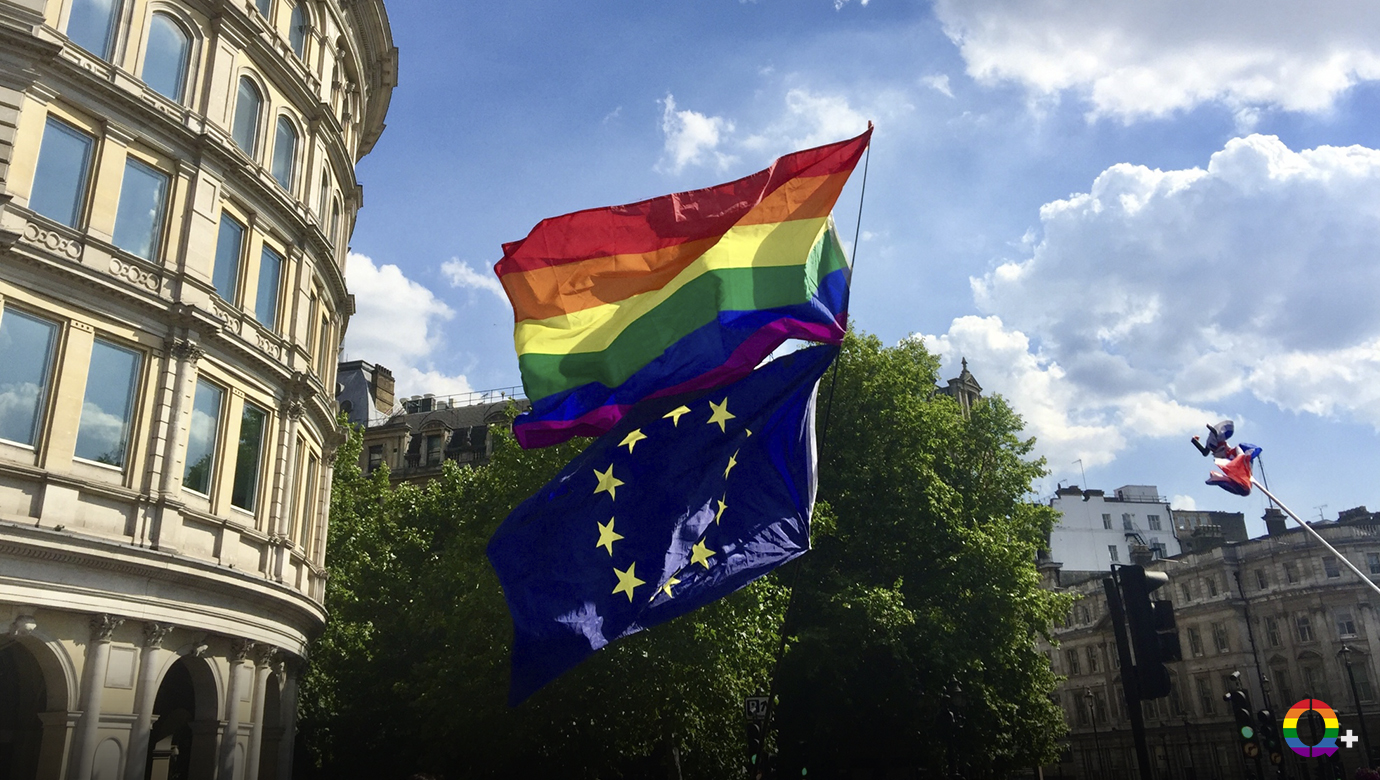
Featured Image: Image via Getty Images. Photo by Darko Mlinarevic.


